
On this page
Start here
Quick answer
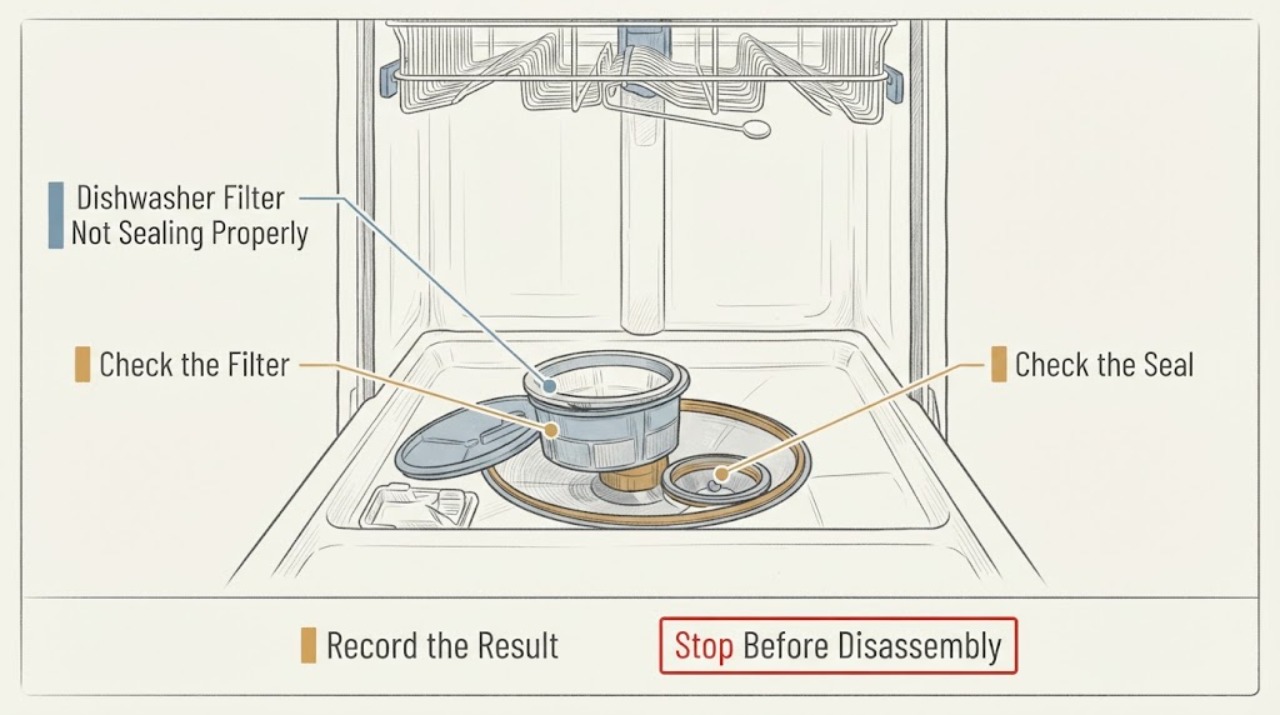
A filter that does not sit flush should be treated as an installation, debris or damage problem until the exact model manual says otherwise. Cancel the cycle and let the dishwasher stop, then clean the filter and glass trap with the appliance off according to the owner manual. Electrolux says the glass trap/filter must be maintained and installed properly with no clogs; its filter guide describes removing the cylinder filter, emptying it, rinsing it and replacing it. Check the filter rim and mating area for food, glass or visible damage, but do not force a distorted filter or guess a gasket or replacement part. If the filter still will not seat, the dishwasher leaks, leaves water, shows a drain code, or the filter/sump is damaged, stop using it and arrange model-specific service.
Before you begin
Safety first
- Cancel the cycle before filter work. Do not reach into active spray action or sharp debris, force or pry the filter, shim or glue a seal, remove the sump/pump, access wiring, or keep running the dishwasher when it leaks or leaves persistent water.
Work through in order
Diagnostic checks
Use only checks that match the exact appliance or system and its official guide.
-
Check 1
Cancel the dishwasher cycle and wait until wash action stops; if water is on the floor or the filter area contains sharp fragments, keep the unit out of service and make the area safe before opening the filter area.
Expected result: The cycle is still running, water is leaking onto the floor, standing water covers the filter, or the dishwasher is stopped and safe to inspect.
Next step: If the unit is running or leaking, cancel it and address the immediate water hazard from a safe position. If sharp debris is visible, do not reach into it; arrange service or use the exact manual's safe cleaning procedure.
Stop if: When the dishwasher is stopped and the area is safe, continue with the model-specific filter removal and inspection.
Why this matters
Why: Filter removal and inspection should not be done during active spray action. A leak or standing water may be a drainage or installation problem in addition to the filter complaint.
-
Check 2
Use the exact Electrolux owner manual to remove the filter or glass trap; for the cylinder style shown in Electrolux's guide, rotate it counterclockwise, lift it out, empty it and rinse it under running water.
Expected result: Food soil, glass, bones, pits or other debris is present; the filter comes out normally; or it will not turn or lift without force.
Next step: If debris is present, remove only what the model manual permits and rinse the filter. If it will not release without force, stop and use the exact manual or service instead of prying the filter or pump area.
Stop if: If the filter is clean and comes out normally, inspect the filter edge and mating surface before reinstalling; do not assume the unseen seal is compatible with another model.
Why this matters
Why: Debris can prevent the filter from sitting correctly and can contribute to poor draining. A filter that will not release normally may have a different design, be mispositioned or be damaged; force can damage the seat.
-
Check 3
Inspect the filter rim, visible locking features and filter seat for food, glass, cracks, warping or a part that is not sitting evenly; clean accessible residue as the manual permits.
Expected result: The filter is intact and sits evenly; debris remains under the edge; the filter is cracked/warped; or the filter rocks, leaves a visible gap or will not lock.
Next step: If residue is present, clean it and reinstall according to the exact manual. If the filter is damaged or still will not sit flush, stop using the dishwasher and arrange service with the full model number; do not force, glue or shim the filter.
Stop if: If the filter is clean, intact and seats correctly, continue by checking the symptom that led to the seal concern rather than replacing a part preemptively.
Why this matters
Why: Electrolux requires the filter to be maintained and installed properly with no clogs. A persistent gap or damaged filter is not a confirmed gasket diagnosis and may involve the filter seat or another model-specific assembly.
-
Check 4
After correct reinstallation, classify the remaining symptom: poor draining or standing water, water leaking from the dishwasher, poor cleaning, or no continuing symptom.
Expected result: Water remains after the cycle, water reaches the floor, dishes remain dirty, or the filter issue is no longer present.
Next step: For poor draining, check only the accessible hose, disposal connection and filter conditions in the manual. For a leak, stop the unit and check the safe external door/hose and detergent conditions; arrange service if unresolved. For poor cleaning, inspect the filter, glass trap and spray arms as the manual permits.
Stop if: If the original complaint is gone and there is no leak or abnormal noise, resume normal use while monitoring the filter seating; do not add an unapproved sealant or replacement ring.
Why this matters
Why: Electrolux lists filter and glass-trap blockage as one possible contributor, but also lists the drain hose, disposal knockout, door closure, spray arms and detergent/oversudsing conditions depending on the symptom.
-
Check 5
If a code is displayed or the filter will not remain seated, record the exact model, code, filter position and visible result and contact Electrolux or qualified service.
Expected result: The display shows i20, i40 or another code; the filter repeatedly comes loose; water leaks or remains; or the appliance operates normally after cleaning and seating.
Next step: For a continuing code, leak, standing water or loose/damaged filter, stop repeated cycles and arrange service. Give the technician the model, code, recent filter cleaning and whether the filter locks or rocks.
Stop if: If no code or symptom remains, monitor the filter on a normal cycle and consult the model manual if it loosens again; do not dismantle the pump or sump as a first step.
Why this matters
Why: Electrolux describes i20 as incomplete draining and i40 as a clogged filter or sump, but a code must be confirmed and a repeated seating failure can require model-specific parts or service.
Use your observations
Decision map
Find the observation that best matches what you see, then follow the next safe action.
-
PATH 01Next step
What you see
The filter has food or glass under its rim and seats correctly after the debris is removed.
Do this next
Run only the model-approved normal check and monitor draining; stop if the filter loosens, leaks or the symptom returns.
Why this path and its safety boundary
Why it matters: Debris was a supported installation/cleanliness explanation for the apparent gap or poor fit.
-
PATH 02Next step
What you see
The filter is clean but cracked, warped, loose, rocking or unable to lock in the exact model's filter seat.
Do this next
Keep the dishwasher out of service and arrange model-specific Electrolux support or qualified repair; do not force, shim, glue or substitute a filter.
Why this path and its safety boundary
Why it matters: The public Electrolux guidance does not identify a universal seal or compatible replacement for an unidentified model.
-
PATH 03Next step
What you see
Water remains after the cycle, the dishwasher leaks, or i20/i40 appears after the filter is correctly installed.
Do this next
Perform only the accessible checks in the exact manual and stop repeated cycles if the problem persists; contact Electrolux or qualified service.
Why this path and its safety boundary
Why it matters: Electrolux associates these symptoms with incomplete drainage, filter/sump soil or other hose, disposal, door or oversudsing conditions; the filter complaint may not be the only cause.
-
PATH 04Next step
What you see
The filter seats correctly, no code or leak remains, and the dishwasher drains and cleans normally.
Do this next
Resume normal use and follow the exact manual's filter-care interval. Stop and document the model if the filter loosens or the symptom recurs.
Why this path and its safety boundary
Why it matters: The original apparent sealing problem is not currently reproduced; a replacement part is not justified by the symptom alone.
Helpful context
Understand the symptom
What “not sealing” can mean
Electrolux's public dishwasher guidance uses the terms maintained and installed properly, with no clogs, rather than defining one universal filter gasket or locking design. A loose filter may be sitting on food or glass, may not be in the correct position, or may be damaged. It can also be a description of a leak or poor draining rather than a confirmed seal failure. Keep the assigned problem identity, but verify the exact model before selecting a filter, seal or sump part.
Clean the filter without forcing it
The filter guide says the cylinder fine filter can collect large items such as broken glass, bones and pits. With the cycle stopped and the dishwasher safe to access, remove and rinse the filter as the model manual shows. Inspect the filter rim, the opening it sits in and the visible glass trap for food or fragments. A filter that is cracked, warped, cross-threaded, or still rocks after the area is clean is not made safe by tightening harder.
Do not turn a filter issue into a pump diagnosis
Poor draining or water on the floor does not prove that the filter itself is the only cause. Electrolux also lists a kinked drain hose, a missing garbage-disposal knockout plug, an incompletely closed door, detergent or rinse-aid oversudsing and other installation conditions. Check only the accessible conditions supported by the manual; do not remove the sump, pump or wiring to make a filter fit.
When checks do not resolve it
Need a professional?
Arrange Electrolux or qualified dishwasher service when the filter is cracked, warped, loose or will not seat/lock after the accessible area is clean, or when a leak, standing water, i20/i40 code or poor cleaning persists. Do not force the filter, add sealant or shims, remove the sump or pump, or run repeated cycles to compensate for a filter that does not fit.
Safety scope: Cancel the cycle before filter work. Do not reach into active spray action or sharp debris, force or pry the filter, shim or glue a seal, remove the sump/pump, access wiring, or keep running the dishwasher when it leaks or leaves persistent water.
Common questions
FAQ
Why does my Electrolux dishwasher filter not sit flat?
Food, glass or other debris may be under the filter, or the filter may be mispositioned or damaged. Cancel the cycle, use the exact manual to remove and rinse the filter, inspect the rim and seat, and stop if it still rocks, leaves a gap or will not lock.
Can I use the dishwasher if the filter does not seal?
Do not keep running it when the filter remains loose, the dishwasher leaks, leaves water or displays a drain code. Electrolux requires the filter to be maintained and installed properly; arrange model-specific service if cleaning and correct reinstallation do not restore the fit.
Does a loose filter always mean the filter gasket is bad?
No. Electrolux's public guidance also points to clogs, incorrect installation and other drainage or leak causes. Without the exact model and filter design, do not diagnose or order a gasket from appearance alone.
What do i20 and i40 mean on an Electrolux dishwasher?
Electrolux lists i20 for incomplete draining and i40 for a clogged filter or sump. Confirm the code on the appliance, clean and reinstall the filter as the manual permits, and contact service if the code continues; do not infer a code from a filter that merely looks loose.
Can I use glue or a shim to make the dishwasher filter seal?
No. A shim, adhesive or substitute ring can change the filter's fit and is not supported by the opened Electrolux guidance. Use the exact model manual or qualified service to identify the filter and seat.
Read the exact guide
Official sources
- Dishwasher Error Codes and Alarms GuideElectrolux · Electrolux dishwasher error-guide page; code meanings are used only when the user confirms the displayed code.
- Dishwasher Glass Trap and Filter GuideElectrolux · Electrolux dishwasher support page; exact dishwasher model and filter design are not supplied, so its cylinder-filter example is explicitly conditional.
- Dishwasher - Not CleaningElectrolux · Electrolux dishwasher support page; used only for the symptom branch involving poor cleaning and accessible filter/glass-trap/spray-arm checks.
- Dishwasher - Water LeakingElectrolux · Electrolux dishwasher leak guidance; used to keep a filter complaint from being treated as the only possible source of water on the floor.
- What can I do if my dishwasher is not draining?Electrolux · Electrolux dishwasher support page; used for the general requirement that the glass trap/filter be maintained and installed properly with no clogs.
Community feedback
Share a repair observation
Share a plain-text repair observation. Accepted observations are published automatically; this page may take a moment to update.