
On this page
Start here
Quick answer
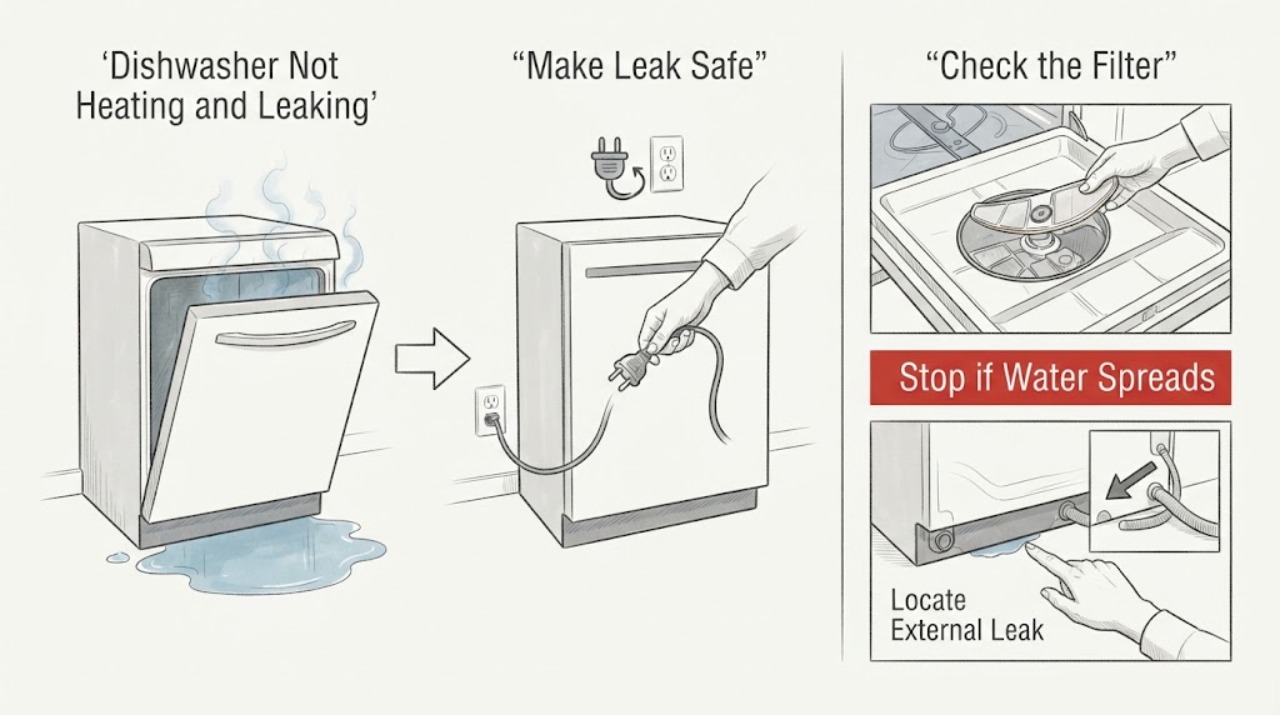
Treat an active leak as the first problem: stop the cycle, keep hands and power connections dry, and shut the dishwasher water supply off when you can do so safely. Identify whether water is coming from the door area, a supply connection, the drain path or an installation connection before running another cycle. Electrolux says detergent oversudsing, a spilled rinse aid, a blocked filter, a kinked drain hose and an unremoved disposer knockout plug can contribute to leaking or standing water. “Not heating” can also mean a documented Hd/HO heat-delay or heater-on state, cold incoming water, or dishes that remain wet after a cycle; it does not by itself identify a failed heater. Check the exact model manual for settings, and arrange qualified service for a persistent leak, persistent no-heat condition or any internal electrical or water-system repair.
Work through in order
Diagnostic checks
Use only checks that match the exact appliance or system and its official guide.
-
Check 1
Stop the dishwasher when water is actively leaking, cancel the cycle if the controls respond, keep wet hands and electrical connections apart, and shut the water supply off when it is safe to do so.
Expected result: The leak stops, or water continues to appear after the cycle is stopped.
Next step: Dry the surrounding area only if safe, record where the water first appeared, and keep the dishwasher out of use until the source is identified or serviced.
Why this matters
Why: A continuing leak needs containment and service attention; repeated heating cycles can add water and do not diagnose the heater.
-
Check 2
With the appliance stopped, inspect the closed-door edge, accessible supply hose connection, drain hose routing and disposer connection without removing panels.
Expected result: Water is associated with the door area, a loose or kinked hose, a displaced drain connection or an installation change.
Next step: Correct only an accessible connection or routing issue covered by the exact manual; if the connection is damaged or the leak remains, arrange service.
Why this matters
Why: Electrolux identifies incomplete door closure, hose connection/routing and a disposer knockout plug as relevant leak or drain causes.
-
Check 3
Check the user-accessible filter or glass trap and the visible spray-arm area as the exact manual permits; also look for a kinked drain hose or an unremoved disposer knockout plug.
Expected result: The filter/trap is dirty, the hose is kinked or displaced, water remains in the tub, or a disposer connection lacks the knockout-plug removal.
Next step: Clean or realign only the accessible items described for the model, then use the manual’s drain/cancel procedure once. Persistent water or leaking requires support.
Why this matters
Why: Electrolux associates these conditions with incomplete draining, pooling and possible leaking; they do not prove a failed drain pump or heater.
-
Check 4
Record whether the display shows Hd/HO, whether the complaint is actually wet dishes, and which cycle and incoming-water condition were used.
Expected result: Hd/HO appears, the cycle is a short or air-dry type, or the incoming water was cold; alternatively, a normal supported cycle still leaves the water cold or the display reports a persistent heating issue.
Next step: Follow the exact manual for the model and cycle, and use the manufacturer’s documented water-temperature guidance where applicable. If the leak or no-heat condition persists, stop and arrange service.
Why this matters
Why: Electrolux describes Hd/HO as heat delay/heater-on behavior and says cycle, rinse aid, load shape and water temperature affect drying; these observations do not name a failed component.
-
Check 5
Check whether non-dishwasher soap, excess detergent or spilled rinse aid could have produced foam; correct the product or amount only as the exact manual permits.
Expected result: Foam or suds are present, or the detergent/rinse-aid use did not match the manual.
Next step: Remove the source of oversudsing and do not keep running hot cycles to compensate. If water or foam returns, keep the appliance out of use and request service.
Why this matters
Why: Electrolux says non-dishwasher soap, too much detergent and spilled rinse aid can cause oversudsing and leaks.
Use your observations
Decision map
Find the observation that best matches what you see, then follow the next safe action.
-
PATH 01Next step
What you see
Hd or HO is displayed, there is no active leak, and the dishwasher otherwise progresses through the cycle.
Do this next
Check the exact model manual and incoming-water conditions before treating the display as a failed heater. Call service if the indication persists outside the manual’s expected behavior or a leak appears.
Why this path and its safety boundary
Why it matters: Electrolux defines Hd/HO as Heat Delay or Heater On mode; colder incoming water can lengthen the delay.
-
PATH 02Next step
What you see
Water is first seen at the door edge, a supply/drain connection or a disposer connection.
Do this next
Stop the water supply when safe, correct only documented accessible installation issues, and arrange service if the leak continues.
Why this path and its safety boundary
Why it matters: The observation points first to containment or installation checks such as door closure, hose routing or the disposer knockout plug, rather than proving an internal heater fault.
-
PATH 03Next step
What you see
Water remains in the tub and the filter/trap is dirty, the drain hose is kinked, or the disposer knockout plug is still present.
Do this next
Clean or realign the accessible item according to the exact manual and use the documented cancel/drain procedure once; persistent pooling needs support.
Why this path and its safety boundary
Why it matters: Electrolux treats these as drainage checks that can explain pooling and contribute to leaking.
-
PATH 04Next step
What you see
There is no active leak, but dishes remain wet after a supported cycle with correct loading and the model’s drying settings, or the water remains cold on a normal cycle.
Do this next
Keep the model and cycle details, do not open the appliance, and arrange qualified Electrolux service for model-specific diagnosis.
Why this path and its safety boundary
Why it matters: The symptom is outside the basic heat-delay and drying checks; it still does not prove a heater, sensor or control-board failure.
Helpful context
Understand the symptom
Stop the leak before judging the heating
If water is actively escaping, cancel the cycle if the controls respond, keep clear of wet electrical connections, and shut the dishwasher water supply off when this can be done safely. Do not run repeated cycles to see whether it heats. Note whether the water appears at the door edge, underneath the front, at a supply connection, or in the drain/disposer connection. A leak location is more useful than assuming that “not heating” means a heater failure.
Check the external causes Electrolux documents
With the appliance stopped and cool, inspect only accessible connections and seals. Electrolux lists a door that is not completely shut, loose or kinked supply and drain hoses, an unremoved garbage-disposal knockout plug, and a blocked filter or glass trap among the leak or drainage checks. Clean only the user-accessible filter/glass-trap and spray-arm areas described by the model manual; do not remove panels or reach live wiring.
Separate heat delay from a failed-heating assumption
If the display shows Hd or HO, Electrolux describes that as Heat Delay or Heater On mode. The dishwasher may be waiting for water to reach its target temperature, and colder incoming water can extend the delay. If the symptom is wet dishes rather than a heat-related display, cycle selection, rinse aid, load shape and incoming water temperature can affect drying. These observations do not identify a heater, thermostat or control-board failure.
Check detergent and oversudsing
Electrolux says non-dishwasher soap, too much detergent or spilled rinse aid can create foam and contribute to leaking. Use only the detergent and amount allowed by the exact manual, keep detergent in its dispenser, and clean up spilled rinse aid. If foam or water returns after the accessible correction, stop using the dishwasher and arrange service rather than adding more chemicals or running repeated hot cycles.
Escalate when both symptoms persist
If there is no obvious external installation, drainage or oversudsing cause and the dishwasher still leaks or does not heat on a normal supported cycle, record the exact model, cycle, display message, leak location and whether water remains in the tub. Electrolux support can then match the instructions to that model. Do not open the tub base, test a heater or pump, bypass a leak sensor, or order an internal part from the symptom alone.
When checks do not resolve it
Need a professional?
Arrange Electrolux or qualified dishwasher service for a leak that returns after accessible installation, drain and oversudsing checks; water that remains in the tub; a persistent no-heat condition; or any repair involving the heater, pump, valve, wiring, base or leak-protection system. Do not choose an internal part from these symptoms alone.
Common questions
FAQ
Does a leaking Electrolux dishwasher automatically need a new heater?
No. Electrolux first points to door closure, hose routing and connections, the filter or glass trap, the disposer knockout plug, detergent oversudsing and spilled rinse aid. A leak does not identify the heater.
What does Hd or HO mean on an Electrolux dishwasher?
Electrolux describes Hd/HO as Heat Delay or Heater On mode. Colder incoming water can make the delay longer, so check the exact model guidance before treating the display as a failed heater.
Why are dishes wet if there is no obvious leak?
Electrolux says cycle choice, load shape, rinse aid, air-dry behavior and incoming water temperature can affect drying. If a supported cycle still leaves dishes wet or the water remains cold, arrange model-specific service rather than opening the dishwasher.
Read the exact guide
Official sources
- Dishwashers - Not DrainingElectrolux · Official Electrolux dishwasher guidance for kinked or displaced drain hoses, filters, disposer knockout plug and a documented cancel/drain attempt.
- Dishwasher Error Codes and Alarms GuideElectrolux · Official Electrolux dishwasher error guide covering Hd/HO, i20, i40, drain checks and model-specific reset/support boundaries.
- Dishwasher - Not DryingElectrolux · Official Electrolux dishwasher guidance on cycle/load effects, rinse aid, air-dry behavior, minimum incoming-water temperature and drain-hose installation context.
- Dishwashers - Support for DishwashersElectrolux · Official Electrolux dishwasher support hub linking model-specific help for heat delay, leaking, draining and drying.
- Dishwasher - Water LeakingElectrolux · Official Electrolux dishwasher guidance covering door closure, hoses, filter/glass trap, spray arms, detergent, rinse aid and disposer installation checks.
- Dishwasher Error Code Hd or HO - Heat delay or heater on mode activatedElectrolux · Official Electrolux dishwasher article defining Hd/HO as Heat Delay or Heater On mode and explaining the effect of colder incoming water.
Community feedback
Share a repair observation
Share a plain-text repair observation. Accepted observations are published automatically; this page may take a moment to update.