
On this page
Start here
Quick answer
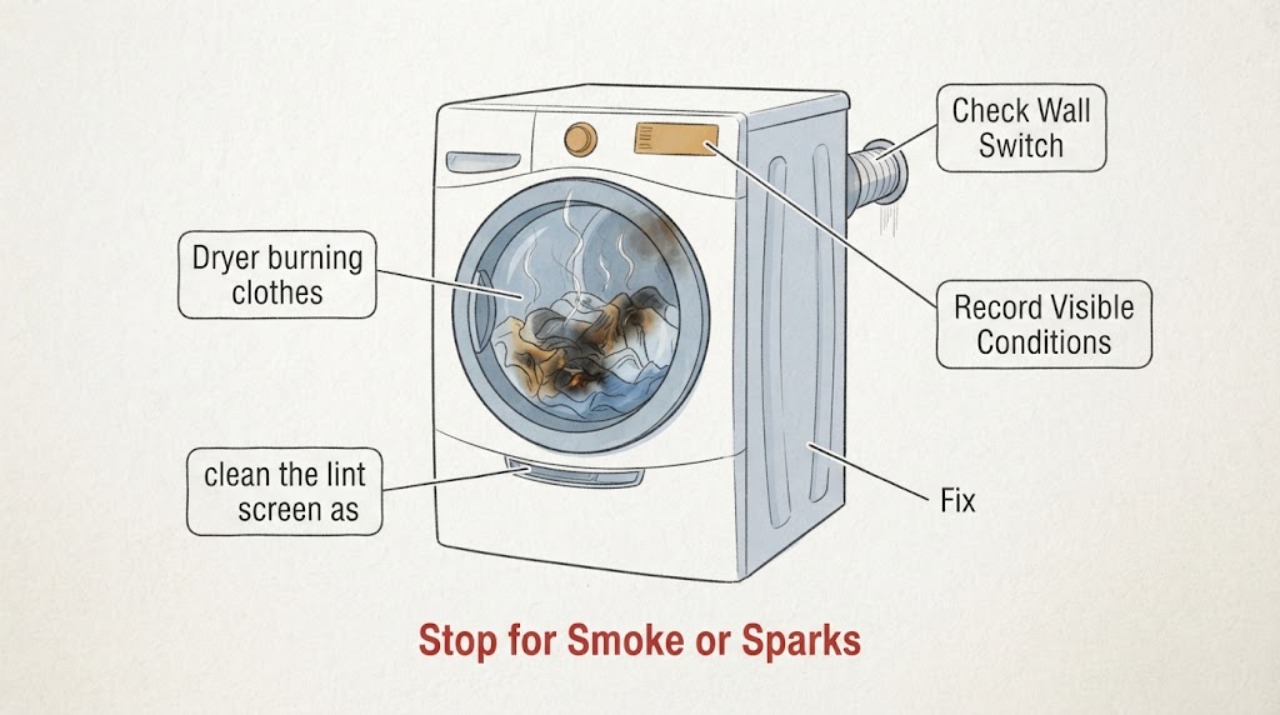
Stop the Electrolux dryer if clothing is scorched, smoking, melting, or producing a burnt smell, and do not run another test load. After the appliance is safely off and cool, separate a fabric-care or cycle-temperature problem from an airflow or appliance-safety problem: read the garment care label, use the model-supported cycle and temperature, clean the lint screen, and check the accessible exhaust path and hood for blockage. Electrolux says lint buildup can restrict airflow, and its dryer guidance warns that gas dryers must vent outdoors. If heat damage repeats on items that are dryer-safe, the vent is clear but the symptom persists, or there is smoke, flame, electrical odor, breaker activity, or a gas concern, keep the dryer out of service and arrange qualified service. Do not assume the heating element or replace it from the clothing damage alone.
Work through in order
Diagnostic checks
Use only checks that match the exact appliance or system and its official guide.
-
Check 1
Stop the dryer immediately if a garment is smoking, flaming, melting, strongly burnt-smelling, or repeatedly scorched; switch it off and disconnect power from a safe location after the drum has stopped, and keep people away if smoke or fire is present.
Expected result: There is visible smoke or flame, a continuing burnt or electrical odor, heat damage beyond one garment, a tripped breaker, or only an isolated mark with no ongoing odor.
Next step: Do not run another load or open the cabinet. For smoke or fire, follow local emergency guidance; otherwise keep the dryer out of service and arrange qualified service. Preserve the damaged items and note the cycle, temperature, load, and timing for the technician.
Why this matters
Why: Smoke, flame, ongoing odor, electrical activity, or repeated damage is an appliance-safety event. A single mark without an appliance warning still requires checking the garment label and cycle before any future use; it is not proof of a failed heater.
-
Check 2
When the load and dryer are cool, record the full model number, fuel type if known, cycle and temperature selected, the fabric-care label, where the garment was damaged, and whether the damage occurred once or on multiple loads.
Expected result: The item was marked low heat or no tumble dry, the selected cycle was Timed Dry or high heat, or a dryer-safe item was damaged under a normal model-supported setting.
Next step: Do not repeat a questionable fabric or high-heat cycle. Use the exact owner guide for the model; if a dryer-safe load was damaged correctly and the symptom repeats, stop using the dryer and arrange service.
Why this matters
Why: A label or selection mismatch can explain textile damage without proving an appliance failure. Repeated damage to suitable items under the correct setting is a stronger service signal, but still does not identify the heating element or another internal part.
-
Check 3
With the dryer off and cool, clean the lint screen as Electrolux directs and inspect the accessible exhaust duct, exterior hood, and surrounding clearance for lint, bends, restrictions, or blockage; do not remove panels or reach into the heater area.
Expected result: The lint screen is heavily coated, the duct or hood is visibly restricted, the dryer is enclosed without the required airflow, or the accessible path is clear.
Next step: Clean only the user-accessible lint screen and approved external path. Arrange authorized vent cleaning or service if the duct remains restricted; do not run a gas dryer without an outdoor exhaust path and do not use the dryer again after repeated scorching until evaluated.
Why this matters
Why: Restricted airflow can increase drying time and heat stress. A clear visible path reduces one external possibility but does not verify the internal temperature control or heating system.
-
Check 4
Check the load and cycle conditions without restarting the damaged load: sort similar fabrics, avoid an overloaded or nearly empty drum, and compare the selected setting with the garment label and the exact Electrolux guide.
Expected result: The load was too large or too small, fabrics were mixed, the cycle or temperature exceeded the label, or the load and setting were appropriate.
Next step: Correct only the load or setting issue for future undamaged items. If a correctly selected dryer-safe load was burned, do not use the dryer and arrange model-specific service.
Why this matters
Why: Electrolux says load size, free tumbling, fabric sorting, and cycle or temperature selection affect drying. Appropriate load and settings with continued heat damage leave an appliance or airflow fault unresolved.
-
Check 5
Record any displayed code or ventilation warning and compare it with the exact Electrolux model support page; do not convert a code into a heater, thermostat, or control diagnosis.
Expected result: The model shows EF1 or another ventilation-related code, an E4 humidity-sensor code, a power code, or no code.
Next step: Follow only the matching model guidance. If the warning persists, if the clothes continue to scorch, or if there is any smoke or electrical/gas concern, keep the dryer off and schedule service.
Why this matters
Why: Electrolux's code guide ties EF1 to checking the lint filter, exhaust tube, and vent exit, while E4 and power-related codes have different service paths; a code is model-scoped evidence, not a generic component verdict.
Use your observations
Decision map
Find the observation that best matches what you see, then follow the next safe action.
-
PATH 01Next step
What you see
There is smoke, flame, a continuing burnt or electrical odor, a gas concern, repeated breaker activity, or a second correctly selected load is damaged.
Do this next
Keep the dryer stopped and disconnected from a safe location, do not open the cabinet or reset it for another cycle, and arrange qualified appliance service; use emergency response for an active fire.
Why this path and its safety boundary
Why it matters: The risk is beyond a garment-care adjustment and the dryer should not be treated as safe to test.
-
PATH 02Next step
What you see
The damaged item is labeled no-tumble-dry or low-heat, and there is no smoke, persistent odor, or repeat damage from a dryer-safe load.
Do this next
Do not dry that item in the same way again. Follow the label and the exact Electrolux cycle-temperature guidance; stop and seek service if safe items are later damaged.
Why this path and its safety boundary
Why it matters: The available evidence points first to an incompatible textile or heat selection, not a confirmed dryer component failure.
-
PATH 03Next step
What you see
The lint screen or accessible exhaust path is blocked, kinked, or heavily coated with lint.
Do this next
Clean the lint screen and arrange authorized exhaust cleaning if needed. Do not operate a gas dryer without an outdoor exhaust path, and do not resume use after scorching until the safety concern is resolved.
Why this path and its safety boundary
Why it matters: Restricted airflow is a supported external explanation for poor drying performance and heat stress; it does not prove which internal part is affected.
-
PATH 04Next step
What you see
The load and label were appropriate, the selected temperature was model-supported, the visible lint and vent checks are clear, and clothes still scorch or overheat.
Do this next
Keep the dryer out of service and provide the model, cycle, load, damage photos, and timing to Electrolux or qualified service. Do not perform live measurements or replace an internal part by guesswork.
Why this path and its safety boundary
Why it matters: The external checks did not explain the symptom. The result does not identify a heating element, thermostat, sensor, control, or airflow component.
-
PATH 05Next step
What you see
The display shows EF1, E4, H2/B2, or another model-specific warning while the dryer is overheating or damaging clothes.
Do this next
Use the exact model code guide and stop if the code returns or damage continues. Arrange service rather than inferring a heater or control-board failure.
Why this path and its safety boundary
Why it matters: The warning narrows the support path only as defined for that Electrolux model; EF1 is associated with ventilation checks, while other codes have different meanings.
Helpful context
Understand the symptom
Treat scorching as a stop condition first
A damaged garment can result from an unsuitable fabric or cycle, but smoke, flame, a persistent burnt smell, melting, or repeated scorching can also indicate an unsafe dryer or restricted airflow. Stop the cycle and let the load and appliance cool from a safe position. Do not repeat the load to see whether it happens again, and do not open the cabinet to look for a heater fault.
Check fabric and heat selection separately from the appliance
Electrolux advises using the appropriate cycle and temperature, trying Auto Dry instead of Timed Dry when over-drying is the concern, and following the fabric label. A garment marked for low heat or no tumble drying should not be used to prove that the dryer is overheating. If heat damage occurs on a dryer-safe load at the model-supported setting, keep the appliance out of service while the airflow and service path are evaluated.
Airflow is a fire-safety boundary, not a heater diagnosis
Electrolux says lint buildup can block airflow, recommends cleaning the lint screen for each load, and directs owners to inspect the exhaust duct and vent hood. The exact exhaust and cleaning requirements depend on the model and installation; gas dryers must vent outdoors. A clear lint screen or visible hood does not prove that the internal heating system is safe, so repeated scorching still needs service.
When checks do not resolve it
Need a professional?
Stop using the dryer and arrange Electrolux or qualified service for smoke, flame, persistent burnt or electrical odor, repeated scorching, a blocked or inaccessible exhaust path, a ventilation or power warning that persists, or damage to dryer-safe items after correct cycle and label checks. Do not open the cabinet, live-test the heater or thermostat, bypass a thermal limiter, or choose a replacement heating element from the garment damage alone.
Common questions
FAQ
Does burned clothing prove the Electrolux dryer's heating element is bad?
No. A label or cycle-temperature mismatch, over-drying, load conditions, restricted lint or exhaust airflow, and other model-specific faults can produce related symptoms. If a dryer-safe load is repeatedly damaged, stop using the dryer and have the appliance diagnosed rather than replacing a heater from the symptom alone.
What should I check if the clothes are scorched but there is no smoke?
After the dryer is cool, compare the care label with the selected cycle and temperature, and check the lint screen and accessible exhaust path. Do not repeat the damaged load. If the settings and airflow are appropriate but safe items still scorch, arrange service.
Can I run the dryer with the lint screen removed to see whether it cools down?
No. Electrolux says not to operate the dryer without the lint screen in place because this could damage it. Clean the screen as directed and stop using the dryer if heat damage or a fire warning remains.
What does an EF1 warning mean on an Electrolux dryer?
In Electrolux's opened dryer code guide, EF1 points to a ventilation blockage check: lint filter, exhaust tube, and vent exit. Confirm the exact model before applying a code meaning, and arrange service if the warning or burning symptom persists.
Read the exact guide
Official sources
- Dryers - How often do I need to clean my dryer or the lint screen/filter to optimize my drying performance?Electrolux · Opened Electrolux's general dryer maintenance page. It supports lint and exhaust maintenance without authorizing internal disassembly.
- Dryer - Not Drying and Extended Drying TimeElectrolux · Opened Electrolux's general dryer support page. It supports external checks and model-conditioned ventilation guidance; it is not used to infer a heating-element failure.
- Laundry Dryer Error Code GuideElectrolux · Opened Electrolux's code guide. Codes are used conditionally and do not authorize a generic internal component diagnosis.
- My dryer is running, but does not seem to be heating. What should I do?Electrolux · Opened Electrolux's general dryer support page. It keeps electric and gas checks separate and supports ventilation and installation boundaries without a heater diagnosis.
- What should I do if my dryer stops operating?Electrolux · Opened Electrolux's general dryer support page. It supports stopping and service boundaries around overheating, without extending the thermal-limiter statement to the assigned model.
- My clothes seem to be over-dried. How can I prevent this?Electrolux · Opened Electrolux's general dryer support page. It supports textile-care and setting checks but does not diagnose an internal dryer component.
Community feedback
Share a repair observation
Share a plain-text repair observation. Accepted observations are published automatically; this page may take a moment to update.