
On this page
Start here
Quick answer
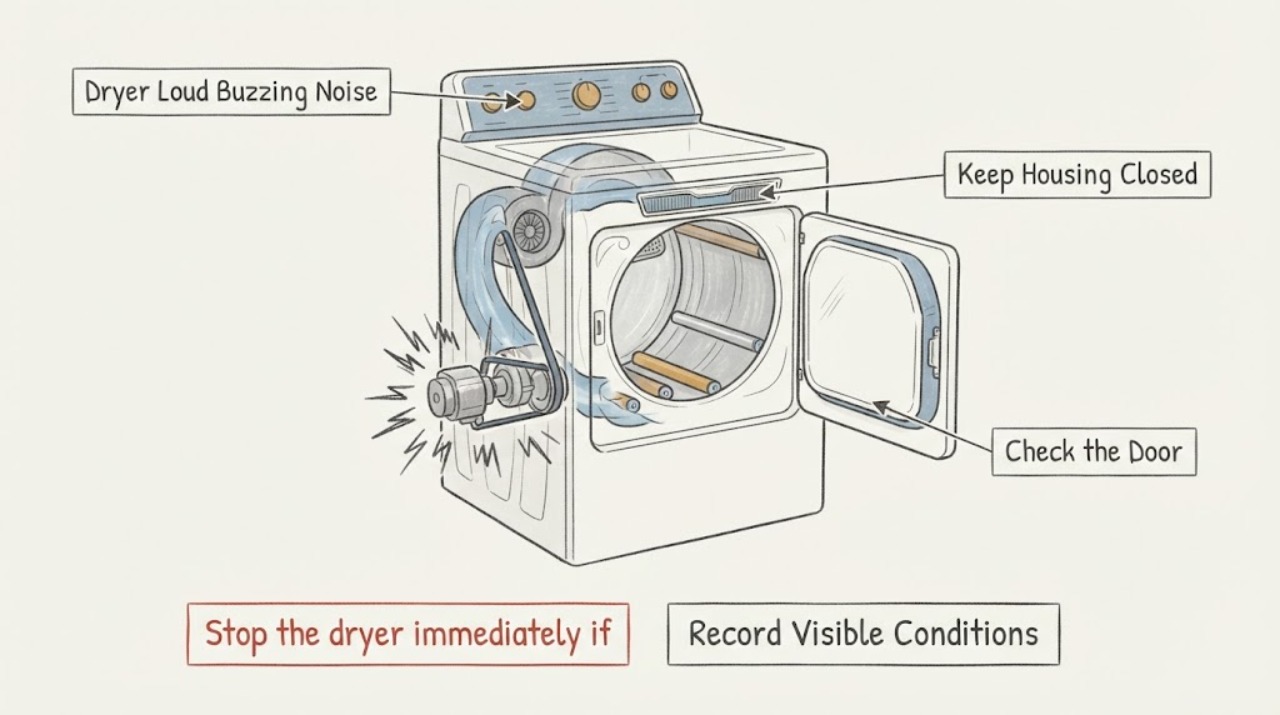
A loud buzz does not identify one failed Electrolux part when the model and sound timing are unknown. Stop the dryer if there is smoke, a burning smell, overheating, damaged wiring, or abnormal electrical noise. Otherwise, with the dryer stopped, note whether the buzz occurs during starting, tumbling, airflow, heating, or shutdown; check the drum for coins and clothing fasteners, and check for an object touching the cabinet, a loose pedestal, or an unlevel installation. Electrolux says some operating sounds can come from airflow, water valves, gas valves, or burners, and recommends an empty load only when it is safe to distinguish a garment/object noise from an appliance noise. If the buzz remains loud with the drum empty, or the dryer stops or overheats, use the exact model guide and arrange authorized service rather than opening the cabinet or guessing a motor, belt, blower, or other part.
Before you begin
Safety first
- Do not open the cabinet, perform live electrical tests, bypass a thermal or protective device, move a stacked dryer alone, or repeatedly run a dryer with smoke, burning odor, overheating, sparks, or damaged wiring.
Work through in order
Diagnostic checks
Use only checks that match the exact appliance or system and its official guide.
-
Check 1
Stop the dryer immediately if the buzz is accompanied by smoke, a burning smell, overheating, sparks, damaged wiring, or a hot electrical connection. From a dry, safe location isolate power only as the installation permits; do not restart the dryer to reproduce a hazardous sound.
Expected result: The dryer has a safety symptom, or it only has a loud sound without smoke, heat, odor, or visible electrical damage.
Next step: For any safety symptom, keep the dryer out of service and obtain qualified appliance/electrical help. If there is no hazard, continue only after the drum and surrounding surfaces are safe to inspect.
Why this matters
Why: Fire, shock, and overheating risks take priority over identifying the sound; a non-hazardous sound can be separated through stopped external checks.
-
Check 2
Record when the buzz starts and stops: before the drum turns, during tumbling, during airflow or heating, during a gas/steam phase if applicable, or after the cycle. Also note whether the sound is a steady electrical hum, a pulsing buzz, or accompanied by rubbing, rattling, or movement.
Expected result: The sound occurs only in a model-specific operating phase, follows the load, or remains loud in every phase and with no load.
Next step: Use the exact model's owner guide for the identified phase. If the sound is loud in every condition or is accompanied by heat, odor, or stopping, stop testing and arrange service.
Why this matters
Why: Electrolux documents several normal operating sound sources, but timing alone cannot identify a failed component for an unspecified model; persistence with an empty drum makes a laundry object less likely.
-
Check 3
With the dryer stopped, cool, and empty, inspect the accessible drum and door area for coins, fasteners, and other loose objects. Check pockets and secure or turn garments inside out before the next normal load; do not reach through a moving drum or remove guarded components.
Expected result: A foreign object or loose metal fastener is found, or the drum is clear and the noise was not visibly caused by the load.
Next step: Remove only the accessible object and use the garment-care guidance. If the drum is clear or the loud buzz returns, use the empty-load comparison only when safe and permitted by the exact manual; otherwise arrange service.
Why this matters
Why: Electrolux identifies coins and clothing fasteners as causes of rattling or clanking; finding one explains a load-related noise but does not prove the dryer is otherwise fault-free.
-
Check 4
Inspect the external installation with the dryer stopped: look for a pedestal or stacked installation that is loose, an object touching the cabinet, visible rocking, or an unlevel floor. Follow the exact use-and-care or installation instructions for any permitted leveling or installation correction; do not move a stacked dryer alone.
Expected result: The cabinet rocks, the pedestal/stacking arrangement is loose, an object contacts the cabinet, or the installation is stable and level.
Next step: Correct only the accessible installation condition covered by the exact instructions and stop if the appliance is unstable. If it is level and secure but the buzz persists, do not open the cabinet; arrange service.
Why this matters
Why: Electrolux links clanking/squeaking to a loose pedestal and vibration/walking to installation or leveling conditions; a stable setup does not diagnose an internal buzzing source.
-
Check 5
Prepare the full model and serial, dryer type (electric, gas, steam, condenser, or other if known), cycle phase, load/empty-load result, sound description, installation checks, run time, drying result, and any heat, odor, smoke, or electrical observations for the service provider.
Expected result: The buzz remains loud with an empty drum, the dryer stops, the motor appears overheated, drying changes, the installation is unstable, or any safety symptom remains.
Next step: Keep the dryer out of service when it overheats, stops, smells burnt, or has electrical damage, and arrange authorized Electrolux service. Do not open panels, perform live electrical tests, or order a motor, belt, blower, roller, or valve from the noise alone.
Why this matters
Why: Electrolux directs unresolved dryer noise to service and says overload-related overheating that does not resolve after cooling/reducing the load needs an authorized provider; the no-model task cannot select a failed part.
Use your observations
Decision map
Find the observation that best matches what you see, then follow the next safe action.
-
PATH 01Next step
What you see
The buzz is absent with an empty drum and a coin, fastener, or other loose item was found in the load.
Do this next
Remove the accessible item, secure the garment fasteners, and monitor a normal load. Escalate if a loud buzz returns with no loose item or any hazard appears.
Why this path and its safety boundary
Why it matters: The observation is consistent with Electrolux's documented load-related noise causes rather than a confirmed dryer component failure.
-
PATH 02Next step
What you see
The sound is a model-appropriate operating sound and there is no smoke, burning odor, overheating, electrical damage, or abnormal stopping.
Do this next
Use the exact owner guide to confirm the sound for that model and continue monitoring. Stop use if it becomes loud, changes character, or is accompanied by heat, odor, or movement.
Why this path and its safety boundary
Why it matters: Electrolux lists airflow and, where fitted, valve and burner sounds among normal dryer operating sounds; the description does not establish a fault.
-
PATH 03Next step
What you see
The buzz remains loud with an empty drum after objects are removed, or the dryer walks, vibrates, or has a loose pedestal/unstable installation.
Do this next
Stop further testing, correct only a safe documented installation issue, and arrange authorized Electrolux service with the model information.
Why this path and its safety boundary
Why it matters: A persistent appliance noise or installation problem remains; Electrolux directs unresolved noise to the installer or service and does not provide a universal internal buzzing diagnosis here.
-
PATH 04Next step
What you see
The dryer overheats, stops, smells burnt, shows damaged wiring, or the buzz is accompanied by sparks or other electrical danger.
Do this next
Keep the appliance out of service, isolate power only from a dry safe location when appropriate, and obtain qualified appliance/electrical help. Do not restart or bypass a thermal or protective device.
Why this path and its safety boundary
Why it matters: The priority is fire, shock, and appliance safety rather than sound isolation; Electrolux identifies overheating that does not resolve after cooling/reducing load as a service matter.
Helpful context
Understand the symptom
Buzzing is a symptom, not a confirmed part failure
Electrolux's general dryer guidance lists several operating sounds, including airflow and, on applicable models, water-valve, gas-valve, and gas-burner sounds. A loud buzz can therefore not be assigned to a motor, blower, belt, roller, valve, or electrical component from the description alone. Record when the sound begins and whether it changes with a load, then use the external checks below.
First separate the load from the appliance
Electrolux says coins and other foreign objects in the drum, along with belt buckles or other metal fasteners on clothing, can create dryer noises. With the dryer stopped, remove accessible objects and secure or turn garments as appropriate. If no hazard is present and the model instructions allow it, an empty load can show whether the sound follows the appliance rather than the laundry. A buzz that remains loud with an empty drum needs model-specific support, not a guessed replacement part.
When checks do not resolve it
Need a professional?
Arrange authorized Electrolux service when a loud buzz remains with an empty drum, the dryer stops or overheats, the installation remains unstable, the noise is accompanied by smoke/burning odor/electrical damage, or the source cannot be safely isolated.
Safety scope: Do not open the cabinet, perform live electrical tests, bypass a thermal or protective device, move a stacked dryer alone, or repeatedly run a dryer with smoke, burning odor, overheating, sparks, or damaged wiring.
Have this ready
- Full model and serial, country/region, dryer type, cycle phase, loaded versus empty result, sound description or safe recording, pedestal/leveling status, run time, drying result, and any odor, smoke, heat, stopping, or electrical observation.
Common questions
FAQ
Is a buzzing sound from an Electrolux dryer always a bad motor?
No. Electrolux lists airflow and, on applicable models, water-valve, gas-valve, and gas-burner sounds among normal operating sounds. A loud buzz that persists with an empty drum, changes character, or comes with overheating or stopping needs model-specific service rather than a guessed motor diagnosis.
What can I check before calling for service?
Stop the dryer and check the accessible drum for coins or clothing fasteners, then note whether the sound remains with an empty load if it is safe and allowed by the exact manual. Check for a loose pedestal, an object touching the cabinet, or an unlevel installation. Electrolux directs unresolved noise to the installer or service.
Should I keep running a dryer that buzzes loudly?
Do not keep testing it if the buzz is accompanied by smoke, burning odor, overheating, sparks, damaged wiring, abnormal stopping, or unsafe movement. If the sound remains loud with an empty drum after the safe external checks, stop further testing and arrange authorized service.
Read the exact guide
Official sources
- What should I do if my dryer stops operating?Electrolux Canada · Opened Electrolux official support page used only for the overheating/stop-use and service boundary. It does not diagnose the assigned buzzing symptom or authorize internal testing.
- Is it normal for my dryer to make sounds or noises?Electrolux Canada · Opened Electrolux official dryer support page. It supports checking clothing fasteners and foreign objects, a safe empty-load comparison, normal operating sound categories, and service escalation; it does not identify a buzzing component for an unspecified model.
- Laundry Dryer NoisesElectrolux Canada · Opened Electrolux official dryer noise guide. It supports external checks for objects, fasteners, pedestal looseness, vibration, and leveling; it is not treated as a universal internal repair procedure.
Community feedback
Share a repair observation
Share a plain-text repair observation. Accepted observations are published automatically; this page may take a moment to update.