
On this page
Start here
Quick answer
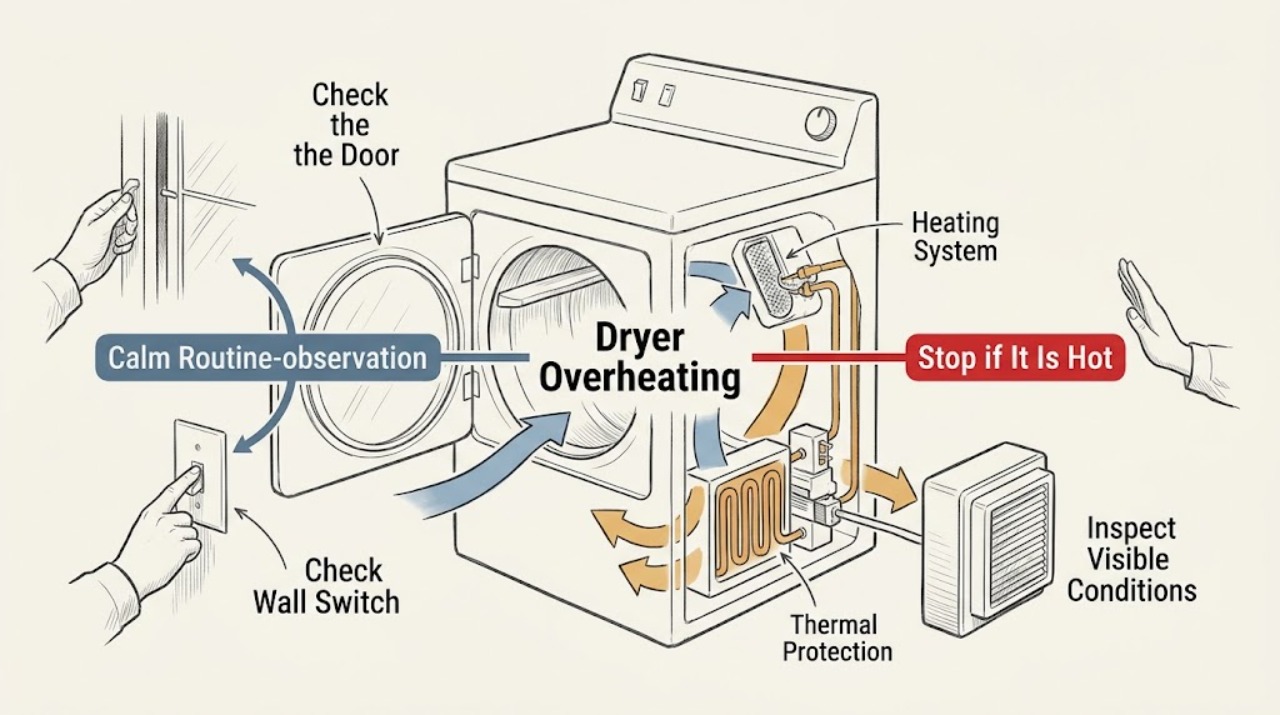
If an Electrolux dryer is unusually hot, smells scorched, produces smoke, or stops from heat, stop the cycle and let it cool before touching or inspecting it. A blocked lint screen, exhaust duct, or outside hood can trap heat; an overloaded drum, poor room ventilation, or a wrong cycle can also contribute. Clean only the accessible lint and exhaust areas with the dryer off and cool, and follow the exact model's error-code guidance. If overheating returns, airflow remains weak, a thermal protection device has operated, or there is any burning, gas, smoke, wiring, or fire symptom, leave the dryer disconnected and arrange qualified service.
Work through in order
Diagnostic checks
Use only checks that match the exact appliance or system and its official guide.
-
Check 1
Stop the cycle immediately if the cabinet is unusually hot, clothing is scorching, a burning or electrical smell is present, smoke appears, or the dryer stops with a heat-related symptom. From a safe distance, note whether the smell is lint-like, chemical, hot rubber, gas, or electrical; do not open the door if smoke or fire is present unless the situation requires emergency action.
Expected result: There is only normal warm exhaust, or there is scorching, smoke, fire, gas smell, sparking, damaged wiring, or severe abnormal heat.
Next step: For any safety symptom, leave the dryer off and follow the stop conditions. If there is no safety symptom and the machine is cool, continue to Action 2.
Why this matters
Why: Normal warm exhaust alone is not proof of overheating. A safety symptom can indicate fire risk, gas risk, wiring damage, friction, or failed thermal protection and is not a user-cleaning diagnosis.
-
Check 2
After the dryer has cooled, switch it off and disconnect it using the normal accessible method. Remove the lint screen, clear lint, and wash it only if the model guidance permits; dry it completely and reinstall it before any retest. Do not operate the dryer without the lint screen.
Expected result: The screen is visibly packed, coated with residue, damaged, or clean and undamaged.
Next step: If lint or residue was present, clean and dry the screen, then continue to Action 3. If the screen is damaged or cannot seat correctly, stop using the dryer and arrange the model-specific replacement or service.
Why this matters
Why: Packed lint or residue can reduce airflow and contribute to retained heat. A clean screen does not prove the exhaust path is clear, especially if lint returns quickly or drying has become slow.
-
Check 3
With the dryer cool and disconnected, inspect the accessible exhaust tube for crushing, sharp bends, lint accumulation, or a loose connection. During a later supervised normal cycle, observe from outside whether the approved exterior hood opens and air exits; do not reach into a moving drum or dismantle a wall duct.
Expected result: The duct is kinked or restricted, the outside hood is blocked or does not open, airflow is weak, or the accessible path appears clear.
Next step: Correct only an obvious accessible restriction with the dryer off and cool. Use authorized vent cleaning for a concealed or recurring blockage; a gas dryer must have an exhaust duct vented outdoors before operation.
Why this matters
Why: A restricted exhaust path prevents heat and moisture from leaving and can cause overheating. A clear visible section does not rule out a concealed restriction or internal airflow fault.
-
Check 4
Confirm that the load is not tightly packed and that the dryer has the model-required space around it. Compare only after the machine is cool, using a correctly sized load of similar fabrics and the cycle and temperature intended for those fabrics. Keep laundry, rugs, and other items away from the dryer openings.
Expected result: The original load was overloaded, the dryer was enclosed or blocked, or a normal load and clear installation still produce excessive heat.
Next step: If the issue improves with a suitable load and clear space, monitor the dryer. If it remains hot or stops again, do not continue testing; proceed to Action 6.
Why this matters
Why: Overloading and poor room ventilation can make heat and moisture removal less effective. Persistent excessive heat with a normal load and clear surroundings points beyond a user setting or load issue.
-
Check 5
Record the exact display code, warning, or stop behavior after the dryer has cooled. Use the Electrolux guide for the exact model and code; do not clear a recurring code by repeatedly restarting, opening the cabinet, or bypassing a thermal or door safety device.
Expected result: The display identifies ventilation blockage, humidity-sensor failure, wiring or power trouble, or no code is shown even though the dryer overheats or stops.
Next step: Clear only an accessible ventilation restriction and retest once if there are no safety symptoms. For a persistent code, repeated stop, or no-code overheating, leave the dryer out of service and arrange help.
Why this matters
Why: A ventilation code supports the lint and exhaust branch. Sensor, wiring, power, or recurring no-code overheating needs qualified diagnosis because the display cannot prove the internal cause.
-
Check 6
If the dryer stopped from heat, allow it to cool fully without opening the cabinet. Note whether it restarts normally after a reduced load and clear airflow, or whether the motor stops again, the cabinet becomes unusually hot, the smell returns, or a thermal protection or other code recurs.
Expected result: The dryer recovers once after a clear, correctly sized load, or the heat symptom returns or the machine stops again.
Next step: If heat returns or the dryer stops again, disconnect it and arrange authorized service. Provide the model, code, load, smell, airflow, and timing; do not replace or bypass internal safety parts yourself.
Why this matters
Why: One event that follows an overloaded load may fit Electrolux's motor-overheat guidance. A repeat event can involve a thermal limiter, motor, heater, blower, wiring, supply, or concealed airflow fault and cannot be safely narrowed by resets.
Use your observations
Decision map
Find the observation that best matches what you see, then follow the next safe action.
-
PATH 01Safety boundary
What you see
Is there smoke, fire, scorching, a burning or electrical smell, gas smell, sparking, damaged wiring, or severe abnormal heat?
Do this next
Stop the dryer, keep clear of hot or damaged surfaces, disconnect it only if safe, and arrange appropriate emergency or qualified appliance help. Do not restart it for a test.
Why this path and its safety boundary
Safety stop: Continue with the cool lint, exhaust, load, and display checks.
-
PATH 02Safety boundary
What you see
Is the lint screen, exhaust tube, or exterior vent exit visibly restricted?
Do this next
Clean the accessible screen and clear only an accessible external restriction with the dryer off and cool. Arrange authorized vent cleaning for a concealed or recurring blockage.
Why this path and its safety boundary
Safety stop: Continue with load, room ventilation, error-code, and service checks; a clear visible path does not prove the internal path is clear.
-
PATH 03Safety boundary
What you see
Did the dryer stop or overheat only after an overloaded drum or blocked installation, then recover when cool?
Do this next
Use a correctly sized load and keep the required clearance, then monitor closely. If heat or stopping returns, stop and arrange service.
Why this path and its safety boundary
Safety stop: Treat repeated heat or stopping as a possible motor, limiter, heater, airflow, or supply fault and do not continue reset testing.
-
PATH 04Safety boundary
What you see
Does the display show a ventilation, sensor, wiring, power, or other recurring code?
Do this next
Follow only the exact Electrolux code guidance. Clear accessible lint or vent restrictions; wiring, supply, sensor, and persistent-code work belongs to qualified service.
Why this path and its safety boundary
Safety stop: A no-code overheating event still requires service when it recurs or persists after the user-safe airflow and load checks.
-
PATH 05Safety boundary
What you see
Is this a gas dryer without a confirmed outdoor exhaust, or is there a gas smell?
Do this next
Do not operate it. Move away from a gas smell without creating an ignition source and contact the appropriate qualified gas or appliance service.
Why this path and its safety boundary
Safety stop: Continue only with the user-safe lint, exhaust, load, and display observations.
Helpful context
Understand the symptom
Treat overheating as a safety symptom first
Warm air at the outlet is part of drying; an unusually hot cabinet, scorching smell, smoke, melted material, or heat that continues after the cycle is not a normal performance complaint. Stop the cycle, keep clear of hot surfaces, and let the machine cool. Do not restart it simply to see whether the symptom repeats. The safe diagnosis starts with airflow and load conditions and stops before electrical, gas, heater, motor, or thermal-limit components.
Airflow carries heat out of the dryer
Electrolux identifies a blocked lint filter, restricted exhaust tube, or blocked vent exit as a ventilation problem. A closet or under-counter installation can also limit ventilation. After the dryer is cool and disconnected, clean the lint screen and inspect accessible duct and hood areas. A concealed wall blockage, recurring lint build-up, or an inaccessible duct should be handled by authorized vent service.
A heat-protection stop is not a reset invitation
Electrolux notes that an overloaded dryer can overheat the motor and that a thermal limiter may stop an electric dryer during an overheated situation. Allowing the machine to cool and reducing a load may help isolate a load-related event, but a repeat stop or a dryer that remains hot needs service. Do not bypass a thermal limiter or open the cabinet to reach the motor or heater.
Safety boundary
Stop conditions
- Stop immediately for smoke, fire, scorching, burning or electrical smell, gas smell, sparking, damaged wiring, severe abnormal heat, or melted material.
- Do not restart an overheating dryer to reproduce the symptom, bypass a thermal limiter or door safety, open the cabinet, or perform live electrical or gas tests.
- Do not operate a gas dryer without an exhaust duct that vents outdoors, and do not use a damaged lint screen or obstructed vent path.
- If overheating, weak airflow, a recurring stop, or an error code remains after the user-safe checks, leave the dryer disconnected and arrange qualified service.
When checks do not resolve it
Need a professional?
Arrange Electrolux or qualified appliance service when overheating returns, the dryer stops from heat, the cabinet becomes unusually hot, a thermal protection device may have operated, a ventilation or sensor code persists, airflow remains weak after accessible cleaning, or any burning, gas, smoke, electrical, or fire symptom occurs. Do not open the cabinet or continue reset testing.
Common questions
FAQ
Why is my Electrolux dryer overheating?
Start with airflow: clean the lint screen and inspect the accessible exhaust tube and outside hood after the dryer is off and cool. Overloading, poor room ventilation, a wrong cycle, motor overheating, or thermal protection can also be involved; repeated heat requires service.
What should I do if my Electrolux dryer smells like it is burning?
Stop the cycle and leave the dryer out of service. Disconnect it only if safe, do not restart it, and arrange qualified appliance inspection. Smoke, scorching, sparks, damaged wiring, or fire require immediate safety action rather than cleaning.
Can a blocked vent make an Electrolux dryer overheat?
Yes. Electrolux identifies blocked lint, exhaust tubes, and vent exits as ventilation problems. Clean the accessible lint screen and check the accessible path with the dryer off and cool; use authorized vent cleaning for concealed or recurring restrictions.
Should I keep using an Electrolux dryer after it stops from overheating?
No if the stop repeats, the dryer remains unusually hot, a thermal protection device may have operated, or any smell, smoke, gas, or electrical symptom is present. Allow it to cool once for safe observation, then arrange service rather than bypassing protection or repeatedly restarting.
Read the exact guide
Official sources
- Dryer - Not Drying and Extended Drying TimeElectrolux · Electrolux dryer lint, load, moisture, ventilation, exhaust, and gas-dryer outdoor vent guidance
- Laundry Dryer Error Code GuideElectrolux · Electrolux laundry dryer ventilation, sensor, wiring, power, and display-code guidance
- What should I do if my dryer stops operating?Electrolux · Electrolux dryer motor overheating, load reduction, cooldown, and thermal protection guidance
- My dryer is running, but does not seem to be heating. What should I do?Electrolux · Electrolux dryer heating, electrical, gas, and ventilation service boundaries
Community feedback
Share a repair observation
Share a plain-text repair observation. Accepted observations are published automatically; this page may take a moment to update.