
On this page
Start here
Quick answer
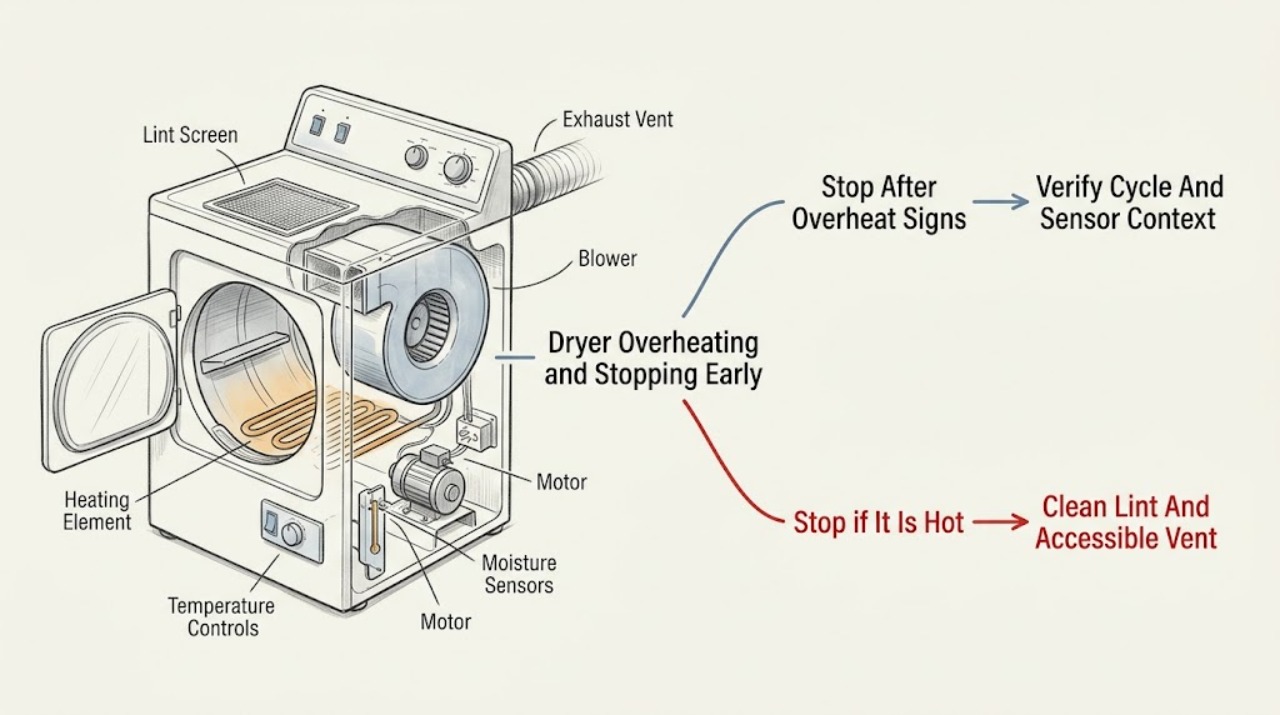
A dryer that becomes unusually hot and stops before the cycle ends may be protecting itself from restricted airflow, but an early stop can also be normal moisture-sensor behavior if the load is already dry. Stop the dryer if the cabinet or clothes are intensely hot, there is a burning smell, smoke, sparking, or a damaged cord. Once it is cool and safe, clean the lint screen, inspect the accessible vent and outside hood for blockage, and compare the symptom with the selected cycle and load. If airflow is normal yet overheating or early shutdown returns, leave the dryer off: a blower, motor, heating element, thermostat, thermal cutoff, sensor, or control requires qualified diagnosis. Do not bypass a safety device or open the cabinet to test energized parts.
Work through in order
Diagnostic checks
Use only checks that match the exact appliance or system and its official guide.
-
Check 1
Turn the dryer off and let it cool without restarting it if the cabinet or laundry is intensely hot, the room is unusually humid, or you notice a burning smell, smoke, sparking, melted material, or a hot or damaged cord. From a safe position, note whether the control shows a heating or vent warning and whether the drum stopped while the load was still wet.
Expected result: There is smoke, a burning odor, a spark, visible damage, a hot cord or outlet, repeated breaker action, or the dryer becomes merely warm and works normally after cooling.
Next step: For smoke, fire, sparking, gas odor, or electrical damage, leave the dryer off and contact appropriate emergency, gas, electrical, or appliance service from a safe location. If it only cooled after stopping, do not keep cycling it; continue with the cold-appliance airflow and cycle checks only after the machine is safe.
Stop if: Do not touch a hot or damaged cord, spray water on the appliance, open panels, or restart the dryer just to reproduce an overheating shutdown.
Why this matters
Why: Smoke, odor, electrical damage, or repeated protection action is an immediate stop condition and is not a routine airflow reset. A single warm housing without danger signs may be normal, but intense heat or a repeat shutdown indicates heat is not being removed or a protective component is intervening.
-
Check 2
With the dryer cool and no danger sign present, identify whether the early stop occurred on an Automatic or Sensor Dry cycle, a timed cycle, Air Fluff, Eco, or a low-temperature setting. Check the load for dry lightweight items mixed with heavy damp items, and inspect the two accessible moisture-sensor bars if the owner's manual identifies them; wipe residue with a soft cloth only when the dryer is off.
Expected result: The cycle ended with dry or mostly dry laundry and no excessive heat, the setting uses no or reduced heat, a small or mixed load contacted the sensors unevenly, or the machine stopped hot with damp laundry.
Next step: Use the model-approved cycle and load size, clean sensor residue only as the manual permits, and observe one normal load only if the dryer has no overheating or damage sign. If it becomes excessively hot or stops again, leave it off and investigate airflow or arrange service.
Stop if: Do not defeat a moisture sensor, run a hot cycle unattended, or continue testing after an overheating warning or abnormal odor.
Why this matters
Why: A dryness-sensor decision, no-heat setting, or mixed-load pattern can explain a short cycle without an overheating fault. A hot stop that leaves damp laundry is not explained by normal dryness detection and keeps airflow, motor, heating-control, and safety branches open.
-
Check 3
With the dryer off and cool, clean the lint screen as directed by the owner's manual. Look behind the appliance without forcing it for a crushed or sharply kinked hose, and check the outside exhaust hood for lint, debris, or a flap that cannot open freely. Do not disconnect a hot or difficult vent connection or push tools into the duct.
Expected result: The lint screen is coated, the hose is crushed or kinked, the exterior hood is obstructed, airflow is weak during a brief model-approved check, or the accessible path is clean and open.
Next step: Clean only the accessible screen and hood, restore a smooth vent route when it can be done without moving or opening the appliance, and have the full vent run professionally cleaned or inspected if restriction persists. Do not use the dryer again if the vent is damaged, heavily blocked, or overheating returns.
Stop if: Do not operate with a missing, loose, damaged, or blocked lint screen, and do not remove cabinet panels or bypass a vent or temperature safety.
Why this matters
Why: Lint or restricted exhaust can trap heat, extend drying, and cause a safety shutdown. A clean visible path does not prove that the hidden wall duct or blower is clear; persistent overheating with normal accessible airflow points to a service-level restriction or internal fault.
-
Check 4
Compare the event with the load and installation context: note whether the drum was tightly packed, whether items entered soaking wet, whether the dryer was recently moved or installed, and whether the plug, outlet, or gas connection is visibly damaged or disturbed. Check only from a safe, dry position and follow the model manual; do not test voltage or loosen wiring or gas fittings.
Expected result: The problem occurs only with a packed or very wet load, began after installation or movement, or occurs with normal loads despite a clear accessible vent; the visible cord, outlet, and supply condition are normal or damaged.
Next step: Use an appropriately sized load only after the dryer has passed the safety and airflow checks. Keep it off and use qualified electrical, gas, or appliance service for damaged or uncertain supply conditions, or for recurring overheating with normal loads.
Stop if: Do not reset a repeatedly tripping breaker, measure live voltage, open a terminal box, adjust a gas fitting, or move the appliance while it is hot.
Why this matters
Why: Excess moisture and restricted tumbling can lengthen a cycle, while an installation or supply problem can affect heating and controls. Repeated overheating with an appropriate load and normal visible supply makes an internal blower, motor, heating, temperature, or control fault more likely.
Use your observations
Decision map
Find the observation that best matches what you see, then follow the next safe action.
-
PATH 01Next step
What you see
The dryer ends early with dry or mostly dry laundry, normal warmth, and no odor, warning, or repeat heat buildup; the selected cycle is an automatic or sensor cycle.
Do this next
Use the manual's load guidance, clean accessible sensor bars as directed, and choose a suitable dry level or timed cycle when appropriate. If the dryer becomes intensely hot or leaves wet laundry while stopping, move to the airflow and service branches.
Why this path and its safety boundary
Why it matters: The dryness sensor may be ending the cycle as designed, especially with a small, lightweight, or mixed load, rather than the dryer overheating.
-
PATH 02Next step
What you see
The cabinet becomes very hot, the cycle stops before the load is dry, lint or the outside hood is blocked, the hose is crushed, or airflow is weak.
Do this next
Keep the dryer off until the accessible lint and vent issues are corrected. Arrange full vent cleaning or inspection when the restriction is hidden, persistent, or inaccessible, then stop using the machine if overheating remains.
Why this path and its safety boundary
Why it matters: Restricted exhaust is the leading accessible explanation: heat and moisture are not leaving efficiently, so the dryer may reduce heat or shut down for protection.
-
PATH 03Next step
What you see
The accessible lint screen, hood, and hose are clear, but the dryer repeatedly overheats or stops after running; airflow is weak, the blower sounds abnormal, or the motor stops and later runs again after cooling.
Do this next
Leave the dryer off and arrange qualified vent or appliance service. Give the technician the timing of the shutdown, airflow observation, noises, load condition, and whether cooling temporarily allows a restart.
Why this path and its safety boundary
Why it matters: A hidden vent obstruction, failing blower, or motor thermal overload is more likely than a load-selection issue. These components require access and diagnosis beyond ordinary user maintenance.
-
PATH 04Next step
What you see
The load and cycle are appropriate, visible airflow is normal, and overheating or a heat warning returns, or a damaged electrical connection, error, smoke, or burning odor is present.
Do this next
Stop using the dryer and obtain qualified appliance service; use a licensed electrician for a damaged cord, outlet, or uncertain supply. For smoke, fire, sparking, or gas odor, leave the area and contact emergency or utility support from a safe location.
Why this path and its safety boundary
Why it matters: A heating element, thermostat, thermal cutoff, sensor, control, wiring, or other internal fault may be allowing excess heat or false protection behavior. The symptom cannot identify a replacement part safely.
Helpful context
Understand the symptom
Separate a safety shutdown from a normal cycle ending
A normal automatic cycle can end early when its moisture sensing decides the selected dryness level has been reached. That is different from a dryer that feels intensely hot, smells burnt, shows a heating error, or stops and will only run again after cooling. Treat excessive heat as a safety symptom first; do not repeatedly restart the appliance to see whether it finishes.
Airflow is the first maintenance branch
The lint screen and exhaust path must move warm, moist air out of the dryer. Lint, a crushed hose, a blocked hood, or a failing blower can trap heat and cause poor drying or a protective shutdown. User checks stop at the accessible screen and vent openings; hidden vent cleaning and internal component diagnosis belong to qualified service.
Only after diagnosis
Potential parts
- dryer exhaust vent or lint-screen component
Only consider this category if inspection or qualified vent service confirms a damaged screen, crushed vent, or restriction that cannot be corrected with routine cleaning.
Confirm the exact dryer model and its installation and venting requirements before replacing or modifying any vent component. - dryer blower wheel or motor
Only consider this category when airflow remains weak or the motor or blower has abnormal behavior after the accessible vent path is clear and a technician confirms the fault.
Blower and motor parts are model-specific and require safe disassembly and installation by qualified service. - dryer thermostat thermal cutoff or heating element
Only consider this category when recurring overheating persists with appropriate load and confirmed airflow, and qualified diagnosis identifies the failed temperature or heating component.
Do not bypass or substitute a safety component; verify the exact model and have qualified service install the correct part.
When checks do not resolve it
Need a professional?
Stop using the dryer and arrange qualified appliance or vent service when overheating recurs after the lint screen and accessible vent checks, the dryer stops with damp laundry, the motor or blower sounds abnormal, a heating or temperature error returns, or diagnosis would require removing panels or testing energized parts. Use a licensed electrician for a hot, loose, or damaged cord or outlet, an uncertain supply, or repeated breaker trips. If there is smoke, fire, sparking, a strong burning smell, or gas odor, do not operate switches or attempt a restart; leave the area and contact emergency or utility support from a safe location.
Common questions
FAQ
Why does my dryer overheat and then stop before the cycle ends?
Restricted airflow from lint, a crushed hose, a blocked outside hood, or a hidden vent problem can trap heat and trigger a protective shutdown. A failing blower, motor, heating component, or temperature control is also possible. Stop using the dryer when it is intensely hot, clean only the accessible lint and vent areas after it cools, and arrange service if overheating returns.
Could a dryer stopping early be normal?
Yes, an Automatic or Sensor Dry cycle can stop when its sensors detect the selected dryness level, especially with a small or mixed load. That normal behavior should not involve intense heat, smoke, burning odor, or repeated shutdown after cooling. If damp laundry remains and the dryer is very hot, treat it as an overheating fault instead.
What should I check before replacing a dryer thermostat or heating part?
First document the shutdown and let the appliance cool. Check the selected cycle and load, clean the lint screen, inspect the accessible hose and outside hood, and note airflow, warnings, and unusual motor or blower sounds. If overheating persists with a clear vent path, have qualified service identify the failed part; do not bypass a thermal cutoff or open the cabinet to test it.
Read the exact guide
Official sources
- Why Does My Dryer Keep Stopping? 8 Possible ReasonsWhirlpool · Manufacturer overview of mid-cycle stopping from overheating, power, motor thermal overload, heating, door, and moisture-sensor conditions
- Clothes are not dry after using Samsung dryerSamsung · Manufacturer distinction between no heat, insufficient heat, short cycles, vent restriction, cycle settings, moisture sensors, and service escalation
- AF or "Check Vent" - DryerWhirlpool Product Help · Manufacturer restricted-airflow indicators, lint and vent checks, outside exhaust observation, and vent-service escalation
- Cycles, settings, and features on your Samsung dryerSamsung · Manufacturer description of Sensor Dry automatic stopping, Manual Dry timing, Air Fluff no-heat operation, and Eco Dry behavior
- Samsung dryer displays an error codeSamsung · Manufacturer temperature, heating, vent-blockage, and error-code service guidance for Samsung dryers
- Dryer Too HotWhirlpool Product Help · Manufacturer cycle, temperature-selection, lint-screen, vent, outside-hood, airflow, and service guidance for a dryer that is too hot
- How Hot Does a Dryer Get?Maytag · Manufacturer guidance on normal dryer warmth, overheating signs, automatic shutdown, lint and vent restrictions, blower, heating element, and crushed duct conditions
Community feedback
Share a repair observation
Share a plain-text repair observation. Accepted observations are published automatically; this page may take a moment to update.