
On this page
Start here
Quick answer
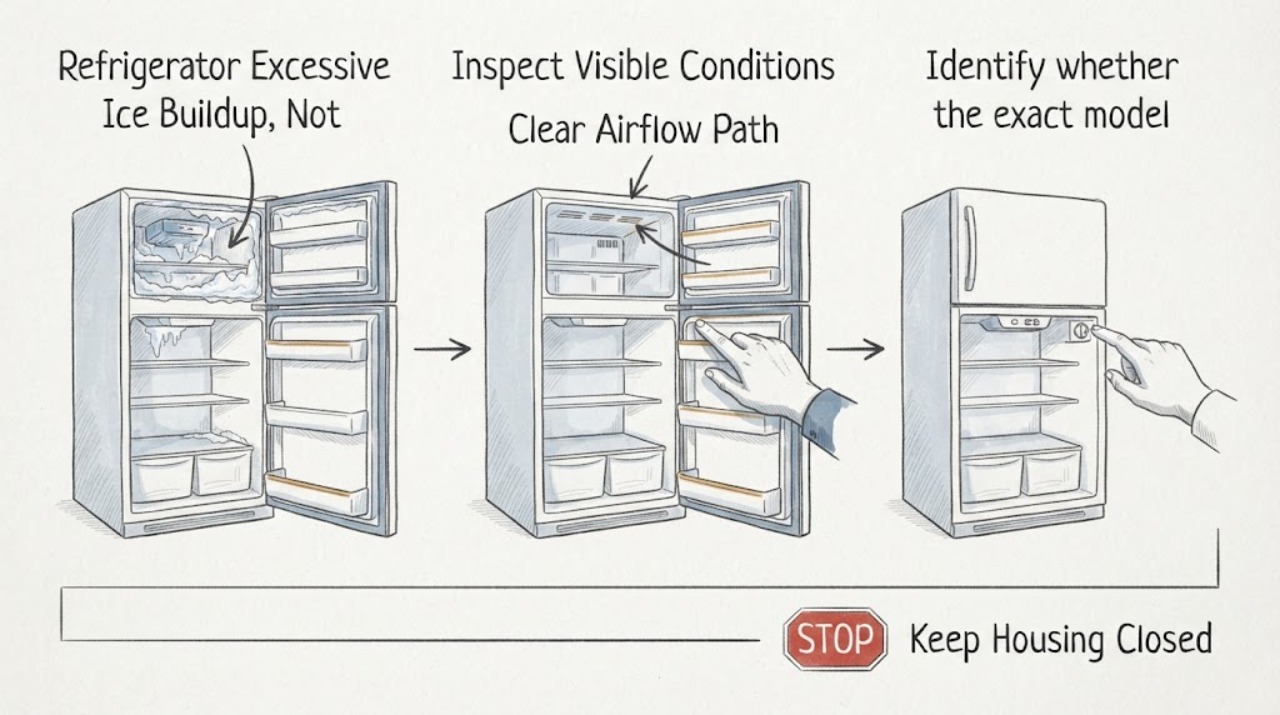
First protect food and identify where the ice is forming. A small amount of moisture or frost on a cold refrigerator back wall can be normal, but heavy ice that blocks vents, returns quickly, or accompanies softening food points to a door-seal, airflow, manual-defrost or technical problem. Check that doors close fully, the gasket is clean and intact, vents are clear, and settings match the exact model. If the appliance is a model that the manual permits the owner to defrost, switch it off, unplug it, remove food and let ice melt naturally; never chip ice with a knife or screwdriver or use a heater or hairdryer unless the manufacturer specifically approves it. If cooling does not recover after the model-supported defrost and external checks, frost rapidly returns, or food is thawing, arrange Electrolux service rather than opening the cooling system.
Before you begin
Safety first
- Do not use sharp tools, unapproved heaters, hairdryers or steam devices to remove ice; do not open panels, probe electrical parts, disturb sealed-system tubing or keep using the appliance when food is thawing or a safety symptom is present.
Work through in order
Diagnostic checks
Use only checks that match the exact appliance or system and its official guide.
-
Check 1
Protect temperature-sensitive food and map the ice before changing controls: note whether the ice is on the refrigerator back wall, freezer walls/edges, around vents, around a door seal, or around an internal fan area, and record the observed compartment temperature if available.
Expected result: The ice is a light back-wall film with stable cooling; it is a thick layer blocking vents; it returns quickly; or frozen food is softening or thawing.
Next step: For softening or thawing food, limit door openings, move vulnerable food to a suitable working appliance and arrange service promptly. For a light film without performance loss, continue with the external door and airflow checks.
Stop if: If the location or temperature is unclear, do not dismantle the appliance to find the source; record photos and the model/PNC for the exact manual or service.
Why this matters
Why: Light back-wall condensation can occur during normal cooling, while heavy or recurrent ice can restrict airflow or indicate warm moist air entering; thawing food means cooling performance is no longer reliable.
-
Check 2
Check the accessible temperature setting, door closure, gasket condition and visible airflow openings; clear food from the door and vents without moving internal panels.
Expected result: The setting was changed, a door or gasket does not seal, the door is blocked, or items cover vents; or these conditions are normal.
Next step: Restore only the model-supported temperature setting, clean the gasket with a damp cloth, clear the door and vents, and allow the appliance to stabilize. Replace or service a damaged/deformed seal rather than stretching it by force.
Stop if: If the door seals and vents are clear but cooling remains poor, continue to the frost-technology and defrost branch instead of diagnosing a sealed-system part.
Why this matters
Why: Electrolux links incorrect settings, frequent or prolonged openings, damaged or dirty seals and blocked vents with frost and unstable cooling.
-
Check 3
Identify whether the exact model is Low Frost, manual-defrost or No Frost from its manual or product label before attempting defrosting.
Expected result: The manual permits owner defrosting, the appliance is No Frost but has internal ice, or the technology cannot be identified.
Next step: Follow only the exact manual. For an applicable manual-defrost unit, disconnect power and let ice melt naturally. For No Frost or unknown technology with excessive internal ice, keep the appliance within the service boundary and do not remove panels.
Stop if: Do not chip, scrape, puncture or heat the ice. Obtain the full model/PNC and the correct manual first.
Why this matters
Why: Electrolux says Low Frost units may need occasional defrosting, while No Frost appliances should thaw ice automatically; an unidentified technology cannot safely be assigned a universal defrost or reset procedure.
-
Check 4
If the exact manual permits defrosting, switch the appliance off, unplug it, remove food and shelves/drawers as directed, leave the door open and allow the ice to melt naturally; wipe and dry the interior before restoring power.
Expected result: Ice melts without force and cooling returns after the model-supported stabilization period, or the ice does not clear, returns quickly or cooling remains poor.
Next step: Return food only after the appliance reaches the selected model-supported temperature. If performance does not recover or ice rapidly returns, stop repeating defrost cycles and arrange service.
Stop if: Do not use knives, screwdrivers, boiling water, heaters, hairdryers or steam devices unless the exact manufacturer instructions expressly approve them; keep the appliance disconnected and seek service if needed.
Why this matters
Why: A complete, safe defrost can temporarily restore airflow when frost was the obstruction, but rapid recurrence or persistent poor cooling suggests the appliance is not operating as intended and needs diagnosis.
-
Check 5
After the permitted external checks or defrost, monitor cooling and frost recurrence without opening panels; record model/PNC, temperature, ice location, door-seal result and time to recurrence.
Expected result: Cooling stabilizes and frost does not return; frost returns quickly; food thaws; or unusual noise, leakage or electrical symptoms appear.
Next step: For recurring frost, thawing food, persistent poor cooling, unusual noise, leak or electrical symptom, stop using the affected appliance as appropriate and arrange Electrolux or qualified service. Do not open the sealed cooling or electrical system.
Stop if: If cooling remains stable, keep doors closed as much as practical, avoid blocking vents and follow the exact manual's maintenance schedule.
Why this matters
Why: Stable cooling after a permitted defrost supports frost-related airflow restriction as a possibility but does not prove the root cause; recurrence, thawing or safety symptoms require professional diagnosis.
Use your observations
Decision map
Find the observation that best matches what you see, then follow the next safe action.
-
PATH 01Next step
What you see
A light film appears on the refrigerator back wall, the door seals and cooling remains stable.
Do this next
Keep warm food and frequent long door openings under control, keep the seal clean, and monitor rather than scraping the wall.
Why this path and its safety boundary
Why it matters: Electrolux says moisture can condense and freeze on the cold back wall during normal cooling, influenced by humidity and food temperature.
-
PATH 02Next step
What you see
Thick frost blocks vents or freezer airflow, the door was left open, the gasket leaks, or food blocks closure.
Do this next
Correct only visible door, gasket, setting and loading issues, then use the exact manual's defrost path if applicable. Service a damaged seal or persistent problem.
Why this path and its safety boundary
Why it matters: Warm moist air and restricted airflow can create frost and unstable temperature; the pattern does not prove a failed heater or compressor.
-
PATH 03Next step
What you see
The appliance is a Low Frost/manual-defrost model and the manual permits defrosting, with no electrical, leak or food-safety emergency.
Do this next
Unplug, remove food and let ice melt naturally as directed; never chip it or use unapproved heat. Reconnect only after the interior is dry and follow the stabilization period.
Why this path and its safety boundary
Why it matters: The ice may be restricting usable space or airflow and a natural, power-off defrost may restore performance.
-
PATH 04Next step
What you see
The appliance is No Frost or its technology is unknown, ice returns rapidly after a complete permitted defrost, or food is thawing and cooling remains poor.
Do this next
Protect food, limit door openings, keep panels and sealed-system parts closed, and arrange Electrolux or qualified service with the model and observations.
Why this path and its safety boundary
Why it matters: The automatic defrost, airflow or cooling system may require technical diagnosis, and continued thawing risks food loss.
Helpful context
Understand the symptom
Decide whether the ice is normal condensation or a cooling obstruction
Electrolux explains that moisture can condense and freeze on a refrigerator's cold back wall, especially with humid air or warm food. That is different from a thick layer that covers vents, returns rapidly, accompanies unstable temperature, or appears in a No Frost appliance. Frost can both signal warm moist air entering through a poor seal and restrict airflow; the location, amount and recurrence matter more than the word ice alone.
Check the door, seal and airflow before defrosting
A door left open, a dirty or damaged gasket, food blocking the door, and items covering vents can introduce moisture or prevent cold air circulation. Check only what is visible and accessible. Do not force a warped door, remove panels or treat an ice pattern as proof of a failed defrost heater, fan or refrigerant circuit.
Defrost only within the exact model's instructions
Electrolux's defrosting guide says to disconnect power, remove food and let ice melt naturally for an applicable fridge or fridge-freezer, then dry the interior before restoring power. It warns against knives, screwdrivers and unapproved heaters or hairdryers because they can damage the appliance or cooling system. No Frost appliances normally prevent this buildup automatically, so recurring internal ice should move to the service branch rather than a repeated improvised defrost.
When checks do not resolve it
Need a professional?
Arrange Electrolux or qualified refrigerator service when food is thawing, cooling does not recover after the exact manual's external checks or permitted defrost, frost rapidly returns, a gasket is damaged, ice is inaccessible behind panels, or there is unusual noise, water leakage, electrical damage or repeated temperature loss. Do not pierce ice, open the cooling system or live-test internal components.
Safety scope: Do not use sharp tools, unapproved heaters, hairdryers or steam devices to remove ice; do not open panels, probe electrical parts, disturb sealed-system tubing or keep using the appliance when food is thawing or a safety symptom is present.
Common questions
FAQ
Is frost on the back wall of an Electrolux refrigerator always a fault?
No. Electrolux says moisture can condense and freeze on the cold back wall during normal cooling. Heavy ice that blocks airflow, returns quickly or accompanies poor cooling needs the door, vent, frost-technology and service checks described here.
Can I scrape ice from my Electrolux refrigerator with a knife?
No. Electrolux specifically warns against knives, screwdrivers and other sharp objects because they can damage the appliance or cooling system. Disconnect power and use only the exact manual's natural-defrost procedure.
Should a No Frost Electrolux refrigerator have heavy ice buildup?
No Frost appliances should normally thaw ice automatically. If significant internal ice persists or returns, do not assume a manual defrost or a failed part is universally appropriate; use the exact manual and arrange service if cooling is affected.
What if the refrigerator is not cooling and frozen food is thawing?
Treat that as an urgent performance problem: limit door openings, protect the food in a suitable working appliance, and arrange professional service if settings, seal and model-permitted external checks do not restore cooling. Do not open the cooling system.
Read the exact guide
Official sources
- There is frost or ice on the sides and edges of my freezerElectrolux · Electrolux freezer families in the support article; applied only to the freezer compartment and not to an unidentified model's internal parts.
- How to Defrost a Fridge or Freezer SafelyElectrolux · Electrolux fridge-freezer and freezer families covered by the defrost guide; exact model and frost technology must be checked first.
- Freezer Tips: Expert Repair & Maintenance AdviceElectrolux · Electrolux freezer and freezer-compartment concerns; used here for the freezer portion of a refrigerator/fridge-freezer without transferring model-specific parts or codes.
- Refrigerators - Not CoolingElectrolux · Electrolux refrigerator families covered by the owner support article; exact model and region are not supplied.
- Why is my fridge frosting up?Electrolux · Electrolux freestanding and built-in fridge/fridge-freezer families; exact model is not supplied.
Community feedback
Share a repair observation
Share a plain-text repair observation. Accepted observations are published automatically; this page may take a moment to update.