
On this page
Start here
Quick answer
Electrolux documents hissing or sizzling during defrost when water drips onto the defrost heater, followed by possible popping after defrost. It also says popping or cracking when the compressor starts can come from metal expansion and contraction or refrigerant circulation and may level off as the appliance runs. First record whether the sound follows defrost, compressor startup, ice making, dispensing, or a door event, then check only external installation and airflow issues. If the sound is severe or worsening, the refrigerator is not cooling, or there is a burning smell, smoke, refrigerant or water leak, stop trying to reproduce it and arrange service.
Before you begin
Safety first
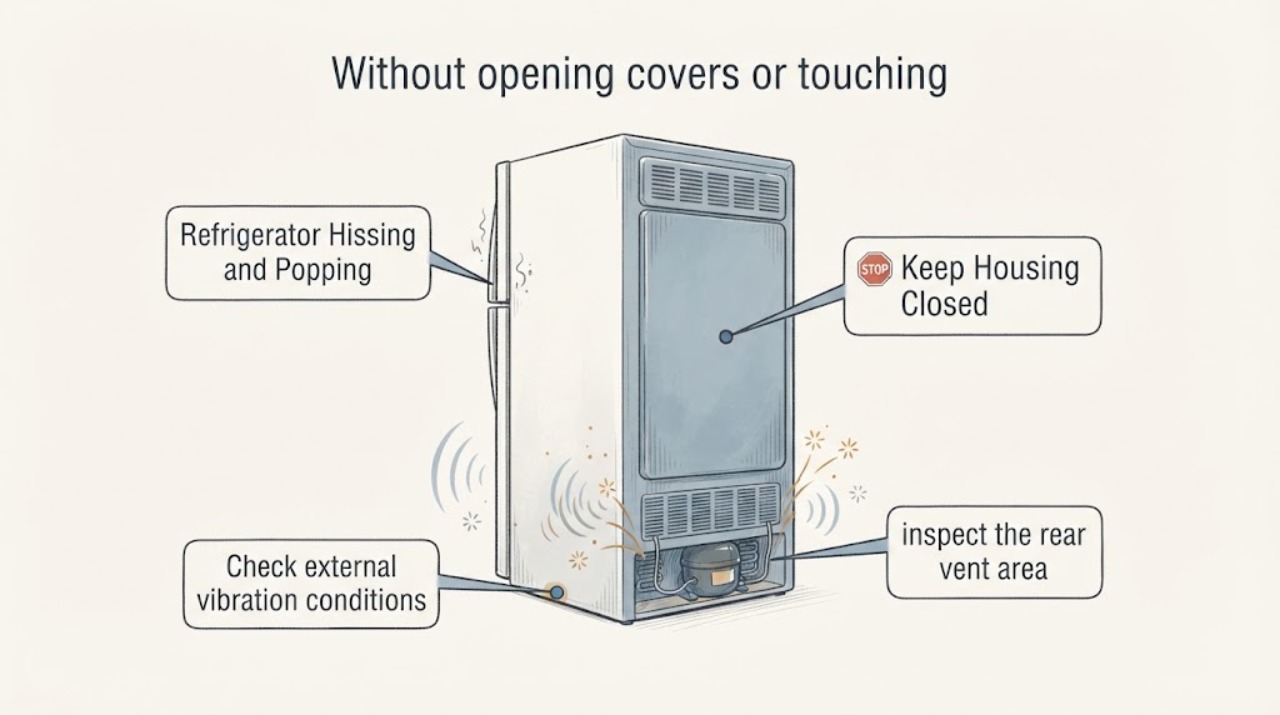
- Do not remove cabinet covers, touch the compressor or defrost heater, open the refrigerant circuit, or test live wiring to diagnose a sound. Stop repeated testing for smoke, burning smell, leak, severe noise or cooling loss.
Work through in order
Diagnostic checks
Use only checks that match the exact appliance or system and its official guide.
-
Check 1
Without opening covers or touching moving parts, note whether the hissing or popping happens during defrost, at compressor startup, during ice making/dispensing, or at another repeatable time.
Expected result: The sound follows a known cycle event, appears randomly, or is accompanied by cooling loss, water, odor, smoke or visible damage.
Next step: Use the matching branch below. Do not force a cycle to reproduce the sound; stop and arrange service for the hazard or performance result.
Why this matters
Why: Timing can match a documented operating sound, but a sound alone does not prove a compressor, heater, valve or refrigerant failure.
-
Check 2
Check external vibration conditions: the refrigerator is level, does not touch the wall, has no objects on top, and stored items are not rattling against shelves or bins.
Expected result: The cabinet rocks, touches the wall, has an item on top, or the sound changes after items are repositioned; or none of these conditions is present.
Next step: Correct the external condition according to the model instructions. If hissing/popping remains severe or unusual, keep the refrigerator closed and contact service.
Why this matters
Why: Electrolux identifies these external conditions as causes of vibration or rattling, but correcting them does not diagnose an internal noise source.
-
Check 3
If the sound is accompanied by a warmer compartment or unusually long running, inspect the rear vent area from outside for dust or blockage and verify the unit is not pushed too close to the wall.
Expected result: Airflow is restricted, or the vent and clearance appear normal while cooling is still abnormal.
Next step: Use the model manual for safe cleaning and clearance. If temperature does not recover or the sound persists, arrange service and protect perishable food.
Why this matters
Why: Electrolux says restricted airflow can make the refrigerator work harder. It does not establish that a noise with cooling loss is only an airflow issue.
-
Check 4
If the sound occurs only during ice making or dispensing, check the timing against ice production, water-valve fill, fan operation or dispenser use without reaching into the mechanism.
Expected result: The sound is limited to ice operations, or it also occurs when the ice maker and dispenser are idle.
Next step: Use the exact model guide for ice-maker settings. Do not order a valve, fan or dispenser part from the sound description alone; call service if the sound is harsh, continuous or accompanied by poor cooling or leakage.
Why this matters
Why: Electrolux lists ice-maker, water-valve, refrigerant-gas and dispenser-solenoid sounds as possible operating sounds; the same noise outside those events needs a broader assessment.
-
Check 5
Prepare a service handoff with the full model, sound recording, timing, compartment temperatures, recent installation or move history, external vibration result, airflow condition and any water or electrical symptom.
Expected result: The sound is new, worsening, severe, continuous, not tied to a documented cycle, or the refrigerator is not cooling normally.
Next step: Keep doors closed to protect food, avoid removing covers or testing wiring/refrigerant components, and contact Electrolux or qualified appliance service.
Why this matters
Why: The family noise guidance cannot safely identify an internal or sealed-system fault from sound alone.
Use your observations
Decision map
Find the observation that best matches what you see, then follow the next safe action.
-
PATH 01Next step
What you see
Hissing or sizzling occurs during defrost and a short popping sound follows, while the refrigerator continues cooling normally and there is no smoke, leak or burning smell.
Do this next
Monitor without forcing another cycle. Use service if the sound becomes severe, remains continuous, or is joined by cooling loss or a hazard.
Why this path and its safety boundary
Why it matters: This pattern matches Electrolux's documented defrost-heater and temperature-change explanation.
-
PATH 02Next step
What you see
A brief pop or crack occurs when the compressor starts and the sound levels off as the refrigerator runs, with stable temperatures and no visible damage.
Do this next
Do not open the compressor area. Record the event and seek service if it becomes louder, frequent outside startup, or affects cooling.
Why this path and its safety boundary
Why it matters: Electrolux says metal expansion/contraction or refrigerant circulation can cause this startup sound.
-
PATH 03Next step
What you see
The sound appears only during ice making, water-valve fill or ice dispensing and does not occur while those systems are idle.
Do this next
Check the model guide for ice-maker operation and settings. Escalate if there is a leak, no ice/water, a harsh continuous sound or poor cooling.
Why this path and its safety boundary
Why it matters: The timing is consistent with Electrolux's listed ice-maker, valve, fan, refrigerant-gas or dispenser operating sounds.
-
PATH 04Next step
What you see
The sound is severe, continuous, worsening, unrelated to a documented event, or occurs with warm food, smoke, burning smell, water leak or visible damage.
Do this next
Stop repeated testing, keep food protected, and arrange qualified Electrolux service. Do not remove covers or work on the sealed system or wiring.
Why this path and its safety boundary
Why it matters: The normal-sound explanations no longer safely scope the issue; external checks cannot rule out a service problem.
Helpful context
Understand the symptom
Hissing and popping are descriptions, not a component diagnosis. Electrolux separates defrost hissing/sizzling, compressor-start popping, ice-maker and water-valve sounds, and cabinet or item vibration. The timing of the sound and whether temperatures remain normal are more useful than guessing that the compressor or refrigerant circuit has failed.
Record when the sound happens
Note whether it occurs during a defrost period, as the compressor starts, during ice making or dispensing, or when a door opens or closes. Electrolux says defrost water can hiss on the heater and popping may follow defrost; it also describes ice-maker, valve and dispensing sounds. Do not force a cycle just to reproduce the noise.
Separate normal cabinet movement from a new harsh sound
Electrolux says freezer or refrigerator parts can make normal sounds as temperature changes, but its external vibration guidance still calls for checking level, wall contact, items on top and items inside. Correct only those external conditions and do not open the sealed system.
Check cooling and airflow at the same time
If the noise is accompanied by warmer food or longer running, check that the rear vent is not dusty or blocked and that the refrigerator is not pushed too close to the wall. Electrolux says restricted airflow can make the refrigerator work harder; use the model manual for any cleaning or clearance instruction.
Treat ice-maker and water sounds as a separate branch
If the sound occurs only while making or dispensing ice, record that timing. Electrolux lists ice cubes, the ice-maker fan, water-valve activation, refrigerant gas and the dispensing solenoid as possible operating sounds. Do not infer a failed valve or dispenser from a single click or pop.
Escalate sound plus performance or hazard symptoms
Keep the refrigerator in service only when cooling is stable and there is no visible damage or hazard. A new severe or continuous noise, cooling loss, smoke, burning smell, water leak or suspected sealed-system problem needs qualified service rather than a cover removal or repeated test.
When checks do not resolve it
Need a professional?
Call Electrolux or qualified appliance service for severe or persistent hissing/popping, sound unrelated to a normal event, any cooling loss, water leak, smoke, burning smell, visible damage or suspected sealed-system issue.
Safety scope: Do not remove cabinet covers, touch the compressor or defrost heater, open the refrigerant circuit, or test live wiring to diagnose a sound. Stop repeated testing for smoke, burning smell, leak, severe noise or cooling loss.
Have this ready
- Full Electrolux model, when the sound occurs, recording, compartment temperatures, recent move/install details, level/wall-contact result, airflow condition, ice-maker timing and any leak, odor, smoke or electrical symptom.
Common questions
FAQ
Is hissing from an Electrolux refrigerator always a refrigerant leak?
No. Electrolux says hissing or sizzling can occur during defrost when water reaches the defrost heater. Timing and normal cooling matter; do not open the sealed system to investigate a sound.
Can a pop when the compressor starts be normal?
Electrolux says a brief startup pop or crack can come from metal expansion and contraction or refrigerant circulation and may level off as the unit runs. A louder, worsening sound or one joined by cooling loss needs service.
What should I check if the refrigerator also vibrates?
Check the external conditions Electrolux lists: level, wall contact, objects on top and items inside that can rattle. If cooling is abnormal, also inspect rear airflow from outside and arrange service if the problem continues.
Read the exact guide
Official sources
- Refrigerators - Why does my refrigerator run most of the time? Is this normal?Electrolux · Electrolux support article covering refrigerator families; used only for the conditional airflow check when unusual sound is accompanied by long running or warmer temperatures.
- Is it normal to hear a popping or cracking sound when the freezer motor (compressor) comes on?Electrolux · Electrolux support article marked Applies to Freezers; used narrowly for startup popping caused by metal expansion/contraction or refrigerant circulation, not as a universal refrigerator diagnosis.
- Is it normal for my freezer to make vibrating or rattling sounds?Electrolux · Electrolux support article marked Applies to Freezers and Refrigerators; used for level, wall contact, items on top and interior item checks only.
- Refrigerators Noise GuideElectrolux · Electrolux support article marked Applies to All Refrigerators; used for hissing/sizzling during defrost, popping after defrost, ice-maker/water-valve timing and service escalation.
Community feedback
Share a repair observation
Share a plain-text repair observation. Accepted observations are published automatically; this page may take a moment to update.