
On this page
Start here
Quick answer
Treat an Electrolux refrigerator that is difficult to clean as a surface-access and material-compatibility problem first. Remove shelves, drawers, and bins only as the exact manual permits, clean removable parts by hand with warm water and neutral soap, use a soft damp cloth inside, and wipe the door seals and runners without flooding controls or electrical parts. Do not use abrasive powders, chlorine or bleach, ammonia, alcohol on the control panel or handles, sharp tools, heaters, or steam devices; if ice, damage, or an unreachable spill prevents safe cleaning, stop and use model-specific service guidance.
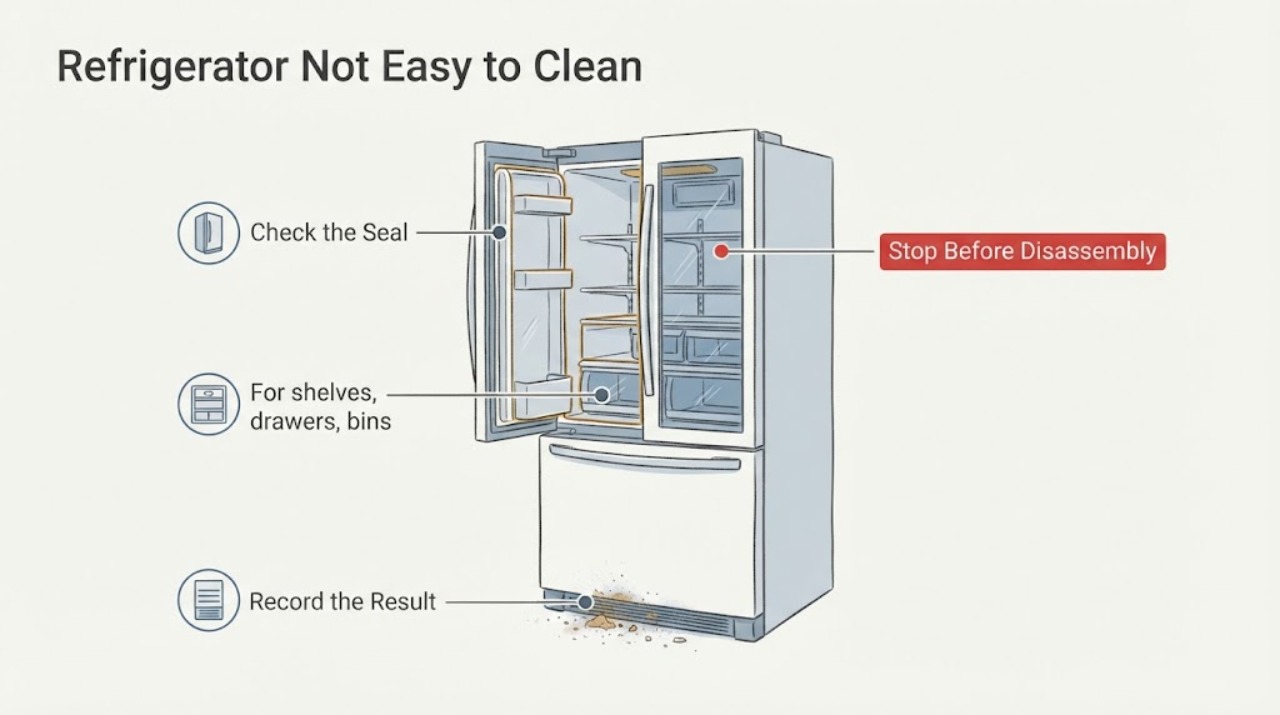
Work through in order
Diagnostic checks
Use only checks that match the exact appliance or system and its official guide.
-
Check 1
Identify the exact area that is hard to clean before taking anything apart: shelves or drawers, door gasket, drawer track, interior liner, glass, exterior finish, or display panel.
Expected result: Note whether the problem is a spill, dried residue, frost or ice, odor, sticky track, damaged finish, or an access problem caused by a part that will not release.
Next step: Use the matching surface branch below and look up the exact model manual before releasing a shelf, drawer, filter, or other fitted component.
Why this matters
Why: Electrolux assigns different cleaning materials and handling limits to these surfaces, so a generic spray or forceful removal can create damage rather than solve the cleaning problem.
-
Check 2
For shelves, drawers, bins, and compartments that are designed to come out, let cold glass or plastic reach room temperature, remove them without force, and wash them by hand with warm water, neutral soap, and a soft cloth.
Expected result: A part that slides or lifts out normally can be cleaned separately; a part that binds, flexes, or needs a tool is not proven removable from this model-free guidance.
Next step: Stop if the part resists, cracks, or has hidden wiring or plumbing; dry it fully and consult the exact manual instead of prying or improvising a release step.
Why this matters
Why: Electrolux UK says shelves and compartments should be washed with warm water and neutral detergent, and accessories should be cleaned by hand rather than in a dishwasher. The US guide also warns against putting removable items in a dishwasher.
-
Check 3
Clean the interior liner, door seal, drawer runners, and tracks with a soft cloth that is damp rather than dripping, then wipe away residue and dry the surfaces.
Expected result: Check whether debris is concentrated in the gasket folds or track corners, and whether the seal remains flat and contacts the cabinet after cleaning.
Next step: If the seal is torn, displaced, or still will not close after visible debris is removed, stop trying to reshape it and arrange model-specific service.
Why this matters
Why: Electrolux directs users to wipe door seals free of debris and use a soft cloth on runners and tracks; excess liquid around controls, lights, or other electrical parts can create a different safety problem.
-
Check 4
Match the cleaner to the exterior surface: use mild soap and water for the cabinet, a nonabrasive stainless-steel cleaner only where appropriate, and a soft cloth with soap and water for the display panel.
Expected result: Look for a stainless finish, smooth handle or door, or electronic control panel before applying anything; test no unapproved chemical on a visible surface.
Next step: If the finish is already cloudy, scratched, or chemically damaged, stop abrasive polishing and use the model manual or a service professional for the surface-specific limit.
Why this matters
Why: Electrolux warns against bleach or chlorine on stainless steel, ammonia or bleach on handles, and ammonia, bleach, or alcohol cleaners on the control panel. It also says to wipe stainless surfaces with the grain and dry them.
-
Check 5
If ice is what makes the freezer or fridge compartment difficult to clean, switch the appliance off and unplug it when safe, let ice melt naturally, protect the floor, and wipe the interior dry; never chip ice with a knife or screwdriver.
Expected result: Record whether the appliance is a No Frost model, whether ice returns, and whether a drain opening or tray is accessible without removing panels.
Next step: If ice quickly returns, a drain cannot be safely reached, water reaches electrical parts, or the appliance cannot be identified, stop and use the exact manual or qualified service rather than opening panels.
Why this matters
Why: Electrolux says No Frost appliances normally do not need manual defrosting, while ice on other models can be allowed to melt naturally; sharp tools or artificial heat can damage the cooling system or appliance.
Use your observations
Decision map
Find the observation that best matches what you see, then follow the next safe action.
-
PATH 01Next step
What you see
If the difficulty is dried food or residue on removable shelves, bins, or drawers and the part releases normally
Do this next
Bring cold parts to room temperature, hand-wash with warm water and neutral soap, dry fully, and reinstall only according to the exact manual.
Why this path and its safety boundary
Why it matters: This is a surface-cleaning task rather than evidence of a refrigerator fault.
-
PATH 02Next step
What you see
If the difficulty is debris in a gasket fold or drawer track and the seal or track is visibly intact
Do this next
Wipe the area gently with a damp soft cloth, dry it, and arrange service if the seal remains loose, torn, or unable to close.
Why this path and its safety boundary
Why it matters: The obstruction may be reachable with a soft cloth, but forcing the track or stretching the seal is not supported.
-
PATH 03Next step
What you see
If the difficulty is frost or ice that will not clear, returns quickly, or blocks access to a drain or panel
Do this next
Unplug and allow safe natural defrosting only when appropriate, avoid sharp tools or heat, and use the exact manual or qualified service for recurring or inaccessible ice.
Why this path and its safety boundary
Why it matters: The cause and defrost method may depend on the exact refrigerator family and No Frost design; the symptom does not identify a failed part.
-
PATH 04Next step
What you see
If the surface is a control panel, stainless exterior, or a finish already damaged by cleaner
Do this next
Stop using the questionable product, wipe only with the surface-appropriate soft-cloth method in the Electrolux guide, and seek model-specific advice for persistent damage.
Why this path and its safety boundary
Why it matters: Chemical compatibility matters, and abrasive or bleach-based cleaning can worsen the surface.
Helpful context
Understand the symptom
“Not easy to clean” does not by itself identify a failed refrigerator part. Electrolux’s cleaning guidance separates the job into shelves and compartments, interior surfaces, seals, runners, glass, exterior finishes, and the display panel. The safe method changes by surface: use mild, nonabrasive cleaning and control moisture around electrical areas. This model-free guide covers those supported external steps; the owner manual remains the authority for a particular shelf release, filter, drain, or panel.
When checks do not resolve it
Need a professional?
Use model-specific service or repair guidance when a shelf, drawer, filter, drain, or panel will not release without force; when a gasket is torn or will not seal; when frost or water returns after safe external cleaning; when water reaches controls or electrical parts; or when the finish has chemical damage. Do not open panels, probe a drain, scrape ice with sharp tools, or use bleach, chlorine, abrasive powders, heaters, hairdryers, or steam cleaners as a workaround.
Common questions
FAQ
Can I put Electrolux refrigerator shelves or drawers in the dishwasher?
No general dishwasher instruction is supported here. Electrolux says to clean shelf accessories by hand with soap and water, and its US care guide says not to wash removable bins or drawers in a dishwasher. Follow the exact model manual if it gives a narrower instruction.
Which cleaners should I avoid?
Avoid abrasive products. Electrolux warns against bleach or chlorine on stainless steel, ammonia or bleach on handles, and ammonia, bleach, or alcohol cleaners on the control panel. Use a soft cloth and the mild surface-specific method in the guide.
How do I remove ice that makes the refrigerator hard to clean?
When the model permits defrosting, switch off and unplug safely, leave the door open, protect the floor, and let ice melt naturally. Do not use knives, screwdrivers, heaters, hairdryers, steam cleaners, or other artificial thawing devices unless the manufacturer specifically approves them.
Read the exact guide
Official sources
- Refrigerator Clean and Care GuideElectrolux Owner Support · Official Electrolux refrigerator cleaning guidance without a supplied model number; surface and feature details may vary by model.
- How to clean your Electrolux fridge and freezerElectrolux UK Support · Official Electrolux UK support guidance for fridge/freezer cleaning; exact features and manual steps vary by model and region.
- How to Defrost a Fridge or Freezer Safely | Complete Defrosting GuideElectrolux UK Support · Official Electrolux UK defrosting guidance for fridge/freezer families; the model manual controls feature-specific procedures.
Community feedback
Share a repair observation
Share a plain-text repair observation. Accepted observations are published automatically; this page may take a moment to update.