
On this page
Start here
Quick answer
First establish whether the Electrolux washer is truly overheating or whether normal heating is being mistaken for a fault. Clothes and the final rinse can be cold even when the wash water was heated, and the closed door may feel warm during a hot wash. Stop the machine instead if the water or laundry is unusually hot, the door is giving off steam, the cycle stops with a heating code, or there is a burning smell, smoke, leaking hot water, or a damaged cord. After everything cools, check the selected program and the inlet-water arrangement against the model manual. Do not open a hot locked door, repeatedly reset a heating fault, or access internal wiring; recurring overheating needs qualified Electrolux service. [Sources: electrolux-clothes-cold, electrolux-hot-water-supply, electrolux-door-safety, electrolux-service-manual]
Before you begin
Safety first
- Keep the appliance out of service until cool and safe. Do not force the door, remove covers, test internal wiring, bypass a temperature or safety device, or repeatedly reset a heating fault.
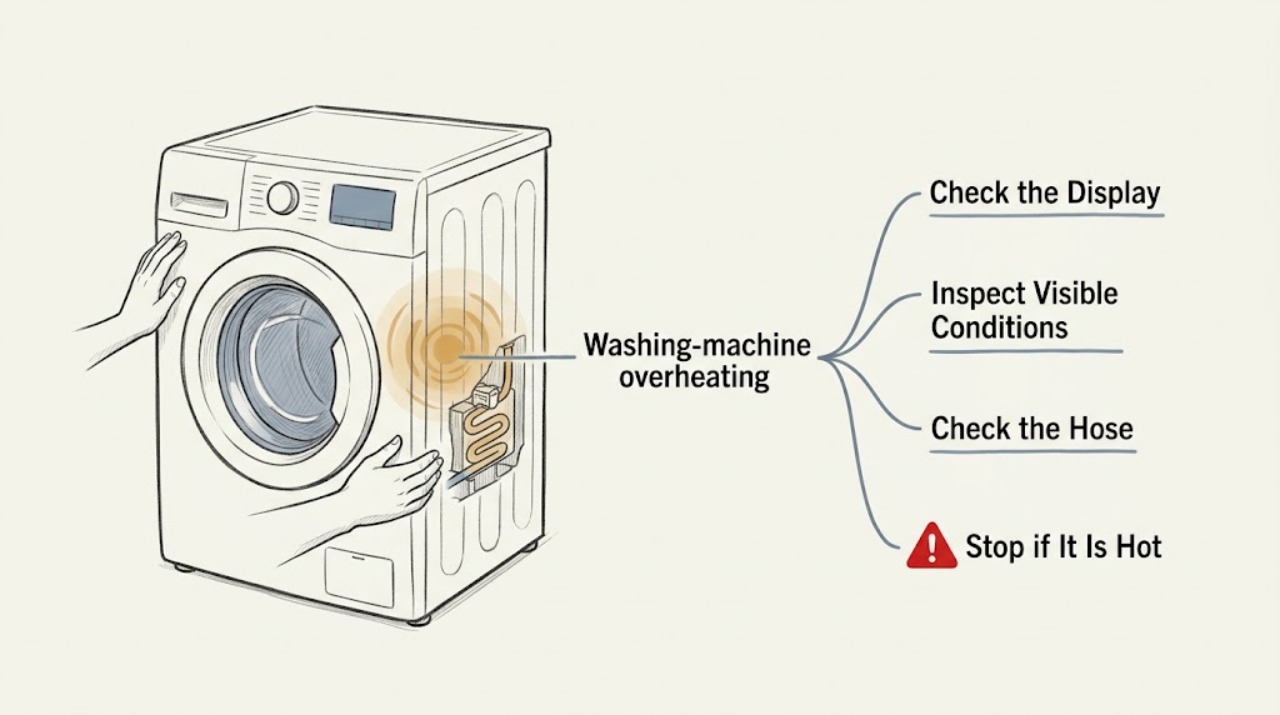
Work through in order
Diagnostic checks
Use only checks that match the exact appliance or system and its official guide.
-
Check 1
If the washer is currently running hot, press its normal off or pause control. Do not force the door. From a dry, safe position, note whether there is steam, smoke, a burning or melted-plastic smell, leaking hot water, a damaged cord, or a display code. If water is escaping, close the accessible supply valves only if doing so does not require reaching through heat or water.
Expected result: There is smoke, a burning smell, visible melting, an electrical fault indication, a hot-water leak, or laundry and water that are too hot to handle safely.
Next step: Stop using the washer. Isolate its external power only from a safe, dry position, keep the door closed until the contents cool, and arrange qualified appliance service. If there is active smoke or fire, leave the area and contact emergency services; do not investigate inside the cabinet.
Why this matters
Why: The washer is outside routine user troubleshooting and continuing a cycle could create a burn, fire, or electrical hazard.
-
Check 2
Compare the symptom with the program stage. If there was no safety symptom, observe the closed door during a model-supported warm or hot wash without touching the water or interrupting the cycle; then note whether the complaint appears only when clothes come out during the final rinse.
Expected result: The door becomes warm during the wash but the clothes are cold at the end, or the complaint occurs only during the final rinse.
Next step: Treat this as normal temperature behavior unless another symptom is present. Follow the program and fabric-care instructions; do not raise the temperature or repeat a hot test just to make the door feel hotter.
Why this matters
Why: Electrolux identifies a cold final rinse as normal. A warm door during the heating portion shows that the machine may be heating as designed, and newer machines may feel less hot than an older replacement.
-
Check 3
With the washer off and cool, check the selected program and temperature setting against the model's operating instructions. Then inspect the external inlet-hose labels and installation arrangement without disconnecting a hot or pressurized hose. Electrolux says most washers are designed for cold-water supply unless the model documentation specifically permits a hot-water connection.
Expected result: The issue occurs only on one temperature selection, a cold-wash setting was changed unexpectedly, or the appliance is connected to a hot supply that the model documentation does not allow.
Next step: Return to the model-specified program and water arrangement. If plumbing must be changed, have a qualified installer do it; do not continue using the washer with an unapproved hot-water connection.
Why this matters
Why: The selected program or installation may be creating the perceived temperature problem, rather than an internal overheat fault. An unapproved hot-water feed can make a low-temperature program unsuitable and can damage clothing.
-
Check 4
Once the drum, water, and laundry are fully cool and there is no leak or burning smell, use the normal power control to switch the washer off and leave it off for the reset interval stated in the model manual. Start no more than one supervised, model-supported cycle and record whether the same code or overheating symptom returns; never remove a filter or open the door while water is hot.
Expected result: The washer completes one cycle normally, or the heating symptom/code returns as soon as a warm program begins.
Next step: If the symptom returns, stop testing and arrange service. Do not keep resetting the machine or use a hotter program to provoke the fault.
Why this matters
Why: A one-time control reset can clear a transient state, but recurrence points to a heating-control or temperature-sensing fault. Electrolux's door-safety guidance also treats hot water and hot laundry as reasons to wait before opening or servicing the door area.
-
Check 5
Read and record the exact display code, indicator pattern, model, and serial information. If the code is E62 or another heating-related code, compare it with the exact model manual rather than assuming every Electrolux platform uses the same meaning; do not run a diagnostic mode or make electrical resistance, earth, or live-voltage measurements.
Expected result: A heating or overheating code is confirmed, the code returns after cooling, or the machine overheats without showing a code.
Next step: Give the recorded code and model to an authorized Electrolux technician. Leave the washer unplugged or otherwise isolated as directed by the technician until the fault is diagnosed; do not bypass a safety device.
Why this matters
Why: On the Electrolux technical platform documented in the service manual, E62 identifies an overheating condition and the technician flow considers the temperature sensor, heating element, wiring, and control board. The exact code behavior is model-dependent.
Use your observations
Decision map
Find the observation that best matches what you see, then follow the next safe action.
-
PATH 01Next step
What you see
The door is warm during the wash but clothes are cold after the program ends
Do this next
Check the selected program and fabric-care instructions rather than treating the final rinse as overheating.
Why this path and its safety boundary
Why it matters: The cold final rinse is normal and the warm door during the heating stage suggests the washer may be operating correctly.
-
PATH 02Next step
What you see
Water or laundry is unusually hot, the door steams, or the washer stops with a heating code
Do this next
Record the code and arrange qualified service; escalate immediately for smoke, burning odor, melting, or a hot-water leak.
Why this path and its safety boundary
Why it matters: Treat the condition as a possible overheat fault. Keep the door closed until contents cool and do not run another hot cycle.
-
PATH 03Next step
What you see
The machine is fed from a hot-water supply that the model documentation does not permit
Do this next
Stop using the arrangement and have the water connection corrected by a qualified installer according to the exact model documentation.
Why this path and its safety boundary
Why it matters: The inlet arrangement can make the washer use water that is too hot for a selected program and can damage clothing.
-
PATH 04Next step
What you see
A heating code such as E62 returns after the washer cools or the fault occurs without a code
Do this next
Leave the machine out of service and provide the exact model, code, program, and symptom timing to Electrolux service.
Why this path and its safety boundary
Why it matters: A transient reset has not resolved the problem. The documented technician path can involve the temperature sensor, heater, wiring, or control board, but the user should not test these internally.
-
PATH 05Next step
What you see
Smoke, burning smell, visible damage, a hot-water leak, or repeated breaker trips is present
Do this next
Isolate power only if safe, keep clear of the appliance, and obtain emergency or qualified professional help. Do not remove panels or force the door.
Why this path and its safety boundary
Why it matters: This is a safety stop, not a reset or cleaning problem.
Helpful context
Understand the symptom
A washer does not keep the same temperature through the whole program. The final rinse is normally cold, while a selected wash program may warm the water and the door may feel warm before rinsing. A genuine overheating complaint is more concerning when the water or laundry is unexpectedly scalding, the cycle stops, a heating-related code appears, or the appliance produces steam, an electrical smell, or smoke.
Keep the checks external and model-specific. Electrolux says most washers are designed for a cold-water supply unless the technical documentation says otherwise, so an incorrect hot-water connection can change the result. Sensor, heater, relay, wiring, and control-board checks belong to a qualified technician rather than a live-appliance test.
Only after diagnosis
Potential parts
- water temperature sensor or thermistor
Consider this only if a qualified technician confirms that the displayed overheating condition is caused by incorrect temperature feedback rather than the selected program or water connection.
Sensor shapes and electrical characteristics vary by platform; confirm the exact model and manufacturer fit information before ordering. - washing-water heating element
Consider this only after service diagnosis links the recurring heating alarm to the element or its insulation, wiring, and control circuit.
Do not choose a heater by appearance alone; model-specific fitment and qualified installation are required. - heater relay or electronic control board
Consider this only when a technician confirms that the heater is being controlled incorrectly or the board/relay is implicated after the sensor and wiring checks.
Control components are model- and software-specific; verify the exact appliance documentation before any replacement.
When checks do not resolve it
Need a professional?
Arrange qualified Electrolux service when overheating returns after the washer cools, a heating code returns, the machine becomes abnormally hot, or the program and inlet arrangement are correct but the symptom remains. Stop immediately for smoke, a burning or melted-plastic smell, visible damage, a hot-water leak, or a cord or outlet that is hot or damaged. Do not force a locked door, remove covers, access internal wiring, bypass a thermostat or safety device, or make live electrical measurements.
Safety scope: Keep the appliance out of service until cool and safe. Do not force the door, remove covers, test internal wiring, bypass a temperature or safety device, or repeatedly reset a heating fault.
Common questions
FAQ
Can an Electrolux washer feel warm without being overheated?
Yes. The door can feel warm during a heating portion of the wash, and clothes can be cold after the final rinse because that rinse is normally cold. Judge the complaint by the program stage and by safety symptoms, not by the final laundry temperature alone.
Could a hot-water connection make an Electrolux washer too hot?
It can change the result if the model is designed for a cold supply. Electrolux says not to connect a washer to hot water unless the model's technical documentation specifically allows it; have an incorrect connection corrected rather than continuing to run cycles.
What should I do if the door is locked and the laundry is hot?
Do not force the door or use an emergency release while the water or laundry is hot or the drum is moving. Switch the machine off using its normal control and wait for the contents to cool, following the exact model manual; recurring overheating needs professional service.
What does E62 mean on an Electrolux washing machine?
On the Electrolux technical platform documented in the cited service manual, E62 is an overheating-during-washing condition. Code meanings can vary by model, so record the code and model and have a technician diagnose the temperature sensor, heater, wiring, and control path rather than performing internal tests yourself.
Read the exact guide
Official sources
- Washing machine does not heat up and does not display an error message | ElectroluxElectrolux · Electrolux washing-machine program temperature behavior and heating fault support
- SERVICE MANUALElectrolux · Electrolux technical-service diagnostics for selected washing-machine platforms with E62 overheating
- Can I connect my washing machine to a hot water supply? | ElectroluxElectrolux · Electrolux washing-machine inlet-water requirements and hot-water connection limitations
- The door of the washing machine cannot be opened | ElectroluxElectrolux · Electrolux washing-machine hot-water, locked-door, cooling, and reset safety guidance
- The clothes are cold after washing | ElectroluxElectrolux · Electrolux washing-machine distinction between warm wash and cold final rinse
Community feedback
Share a repair observation
Share a plain-text repair observation. Accepted observations are published automatically; this page may take a moment to update.