
On this page
Start here
Quick answer
A freezer odor most often comes from spoiled or leaking food, residue in trays or drawers, a blocked drain, mold in a damp area, or odors absorbed by the interior. Start by distinguishing a food or damp smell from a burning, electrical, sharp chemical or refrigerant-like odor. Smoke, sparks, an unusually hot cabinet, water near electrical parts, or an odor with loss of cooling is a stop-and-service condition. Keep the freezer closed until you can protect the food, then check an appliance thermometer and the food itself; appearance and odor alone cannot prove frozen food is safe after a power failure. For ordinary food odor, remove questionable food, disconnect power, remove and wash accessible shelves and bins, wipe the walls, gasket and floor with a model-approved mild cleaner, rinse and dry completely, and ventilate the empty compartment. Do not mix cleaning chemicals, spray liquid into vents, or open sealed cooling parts. If the smell returns after cleaning, the freezer is not holding temperature, water or frost is accumulating, or the odor is chemical or electrical, stop using it and arrange qualified appliance service.
Before you begin
Safety first
- Do not open rear covers or sealed cooling parts, probe live electrical components, spray liquid into vents, chip ice with sharp tools, use flammable or harsh cleaners, or reconnect the appliance after smoke, sparks, abnormal heat or water near electrics.
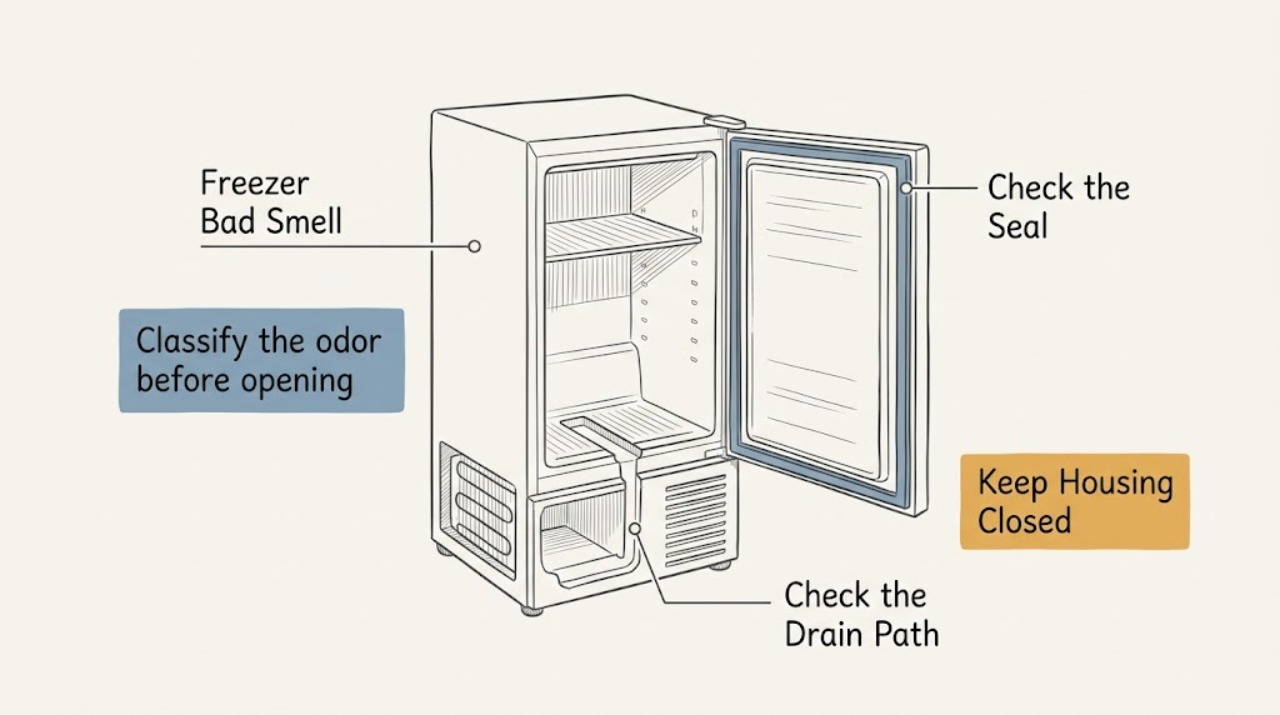
Work through in order
Diagnostic checks
Use only checks that match the exact appliance or system and its official guide.
-
Check 1
Classify the odor before opening the freezer repeatedly. Note whether it is rotten or sour food, musty or mold-like, plastic or chemical, burning or electrical, and whether the freezer is still cold. Check for smoke, sparks, melting, an unusually hot exterior, water near electrical parts, a leak or a recent power outage.
Expected result: The smell is ordinary food or damp odor with normal cooling, or it is a hazard odor, or cooling has failed or food has warmed.
Next step: For a hazard, stop using the freezer and isolate power only from a dry, safe position; obtain qualified help. For a non-hazard smell, keep the door closed as much as practical while protecting food and continue to the food and source checks.
Why this matters
Why: Food and damp odors support an inspection and cleaning path. Burning, electrical, sharp chemical or refrigerant-like odor, smoke, electrical wetness or loss of cooling needs isolation and service; a power event also requires a food-safety decision.
-
Check 2
Inspect the contents and accessible surfaces for a split package, leaked meat or sauce, spoiled food, a forgotten ice tray, residue under a drawer, mold-like growth or packaging that was not sealed. Remove questionable food without tasting it, and separate any food contaminated by leaking raw-food juices.
Expected result: One item or residue clearly accounts for the smell, several packages are affected, or no food source is visible.
Next step: Discard questionable food according to food-safety guidance, keep an unknown-temperature load out of service, and inspect the drain and door area. Do not assume food is safe because it smells normal.
Why this matters
Why: A clear spill or spoiled item can create a persistent odor even after the food is removed. Multiple affected packages or no visible source raises the possibility of an outage, warm compartment, hidden drain moisture or an internal fault.
-
Check 3
With food protected and the appliance disconnected from power, remove only accessible shelves, drawers and ice trays. Wash them and the interior with a soft cloth or sponge and a mild cleaner allowed by the model manual, then rinse and dry the parts, walls, floor, door liner and gasket. Keep cleaners away from vents and do not combine products.
Expected result: Residue or dampness is removed and the smell fades, or the smell remains after the accessible interior is clean and dry.
Next step: Reconnect only when all accessible surfaces are dry and parts are correctly refitted. If the odor remains, do not spray into vents or dismantle the freezer; continue with temperature, frost and drainage observations and prepare for service.
Why this matters
Why: Food residue and absorbed odor can remain in porous packaging, trays, gaskets or damp surfaces. A persistent smell after a complete safe cleaning is evidence to look for a drain, cooling, material or internal-source problem rather than using stronger chemicals.
-
Check 4
Check the temperature and cold-chain history. Read the appliance thermometer if present, look for ice crystals, note whether the door was left open or power failed, and inspect the door gasket and visible drain or collector area for frost, water or blockage. Keep the door closed while measuring and do not chip ice with a sharp tool.
Expected result: The freezer is at or below the applicable safe temperature, food still has ice crystals, the freezer is warmer, or water and heavy frost are present.
Next step: Follow current food-safety guidance for any warmed or questionable food. If the door seal or accessible drain is blocked, use the model manual's safe defrost procedure; if cooling is not restored or the problem is hidden, arrange service.
Why this matters
Why: Temperature and ice-crystal evidence are more useful for food safety than odor alone. Water or heavy frost can point to a door-seal, drain or defrost condition that also holds odors; a warm compartment can make food unsafe and may indicate a cooling fault.
-
Check 5
After cleaning and a return to normal temperature, monitor whether the odor returns and whether the freezer cools normally. Record the odor type, exact location, food or liquid found, power or temperature history, visible frost or leak, and any alarm, unusual noise, smoke or heat.
Expected result: The smell stays gone, returns at the drain, door, rear or floor, or is joined by poor cooling, water, heavy frost, abnormal noise, smoke or heat.
Next step: Stop using the freezer for recurring, chemical, electrical or burning odors, poor cooling, water near electrics, smoke, sparks or abnormal heat. Give the technician the model, odor location, temperature record and cleaning steps; do not open the rear cover or sealed system.
Why this matters
Why: A resolved food odor supports a spill or packaging source. Recurrence or a non-food odor suggests a gasket, drainage, ventilation, material, fan or sealed-system issue that cannot be identified safely from smell alone.
Use your observations
Decision map
Find the observation that best matches what you see, then follow the next safe action.
-
PATH 01Next step
What you see
The odor is burning, electrical, sharply chemical or refrigerant-like, or there is smoke, a spark, melting, abnormal heat, water near electrics or loss of cooling.
Do this next
Stop using the freezer, isolate power only from a dry safe position, keep people away from smoke or damaged parts and arrange qualified emergency or appliance service. Do not restart it to identify the smell.
Why this path and its safety boundary
Why it matters: This may be a fire, electrical, chemical or cooling-system hazard rather than a food-residue issue.
-
PATH 02Next step
What you see
A spoiled package, leaking food, old ice or residue clearly explains the odor and the freezer remains cold.
Do this next
Discard questionable food without tasting it, clean and dry accessible parts with a mild model-approved method, and seal odor-producing foods for future storage.
Why this path and its safety boundary
Why it matters: The source is likely a food or surface contamination issue, but the food must still be assessed separately for safety.
-
PATH 03Next step
What you see
The smell is musty and there is dampness, water, heavy frost, a blocked visible drain or a door gasket that does not seal.
Do this next
Clean the gasket, remove door obstructions and follow the exact model's safe defrost and drain instructions. Escalate if the drain is hidden, the gasket is damaged or water returns.
Why this path and its safety boundary
Why it matters: Moisture and poor drainage or sealing can preserve odor and create new frost or meltwater.
-
PATH 04Next step
What you see
The odor followed a power outage, an open door or a warm freezer, and packages are soft or lack ice crystals.
Do this next
Use an appliance thermometer and current FDA food-safety guidance to decide what to discard, keep the door closed and arrange service if the freezer is not returning to temperature.
Why this path and its safety boundary
Why it matters: This is a food-safety event in addition to an odor complaint; a normal smell cannot establish that the food is safe.
-
PATH 05Next step
What you see
The smell is plastic or chemical after cleaning, a new installation or contact with a product, but there is no smoke or abnormal heat.
Do this next
Remove packaging and any unauthorized cleaner residue, ventilate only as the model instructions permit, use no harsh or flammable cleaner, and arrange service if the odor persists or cooling changes.
Why this path and its safety boundary
Why it matters: The source may be material, packaging or cleaner residue, but a persistent non-food odor should not be masked with stronger chemicals.
-
PATH 06Next step
What you see
The accessible interior is clean and dry but the odor returns, comes from the rear or floor, or is accompanied by poor cooling, water or an alarm.
Do this next
Keep the freezer out of service and arrange qualified appliance diagnosis. Provide the model, odor location, temperature history, leak or frost details and the cleaning already completed.
Why this path and its safety boundary
Why it matters: A drain, fan, seal, electrical part, material or sealed cooling issue may be involved and cannot be confirmed by odor alone.
Helpful context
Understand the symptom
Separate a food smell from a safety smell
A sour, fishy or musty odor with normal cooling usually starts with food, a spill, a tray or a damp drain area. A burning or electrical odor, smoke, sparks, melting, an unusually hot outer surface or a sharp chemical odor is not a cleaning invitation. Disconnect power only from a dry, safe position and keep the freezer out of service until a qualified technician assesses it.
Food safety comes before deodorizing
A freezer that lost power or warmed can produce both an odor problem and a food-safety problem. Keep the door closed while checking an appliance thermometer and the condition of the packages. Do not taste questionable food. If food has been exposed to floodwater, leaking raw-food juices or an uncertain temperature, follow current public food-safety guidance rather than trying to remove the smell.
Clean only accessible surfaces
After food is protected and power is disconnected, use a soft cloth or sponge and a mild, model-approved cleaner on removable parts, interior walls, the door liner and gasket. Rinse and dry thoroughly. Do not use abrasive, flammable or harsh products, and do not pry at ice, remove a rear cover or interfere with a sealed cooling circuit.
Safety boundary
Stop conditions
- Burning, electrical, sharp chemical or refrigerant-like odor
- Smoke, sparks, melting, abnormal exterior heat or a repeated electrical trip
- Water near electrical parts, heavy flooding or a damaged cabinet
- Food has warmed and its safe storage status is uncertain
- The odor returns after safe cleaning or the freezer is not maintaining temperature
- Any need to open a rear cover, sealed cooling system or live electrical area
Only after diagnosis
Potential parts
- door gasket
Consider this only when the gasket is torn, deformed or unable to seal continuously after cleaning and correct door closure.
Confirm the full appliance model and fit information before selecting a replacement. - defrost drain or drain plug
Consider this only after recurring water, frost or odor points to a damaged or obstructed drain component and a qualified diagnosis confirms it.
Drain arrangements vary by upright, chest and frost-free design; do not infer fit from appearance. - air or odor filter
Consider this only if the exact appliance has a replaceable filter and the manual identifies it as part of odor control after the interior source is removed.
Many freezers have no odor filter; verify the model's equipment and replacement instructions first.
When checks do not resolve it
Need a professional?
Arrange qualified appliance service for burning, electrical, chemical or refrigerant-like odor, smoke, sparks, abnormal heat, water near electrics, loss of cooling, recurring odor after safe cleaning, a hidden or blocked drain, a damaged gasket or cabinet, or food-temperature uncertainty caused by a freezer fault.
Safety scope: Do not open rear covers or sealed cooling parts, probe live electrical components, spray liquid into vents, chip ice with sharp tools, use flammable or harsh cleaners, or reconnect the appliance after smoke, sparks, abnormal heat or water near electrics.
Common questions
FAQ
What is the most common cause of a bad smell in a freezer?
Start with spoiled or leaking food, residue under a drawer, an old ice tray, damp packaging or food stored uncovered. If no source is visible, check temperature, frost, door sealing and drainage rather than masking the smell with stronger chemicals.
Is food safe if a freezer smells bad after a power outage?
Do not rely on odor alone. Use an appliance thermometer and check for ice crystals, then follow current FDA food-safety guidance. Discard food with an uncertain temperature history or contamination from raw-food juices, and do not taste it to test safety.
How do I clean a smelly freezer safely?
Protect or remove the food, disconnect power, remove accessible shelves and bins, wash with a soft cloth or sponge and a mild model-approved cleaner, rinse and dry everything thoroughly. Do not mix products, use harsh or flammable cleaners, spray into vents or chip ice with sharp tools.
When should a freezer odor be treated as a service problem?
Stop using it for burning, electrical, sharp chemical or refrigerant-like odor, smoke, sparks, abnormal heat, water near electrics, loss of cooling, recurring odor after cleaning or an inaccessible leak or drain. Arrange qualified diagnosis and provide the model and symptom history.
Read the exact guide
Official sources
- Removing and Preventing OdorsWhirlpool Product Help · Representative manufacturer guidance for refrigerator and freezer odor removal
- Food and Water Safety During Power Outages and FloodsU.S. Food and Drug Administration · Freezer temperature and food-safety guidance after outages or warming
- Cleaning the Interior - Convertible Chest FreezerWhirlpool Product Help · Representative freezer defrost, drain and interior-cleaning guidance
- [LG Refrigerator smells] The ice smells and tastes badLG USA Support · Representative manufacturer guidance on food odors, sealed storage and gentle interior cleaning
- How to Defrost the FreezerWhirlpool Product Help · Representative freezer frost, drain and defrost safety guidance
Community feedback
Share a repair observation
Share a plain-text repair observation. Accepted observations are published automatically; this page may take a moment to update.