
Brand-independent appliance guidance
General Freezer Repair Guides
Brand-independent troubleshooting and repair guidance for common freezer problems and maintenance questions.
General freezer guides
Use these guides when the problem is not limited to a specific manufacturer.
-
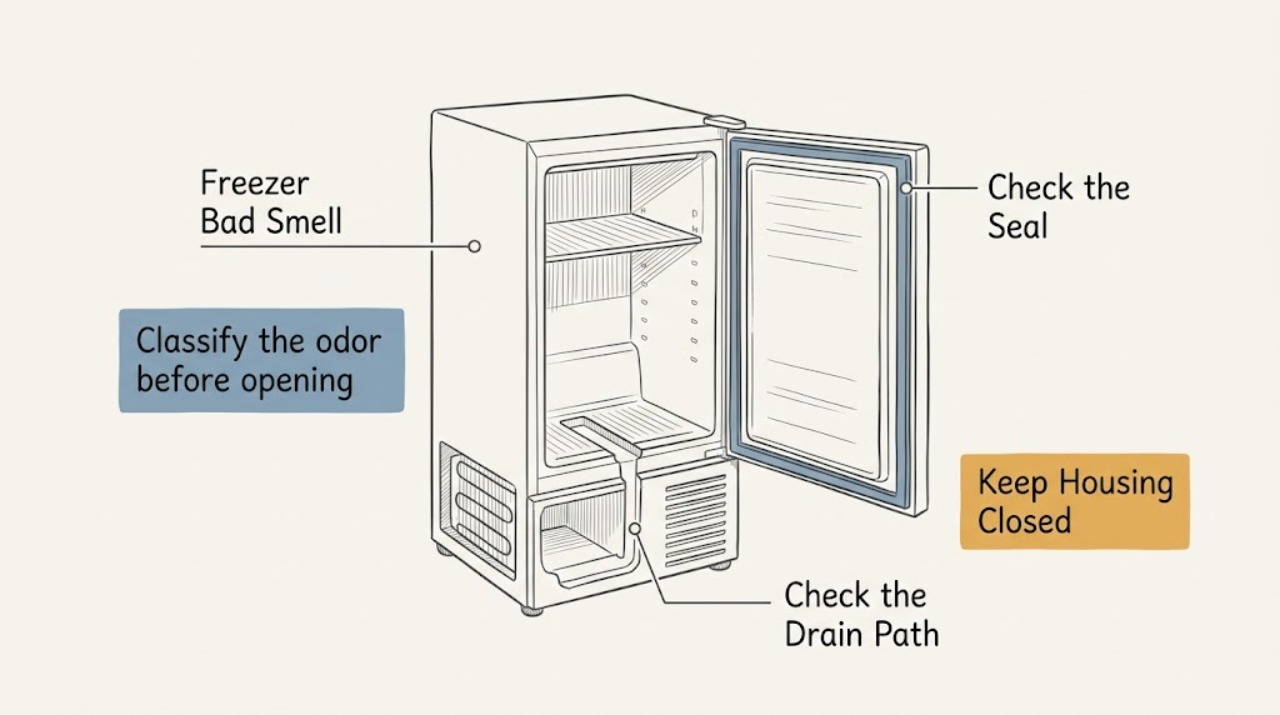
Freezer Bad Smell: Trace the Source, Protect Food and Clean Safely
A freezer odor most often comes from spoiled or leaking food, residue in trays or drawers, a blocked drain, mold in a damp area, or odors absorbed by the interior. Start by distinguishing a food or damp smell from a burning, electrical, sharp chemical or refrigerant-like odor.
-
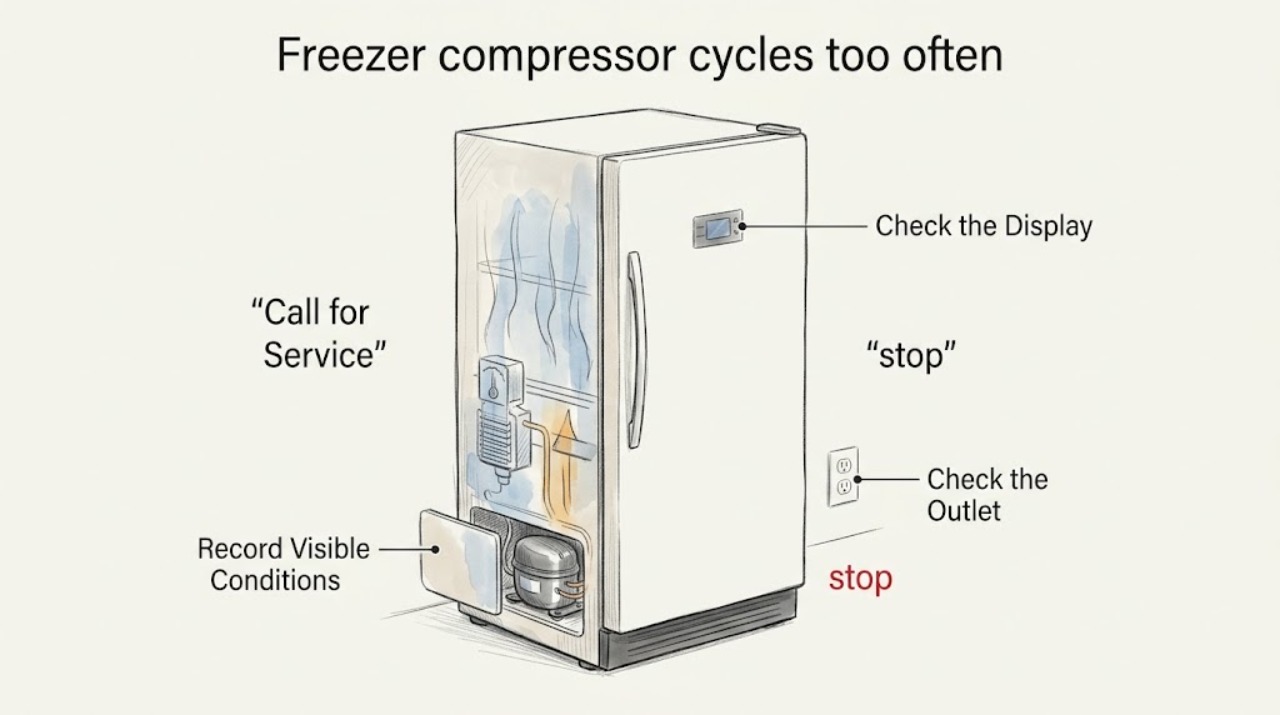
Freezer compressor cycles too often starts and stops repeatedly: What to Check and What to Do Next
First determine whether the freezer is truly short cycling or simply running more often because of a warm room, recent loading, frequent door openings, a loose gasket, or a heavy frost load. A compressor that starts, stops after only a brief run, and repeats while the freezer is still warm is more concerning than normal cycles that run long enough to restore temperature.
-
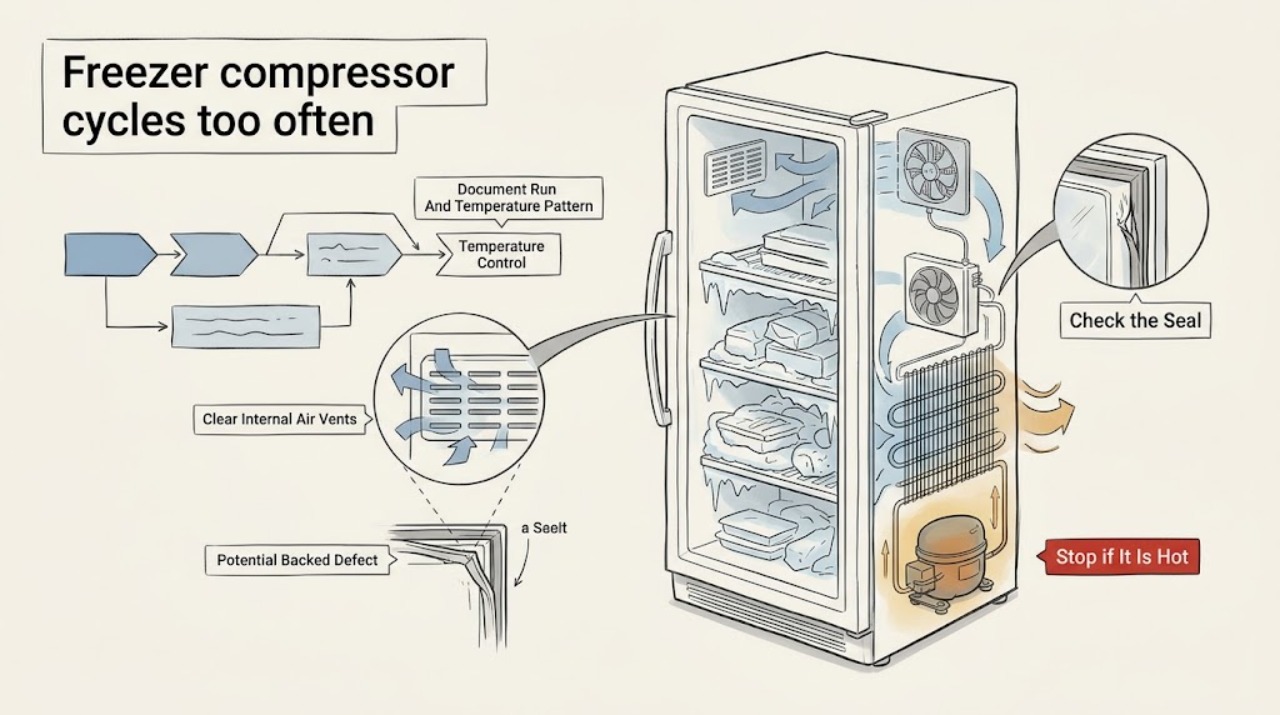
Freezer compressor cycles too often when airflow is restricted: What to Check and What to Do Next
A freezer compressor may run longer or cycle frequently when restricted airflow prevents the cabinet from reaching its set temperature. Check the user-accessible air vents for packages, heavy frost, or an overpacked compartment; inspect the door gasket and closure; confirm that a temporary Fast Freeze or similar mode is not active; and check the exterior clearance or condenser area only as the exact model manual permits.
-
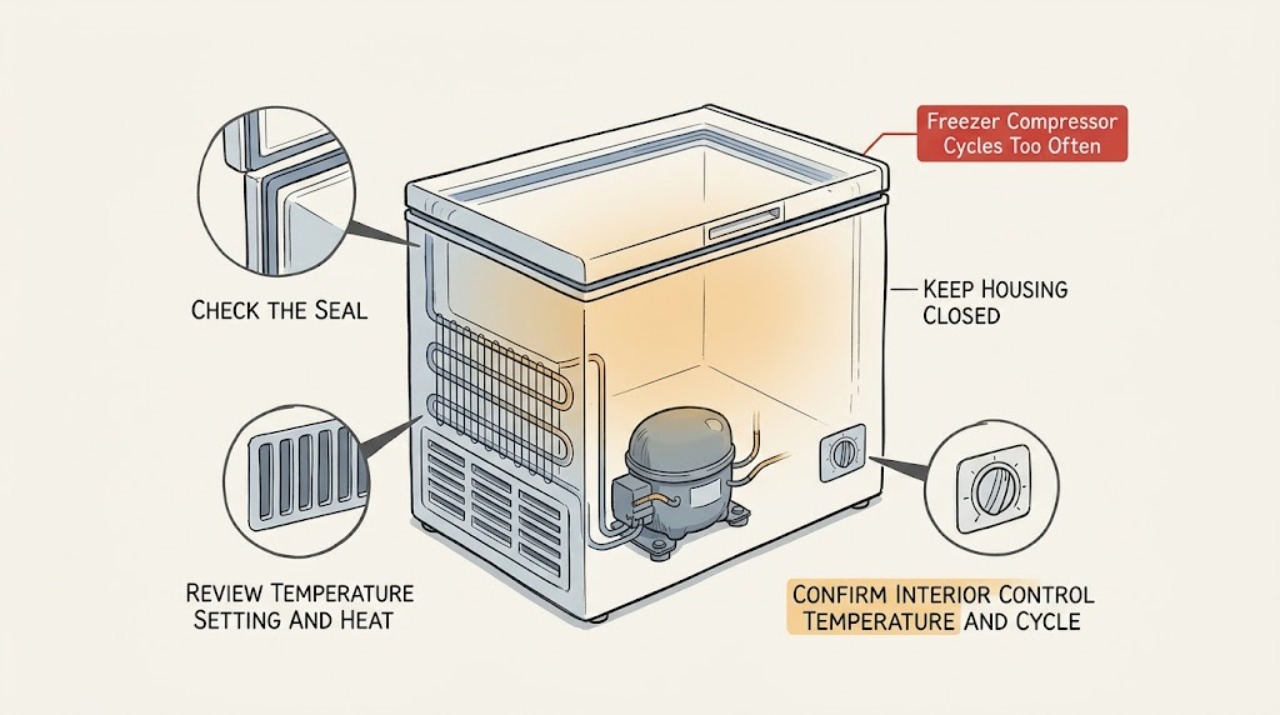
Freezer Compressor Cycles Too Often, Cabinet Is Warm: What to Check and What to Do Next
A warm freezer cabinet is often normal heat rejection, especially while the compressor is running; some chest freezers use the cabinet as a condenser and upright models may warm the case to prevent sweating. The important distinction is whether the food and measured interior temperature stay cold.
-
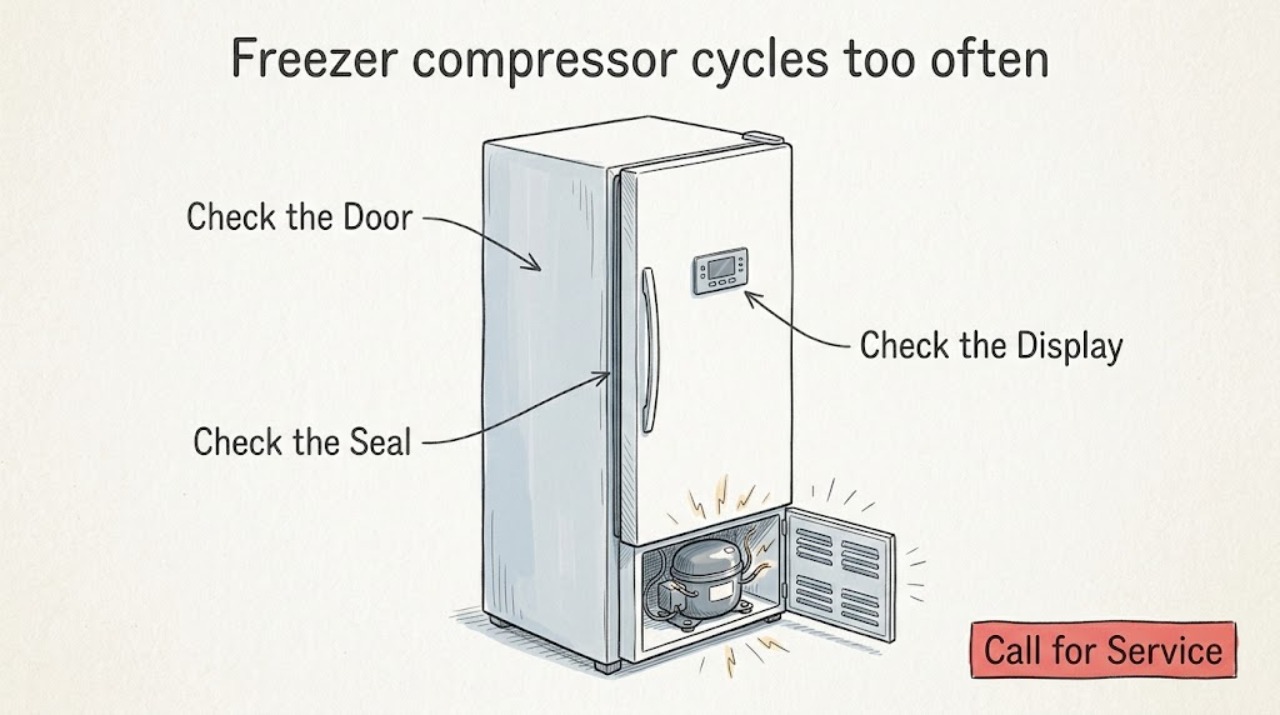
Freezer compressor cycles too often: What to Check and What to Do Next
A freezer may run for a long stretch after a warm load, frequent door opening, a warm room, or a colder-than-needed setting. First watch the start-and-stop pattern from outside, then check the visible door seal, loose package placement, control setting, frost, room conditions, and any unusual heat, noise, or odor.
-
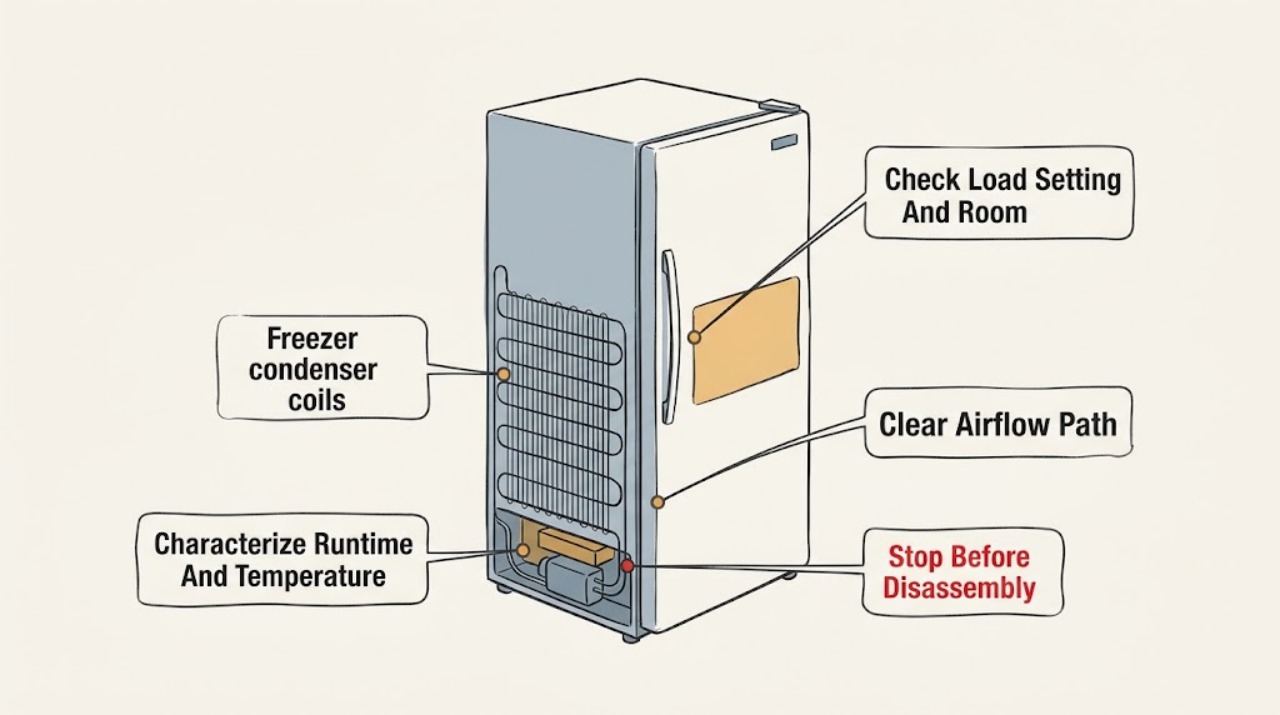
Freezer condenser coils and a compressor that cycles too often: What to Check and What to Do Next
A freezer compressor running much of the time is not automatically a failure: manufacturers note that many compressors run about 80% to 90% of the time, and a newly loaded, recently restarted, hot-room, or frequently opened freezer may run nearly continuously while it recovers. If the freezer is warm or the runtime changed, first check the temperature setting, recent warm food, door or lid closure, gasket, airflow, frost, and room conditions.
-
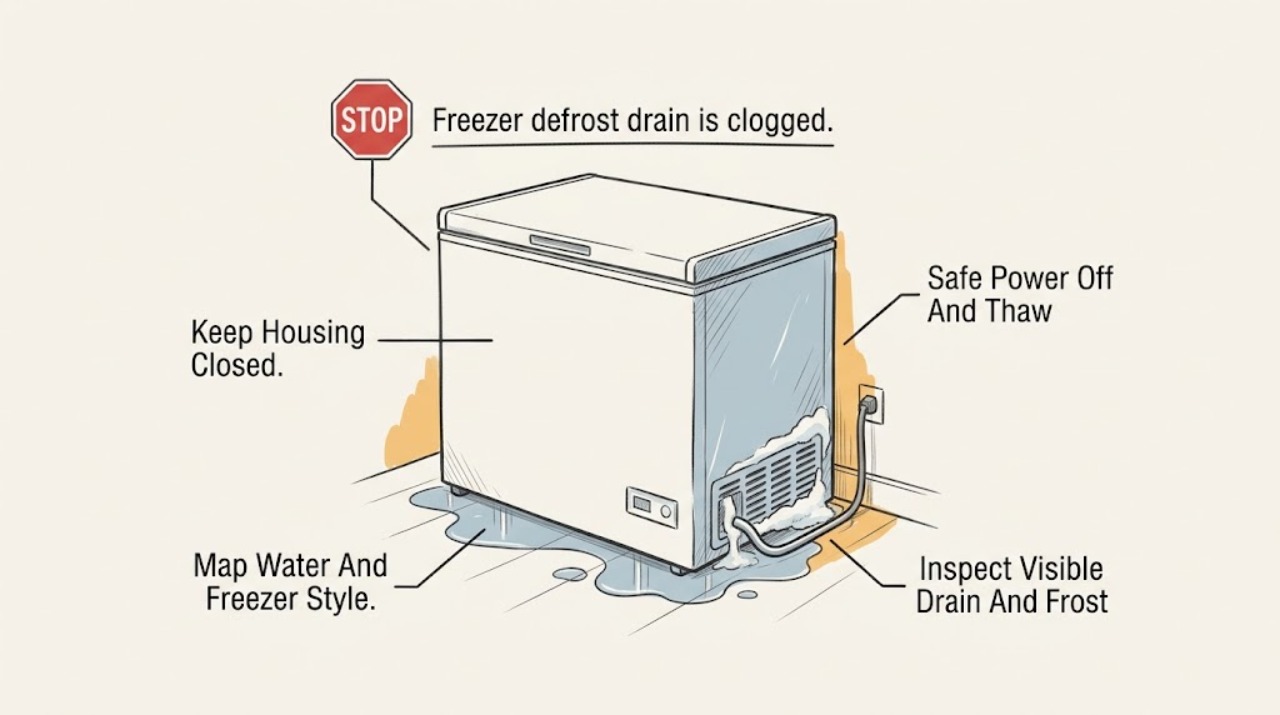
Freezer defrost drain is clogged and water returns after defrost: What to check next
When water returns after you defrost a freezer, the defrost drain may still be blocked by ice or debris, or the drain path may be inaccessible without removing a panel. Frost-free freezers send meltwater through a drain tube to a pan below; ice on the freezer floor, water at the door, or repeated water on the floor can indicate that the path is not staying open.
-
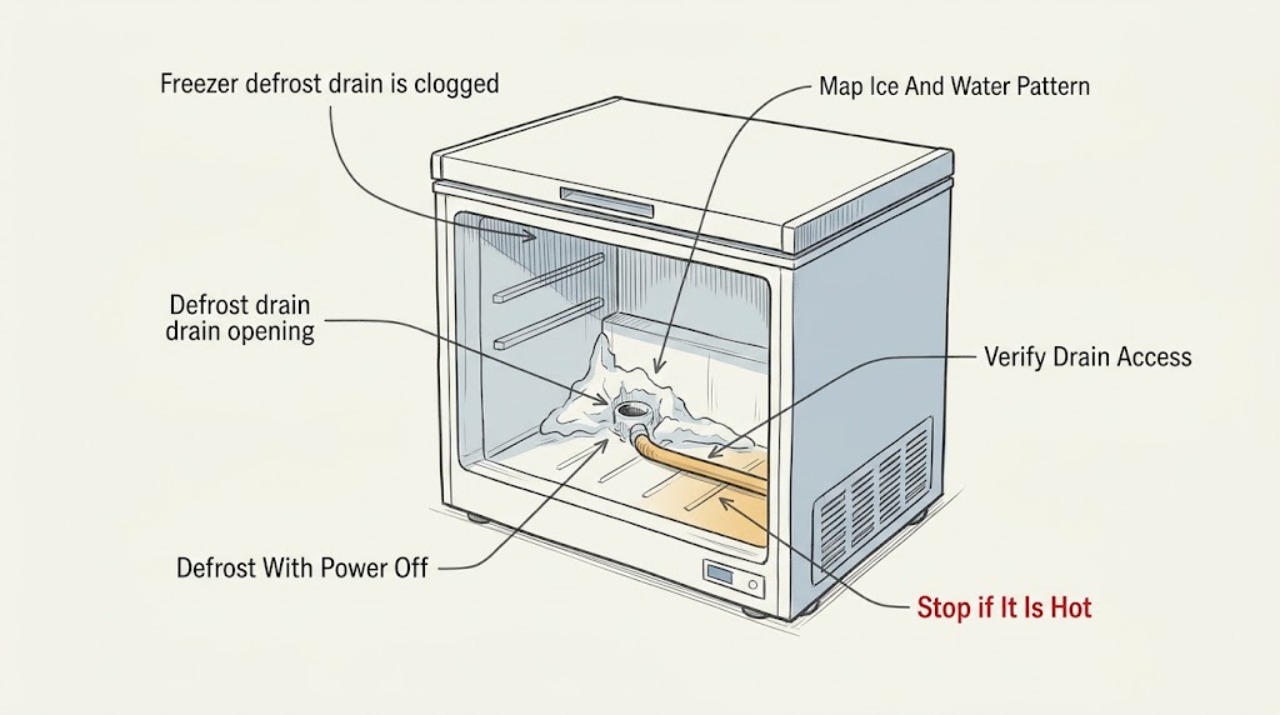
Freezer defrost drain is clogged, with ice around the opening: What to Check and What to Do Next
Ice around a freezer's defrost-drain opening usually means meltwater is not leaving the drain path, but the visible ice is not proof that every freezer uses the same accessible repair. First record whether water or ice is collecting on the freezer floor, whether the rear wall or vents are also iced, and whether the freezer is still holding temperature.
-
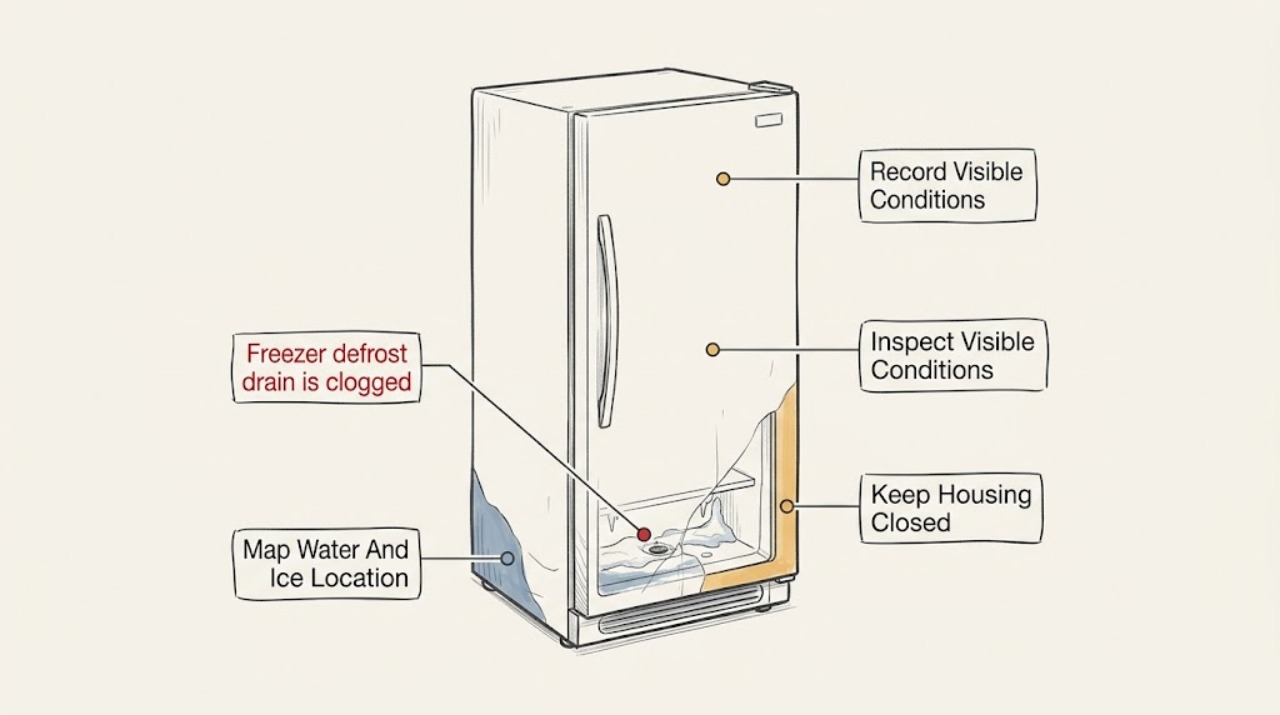
Freezer defrost drain is clogged: What to Check and What to Do Next
A clogged or frozen defrost drain often shows up as ice or water collecting on the freezer floor, under a basket, around the rear drain area, or on the floor outside the appliance. First document where the water or ice appears, when it returns, the door-seal condition, and the appliance temperature or food condition.
-
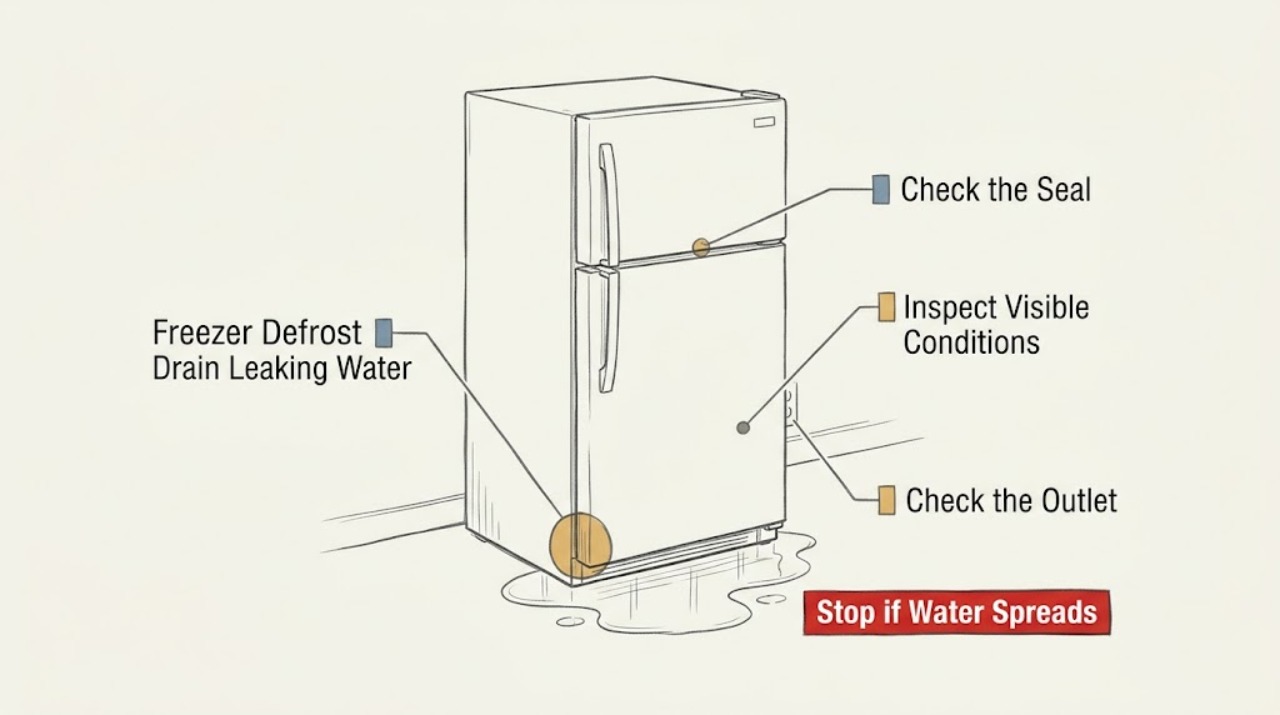
Freezer Defrost Drain Leaking Water: What to Check and What to Do Next
A freezer that leaks during or after defrost may have a blocked or frozen defrost drain, an overflowing drain pan, or a different water source such as an icemaker or supply line. First protect the floor, keep water away from electrical parts, and note whether the water is inside the freezer, under the unit, or coming from a connection.
-
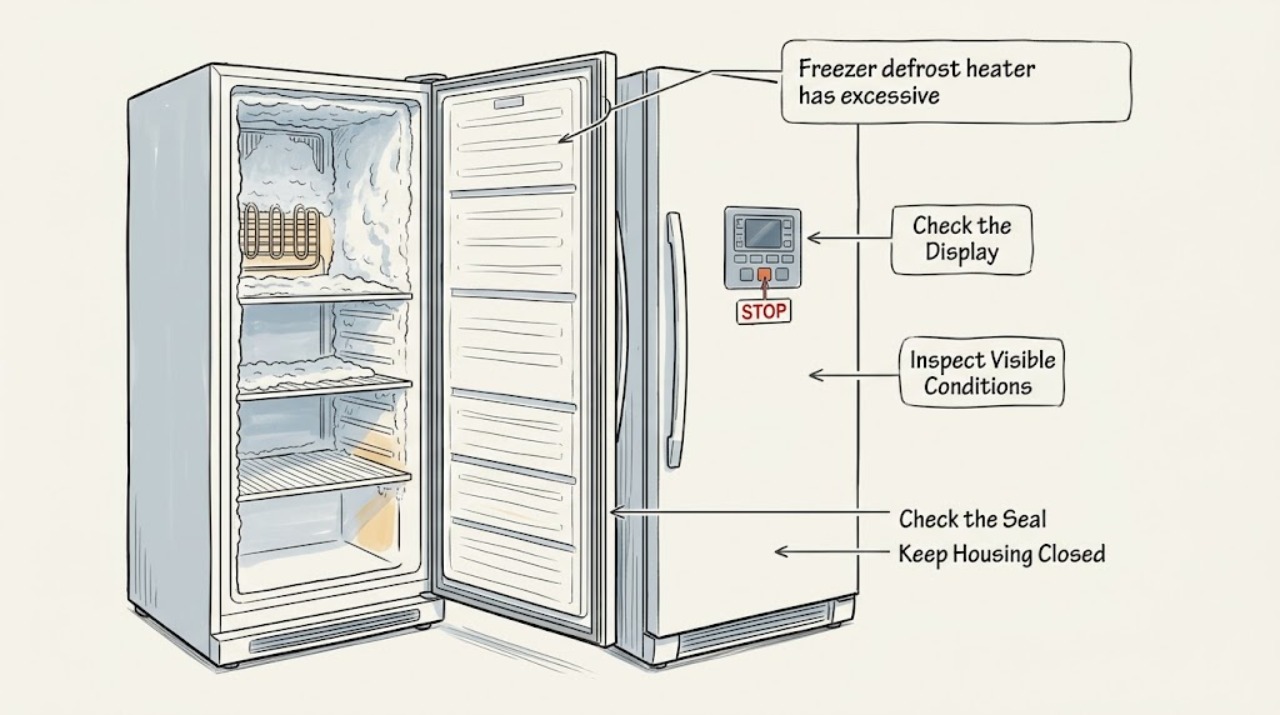
Freezer defrost heater has excessive frost: What to Check and What to Do Next
Excessive frost does not prove that the defrost heater itself has failed. In an automatic-defrost freezer, the heater melts frost from the evaporator, while a timer or adaptive control starts the cycle and a drain carries away meltwater.
-
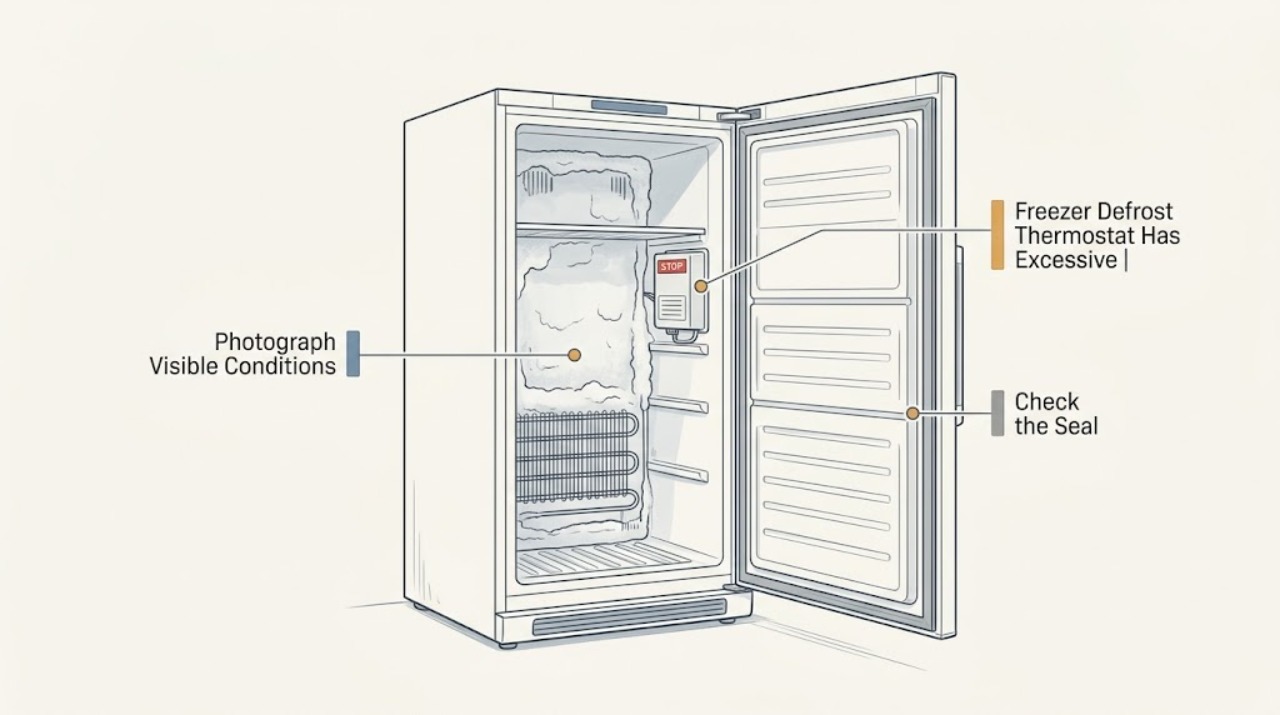
Freezer Defrost Thermostat Has Excessive Frost: What to Check and What to Do Next
Excessive frost does not prove the defrost thermostat is bad. Frost can come from warm moist air entering through a door or gasket, blocked vents, a warm food load, or a fan or airflow problem; in a frost-free freezer, frost that returns after a proper defrost can also indicate a defrost thermostat, heater, timer, control, drain, or fan fault.
-
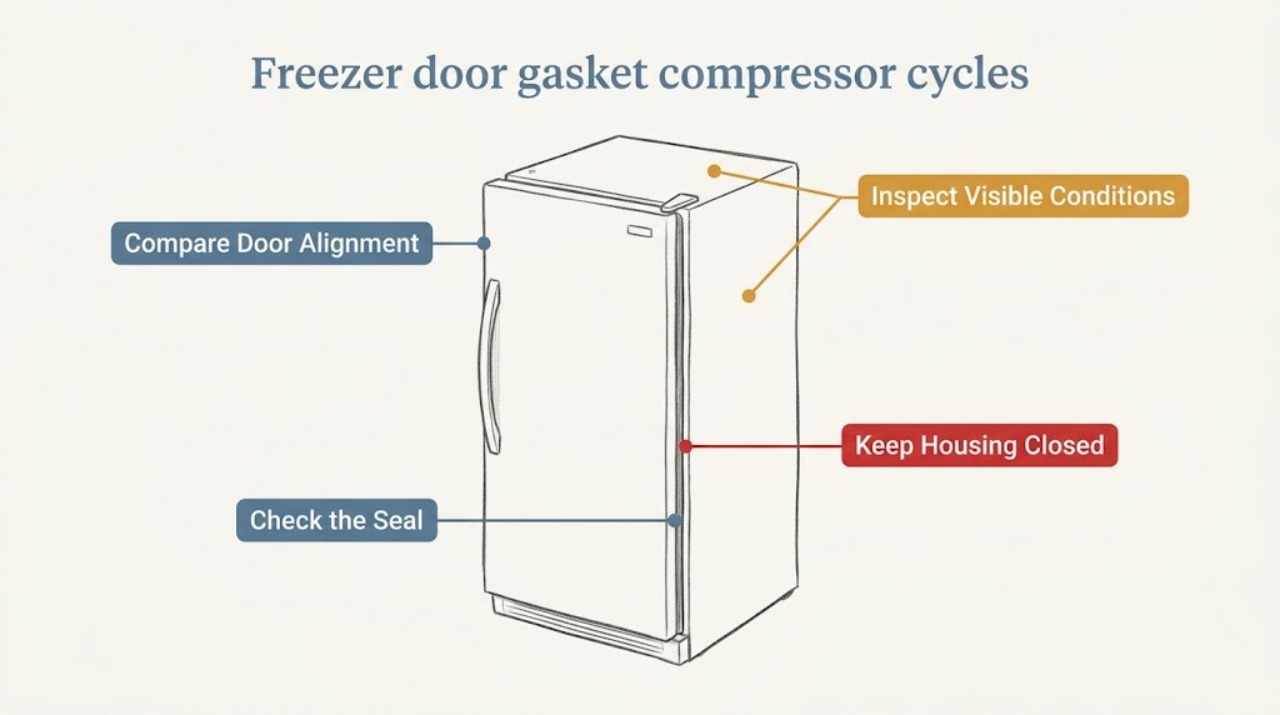
Freezer door gasket compressor cycles too often: What to Check and What to Do Next
A freezer compressor running often can be normal, but a dirty, torn, wrinkled, or poorly seated door gasket lets cold air escape and warm moist air enter, making the appliance run longer and encouraging frost. First confirm that the door closes fully and the gasket contacts the cabinet evenly all around.
-
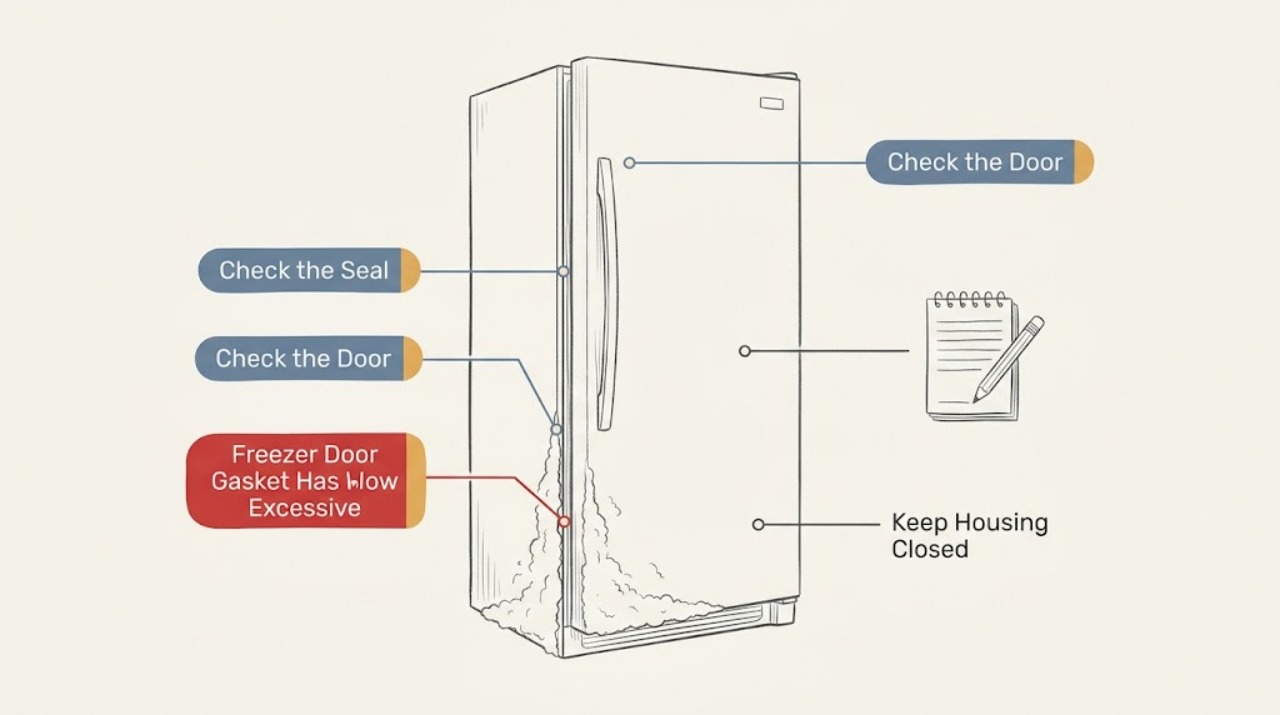
Freezer Door Gasket Has Excessive Frost: What to Check and What to Do Next
Excessive frost at a freezer door gasket usually means warm, moist air is entering through a door that is blocked, misaligned, dirty, damaged, or not sealing evenly. First remove only an obvious package or drawer obstruction, clean and dry the gasket with a soft cloth, and check the seal around the entire perimeter with a sheet of paper; do not use a knife, heat gun, or hair dryer to remove ice.
-
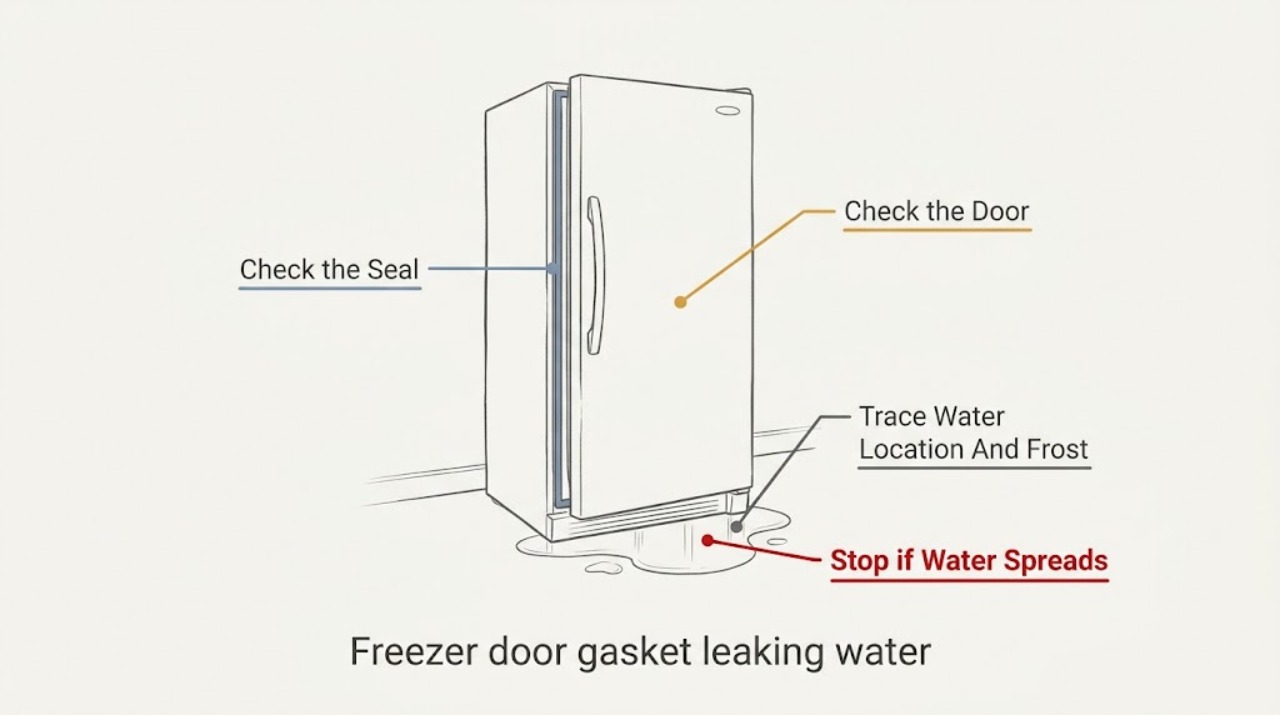
Freezer door gasket leaking water: What to Check and What to Do Next
Water at a freezer door gasket is often condensation caused by warm, humid air entering through a dirty, obstructed, loose, torn, warped, or poorly aligned seal, but water can also be coming from a different defrost or drain path. Dry the area, keep the freezer door closed, clean and dry the gasket with mild soap, and check that containers are not preventing full closure.
-
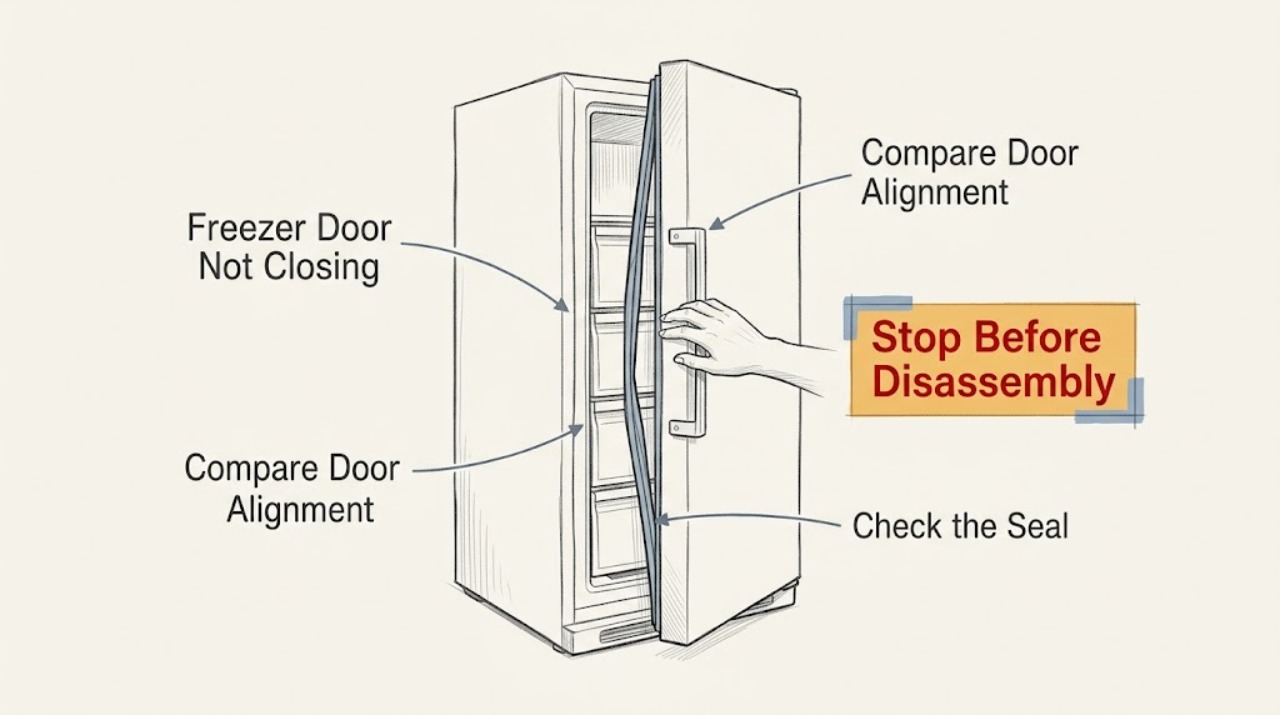
Freezer Door Not Closing: Clear the Seal, Frost, and Alignment Safely
A freezer door that will not close is usually being held open by a package, shelf, basket, drawer, frost, a dirty or displaced gasket, or an out-of-level cabinet. Remove only obvious obstructions, reseat storage parts, and inspect the cool door seal.
-
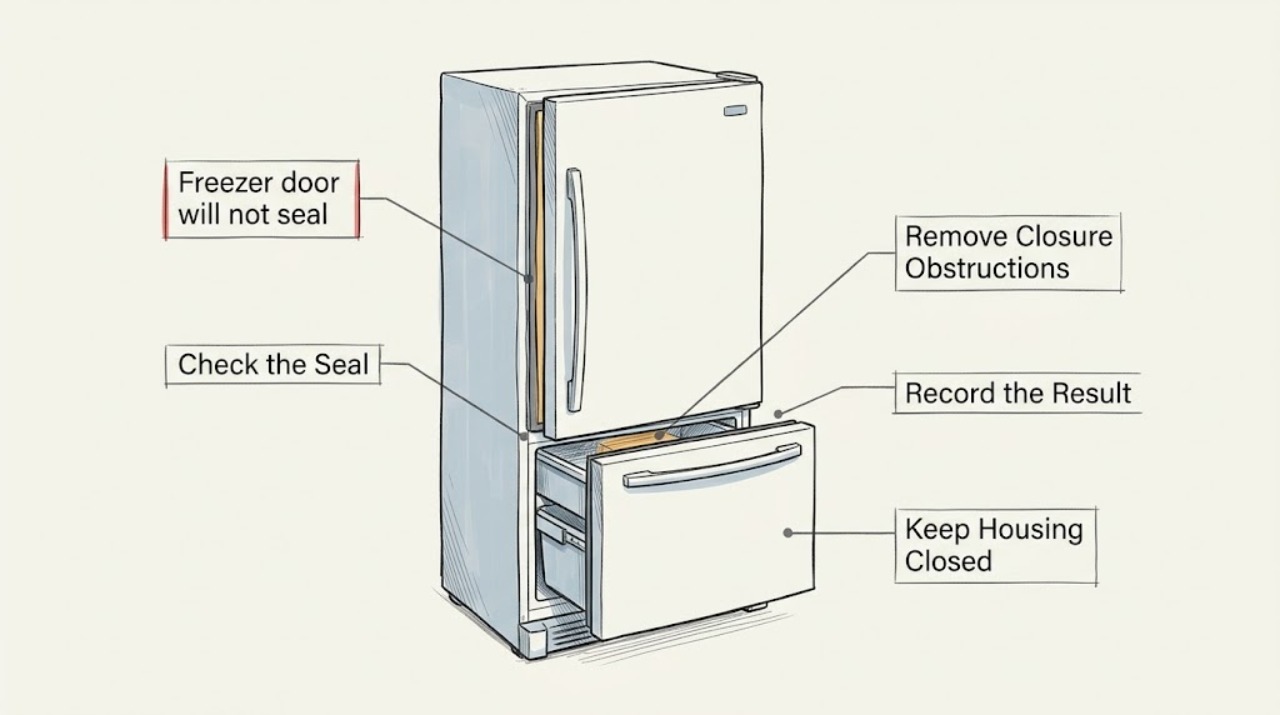
Freezer door will not seal and cold air escapes: What to Check and What to Do Next
A freezer door that will not seal is most often being held open by a package, shelf, basket, drawer rail, frost, or a dirty or displaced gasket; a warped gasket, misalignment, or leveling problem can also let cold air escape. Open the freezer briefly and look for the exact gap, then remove only an obvious obstruction and make sure baskets or drawers are fully seated.
-
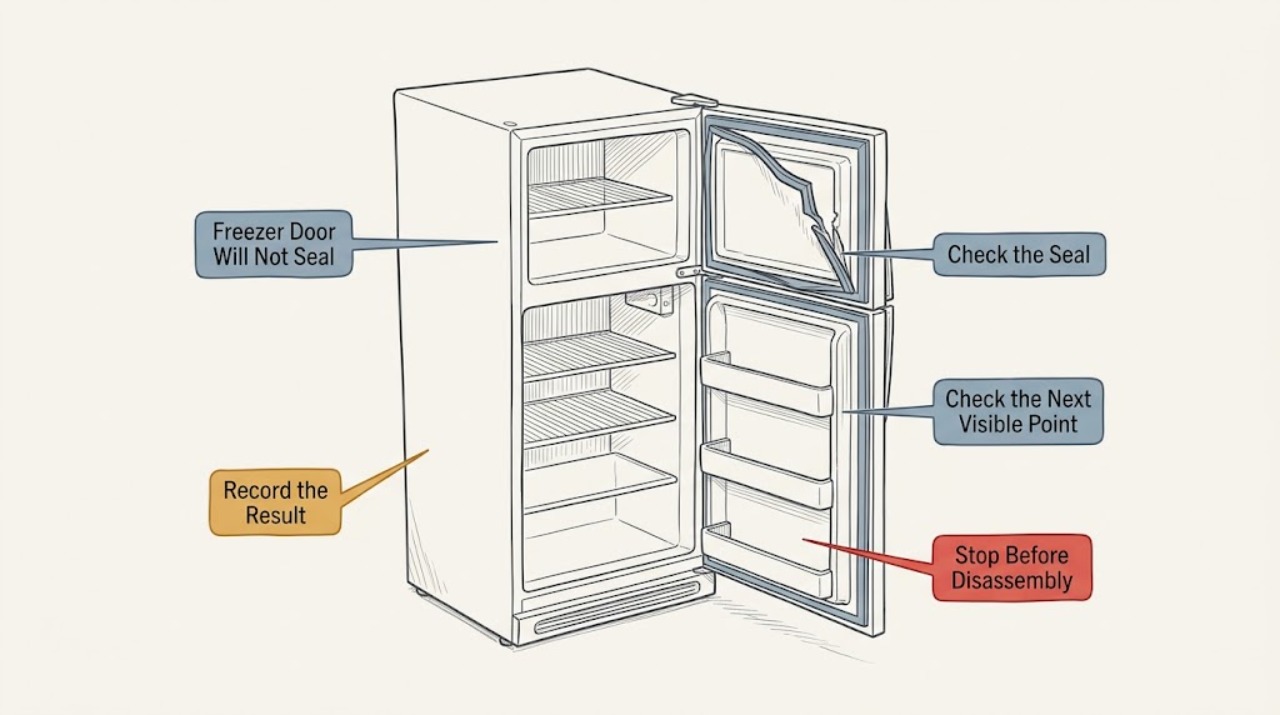
Freezer Door Will Not Seal When the Gasket Is Loose or Torn: What to Check and What to Do Next
A freezer door that will not seal can lose cold air, build frost, and make the appliance run longer. First remove anything that holds the door open and inspect the full gasket for a loose section, gap, twist, dirt, frost, or a tear.
-
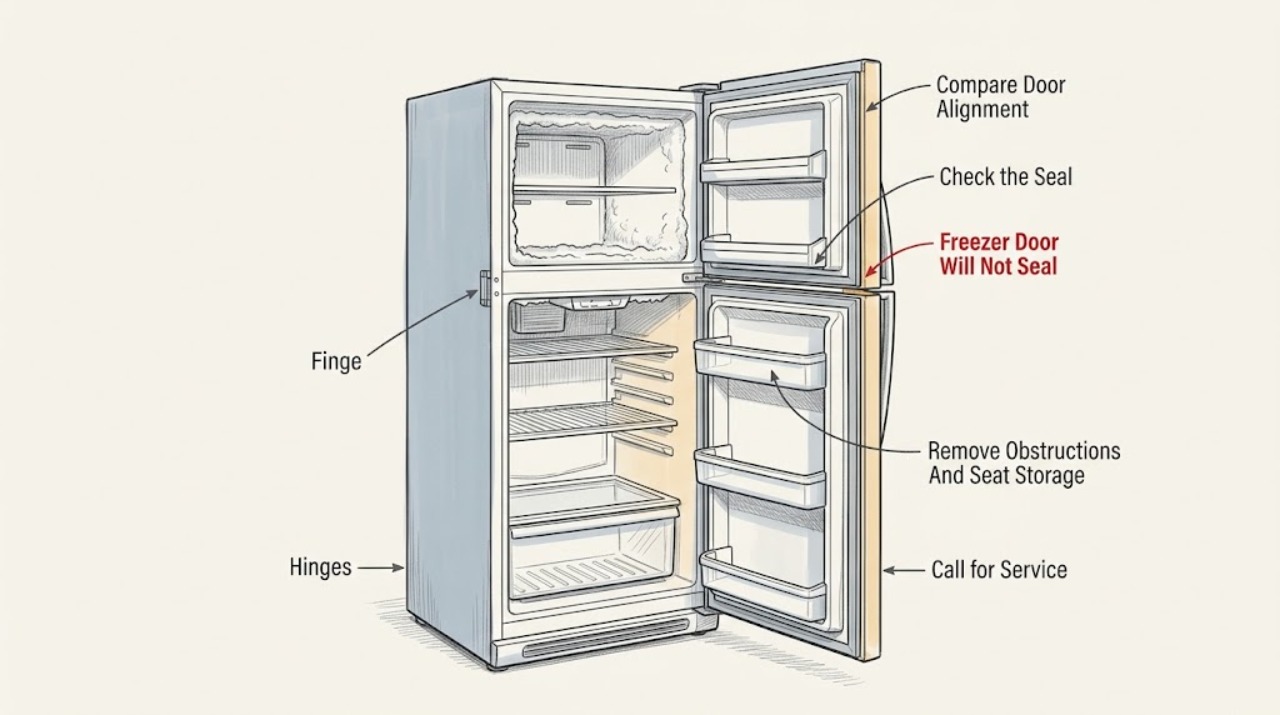
Freezer Door Will Not Seal, Cabinet Is Level: What to Check and What to Do Next
If a freezer door will not seal even though the cabinet is level, first look for an obstruction or drawer that is not fully seated, then inspect the gasket for dirt, warping, gaps, or a section pulled out of its channel. A level cabinet rules out one common cause but does not rule out a gasket problem, an uneven door or rail, a loose hinge, a bent frame, frost at the contact area, or a package pushing from inside.
-
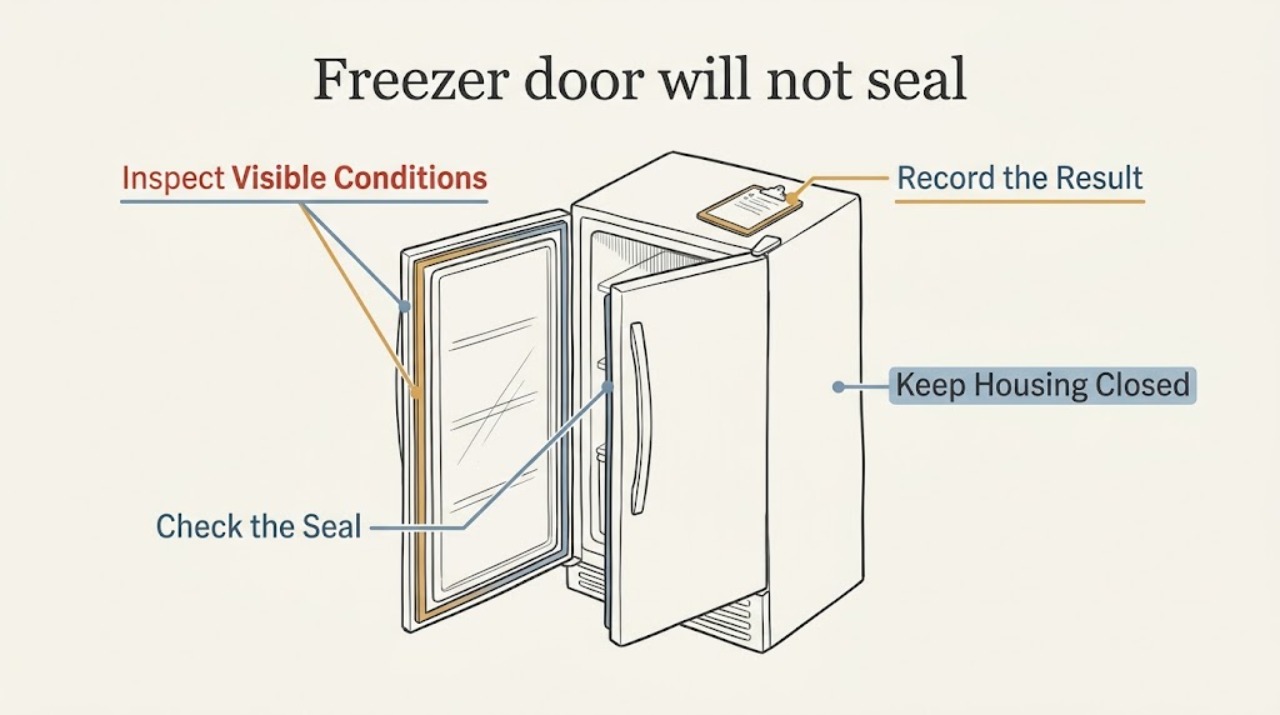
Freezer door will not seal: What to Check and What to Do Next
Start with safe observation: check whether a package, basket, frost, or visible gasket damage is keeping the freezer door from meeting the cabinet evenly. Note the door gap, contact pattern, and any temperature or frost change without removing the door, hinge, gasket, or frost.
-
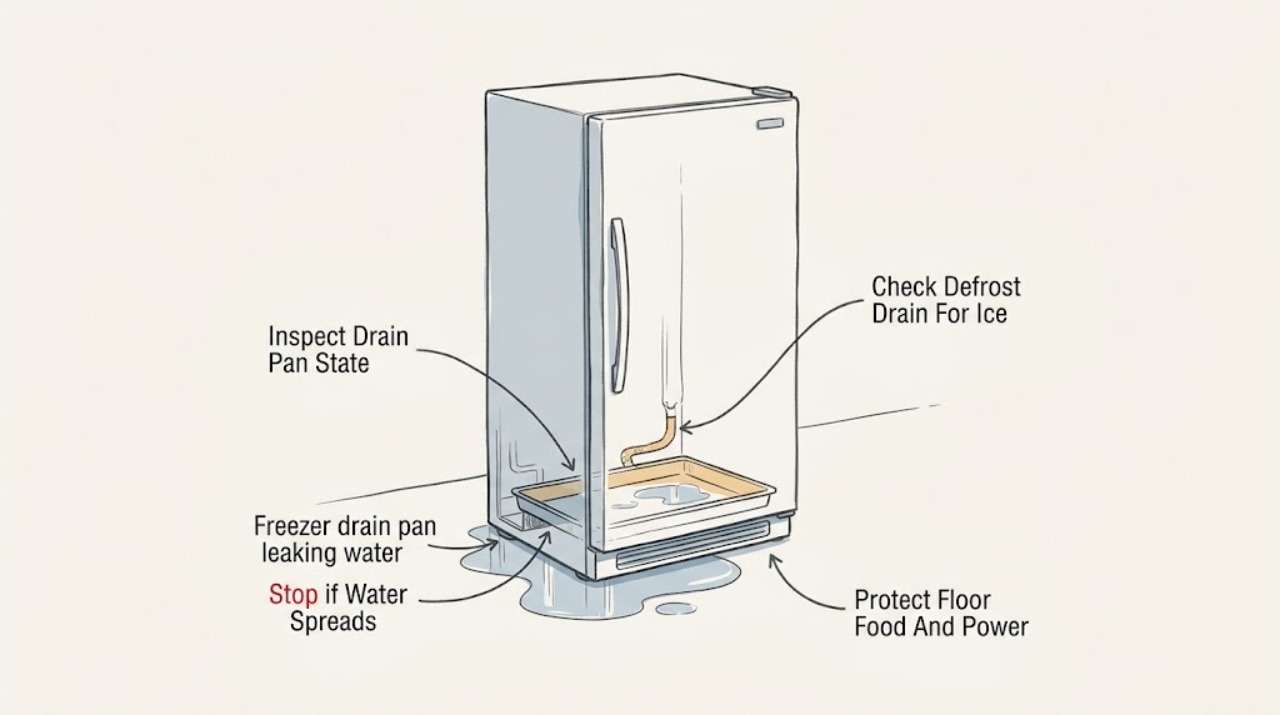
Freezer drain pan leaking water: What to Check and What to Do Next
A freezer drain pan normally receives water from a defrost cycle, but water on the floor means the drain path, pan or evaporation path needs attention. First protect food and the floor, and disconnect power from a dry location if water is near the cord or electrical parts.
-
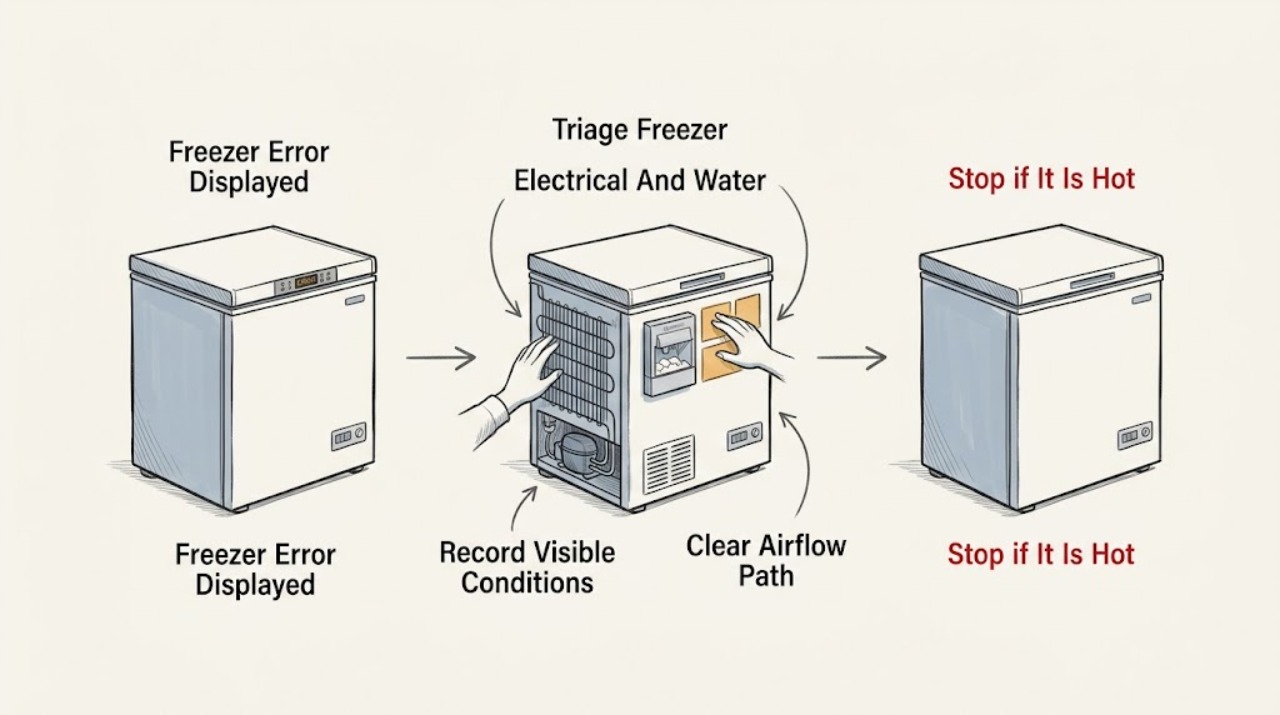
Freezer Error Displayed: Record the Code, Protect Food, and Check Safely
When a freezer displays an error, do not interpret the code from another brand or model. Photograph or write down the exact code, model number, freezer temperature, and when the message appeared.
-
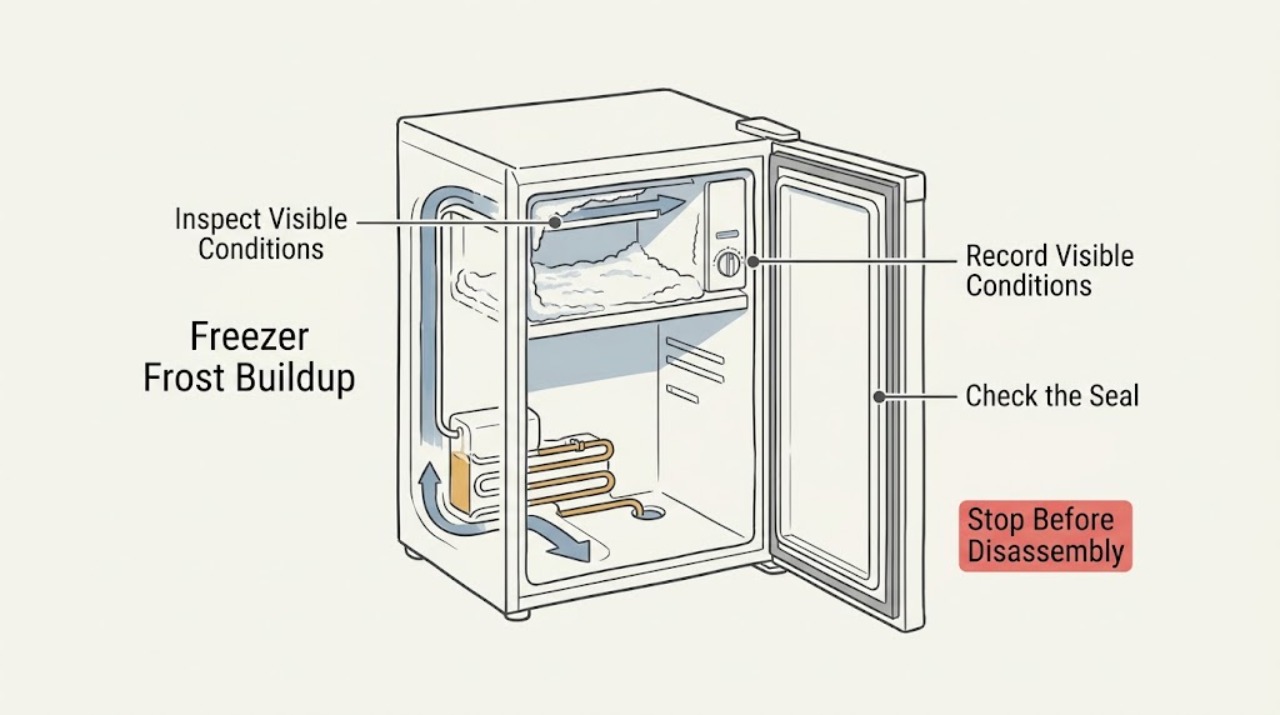
Freezer Frost Buildup: Find the Air Leak, Blocked Flow, or Defrost Fault
Some light, even frost can be normal, especially after humid air enters or on a manual-defrost freezer. Thick, fast-growing, one-sided, or recurring frost usually means warm air is entering through the door seal, packages are holding the door open, vents are blocked, loading or temperature is causing poor circulation, or an automatic defrost or fan path needs service.
-
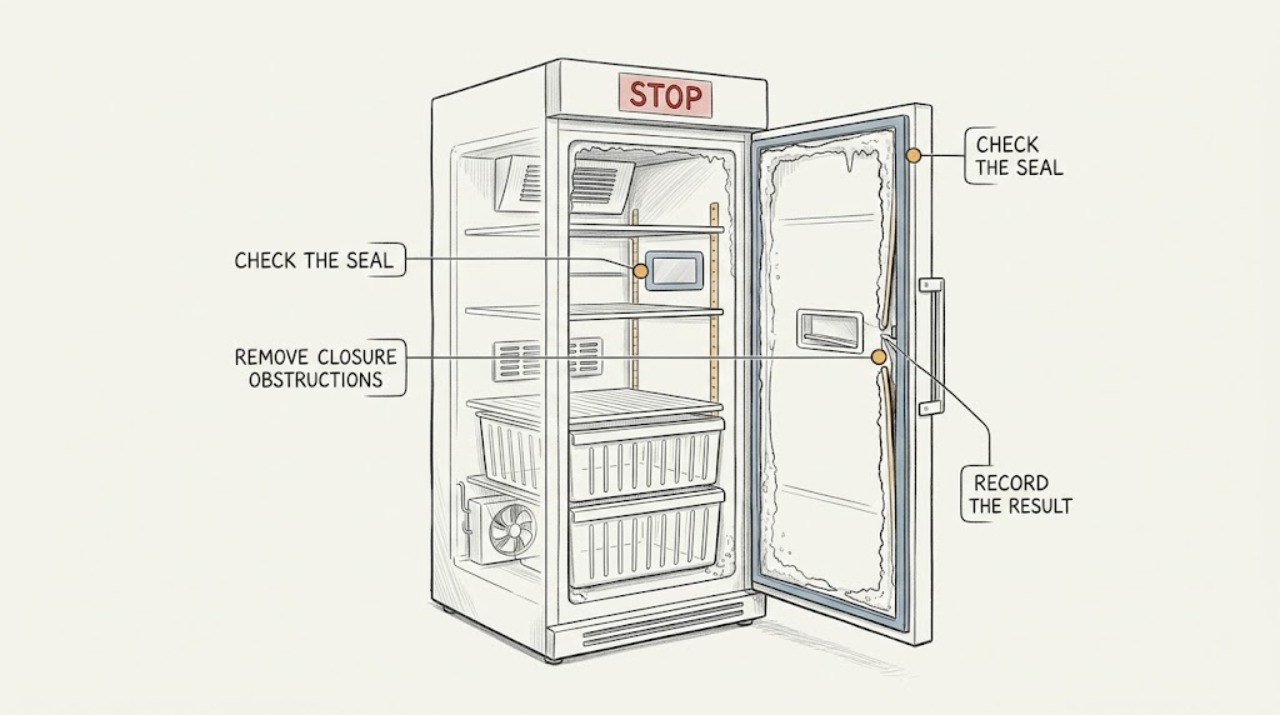
Freezer Has Excessive Frost and Door Seal Gaps: What to Check and What to Do Next
Excessive freezer frost with gaps at the door or lid seal usually means warm, humid room air is entering and freezing on cold surfaces. First confirm the gap around the entire gasket, then check for packages, shelves, baskets, ice, or an unlevel cabinet preventing full closure.
-
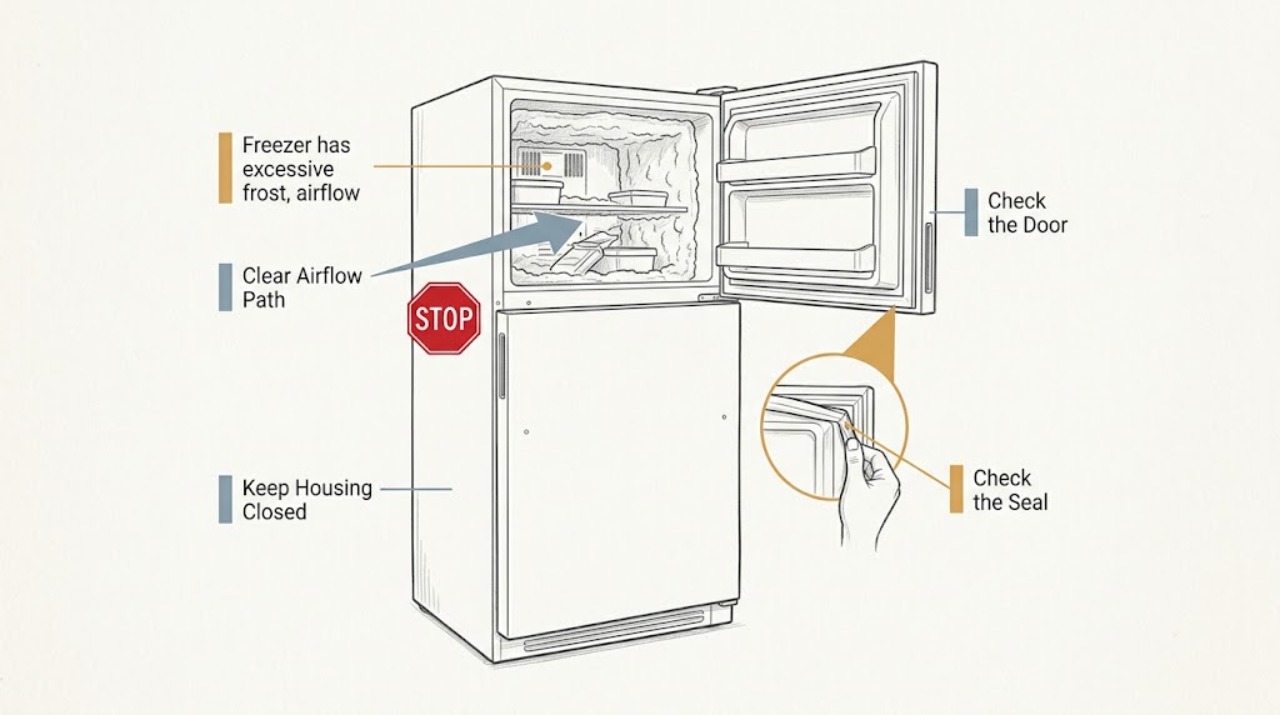
Freezer has excessive frost, airflow is reduced: What to Check and What to Do Next
Excessive frost can cover freezer vents or the evaporator area and reduce airflow, but the frost is usually a result of moisture entering or a defrost problem rather than a stand-alone part diagnosis. First check that packages are not blocking vents, the door closes completely, and the gasket is clean and intact.
-
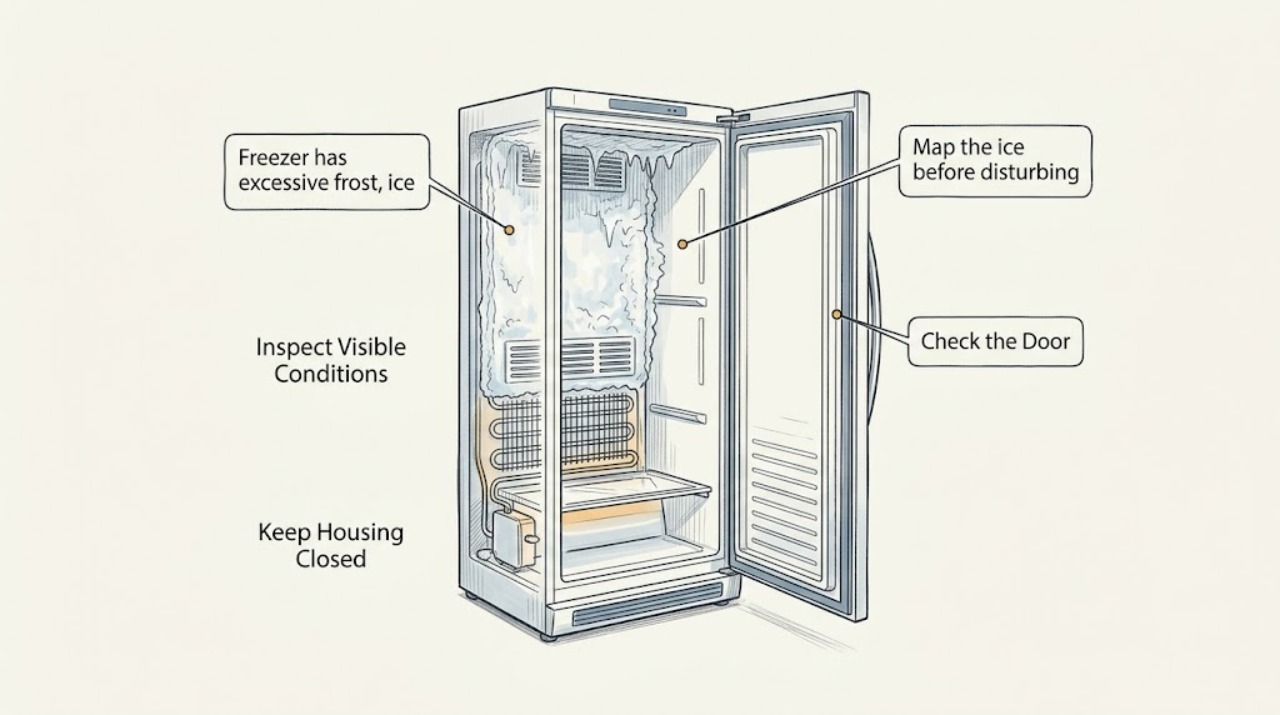
Freezer has excessive frost, ice covers rear wall: What to Check and What to Do Next
Ice covering the rear wall can block the freezer's air path and may point to packages touching the wall, a door that is not sealing, warm humid air entering, or a defrost problem. First move food away from the rear wall and vents, confirm the door closes fully, and clean and inspect the gasket.
-
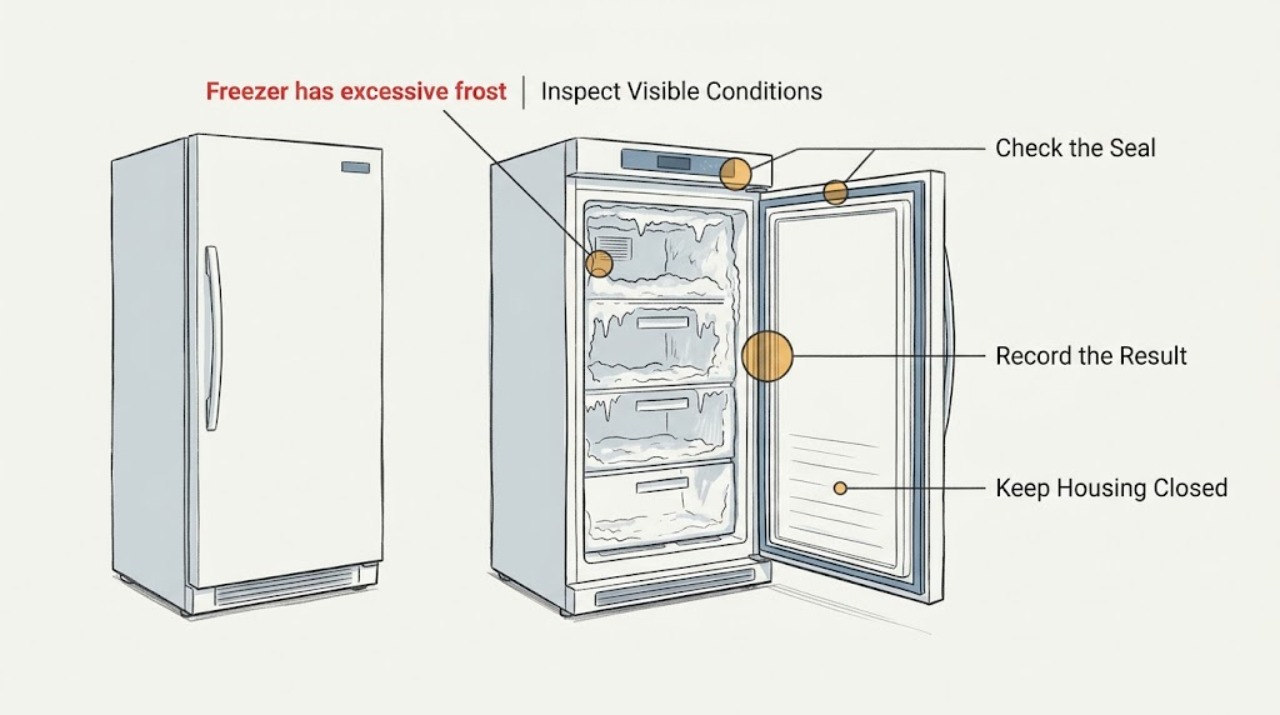
Freezer has excessive frost: What to Check and What to Do Next
Some frost can be normal, but heavy or repeatedly returning frost usually means warm, moist air is entering, a door is not sealing, airflow is blocked, or a frost-free system needs service. Start with user-visible checks: where the frost is concentrated, whether the door closes and its gasket looks intact, whether food blocks vents or the door, and whether temperature or food condition is changing.
-
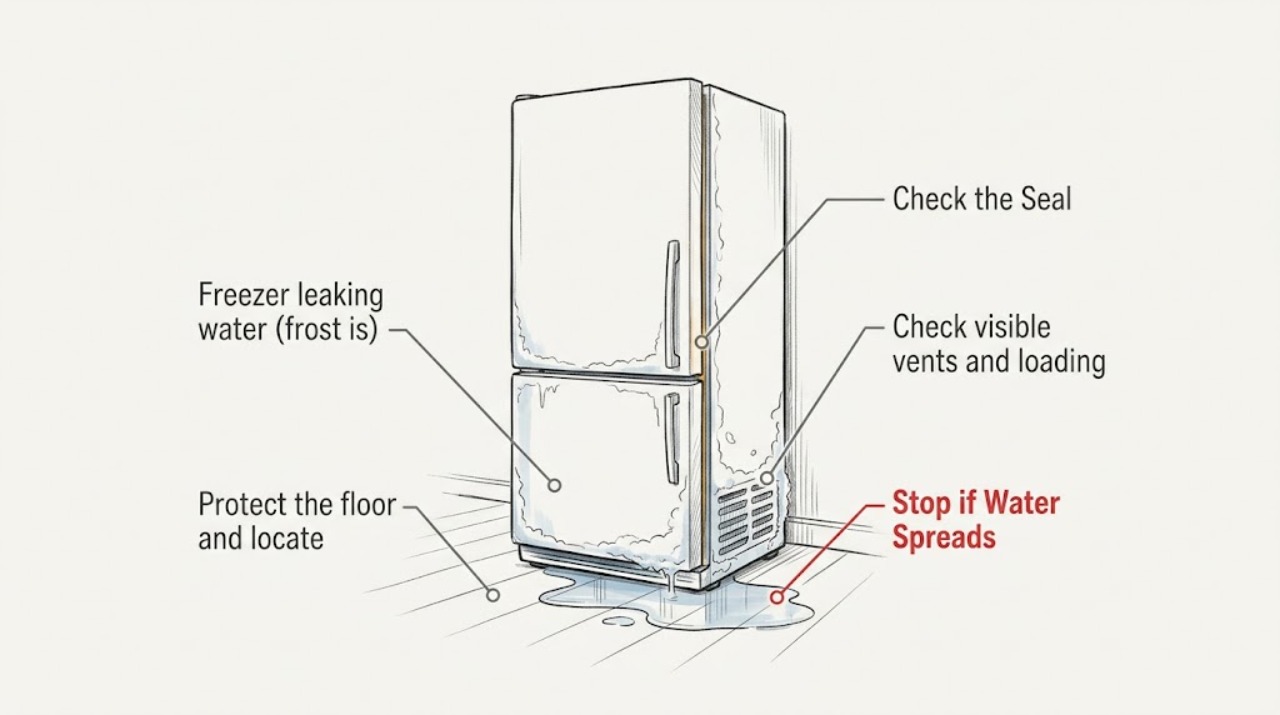
Freezer leaking water (frost is present): What to Check and What to Do Next
A freezer leaking water while frost is present usually has melted frost or defrost water that is not staying in its intended drain path, or warm moist air is entering through a door, gasket, vent, or ice-maker opening and creating excess frost. Protect the floor and food, identify whether the water is inside the compartment, under the appliance, or at a water connection, and inspect only the closed door seal, visible vents, and accessible loading obstructions.
-
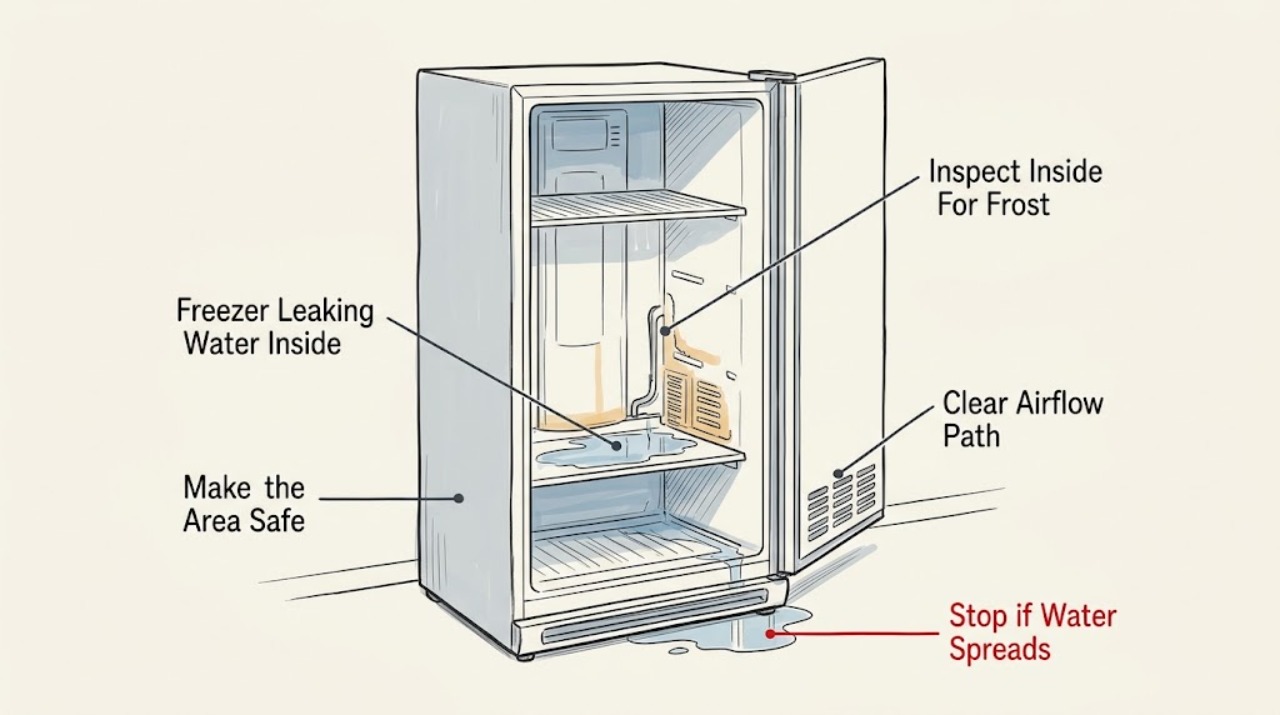
Freezer Leaking Water Inside or Beneath: What to Check and What to Do Next
A freezer leaking water inside or beneath it most often needs the leak source separated into a defrost-drain path, door-and-frost problem, or water-supply circuit. Keep the door closed, protect the floor, and do not reach through water toward a cord or outlet.
-
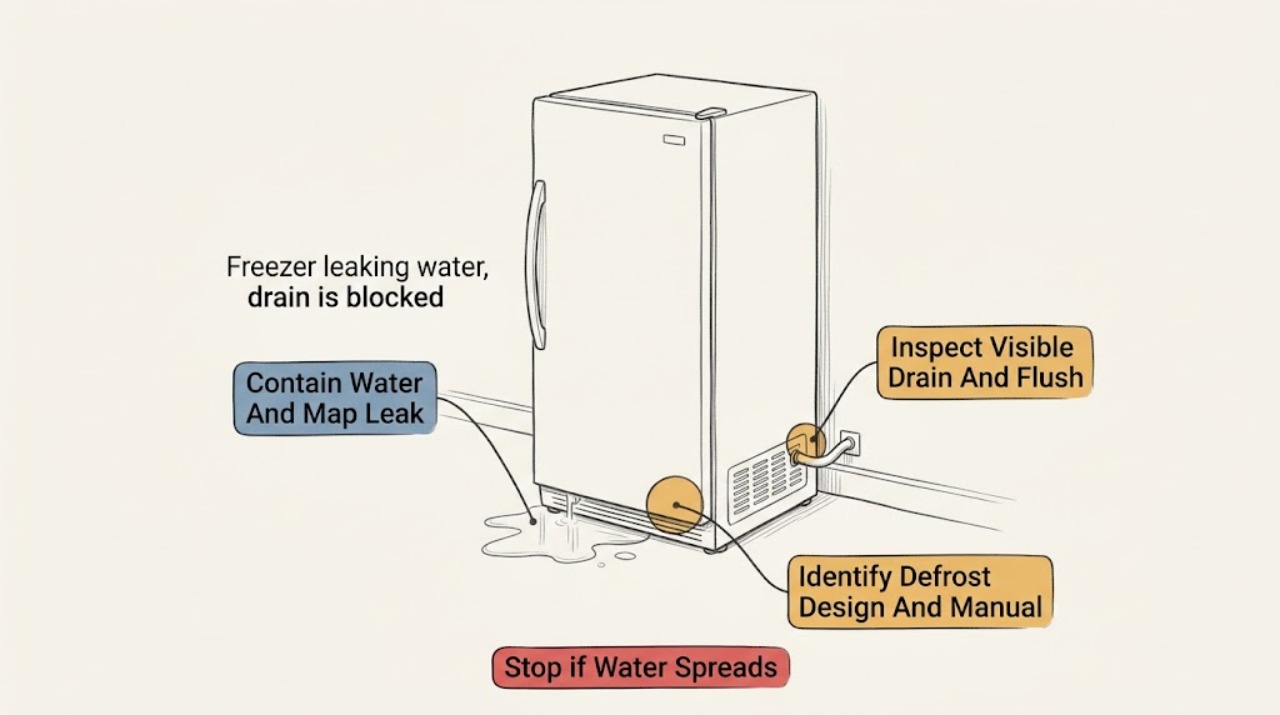
Freezer leaking water, drain is blocked: What to Check and What to Do Next
If a freezer is leaking because its defrost drain is blocked, first protect the floor and identify whether water is pooling inside the freezer, under a basket, in a refrigerator compartment, or at the front of the appliance. A self-defrost freezer normally sends meltwater through a drain tube to a pan; ice on the freezer floor plus a recurring puddle supports a blocked or frozen drain.
-
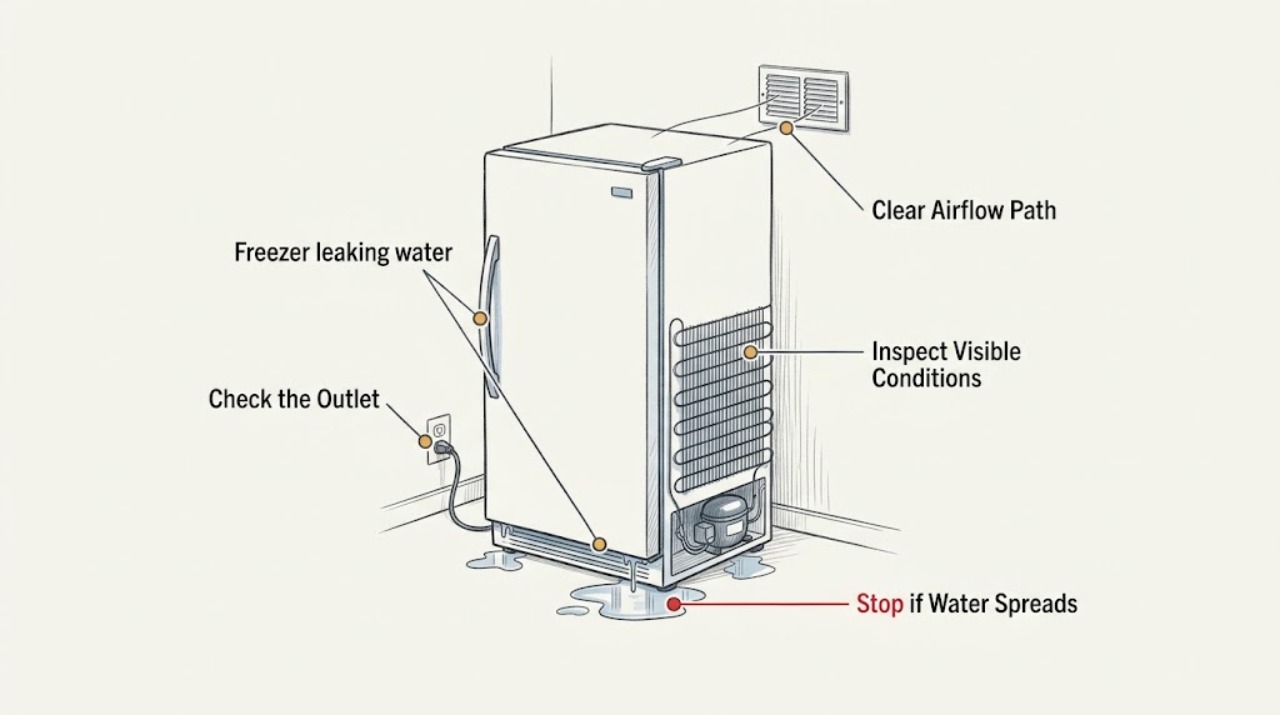
Freezer leaking water: What to Check and What to Do Next
First identify where the water appears and whether it follows a defrost cycle, a door-opening event, a spill, or thawing food. Frost-free freezers normally send defrost water to a drain pan, so water outside the appliance can mean the pan, drain path, door seal, leveling, or a separate spill needs attention.
-
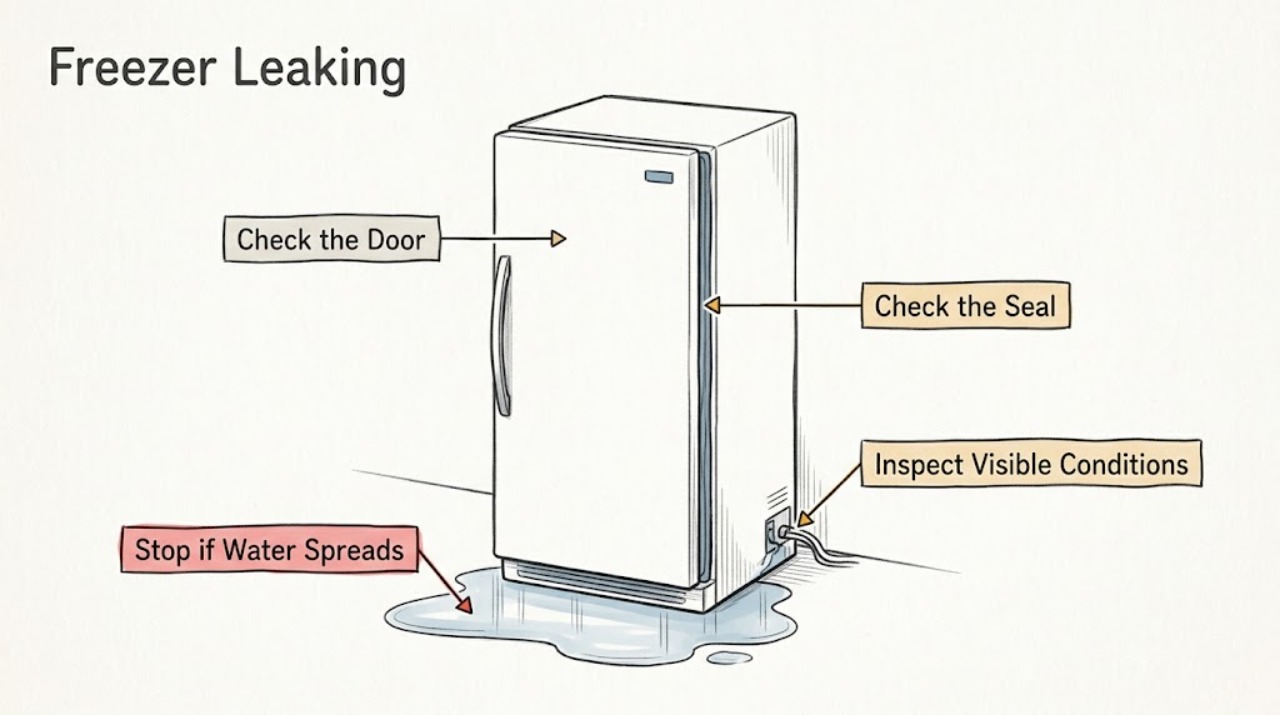
Freezer Leaking: Find the Water Source Without Creating an Electrical Hazard
First locate where water appears: around the door, inside the compartment, beneath the freezer, at a drain or drip pan, or near an ice-maker or water connection if fitted. A door that does not seal can admit warm air and create condensation or frost; a blocked defrost drain can overflow or freeze; an ice-maker line or connection can leak; and a spill or melting ice outside the appliance can be mistaken for a freezer leak.
-
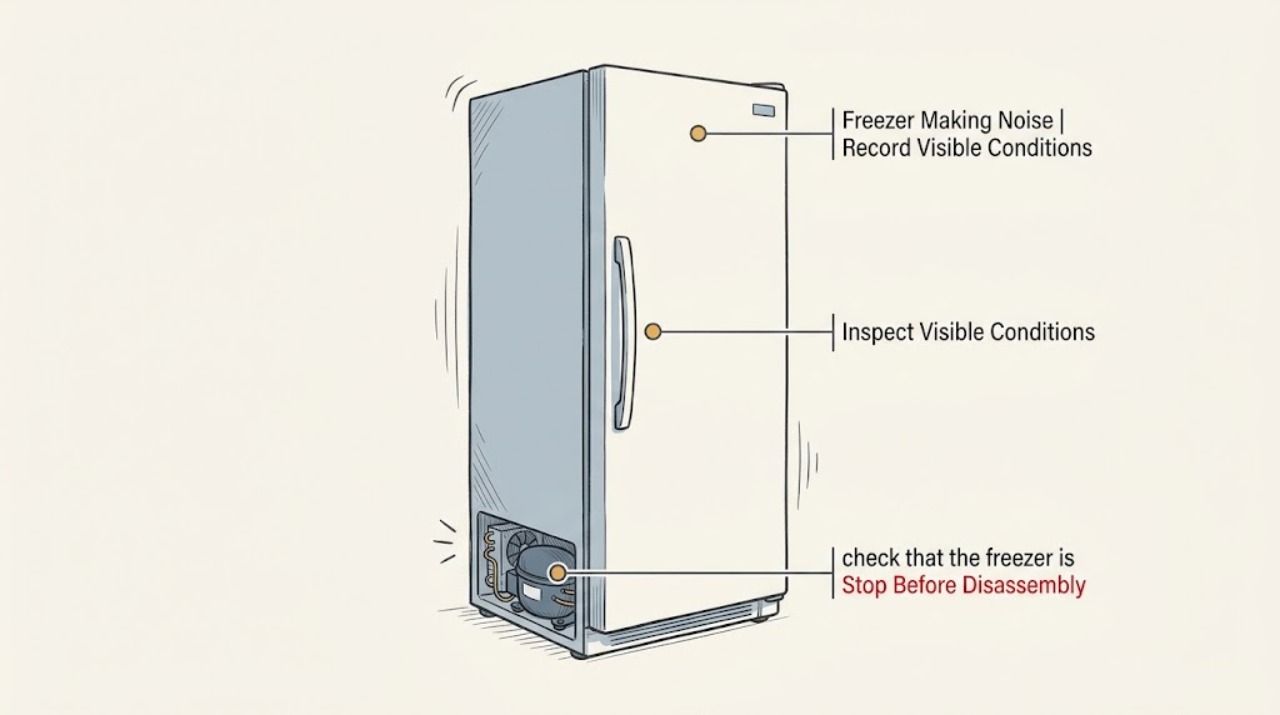
Freezer Making Noise: Identify Normal Cooling Sounds and Unsafe Changes
A freezer can hum, click, gurgle, pop, crackle, hiss, or make a brief water or ice-maker sound during normal cooling, defrost, and temperature regulation. The useful distinction is whether the sound is new or getting louder, where it comes from, whether it changes when a door opens, and whether the freezer is still holding temperature.
-
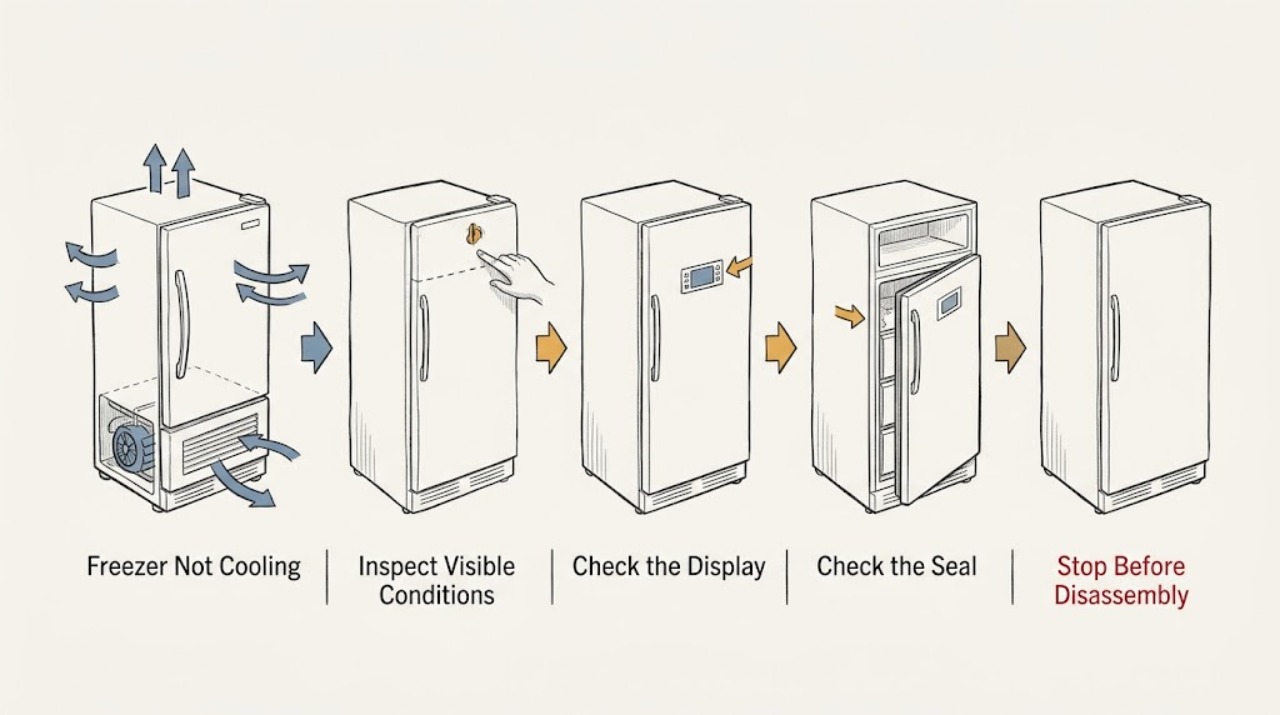
Freezer Not Cooling: Check the Setting, Airflow, Frost, and Power Safely
Start by protecting the food and measuring the freezer temperature if you can. Confirm that the freezer is powered on and not in an Off, Demo, or Showroom mode, then verify the temperature setting and wait for the model's specified stabilization period.
-
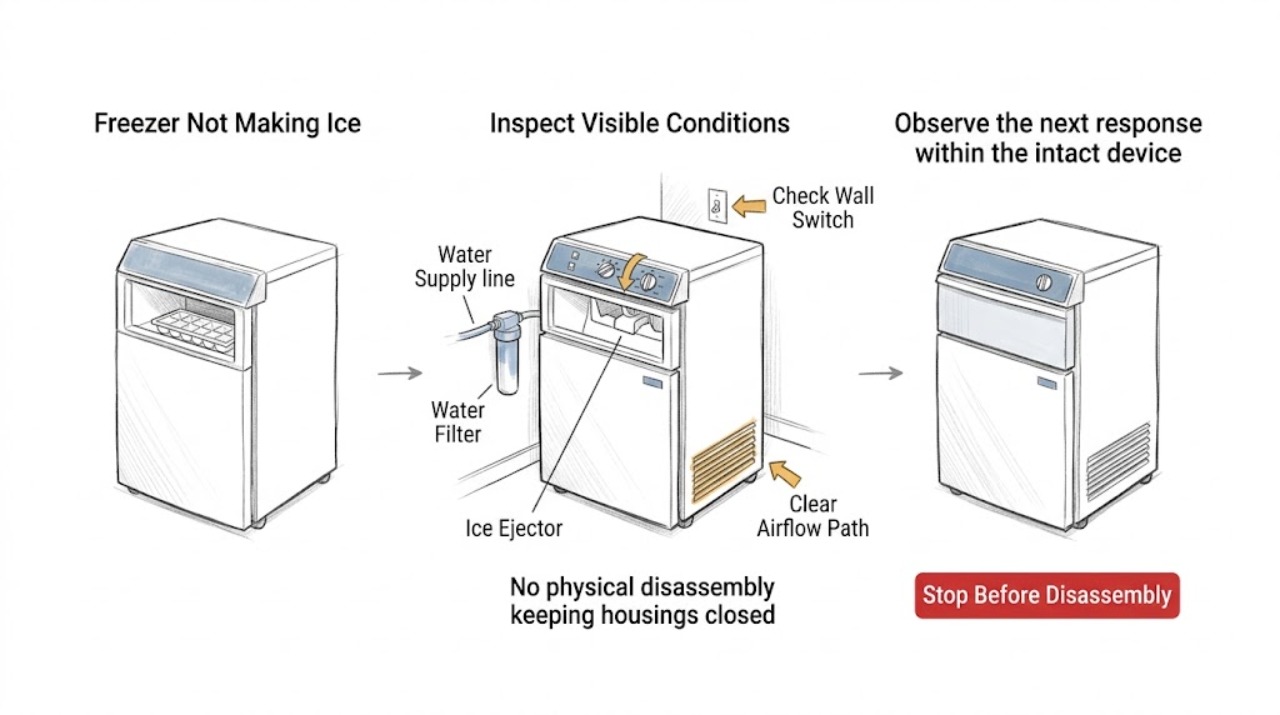
Freezer Not Making Ice: Check the Ice Maker, Water Path, and Temperature
First decide whether this is a manual ice tray or an automatic ice maker, and whether the freezer has a connected water supply. A manual tray needs water placed in the tray and a freezer that is cold enough to freeze it; it does not have an automatic valve, filter, or reset button.
-
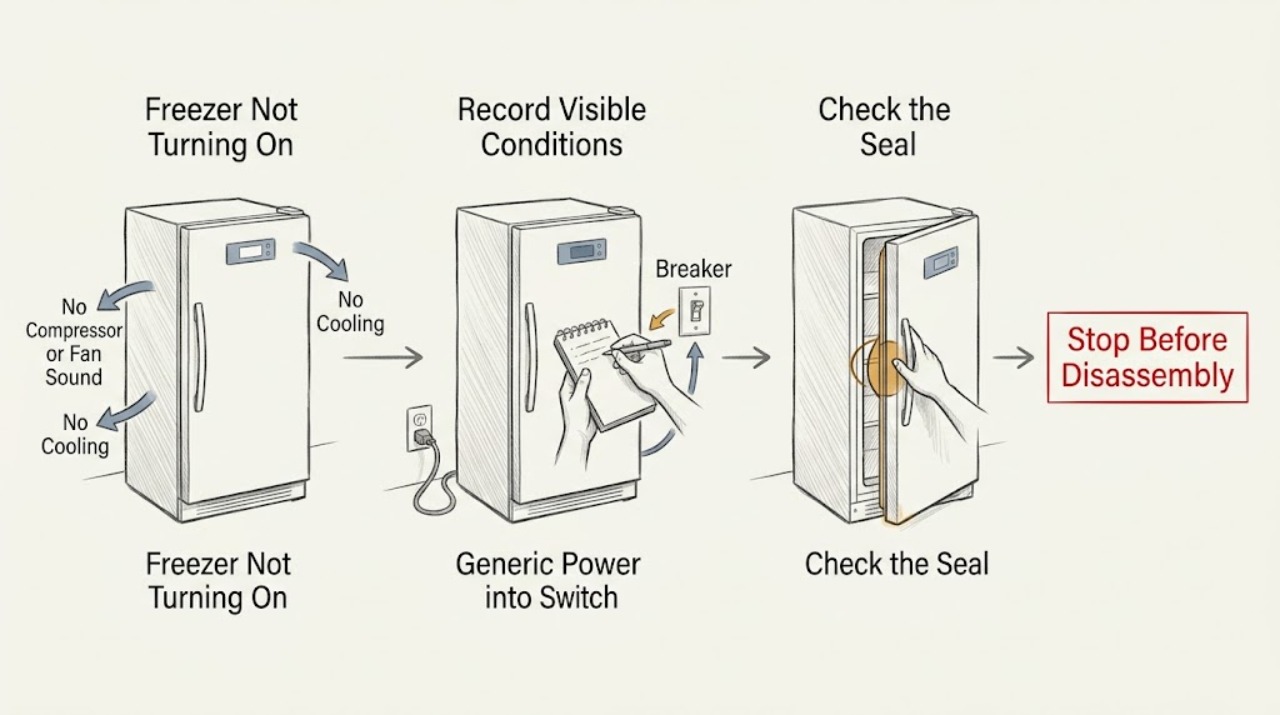
Freezer Not Turning On: Check Power, Controls, Temperature, and Food Safety
First separate a truly unpowered freezer from one that has power but is set too warm, is in an off/demo mode, is between compressor cycles, or has not yet pulled down to temperature. Check the plug, switched outlet, dedicated circuit, breaker or GFCI only from a dry, safe position; do not use an extension cord or open the electrical compartment.
-
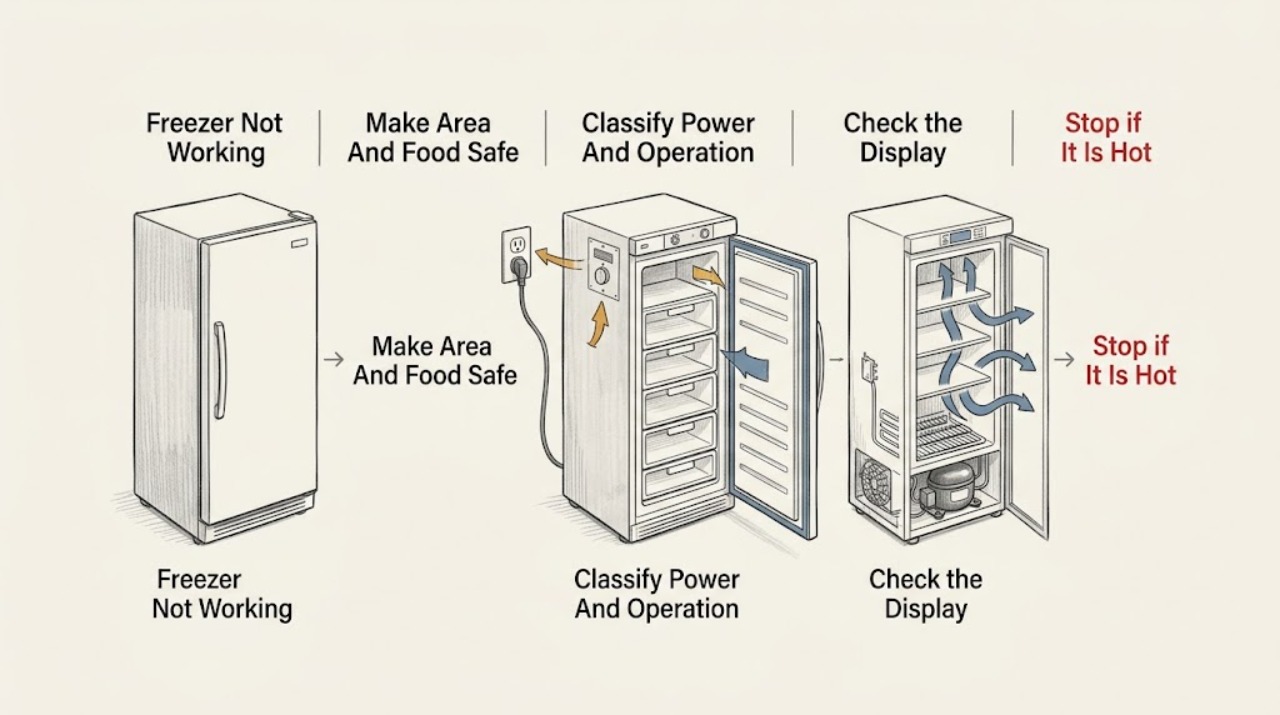
Freezer Not Working: Find Out Whether It Has Lost Power or Cooling
Start by separating a freezer with no display, light, or operating sound from one that has power but is warm. From a dry, safe position, check the plug, outlet, breaker or fuse, control setting, and any cooling-off or demo mode shown by the model manual.
-
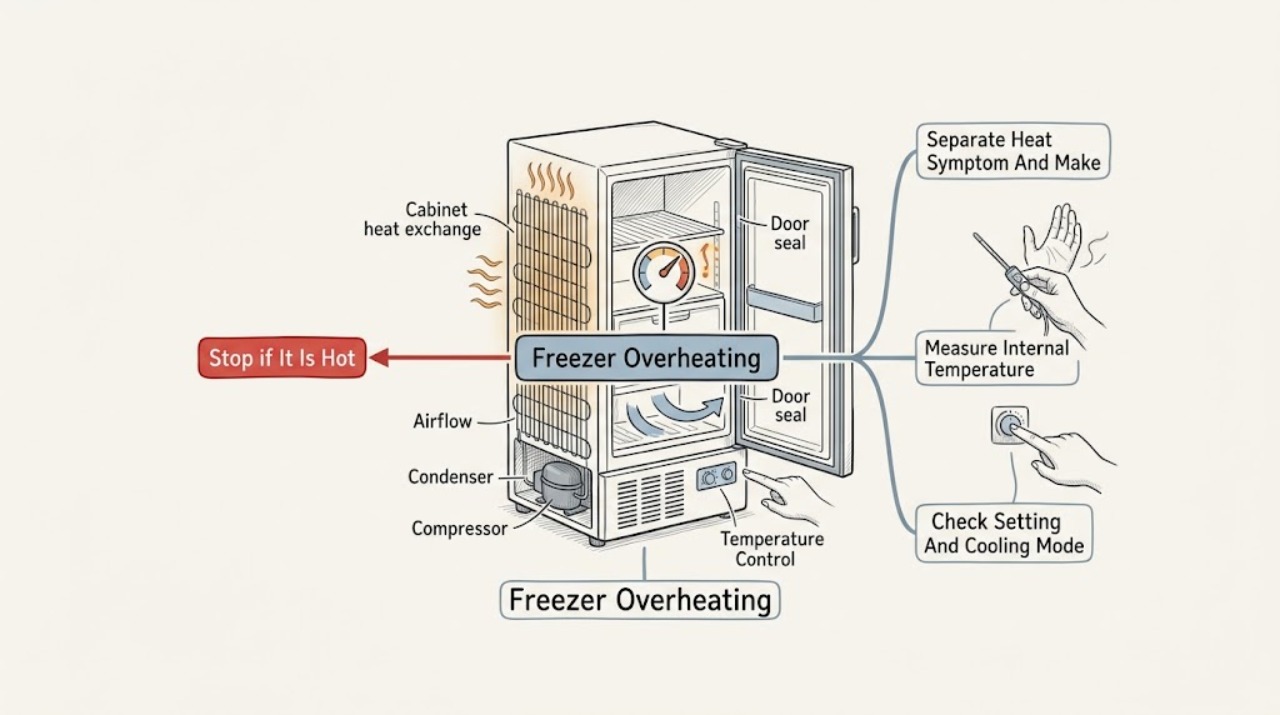
Freezer Overheating: Separate normal cabinet warmth from a cooling fault
A freezer's warm side or front edge is not automatically overheating: manufacturers describe cabinet warmth as a normal part of moving heat from the frozen compartment into the room. The urgent distinction is whether the inside is staying at a safe freezing temperature and whether the warm area is mildly warm or abnormally hot with poor cooling, a burning odour, smoke, a hot plug or wire, repeated clicking, or a trip.
-
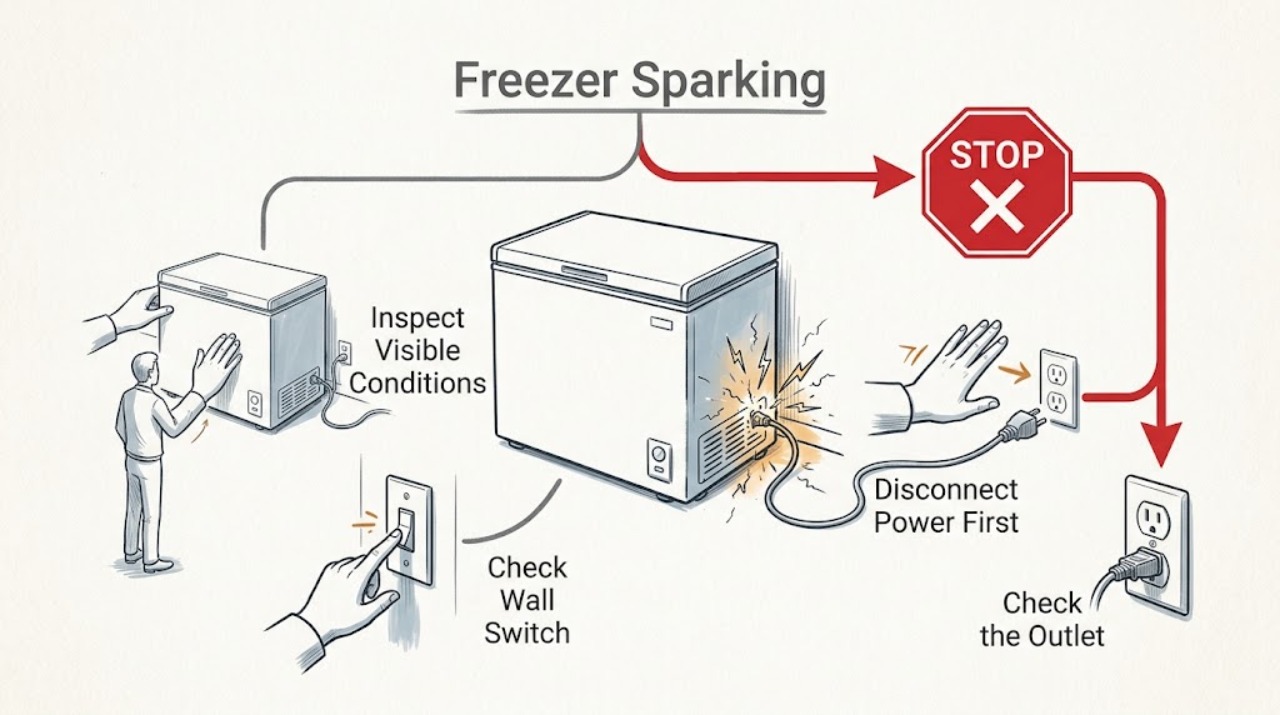
Freezer Sparking: Safe Power-Off Triage
Treat a visible spark, flash, arc, smoke, burning smell, heat, or charred material as an electrical safety event. From a dry, safe position, switch the freezer off or unplug it only if the plug is reachable without approaching the suspected fault; otherwise turn off the freezer circuit at the breaker.
-
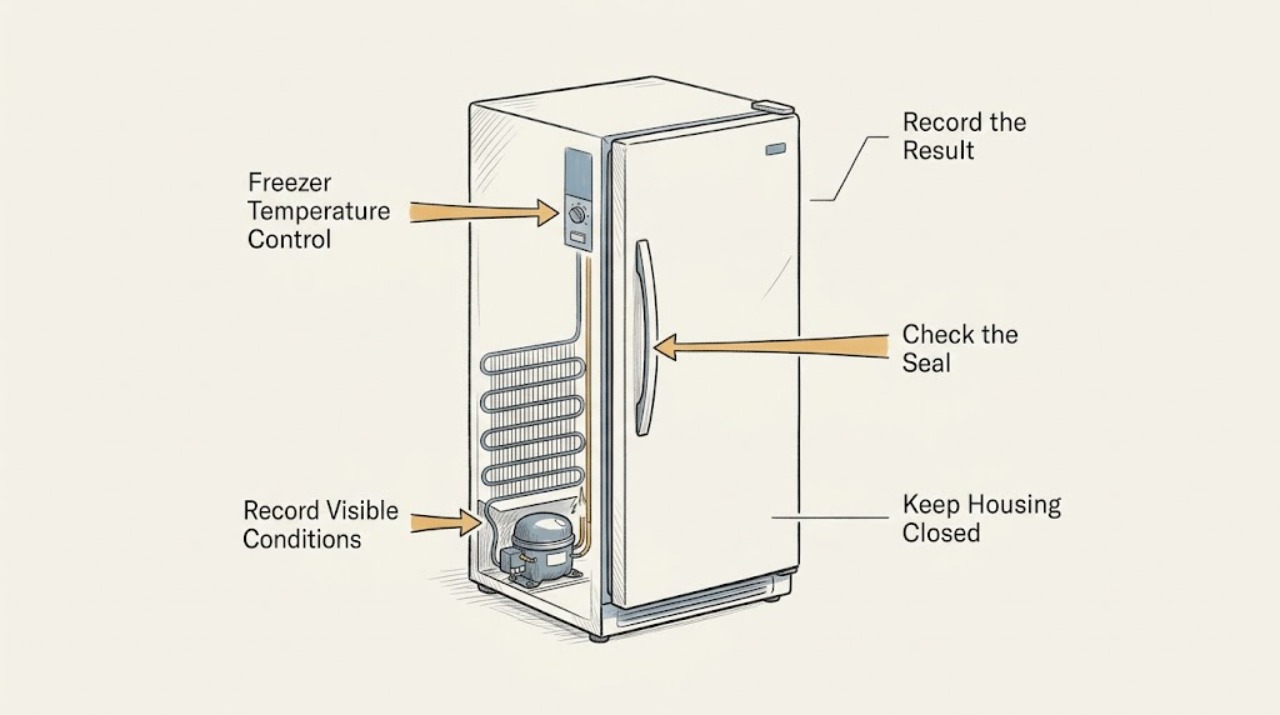
Freezer Temperature Control: Compressor Cycles Too Often—What to Check and What to Do Next
A freezer compressor is designed to run for much of the time and cycle as needed, so frequent operation is not automatically a fault. First verify the actual freezer temperature with a suitable appliance thermometer and compare it with the manufacturer's recommended setting; a setting that is too cold, a recently loaded freezer, frequent door openings, a warm room, a poor door seal, blocked vents or dirty accessible condenser surfaces can all lengthen run time.