
On this page
Start here
Quick answer
First separate a truly unpowered freezer from one that has power but is set too warm, is in an off/demo mode, is between compressor cycles, or has not yet pulled down to temperature. Check the plug, switched outlet, dedicated circuit, breaker or GFCI only from a dry, safe position; do not use an extension cord or open the electrical compartment. Confirm the freezer's control is set to On and the temperature setting is appropriate for the model, and check the door or lid is fully closed with nothing blocking the gasket. After a power interruption, keep the door closed and perform at most one model-approved reset. A low hum, compressor run, click, gurgle, or airflow sound can be normal, but repeated start-clicks without cooling, a grinding fan, or silence with a confirmed supply needs service. Use an appliance thermometer rather than the outside cabinet or a brief touch to judge temperature. Protect food while troubleshooting: keep the door shut, maintain the freezer at 0°F or below when operating, and follow food-safety guidance for thawed items. Stop immediately for burning smell, smoke, sparks, hot or damaged wiring, repeated breaker trips, water near electrics, flooding, or an abnormally hot compressor; isolate power only when safely reachable and arrange qualified service.
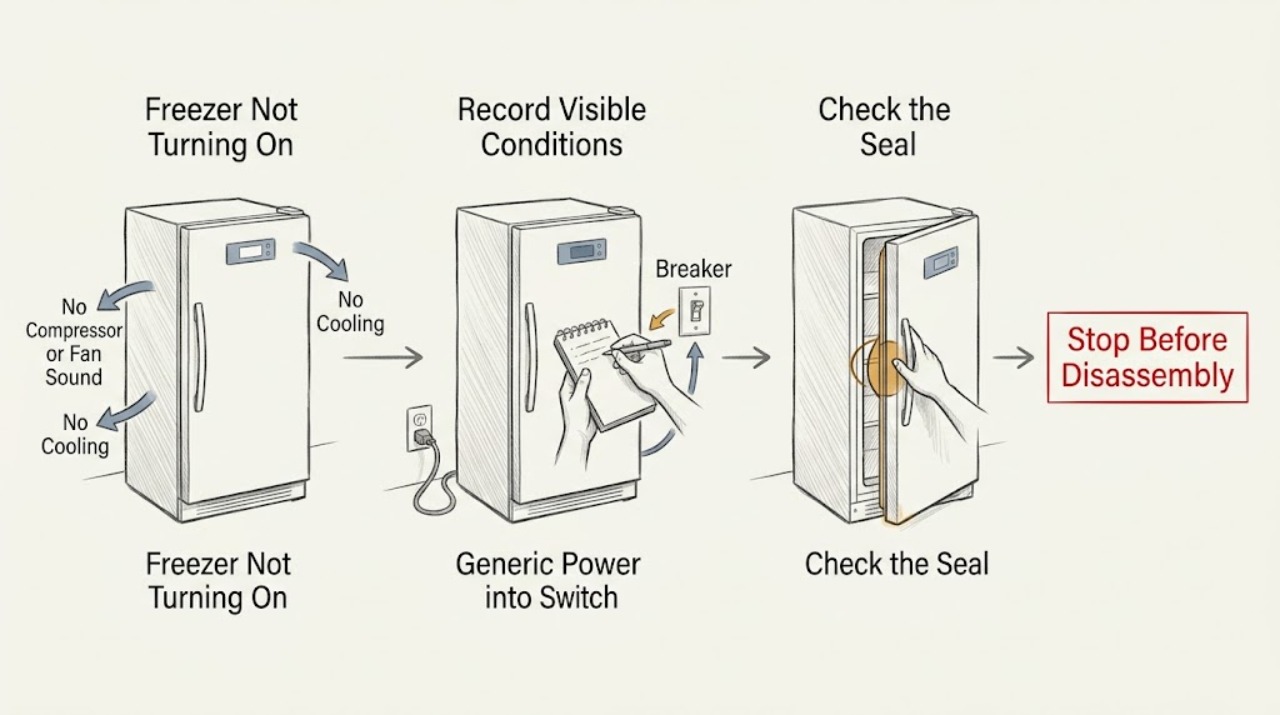
Work through in order
Diagnostic checks
Use only checks that match the exact appliance or system and its official guide.
-
Check 1
Identify whether the unit is a chest or upright freezer and record the model number. Note whether the interior light, display, alarm, temperature control, compressor, fan, and any indicator light respond. Record whether the complaint began after an outage, relocation, door being left open, or a control change, and whether the cabinet is warm or the interior is thawing.
Expected result: No light, display, indicator, or operating sound suggests a power or main-control branch. A light or display with no cooling suggests an On/off or temperature setting, compressor-cycle, airflow, or cooling-system branch. A freezer that has just been started may need time to reach temperature.
Next step: Continue to the external power check if all signs are absent; otherwise check controls, door, environment, and measured temperature without opening panels.
Why this matters
Why: A symptom inventory prevents a normal compressor pause or warm-up period from being mistaken for a dead appliance and gives the model manual the information needed for the correct control sequence.
-
Check 2
From a dry, safe position, inspect the power cord and plug for visible damage and confirm the plug is fully inserted in the intended grounded outlet. Check that the outlet is not controlled by a wall switch. Test the outlet with a small appliance or lamp only if doing so is dry and safe; check the dedicated breaker or GFCI for a trip and reset it once.
Expected result: A dead outlet, switched-off outlet, tripped breaker, or GFCI can make the freezer appear not to turn on. A breaker or GFCI that trips again, a warm or damaged cord, or a wet outlet points to an electrical hazard rather than a freezer setting.
Next step: Restore only an obvious, safe external supply condition. If power does not return or trips again, leave the freezer off and arrange qualified electrical or appliance service; do not use an extension cord or open the cabinet.
Why this matters
Why: Official freezer power guidance calls out a properly connected cord, suitable grounded circuit, outlet verification, and breaker/GFCI checks; it does not authorize internal electrical work.
-
Check 3
Check the accessible freezer control, thermostat, or electronic setting against the owner manual. Confirm the unit is On rather than Off, Demo, Vacation, or another model-specific non-cooling mode, and check for a temperature or door alarm. Inspect the door or lid seal and closure for a package, basket, or ice obstruction without forcing it or removing the gasket.
Expected result: An Off setting, a model-specific mode, a control changed during cleaning, or a door that cannot close can stop or limit cooling while power remains present. A correct setting, closed seal, and persistent no-cooling condition moves the problem toward compressor, fan, control, or sealed-system service.
Next step: Correct only an obvious setting or closure issue using the manual. Do not guess a Demo/Vacation exit sequence or bypass an alarm, switch, or door sensor; arrange service if the control will not hold its setting.
Why this matters
Why: Freezer controls and operating modes vary; official guidance directs owners to the manual and identifies the On control, temperature setting, and door closure as model-dependent checks.
-
Check 4
Check the freezer's environment and accessible airflow without moving it across a wet floor. Confirm it is stable, not pressed tightly against a heat source, and that the model's ventilation openings are not blocked by packages, dust, or stored items. If it was just installed, defrosted, heavily loaded, or the door was opened repeatedly, allow the model's manual-specified stabilization period before judging cooling.
Expected result: A warm room, blocked airflow, a large warm load, or repeated door openings can lengthen the initial pull-down or increase compressor run time. If the freezer remains warm after the manual's stabilization period with clear airflow, it is not explained by environment alone.
Next step: Clear only accessible obstructions and keep the door closed. Do not dismantle panels or clean inaccessible coils; arrange service if the environment is suitable but the freezer does not cool.
Why this matters
Why: Official freezer control guidance notes that room temperature, lid or door openings, and load affect the time needed to reach the desired temperature; the exterior may feel warm while heat is removed from the interior.
-
Check 5
After a power interruption or one safe reset, keep the door closed and listen from outside the cabinet for a smooth compressor hum, airflow, a brief click at start/stop, or gentle gurgling. Do not repeatedly unplug and reconnect the unit, touch a hot compressor, or place hands near a fan. Compare any sound with the model manual and the freezer's cooling result.
Expected result: A hum, compressor run, gurgle, popping, or brief click can be normal operating or defrost sound on some freezer designs. Repeated clicks with no sustained compressor run, grinding or scraping, a loud escalating vibration, or silence with confirmed power suggests a start, fan, control, or compressor fault.
Next step: Stop listening tests when the sound is abnormal or the freezer is warming. Keep the unit out of use and arrange qualified service rather than replacing a relay, fan, compressor, or control based on sound alone.
Why this matters
Why: Manufacturer sound guidance lists normal compressor, refrigerant, fan, defrost, and pressure-equalization sounds, but an unfamiliar or persistent sound paired with warming food is a service branch.
-
Check 6
Place an appliance thermometer between frozen packages and keep the door closed while checking the temperature according to the thermometer instructions. Record the temperature, outage duration if known, ice crystals or thawing, and whether the freezer returns to its normal setting after a safe power restoration. Do not rely on a brief touch, package appearance alone, or tasting food.
Expected result: A freezer at or below 0°F is at the recommended long-term storage target. Food with ice crystals or at or below 40°F may be refrozen or cooked under FDA guidance; food that has warmed beyond safe limits or has been contaminated by floodwater must be handled according to food-safety guidance, not appliance troubleshooting.
Next step: Keep the door closed, use a cooler or other safe cold source if needed, and discard questionable food rather than tasting it. If the freezer remains warm after safe checks, arrange qualified service and provide the temperature record.
Why this matters
Why: Food safety and appliance diagnosis are separate decisions: a freezer can have power while being too warm, and food can become unsafe before a technician arrives.
Use your observations
Decision map
Find the observation that best matches what you see, then follow the next safe action.
-
PATH 01Next step
What you see
The outlet is dead, the cord is unplugged, the outlet switch is off, or a breaker/GFCI has tripped once with no visible damage or water.
Do this next
Restore the obvious external supply condition and verify the freezer once. If power does not return or the protective device trips again, stop and arrange electrical or appliance service.
-
PATH 02Next step
What you see
The freezer has power but the control is Off, in a model-specific non-cooling mode, set incorrectly, or the door/lid cannot close.
Do this next
Use the owner manual to correct the setting or clear an accessible closure obstruction. Do not guess a mode sequence, bypass a sensor, or force the door; arrange service if the state returns.
-
PATH 03Next step
What you see
The freezer has recently been started, defrosted, heavily loaded, or opened frequently, and the compressor or fan is operating normally.
Do this next
Keep the door closed, clear accessible airflow, and allow the model's manual-specified stabilization period. Monitor with an appliance thermometer rather than repeatedly changing the control.
-
PATH 04Next step
What you see
The freezer makes a smooth hum, gentle gurgle, brief click, airflow, or defrost sound and maintains the target temperature.
Do this next
Treat the sound as potentially normal for the model and monitor it. Arrange service if it becomes loud, mechanical, continuous, or is accompanied by warming food or a warning.
-
PATH 05Next step
What you see
The freezer has confirmed safe power and an appropriate setting but remains warm, repeatedly clicks without cooling, has grinding or escalating vibration, or does not run after stabilization.
Do this next
Keep the door closed and arrange qualified appliance service for the fan, start system, compressor, controls, or sealed cooling system. Do not open panels or replace parts from a sound diagnosis.
-
PATH 06Next step
What you see
There is burning smell, smoke, sparks, hot or damaged wiring, repeated breaker trips, water near electrical parts, flooding, an abnormally hot compressor, or any fire/electrical hazard.
Do this next
Stop immediately. Do not touch wet electrical parts or pull a plug while standing in water. Isolate power only from a safe, dry position, keep people away, and obtain qualified or emergency help. Do not restart or repeat the test.
Helpful context
Understand the symptom
A blank freezer is not the same as a freezer that is not cooling
Record whether the interior light, display, alarm, compressor, or fan responds. A freezer with no light and no sound needs a supply or control check first. A freezer with a light or display but no cold air may be between cycles, incorrectly set, blocked by a mode, or have a cooling fault. Chest and upright models use different controls, so the owner manual and model number matter.
Protect food while you diagnose
Keep the door or lid closed as much as possible. Do not taste thawed food to decide whether it is safe. Use an appliance thermometer and move food to a safe cold source if necessary. Do not handle a wet plug, outlet, or appliance, and do not continue testing a freezer that smells burned, sparks, trips power, or has water around electrical parts.
When checks do not resolve it
Need a professional?
Arrange qualified appliance service when the freezer remains warm after safe power, control, closure, airflow, and stabilization checks, or when a confirmed supply is present but the compressor or fan will not run., Stop immediately for smoke, burning smell, sparks, hot or damaged wiring, repeated breaker/GFCI trips, water near electrical parts, flooding, an abnormally hot compressor, or an appliance that repeatedly shuts down., Do not open electrical covers, test live voltage, bypass a thermostat, door switch, or safety device, touch the compressor or fan, or replace a start component or sealed-system part without qualified model-specific service., Protect food separately from repair decisions: keep the door closed, use a thermometer, move food to a safe cold source when needed, and follow current food-safety guidance instead of tasting questionable food.
Common questions
FAQ
Why is my freezer not turning on at all?
Check the plug, switched outlet, breaker or GFCI, and the freezer's On control from a dry, safe position. If power is confirmed but there is no light, sound, or cooling, or a breaker trips again, arrange qualified service.
Can a freezer be running even if I do not hear it?
Yes. Compressors cycle, and modern freezers can produce quiet or intermittent sounds. Use the light, display, temperature control, and an appliance thermometer. Warming food with confirmed power or repeated start clicks needs service.
How long should I wait after restoring power?
Use the owner manual's stabilization guidance and keep the door closed. The required time depends on room temperature, model, load, and door openings; judge the result with a thermometer rather than repeatedly cycling power.
What temperature should a freezer reach?
FDA guidance uses 0°F or below as the freezer target for frozen food. Measure between packages with an appliance thermometer; the outside cabinet or a brief touch is not a reliable temperature test.
How long is food safe when the freezer loses power?
Keep the door closed. FDA says a full freezer can hold temperature for about 48 hours and a half-full freezer for about 24 hours. Food with ice crystals or at or below 40°F may be refrozen or cooked; never taste questionable food.
When is a freezer sound a warning?
Gentle compressor, airflow, gurgling, popping, or brief clicking can be normal on some designs. Grinding, scraping, loud escalating vibration, repeated start-clicks without cooling, burning smell, smoke, sparks, or warming food requires stopping and service.
Read the exact guide
Official sources
- Not Powering On - Not Operating - Chest FreezerWhirlpool Product Help · Chest-freezer power connection, outlet, breaker/GFCI, On control, and service guidance applicable to comparable freezer power checks
- How to Use the Controls (Chest and Upright Freezer)Whirlpool Product Help · Chest and upright freezer controls, temperature setting, compressor cycling, room-temperature/load effects, and operating stabilization
- Upright & Chest Freezer - Normal SoundsGE Appliances · Upright and chest freezer normal compressor, refrigerant, defrost, airflow, and door-pressure sounds
- Food and Water Safety During Power Outages and FloodsU.S. Food and Drug Administration · Freezer temperature, closed-door power-outage practices, thawed-food assessment, and flood-water food safety
Community feedback
Share a repair observation
Share a plain-text repair observation. Accepted observations are published automatically; this page may take a moment to update.