
On this page
Start here
Quick answer
The question alone cannot confirm a freezer thermostat failure. A warm freezer can also be switched off, set incorrectly, still stabilizing after an adjustment or large load, affected by a door or lid seal, blocked by food or frost, or have another cooling-system fault. First identify the freezer type and model, then measure the temperature between established frozen packages rather than judging the air immediately after opening the door. Check only the accessible control, door or lid seal, visible frost and airflow path. If the freezer remains warm with the control on and no external cause, arrange qualified appliance service; do not remove panels, test live wiring or order a thermostat without the exact model and a diagnosis.
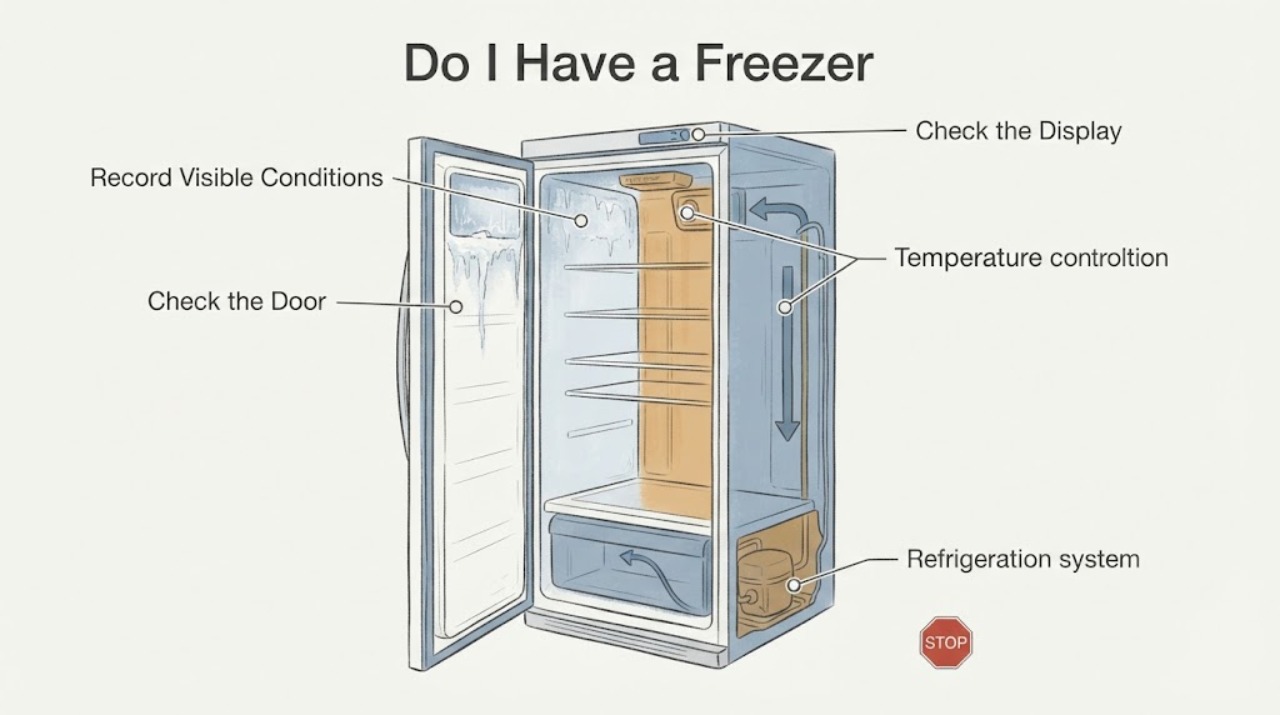
Work through in order
Diagnostic checks
Use only checks that match the exact appliance or system and its official guide.
-
Check 1
Record whether this is a chest freezer, upright freezer or refrigerator-freezer, and read the brand and full model number from the rating label without removing covers. Find the matching owner manual before interpreting the control or ordering a component.
Expected result: The appliance type and complete model are available, or the label is missing or unreadable.
Next step: Use the exact model manual or manufacturer support page if the identity is available. If it is not, continue only with the general external checks below and plan to give the model information to a technician.
Why this matters
Why: Freezer control locations, temperature ranges and thermostat designs vary by model. Without the identity, the word thermostat does not identify a compatible part or a confirmed fault.
-
Check 2
Measure the freezer with an appliance thermometer placed between frozen packages on the middle shelf, leaving the food and thermometer undisturbed long enough to represent a stable reading. Do not judge the result from a brief air reading immediately after opening the door.
Expected result: The food temperature is near the model's documented target, or it is clearly warmer than the target after the freezer has had time to stabilize.
Next step: Write down the temperature, measurement location and time. Compare it with the exact manual; if it remains warm, proceed to the accessible checks and service branch rather than replacing a thermostat by guesswork.
Why this matters
Why: A stable, in-range food temperature does not support a thermostat-failure conclusion. A stable warm reading confirms a cooling symptom but does not distinguish the control from airflow, defrost, compressor or other causes.
-
Check 3
Check the accessible power or temperature control and compare it with the model manual. If an adjustment is permitted, make only one change in the colder direction and wait the manual's stabilization period before measuring again; do not repeatedly turn the control or assume a dial number equals a temperature.
Expected result: The unit was off or set incorrectly, or it was already on the documented setting and remains warm after the waiting period.
Next step: Correct only the documented setting and recheck after stabilization. If the setting is correct and the freezer remains warm, continue with seal and airflow observations and prepare for qualified service.
Why this matters
Why: An off or incorrect setting is an external explanation for the symptom. If the documented setting is correct and one controlled adjustment does not restore temperature, the control may be involved, but the result still does not prove a failed thermostat.
-
Check 4
With the appliance closed and powered as directed by its manual, inspect the visible door or lid gasket, closure and food placement. Look for a package preventing a seal, a torn or dirty gasket, heavy visible frost, or food packed against identifiable vents; do not remove an interior or rear panel.
Expected result: The gasket does not close evenly, frost is substantial, or food blocks an airflow opening; alternatively, the seal and visible airflow path look clear.
Next step: Remove only the obstruction, clean the accessible gasket as the manual permits and allow the freezer to stabilize. If heavy frost returns or the temperature stays warm, stop at external checks and arrange service rather than defrosting or dismantling an unidentified model.
Why this matters
Why: Warm air entering through a poor seal, frost blocking airflow or overpacking can create a warm or uneven freezer without a thermostat fault. A clear visible path only removes those obvious causes; it does not diagnose the refrigeration system.
-
Check 5
If the stable temperature remains warm after the documented setting, stabilization time and visible seal or airflow checks, record whether the control lights or normal cooling indication operate. Do not remove covers, reach a fan, bypass a control or make energized electrical measurements.
Expected result: The freezer remains warm with the control on and no accessible cause is found, or there is burning odor, damaged wiring, water near electrical parts or another immediate hazard.
Next step: Keep the freezer out of service and arrange qualified appliance service; if there is an immediate electrical hazard, keep people away and use qualified emergency or electrical help. Provide the model, temperature log, control setting, frost/seal observations and any alarm history.
Why this matters
Why: GE's troubleshooting list includes several internal causes that cannot be separated safely from this symptom alone. A burning or electrical hazard is a stop-use condition, not evidence that the thermostat is the failed part.
Use your observations
Decision map
Find the observation that best matches what you see, then follow the next safe action.
-
PATH 01Next step
What you see
The stable food-temperature reading is at the model's target and the freezer is maintaining frozen food.
Do this next
Keep an appliance thermometer in place and monitor. Do not replace a thermostat unless a model-specific diagnosis later identifies it.
Why this path and its safety boundary
Why it matters: The available evidence does not support a thermostat-failure diagnosis; a brief concern or air reading may have been misleading.
-
PATH 02Next step
What you see
The freezer is warm, but it was off, recently adjusted, heavily loaded, or measured before the documented stabilization period elapsed.
Do this next
Use the exact manual to turn the unit on or set it correctly, make at most one permitted adjustment, wait the stated period and measure again.
Why this path and its safety boundary
Why it matters: The result can be explained by an operating setting or recovery period and does not isolate the thermostat.
-
PATH 03Next step
What you see
The freezer has a poor visible seal, heavy frost, a blocked vent or food packed against the airflow path.
Do this next
Correct only the accessible obstruction or gasket issue allowed by the manual, then let the freezer stabilize. If frost returns or the temperature remains warm, arrange service instead of opening panels.
Why this path and its safety boundary
Why it matters: Air infiltration or restricted circulation is a more direct external explanation for the temperature symptom than a confirmed thermostat failure.
-
PATH 04Next step
What you see
The control is on and correctly set, the temperature remains warm after stabilization, and no accessible seal, frost or airflow cause explains it.
Do this next
Arrange qualified freezer service and provide the exact model, temperature log, control setting, frost pattern and timing. Do not order or install a thermostat from the symptom alone.
Why this path and its safety boundary
Why it matters: A service diagnosis is needed. GE lists the temperature or defrost control, relay, wiring and compressor among possible causes, so the pattern cannot identify the thermostat by itself.
Helpful context
Understand the symptom
A freezer thermostat is only one possible cause
There is not enough information here to call the thermostat bad. GE's general upright-and-chest-freezer guidance separates an OFF control, a temperature or defrost control fault, relay or wiring problems, and a compressor problem. Those possibilities can produce similar symptoms, so a temperature complaint should be measured and narrowed before a component is selected. The exact control layout and acceptable range still depend on the freezer type and model.
Start with a stable temperature reading
GE recommends checking food temperature rather than relying on air that changes whenever the door opens. Its procedure places a thermometer between frozen packages on the middle shelf after they have been frozen for more than 24 hours. Use the model owner's manual for the exact target and control behavior; a reading near a recently opened door is not enough to diagnose a thermostat.
External causes can imitate a control problem
Whirlpool's freezer guidance says to verify that the unit is on, make only one control change at a time and allow 24 hours for stabilization. Its frost and condensation guidance also points to damaged or obstructed door gaskets, excessive frost and blocked vents or overpacking as causes of poor temperature or airflow. These are observations to make from outside the cabinet; they do not authorize opening panels or assuming a particular thermostat design.
When checks do not resolve it
Need a professional?
Arrange qualified appliance service when the freezer remains above its model-documented target after the control, stabilization, seal and visible airflow checks, or when the control does not respond as the manual describes. Give the technician the exact model, stable temperature readings, setting changes, frost or seal observations and timing.
Have this ready
- Provide the brand and full model from the rating label if safely accessible, freezer type, measured food temperature and location, control setting, time since the last adjustment or load, door or lid seal condition, visible frost or blocked-vent observations and any alarm or power event. State that the thermostat has not been confirmed.
Common questions
FAQ
Can a warm freezer prove that the thermostat is bad?
No. A warm reading can also result from an OFF or incorrect setting, insufficient stabilization time, a poor seal, frost or blocked airflow, or another refrigeration fault. GE lists several of those possibilities separately, so a technician needs the model and measurements to isolate the cause.
What is the safest first temperature check?
Use an appliance thermometer between frozen packages on the middle shelf after the food has been frozen for more than 24 hours. GE warns that a brief air reading changes when the door opens and is less useful for judging the operating temperature.
Should I turn the control colder to test the thermostat?
Only if the exact manual permits that adjustment. Make one documented change and wait the required stabilization period before measuring again. A response or lack of response is useful evidence for service, but it is not by itself a component diagnosis.
Can I replace the thermostat myself without the model number?
No. The task has no brand or model, and thermostat designs and fit vary. Do not open panels or test wiring; identify the appliance and use the matching manual or arrange qualified service instead.
Read the exact guide
Official sources
- How to Avoid Frost Build UpWhirlpool Corporation · General Whirlpool freezer guidance; no model-specific internal defrost procedure is inferred.
- Condensation in the Refrigerator Section - RefrigeratorWhirlpool Corporation · Whirlpool French-door bottom-freezer guidance used only for the external seal/vent principles; the assigned appliance type and model are unknown.
- Upright & Chest Freezer - Not WorkingGE Appliances · General GE upright/chest freezer guidance only; no GE identity or exact model was supplied for this topic.
- Upright & Chest Freezer - Temperature ControlGE Appliances · General GE upright/chest freezer guidance; it does not diagnose this unspecified freezer's thermostat.
- Setting the Controls for a FreezerWhirlpool Corporation · Whirlpool chest-freezer guidance used for the control-adjustment pattern; controls and timing vary by model.
- Freezer - Measuring TemperatureGE Appliances · General GE measurement guidance used for the measurement method; exact acceptable temperature remains model-dependent.
Community feedback
Share a repair observation
Share a plain-text repair observation. Accepted observations are published automatically; this page may take a moment to update.