
On this page
Start here
Quick answer
Stop the dishwasher and let the spray action cease before inspecting the arm. Frigidaire says dishware can block an arm, and its loading guide recommends rotating each spray arm by hand to confirm clearance. Debris can also collect in the filter, glass trap, and spray arms, causing blockages. A loose or cracked arm is different from a removable blockage: do not force it, glue it, drill its jets, or choose a replacement by appearance because arm mounting and spray patterns vary by model. Remove only plainly accessible debris and correct an obvious rack or utensil obstruction. If the arm is cracked, will not stay mounted, rubs after the load is corrected, leaks, or leaves the dishwasher cleaning poorly, keep the dishwasher out of service and use the exact model manual or qualified Frigidaire service.
Before you begin
Safety first
- Do not reach into a running or hot dishwasher, glue/drill/force the arm, open the pump or sump, bypass a mount, or keep cycling with a cracked/loose arm, leak, fragments, or electrical damage.
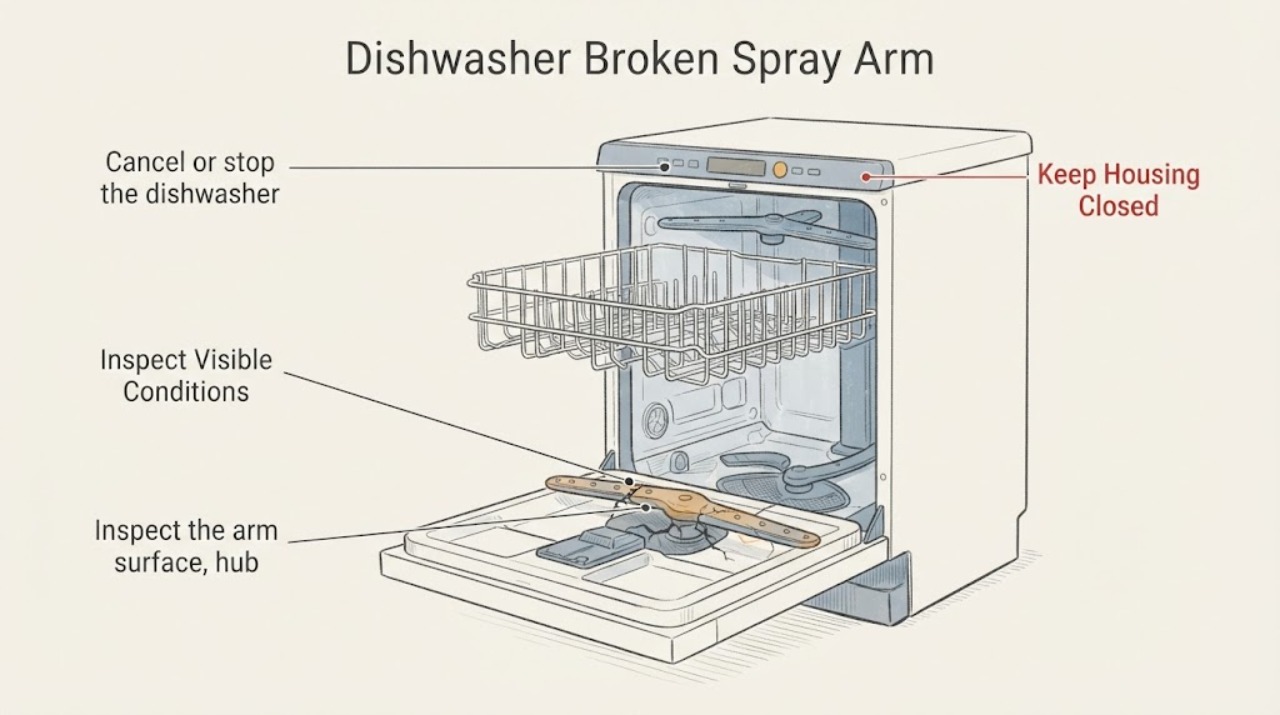
Work through in order
Diagnostic checks
Use only checks that match the exact appliance or system and its official guide.
-
Check 1
Cancel or stop the dishwasher, wait until water and spray motion have ceased, and open it only when it is safe to handle the rack and arm. Do not reach into a running cycle.
Expected result: The arm is stationary and accessible, or water, heat, a leak, or another hazard remains.
Next step: If the dishwasher is still hot, leaking, or electrically damaged, close it and use the model safety instructions or service. If it is stopped and safe, continue with clearance checks.
Why this matters
Why: Rotation and debris checks are only meaningful on a stopped appliance. Heat, moving spray, and water can make a visual inspection unsafe.
-
Check 2
Remove the racks only as the model design permits and look for a tall plate, pan handle, utensil, or protruding item that could contact the spray arm. Rotate the accessible arm gently by hand.
Expected result: The arm catches on a load item, rotates freely, or cannot rotate because it is loose, cracked, warped, or rubbing the rack/tub.
Next step: Correct only the obvious load interference and recheck by hand. If the arm remains damaged, loose, or obstructed without a clear removable cause, stop and use the model-specific service path.
Why this matters
Why: Frigidaire says loading interference can stop arm rotation and recommends checking rotation by hand. Free rotation does not prove that the spray arm hub or jets are sound.
-
Check 3
Inspect the arm surface, hub, and visible spray openings for cracks, missing pieces, deformation, mineral/food debris, or a mount that will not stay seated. Do not glue, drill, enlarge jets, or force a retaining clip.
Expected result: Debris is plainly accessible, the arm is intact and seated, or structural damage/unstable mounting is visible.
Next step: Remove only accessible debris with the model-supported cleaning method. For a crack, missing section, unstable hub, or damaged mount, leave the dishwasher unused and arrange model-matched service or parts verification.
Why this matters
Why: Debris can block spray arms, but a structural or mounting defect is a part-fit and safety question that depends on the exact Frigidaire model.
-
Check 4
Check the accessible filter and glass-trap area for food fragments after the dishwasher is stopped, following the exact model manual for removal and cleaning.
Expected result: The filter/glass-trap area is blocked, clean, or damaged; the spray arm remains restricted after cleaning.
Next step: Clean only the user-accessible parts specified by the manual and recheck arm rotation. If the arm still rubs, wobbles, or cleaning remains poor, arrange service rather than opening the pump or sump.
Why this matters
Why: Frigidaire says debris in the filter, glass trap, and spray arms can cause blockages and poor cleaning. A clear filter does not prove a pump, hub, or arm defect.
-
Check 5
Record whether the complaint is a clunk during operation, poor cleaning, visible water leakage, or a broken arm found before a cycle, and record the model number.
Expected result: The sound occurs only when a tall item is loaded, the arm is visibly damaged, cleaning is poor, or water is leaking.
Next step: Use the model manual or qualified service for a damaged arm, leak, persistent clunk, or poor cleaning after external corrections. Do not assume the pump or arm is the failed part from the symptom alone.
Why this matters
Why: Frigidaire links clunking to spray-arm contact with an item, while poor cleaning can follow arm/filter blockages. Leakage or a structural break needs a separate model-specific assessment.
-
Check 6
Keep the dishwasher out of service if the spray arm is cracked or loose, the mount is damaged, water leaks, fragments are entering the sump, or the door/rack cannot close safely.
Expected result: Structural damage, a leak, loose fragments, or a normal clearance issue is present.
Next step: Close the water supply if a leak makes that necessary and safe, avoid repeated cycles, and contact Frigidaire or qualified service with the exact model. Do not improvise a fastener or run the appliance to test a glued or repaired arm.
Why this matters
Why: A damaged or unstable arm can continue to contact the rack/tub or leave debris in the wash path; a leak adds water-damage risk.
Use your observations
Decision map
Find the observation that best matches what you see, then follow the next safe action.
-
PATH 01Next step
What you see
The arm rotates freely after a tall dish, pan handle, or utensil is removed, and no crack or loose mount is visible.
Do this next
Reload so nothing blocks the arm, then monitor one normal cycle. Stop if the clunk returns without an obstruction or cleaning remains poor.
Why this path and its safety boundary
Why it matters: The evidence supports a loading/clearance problem rather than a confirmed broken arm.
-
PATH 02Next step
What you see
Food or mineral debris is plainly accessible in the spray arm, filter, or glass-trap area, and the arm is structurally intact.
Do this next
Clean the user-accessible areas using the exact manual method and recheck hand rotation. Escalate persistent poor cleaning or restricted motion.
Why this path and its safety boundary
Why it matters: The symptom is consistent with an accessible blockage, but cleaning success does not prove the pump or spray system is healthy.
-
PATH 03Next step
What you see
The arm is cracked, warped, missing material, will not remain mounted, or still rubs after the load and accessible debris are corrected.
Do this next
Leave the dishwasher unused and obtain the exact model-compatible arm/mount through the manual or qualified service. Do not glue, drill, or bypass the mount.
Why this path and its safety boundary
Why it matters: This is a model-specific mechanical/part-fit issue, not a universal spray-arm replacement problem.
-
PATH 04Next step
What you see
Water leaks, fragments enter the sump, or the door/rack cannot close safely after the spray-arm issue appears.
Do this next
Stop the cycle, close the water supply if safely accessible, and arrange qualified service.
Why this path and its safety boundary
Why it matters: The problem has moved beyond a spray pattern or loading check and may cause water damage or further mechanical damage.
Helpful context
Understand the symptom
“Broken spray arm” can mean a cracked arm, a loose mount, blocked jets, or an arm that is only striking a tall dish. Frigidaire’s public dishwasher guidance supports separating those conditions with a stopped-appliance inspection: confirm that the racks and utensils do not prevent rotation, then check the arm and filter areas for accessible debris. The exact arm geometry and mounting are model-specific, so a visible symptom does not select a replacement part.
First rule out rack and utensil interference
Frigidaire says large items, pan handles, or objects protruding through a rack can block spray-arm rotation, and its noise guide says a clunking sound can occur when an item is too tall and the arm hits it. With the cycle stopped, remove only the item that plainly interferes and rotate the arm by hand. Do not bend the arm or force it past a rack.
Check the arm and filter path for accessible debris
Frigidaire says dish debris can become trapped in the filter, glass trap, and spray arms. Clean only the areas the model manual identifies as user-accessible, and keep small fragments out of the jets and sump. A clear arm that still wobbles, will not remain attached, or shows a crack is not repaired by cleaning.
Do not guess the replacement or keep testing a damaged arm
Frigidaire’s public pages do not give a model-independent spray-arm replacement or fastener procedure. If the arm is cracked, warped, loose at its hub, or repeatedly strikes the tub after the load is corrected, record the dishwasher model and use the exact manual or service route. Avoid running repeated cycles with a loose part, because the symptom may involve the arm mount, rack, filter, or another model-specific component.
When checks do not resolve it
Need a professional?
Use Frigidaire or qualified dishwasher service when the spray arm is cracked, warped, loose, or repeatedly rubs after loading and accessible cleaning checks; when water leaks or fragments enter the sump; or when cleaning remains poor. Model-specific parts and mounting must be verified before replacement.
Safety scope: Do not reach into a running or hot dishwasher, glue/drill/force the arm, open the pump or sump, bypass a mount, or keep cycling with a cracked/loose arm, leak, fragments, or electrical damage.
Have this ready
- Exact model number, spray-arm location, whether it is cracked or loose, hand-rotation result, load interference, filter/glass-trap condition, noise or leak observations, and photos if the service channel accepts them.
Common questions
FAQ
How do I tell whether a Frigidaire spray arm is broken?
With the dishwasher stopped, check whether it rotates freely by hand, inspect for cracks or missing pieces, and look for a mount that will not stay seated. A tall dish or utensil can also block or strike an intact arm.
Can I glue a cracked spray arm?
Frigidaire’s opened guidance does not support a universal glued repair. A crack or unstable mount should be matched to the exact model manual or service path; do not run repeated cycles with an improvised repair.
Why is the dishwasher making a clunking sound?
Frigidaire says clunking can occur when a spray arm hits an item that is too tall. Stop the cycle, correct the load if the cause is obvious, and arrange service if the clunk continues or the arm is damaged.
Could a dirty filter cause a spray-arm problem?
Debris can collect in the filter, glass trap, and spray arms and cause blockages or poor cleaning. Clean only user-accessible parts using the exact model instructions; a clean filter does not diagnose the pump or arm mount.
Read the exact guide
Official sources
- Dishwasher - Loading GuideFrigidaire · Opened official Frigidaire loading guide. Supports checking that dishes, pan handles, and utensils do not block arm rotation and manually rotating the arm. Exact rack and arm design varies by model.
- Dishwasher - Noise GuideFrigidaire · Opened official Frigidaire noise guide. Supports clunking from a too-tall item contacting the spray arm and normal pump/arm sound patterns. It does not identify a broken arm part.
- Dishwasher - Not CleaningFrigidaire · Opened official Frigidaire dishwasher support page. Supports debris in filter, glass trap, and spray arms as blockage sources and service escalation after user checks. It does not define a universal spray-arm replacement.
- Dishwasher - Water LeakingFrigidaire · Opened official Frigidaire leak page. Supports stopping for leaks, checking accessible hose/filter conditions, and cleaning filter, glass trap, and spray arms. It does not provide an arm replacement method.
Community feedback
Share a repair observation
Share a plain-text repair observation. Accepted observations are published automatically; this page may take a moment to update.