
Frigidaire appliance guidance
Frigidaire Dishwasher Repair Guides
Troubleshooting and repair guidance for published Frigidaire Dishwasher problems, symptoms, and maintenance questions.
Published Frigidaire Dishwasher guides
Choose the guide whose symptom or condition most closely matches what you are seeing.
-
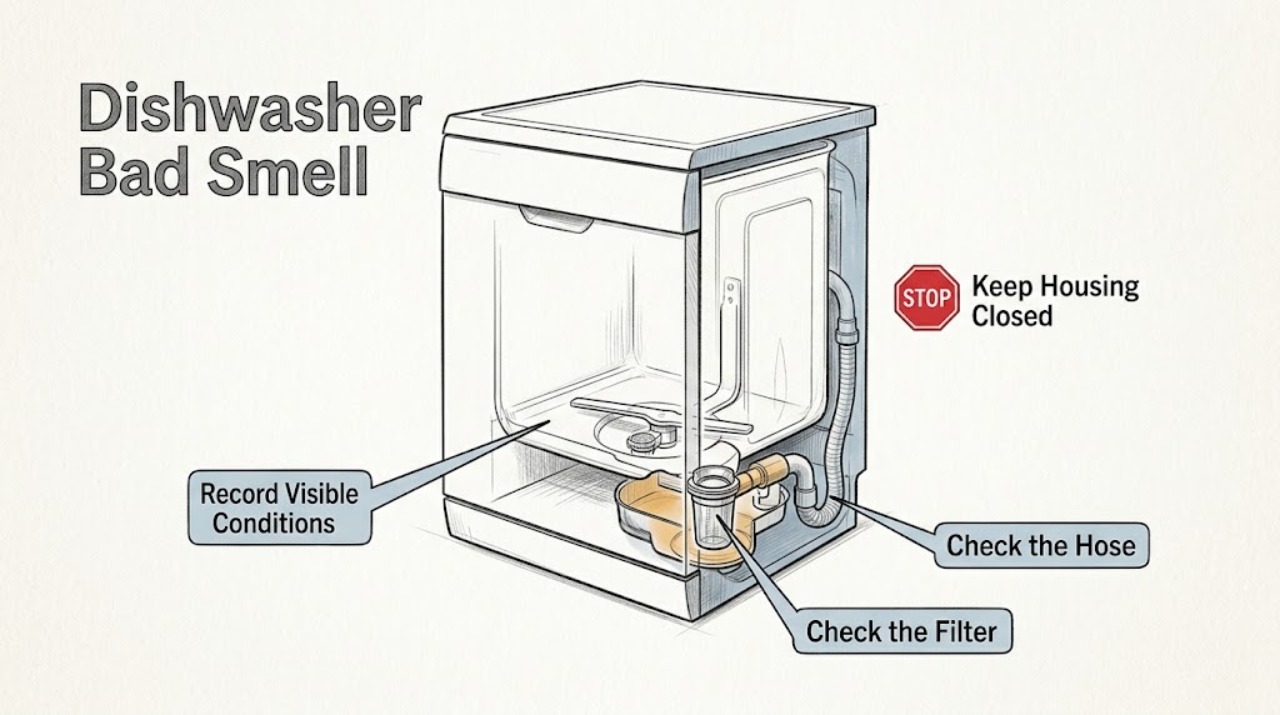
Frigidaire Dishwasher Bad Smell
Classify the odor before cleaning: a newly installed Frigidaire dishwasher can have a temporary new-appliance smell, while food residue, a dirty filter or glass trap, standing water, and an incorrectly installed or kinked drain hose point to different checks. Inspect and rinse the user-accessible filter and glass trap, confirm the tub drains, and check the drain hose or disposer connection if water remains.
-
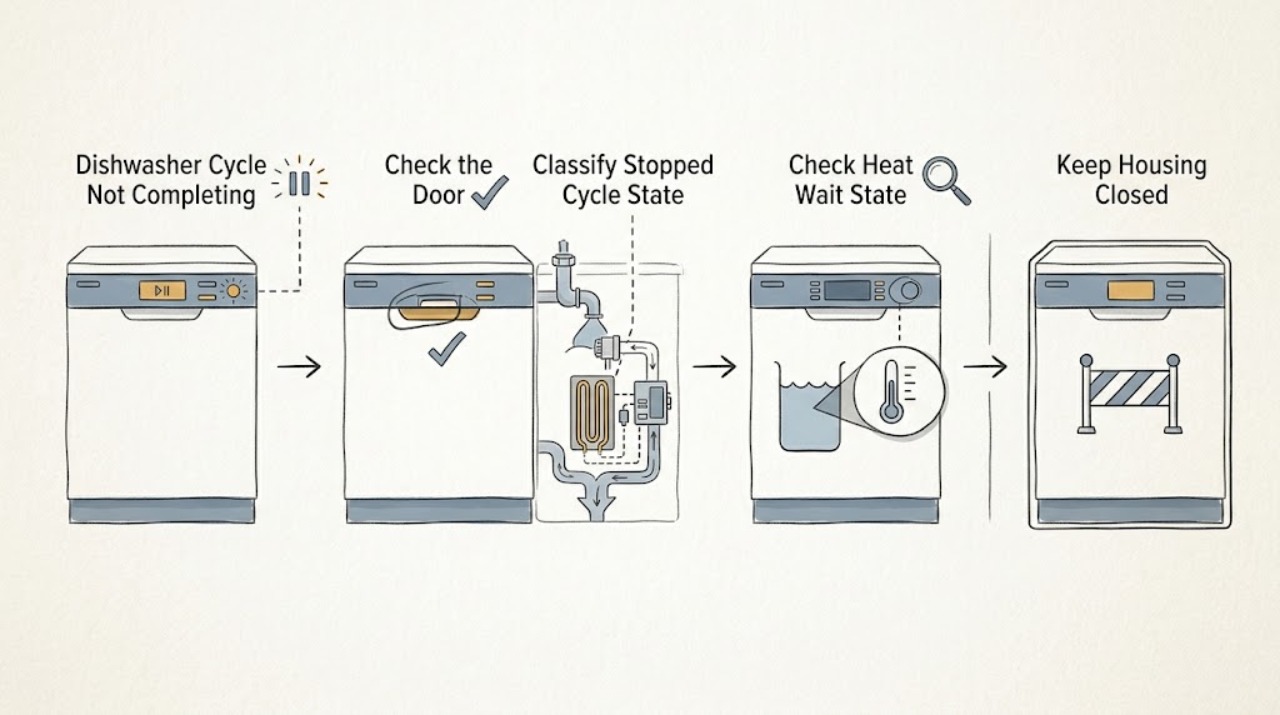
Frigidaire Dishwasher Cycle Not Completing: Separate Pause, Fill, Drain, Heat, and Code Issues
First decide what ‘not completing’ means: the dishwasher may be paused by an open door or a start/control state, waiting for water to heat, unable to fill, unable to drain, stopped after a power interruption, or showing a model-specific code. Check the display and indicator pattern, whether the door is securely latched, whether water is available, whether water remains in the tub, and whether the machine is in a documented heat-delay state.
-
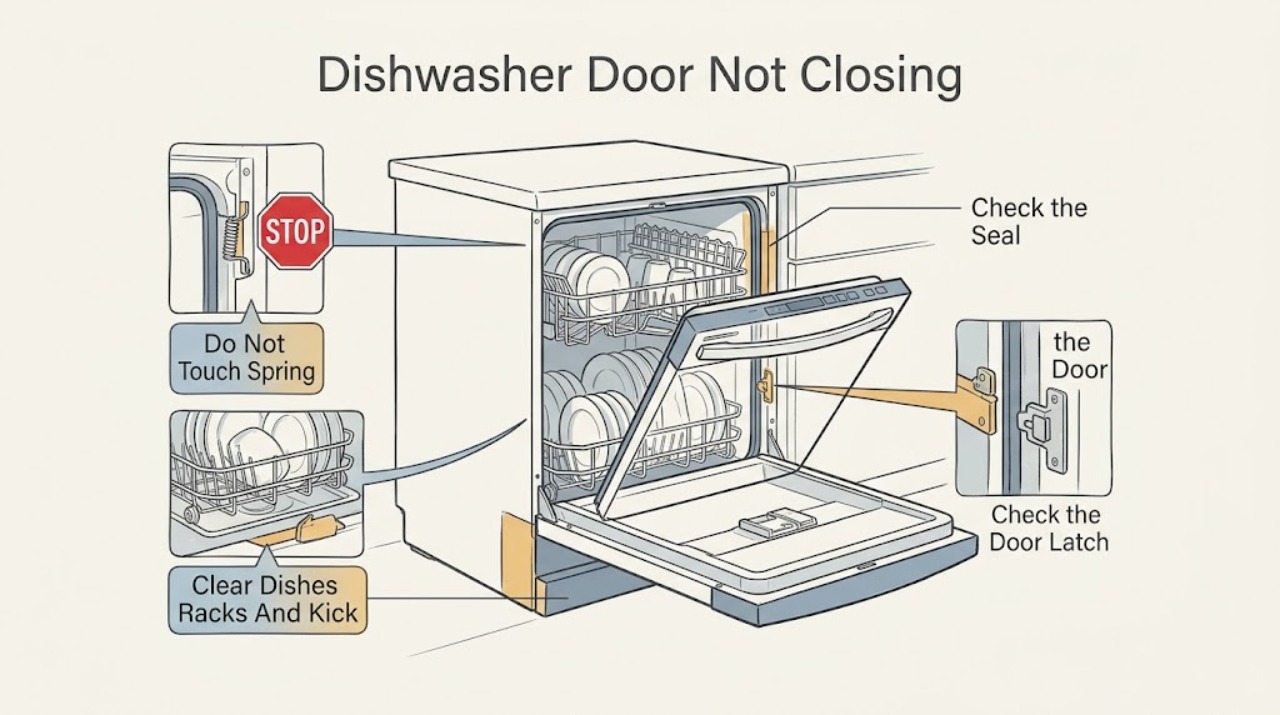
Frigidaire Dishwasher Door Not Closing: Check Loading, Alignment, Seal, and Latch
Do not force a Frigidaire dishwasher door closed. First remove any dish, rack, utensil, tray, or kick plate that is physically stopping the door, then inspect the door gasket for a visible fold, debris, displacement, or damage.
-
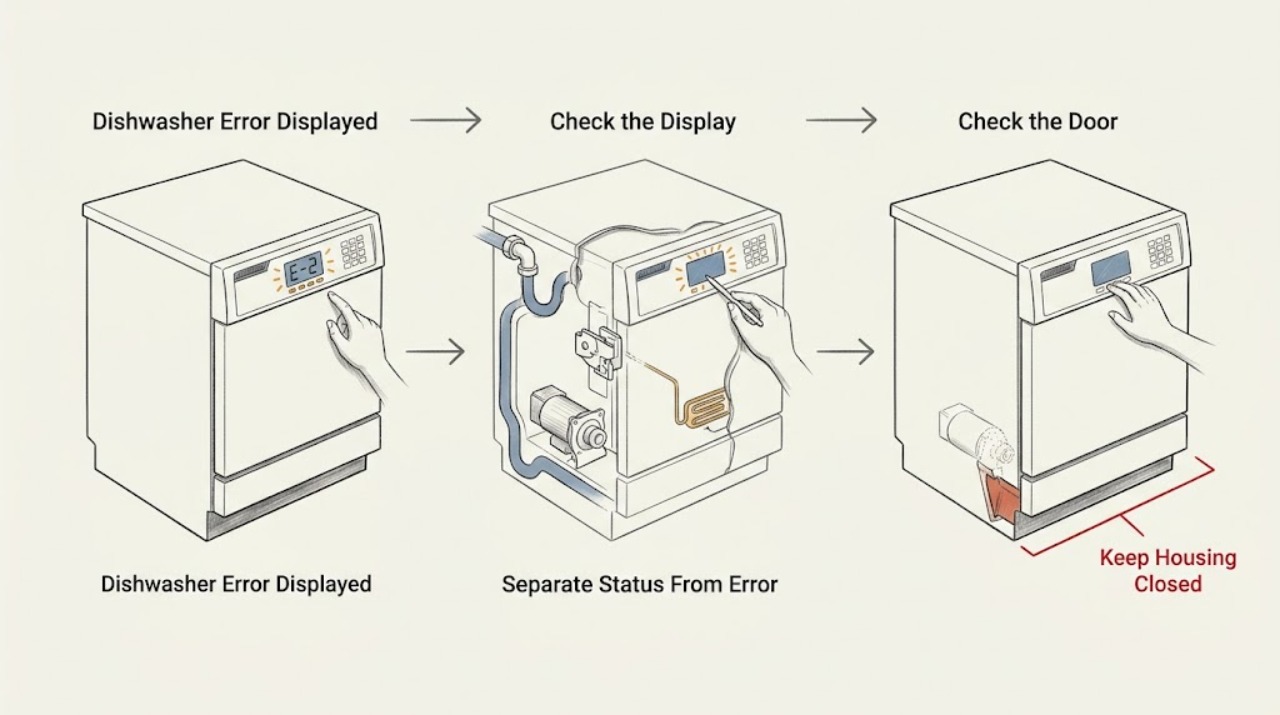
Frigidaire Dishwasher Error Displayed: Capture the Exact Code Before Troubleshooting
Do not start by guessing what a Frigidaire dishwasher code means. Photograph the display or count the flashing lights, write down the complete model number, note whether the message appeared at power-up, after pressing Start, during filling/washing/draining, or after a leak, and record whether the tub contains water or the unit is safe to touch.
-
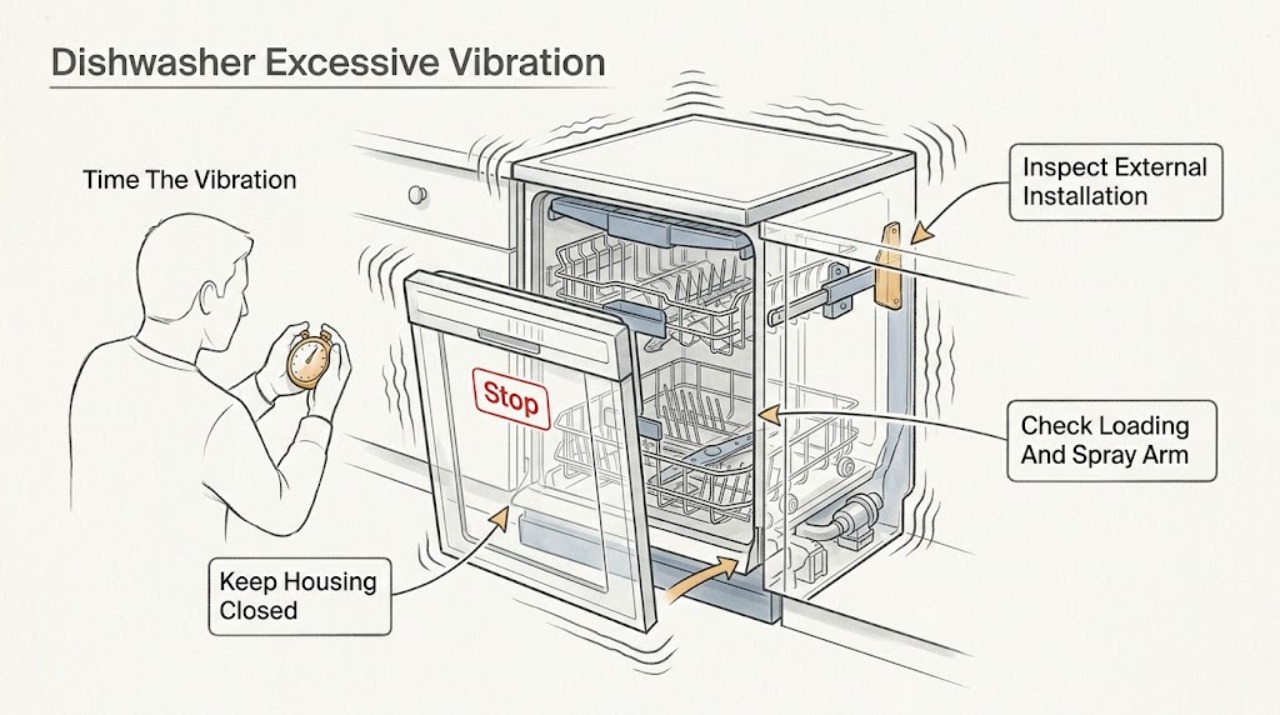
Frigidaire Dishwasher Excessive Vibration: Installation, Loading, and Pump Checks
First note when the Frigidaire dishwasher vibrates: during fill, when the wash pump starts, as the spray arms alternate, while draining, or throughout the cycle. Frigidaire describes water filling, water circulation, motor operation, wash-pump and drain-pump humming, spray-arm whooshing, and some fan operation as normal stage-related sounds; a tall dish, pan, or utensil striking a spray arm can cause knocking or banging.
-
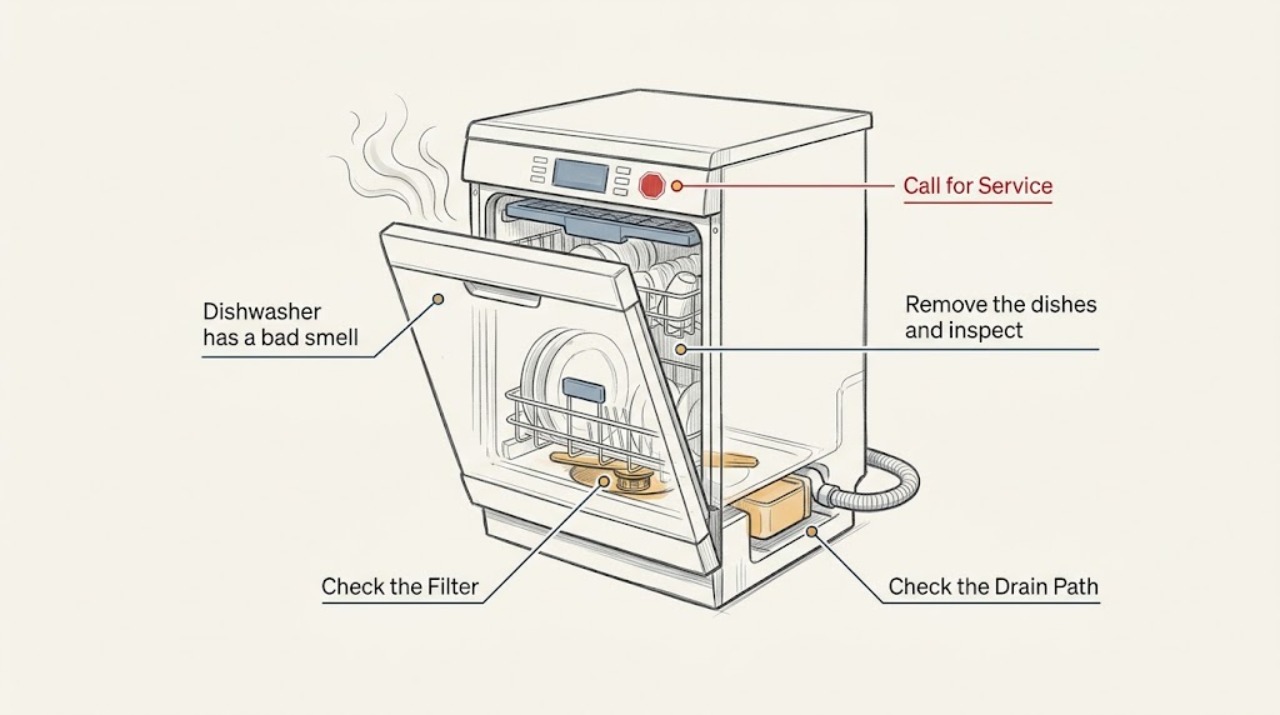
Frigidaire dishwasher has a bad smell: What to Check and What to Do Next
A bad smell from a Frigidaire dishwasher is commonly separated by timing, location, and whether water or food soil remains: a new-installation smell may be temporary, while odor from the filter, glass trap, sump area, or standing water points to trapped residue or a drainage issue. Remove dishes and visible loose debris, then with the dishwasher off and cool, clean the model-approved filter and glass trap.
-
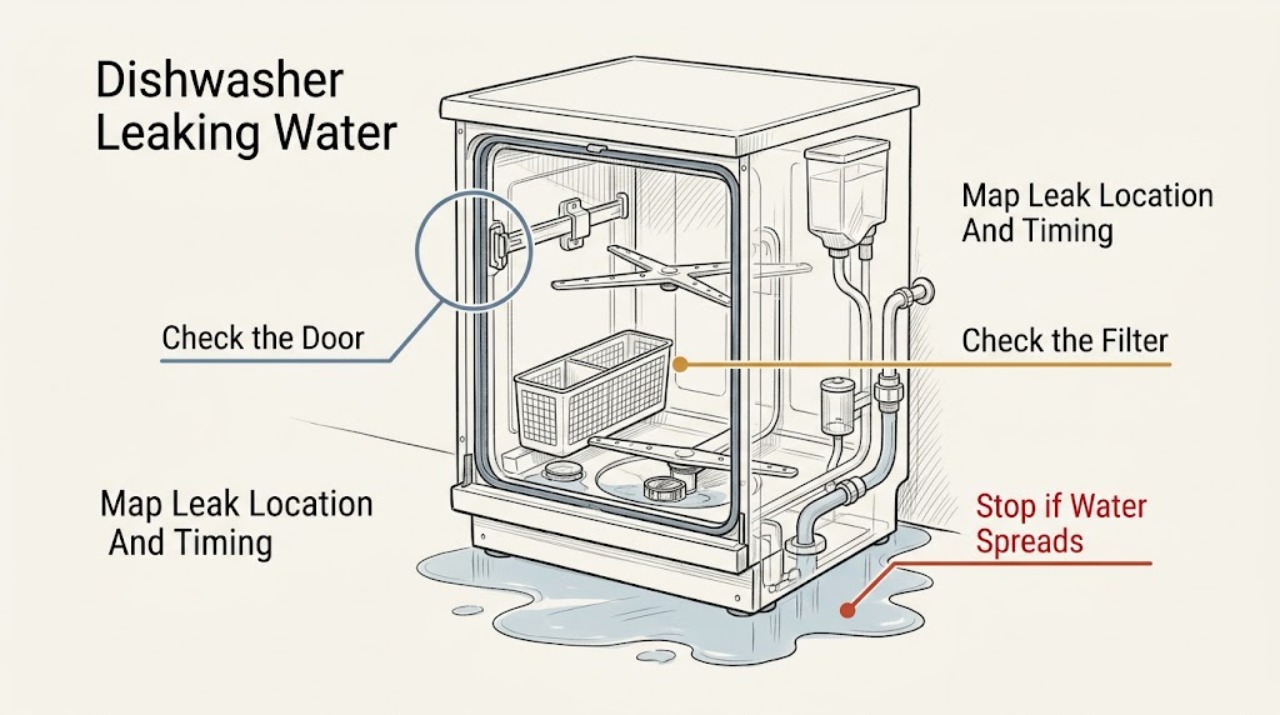
Frigidaire Dishwasher Leaking Water: What to Check and What to Do Next
Stop the cycle and first identify where the water starts: at the door or front edge, beneath the tub, at a visible supply connection, or at the drain side. If water is near electrical parts, the leak is active, or the machine is overflowing, keep clear and arrange service; only shut off water or power from a dry, safe position.
-
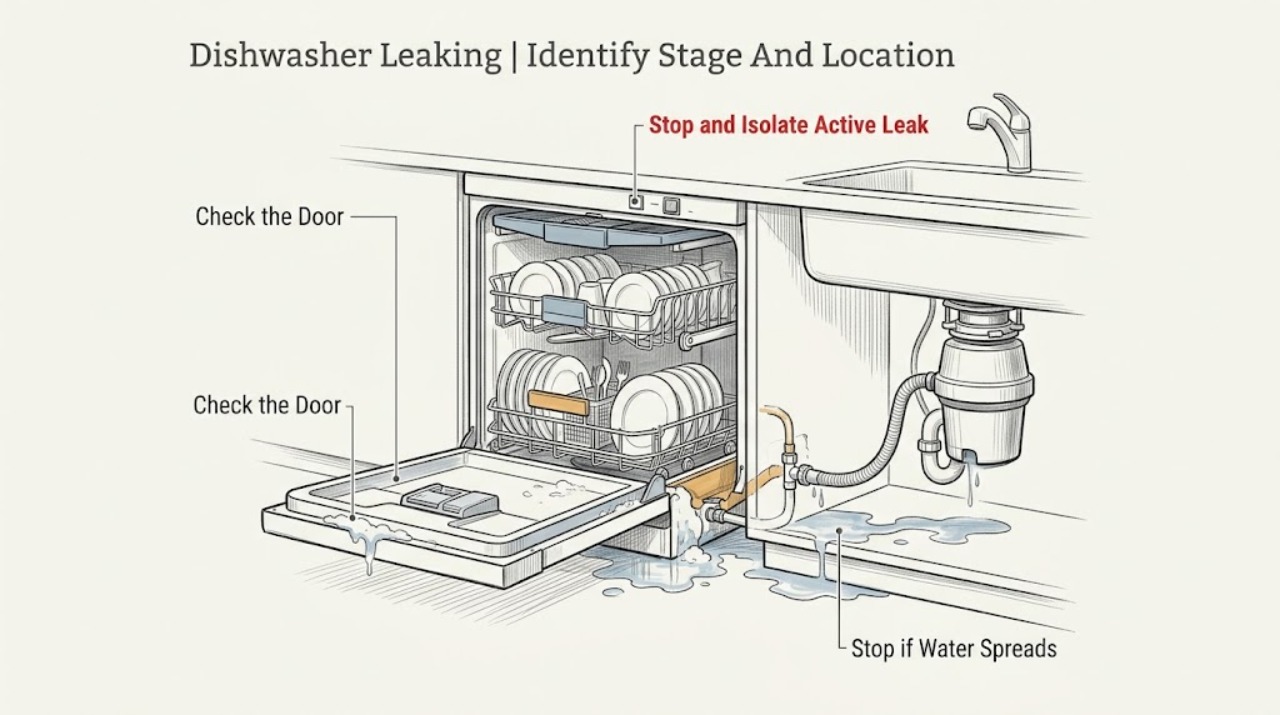
Frigidaire Dishwasher Leaking: Find the Leak by Stage and Location
Stop the cycle as soon as water is actively escaping, keep hands away from wet electrical areas, and close the accessible dishwasher water shutoff if the leak continues. Identify both when the leak starts and where the first wet point appears.
-
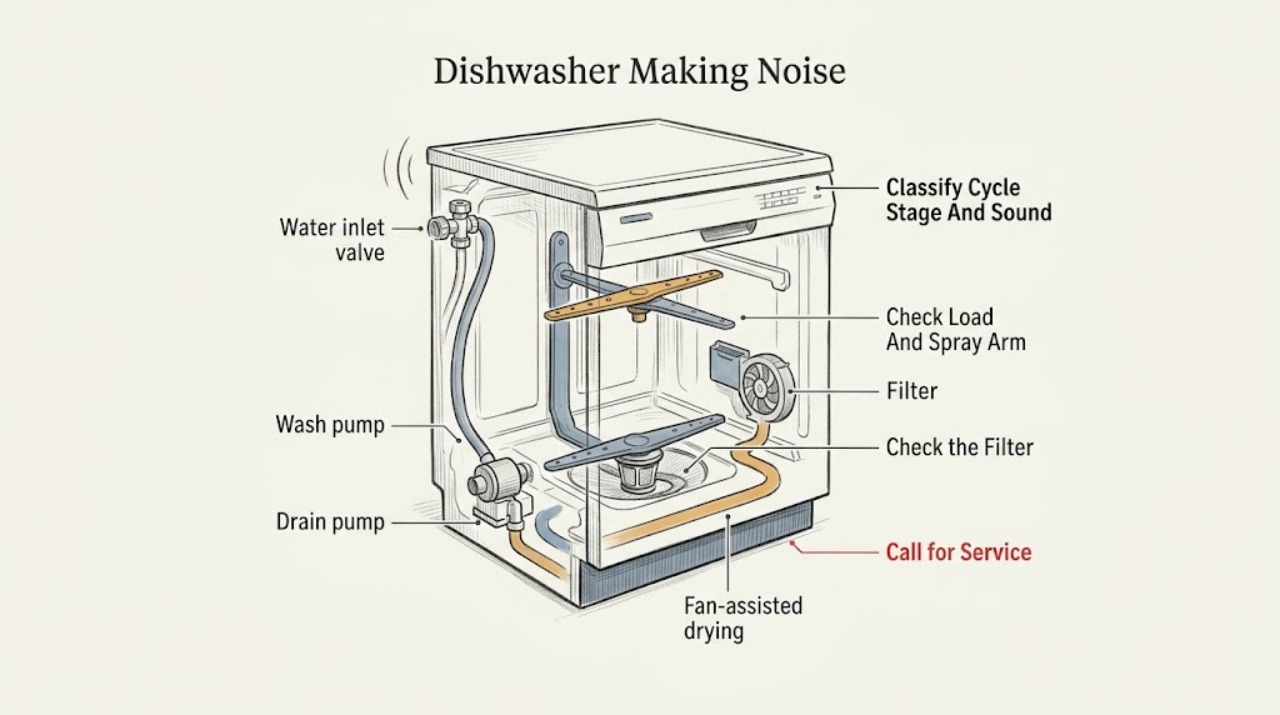
Frigidaire Dishwasher Making Noise: Normal Sounds and Safe Checks
Some Frigidaire dishwasher noise is expected: hissing can occur while the water valve fills, a wash-pump hum can start and stop as spray arms alternate, a drain-pump hum can change as water leaves, and a whoosh can change when spray arms switch levels. A single dispenser or ball-valve clunk can also occur during a cycle, and models equipped with Even Dry or Perfect Dry may run a fan.
-
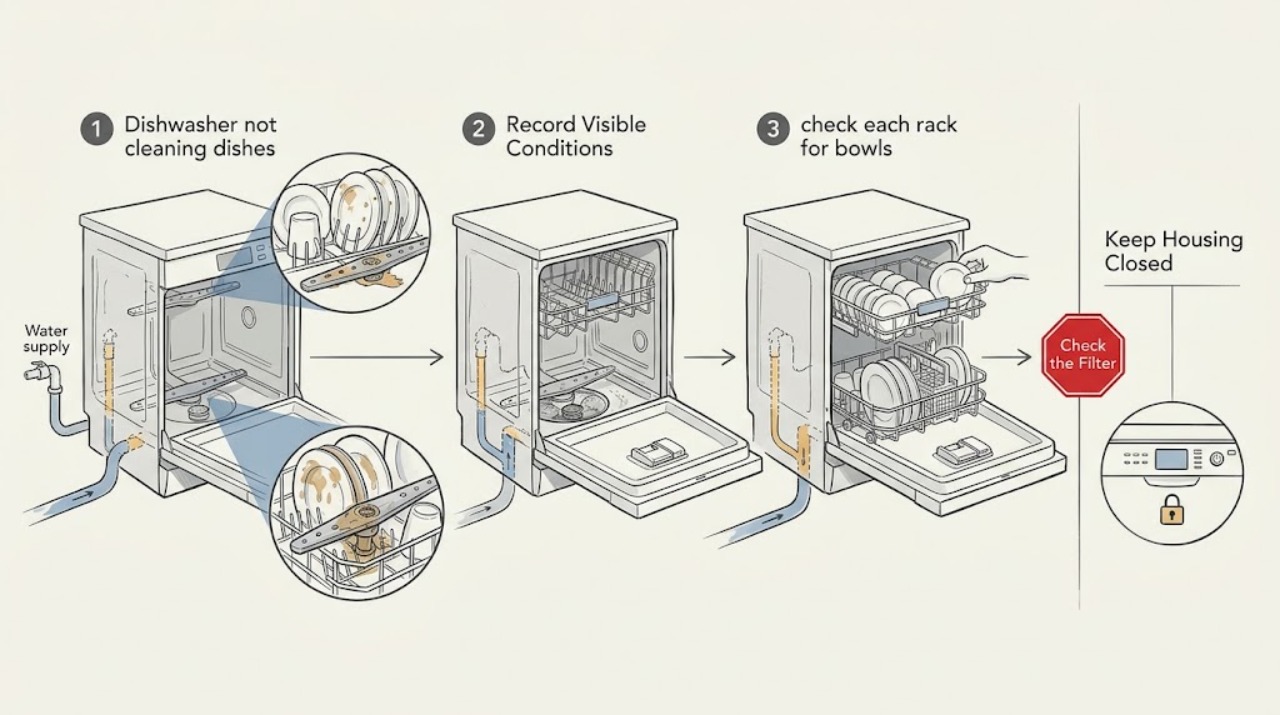
Frigidaire dishwasher not cleaning dishes: What to Check and What to Do Next
A Frigidaire dishwasher can leave dishes dirty when the selected cycle is only a rinse or short wash, dishes block the spray arms or detergent dispenser, the filter or glass trap is clogged, detergent is damp or incorrectly dosed, incoming water is too cool or pressure is low, or the unit is not draining. Start by noting which rack is dirty, whether the detergent cup opened, whether water remains, and whether the problem affects every load or only heavily soiled items.
-
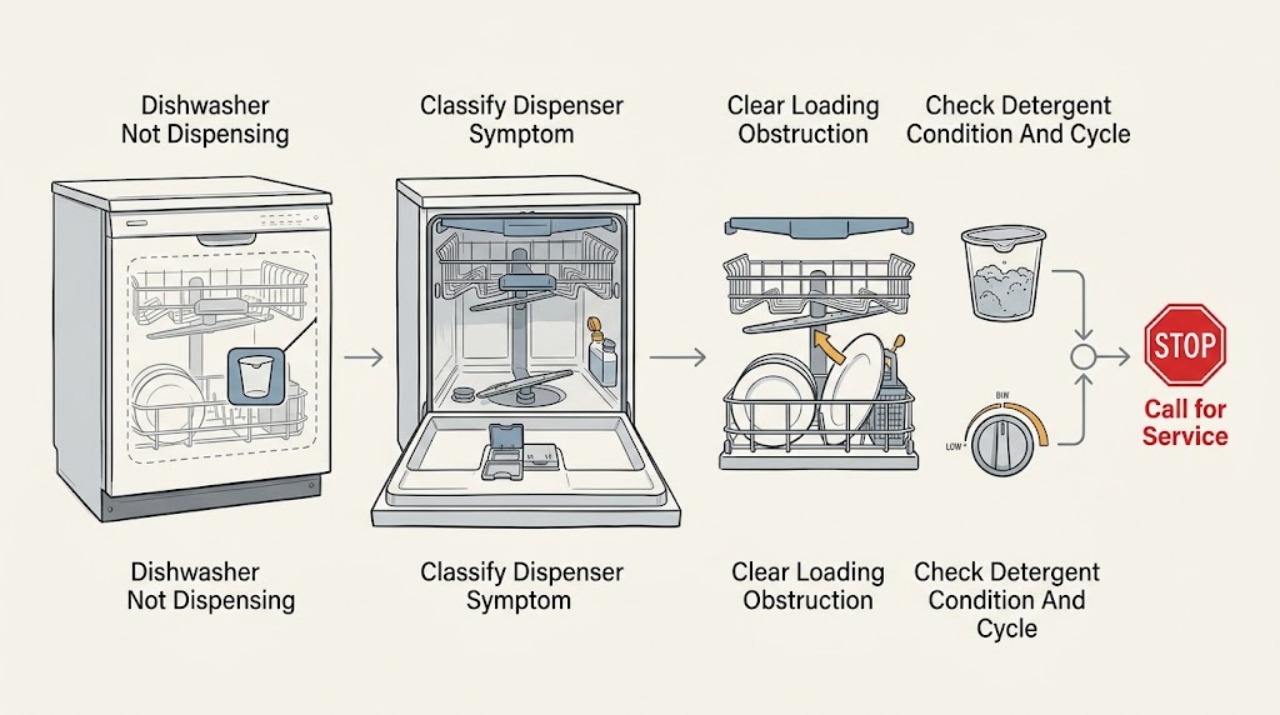
Frigidaire Dishwasher Not Dispensing: Check the Detergent and Rinse-Aid Paths
First identify what failed: a detergent cover that stays shut, detergent left in the cup after the cycle, a damp or caked product that does not dissolve, or rinse aid that is not released or needs refilling. Frigidaire says the detergent cup is designed to open automatically, but a dish or pan can block the cover or prevent spray-arm water from reaching it; fresh detergent stored dry is less likely to remain caked.
-
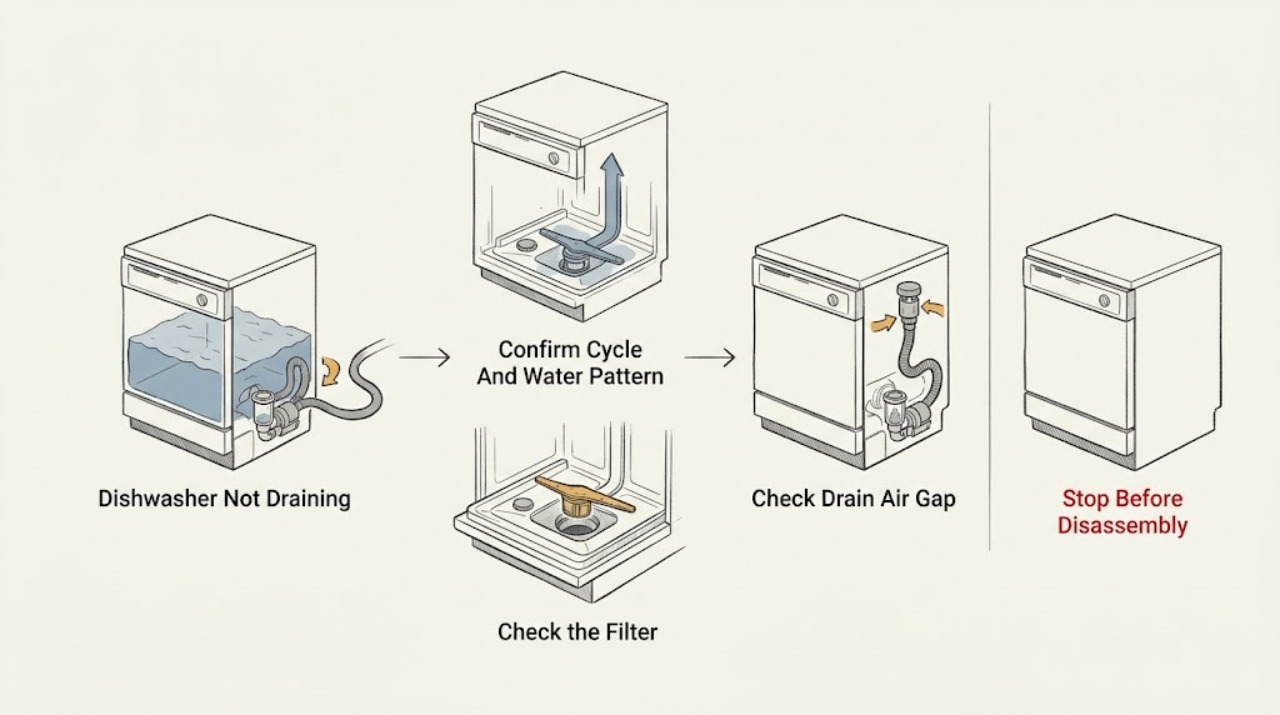
Frigidaire Dishwasher Not Draining: What to Check and What to Do Next
If a Frigidaire dishwasher is not draining, stop adding water and first confirm that the cycle actually finished rather than being paused or interrupted. From a dry, safe position, note the water level and inspect only accessible parts: the glass trap and filter for food or broken pieces, the visible drain hose for kinks or a moved connection, and any countertop drain air gap or garbage-disposal connection.
-
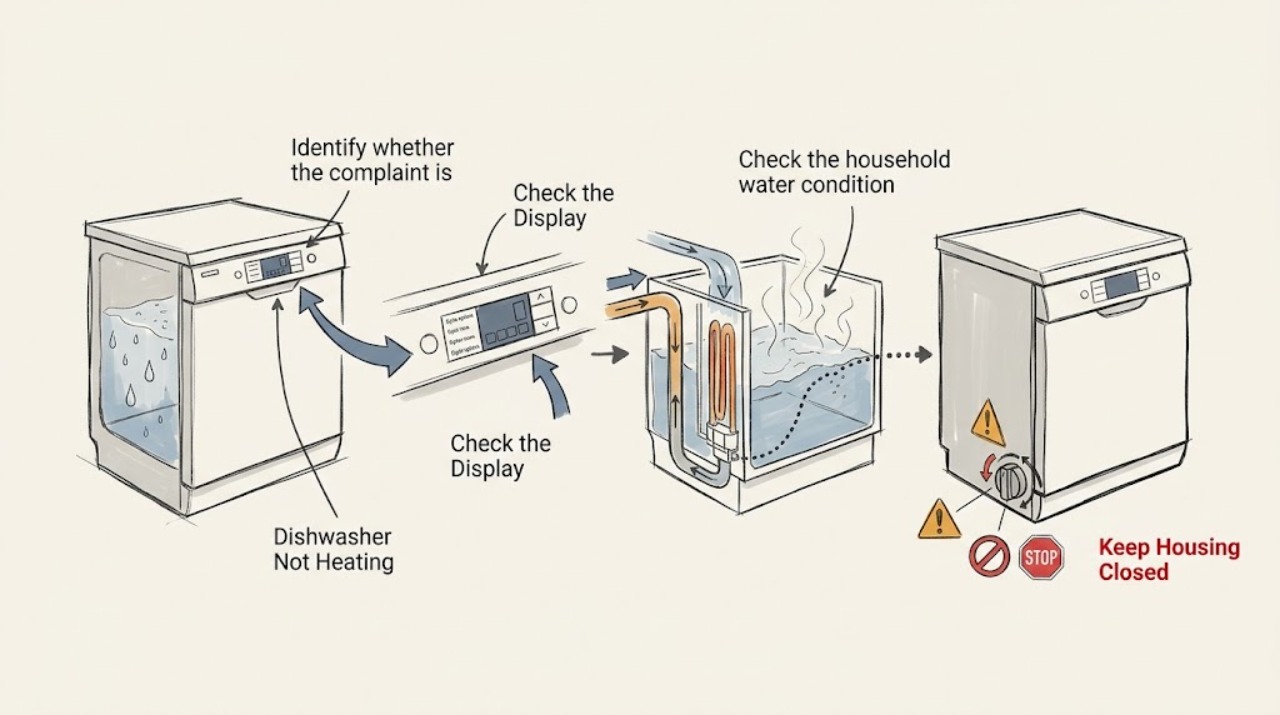
Frigidaire Dishwasher Not Heating
First separate a cold wash from poor drying: a Quick Wash or Air Dry cycle, plastics and concave items, or an empty rinse-aid dispenser can leave dishes wet without proving the wash water stayed cold. Check the selected program and Heat Dry option, refill rinse aid if your model uses it, and confirm the household water starts hot; Frigidaire recommends a water-heater setting of at least 120°F and says hot water at the sink can improve results.
-
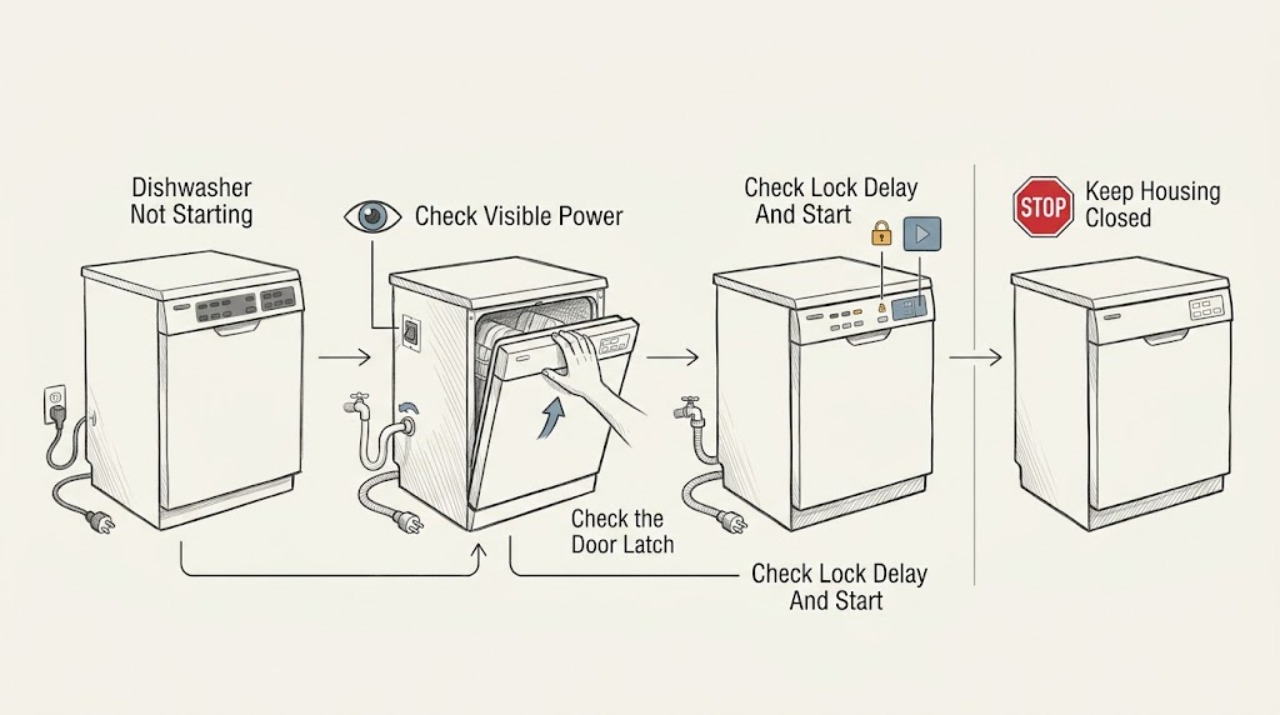
Frigidaire Dishwasher Not Starting: Separate Power, Door, Controls, Water, and Codes
Start with the split that matters: a dark panel suggests power or supply, while a lit panel with no wash action points to the door latch, Start command, Control Lock or Delay Start, water supply, drain condition, or an exact display/indicator code. Frigidaire says the door must be securely closed and latched, water must be available, and a selected cycle must receive the model's Start/Cancel command.
-
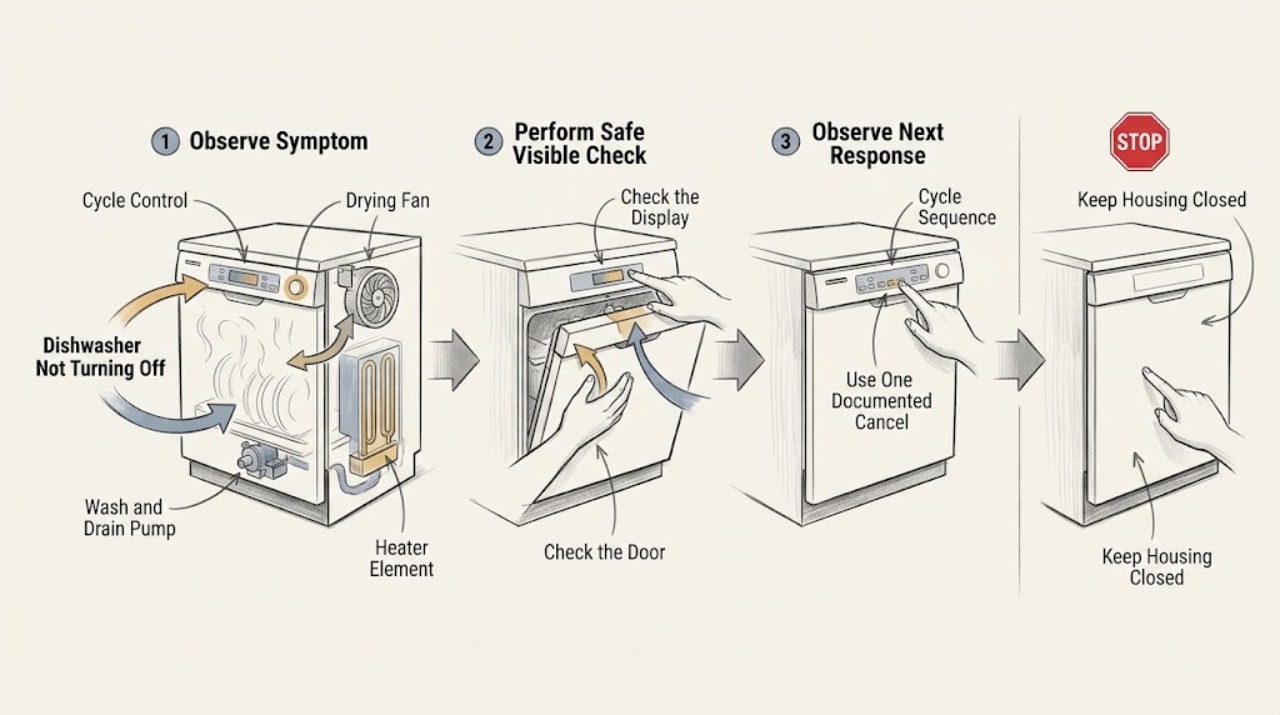
Frigidaire Dishwasher Not Turning Off: Drying Fan, Cd, Pump, and Cycle Checks
First identify what is still running and what the display says. A Frigidaire dishwasher can intentionally continue with water circulation, a drain-pump stage, heat delay, or a fan-assisted drying stage; fan operation at different times is normal on models equipped with Even Dry or Perfect Dry.
-
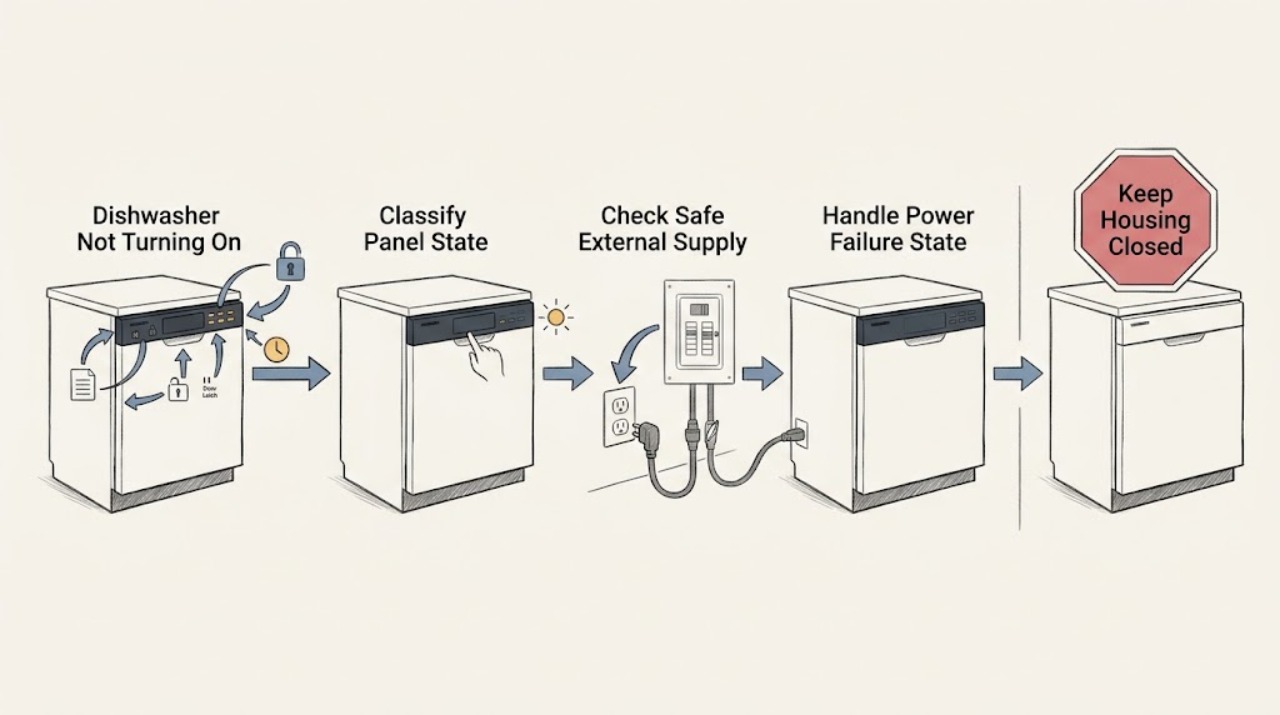
Frigidaire Dishwasher Not Turning On: Check Power, Lock, Door, and Delay States
Separate a blank dishwasher from a dishwasher that has a lit panel but will not begin a cycle. If the panel and indicators are completely dark, check the breaker and any accessible plug or wall switch from outside the appliance; do not remove electrical covers or use live tests.
-
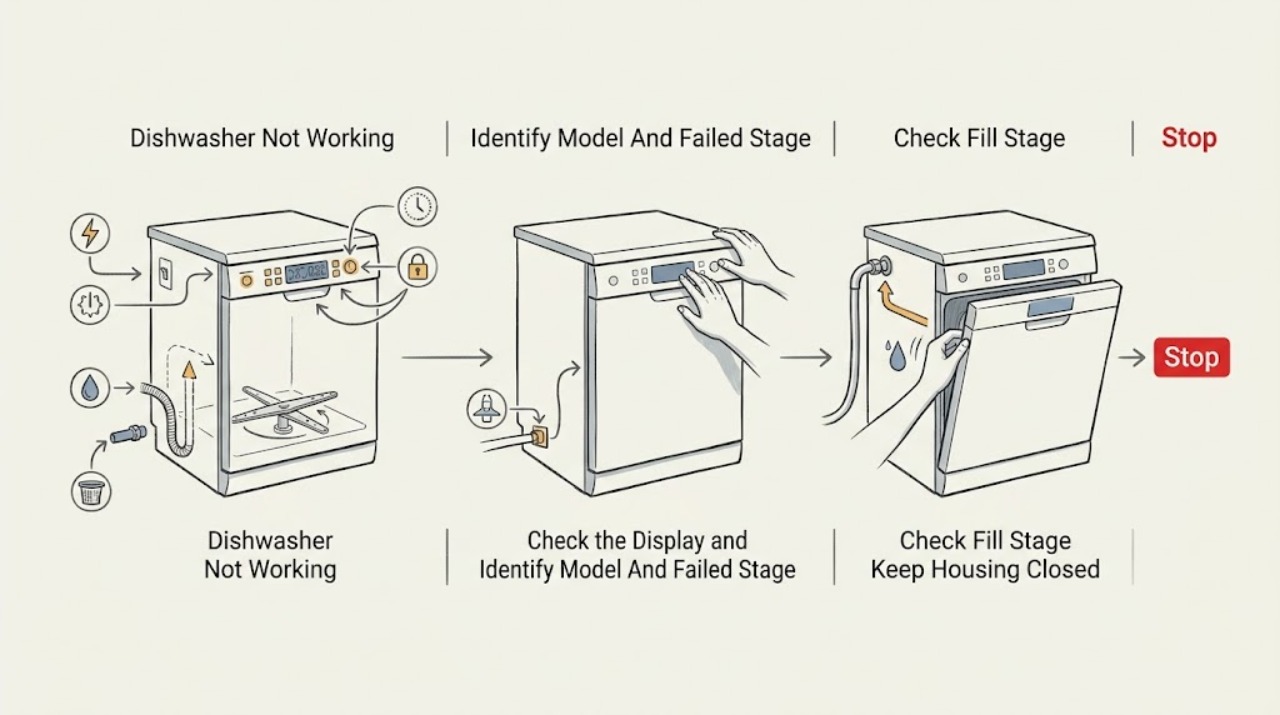
Frigidaire Dishwasher Not Working: Find the Failed Stage First
First identify the last stage that definitely worked. If there are no display lights, check the breaker and power connection from a safe, dry position.
-
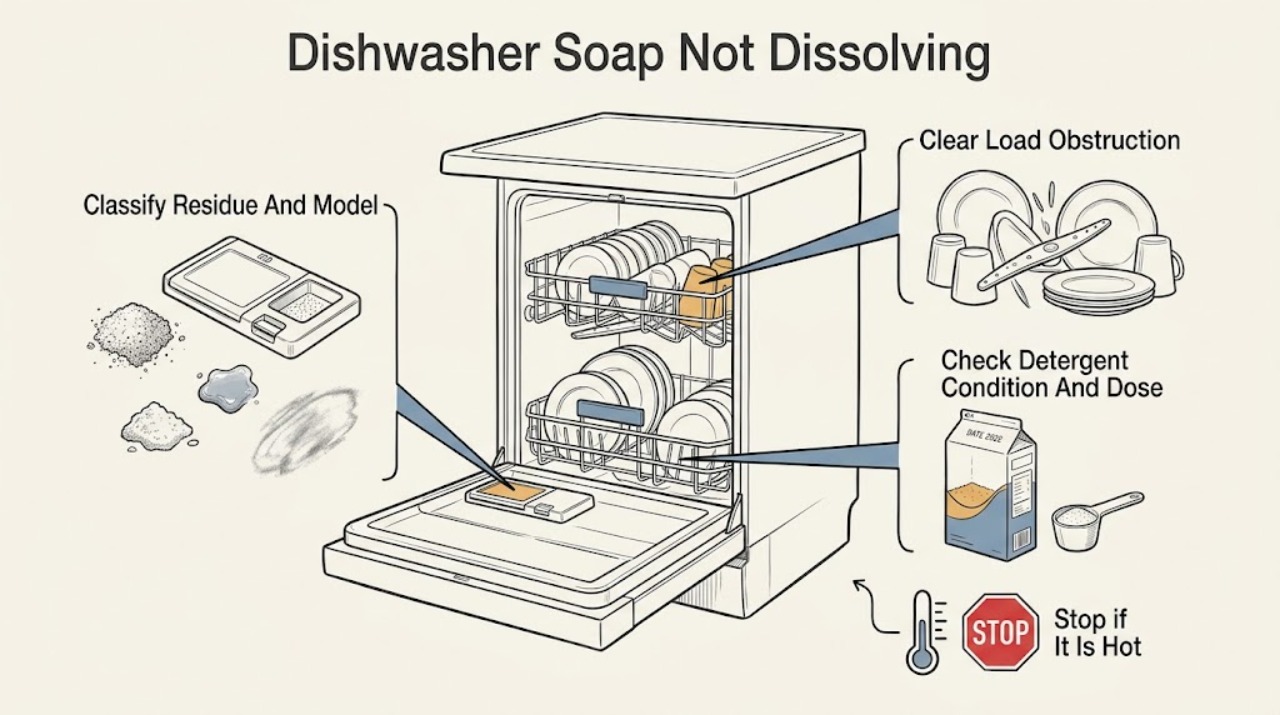
Frigidaire Dishwasher Soap Not Dissolving: Check the Dispenser, Water, and Spray Path
First check what actually happened: the detergent cover may not have opened, the cover may have opened but the product remained, or the cycle may have used a model-specific tablet location. Frigidaire says a dish or pan can block the covered dispenser or keep spray-arm water from reaching it, while damp, caked, old, or incorrectly dosed automatic dishwasher detergent may not dissolve.
-
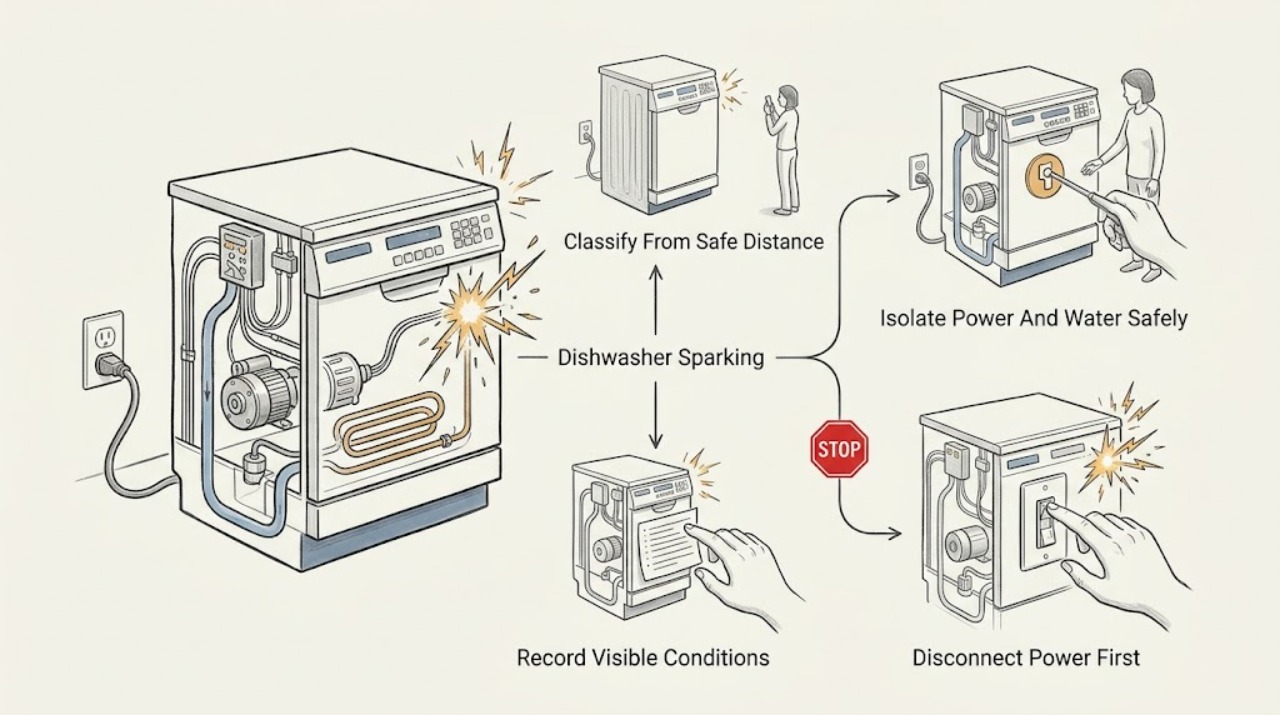
Frigidaire Dishwasher Sparking: Stop Use and Separate Arc, Light, and Sound Reports
If you saw an actual spark or arc, smelled burning, saw smoke or melted plastic, heard electrical crackling, or the breaker tripped, stop the dishwasher immediately and do not start it again to reproduce the event. Keep away from water and the appliance, and isolate power at the breaker or unplug only if the path is dry and safe; if the plug, outlet, or floor is wet, do not touch it.