
On this page
Start here
Quick answer
On the Frigidaire FDB1502RGM family, a drain sound immediately after Start can be normal: the opened owner guide says a cycle may begin with the drain motor, followed by the sound of water entering the tub. The same guide says the dishwasher fills until water covers the filter area. Treat it as a no-fill problem when the drain sound continues, no water-entry sound follows, and the level never reaches the filter. From a dry, stable position, first note the timing, confirm the dishwasher's water valve is open and the visible supply line is not pinched, and check whether a recent installation or disposal change left the drain routing or disposer connection uncertain. Do not remove a valve, disconnect a hose, perform a live electrical test, pull out the dishwasher, or keep forcing cycles. If the supply and visible installation checks are normal but the machine still pumps out without filling, leave it off and arrange qualified appliance service with the exact model, timing, and observations.
Before you begin
Safety first
- Do not remove the inlet valve, pump, panels, or wiring; perform a live electrical test; bypass a door or float safety; disconnect a water or drain hose; pull the dishwasher from the cabinet; or keep forcing cycles. Isolate water or power only from a dry, stable, readily accessible position and only when safe.
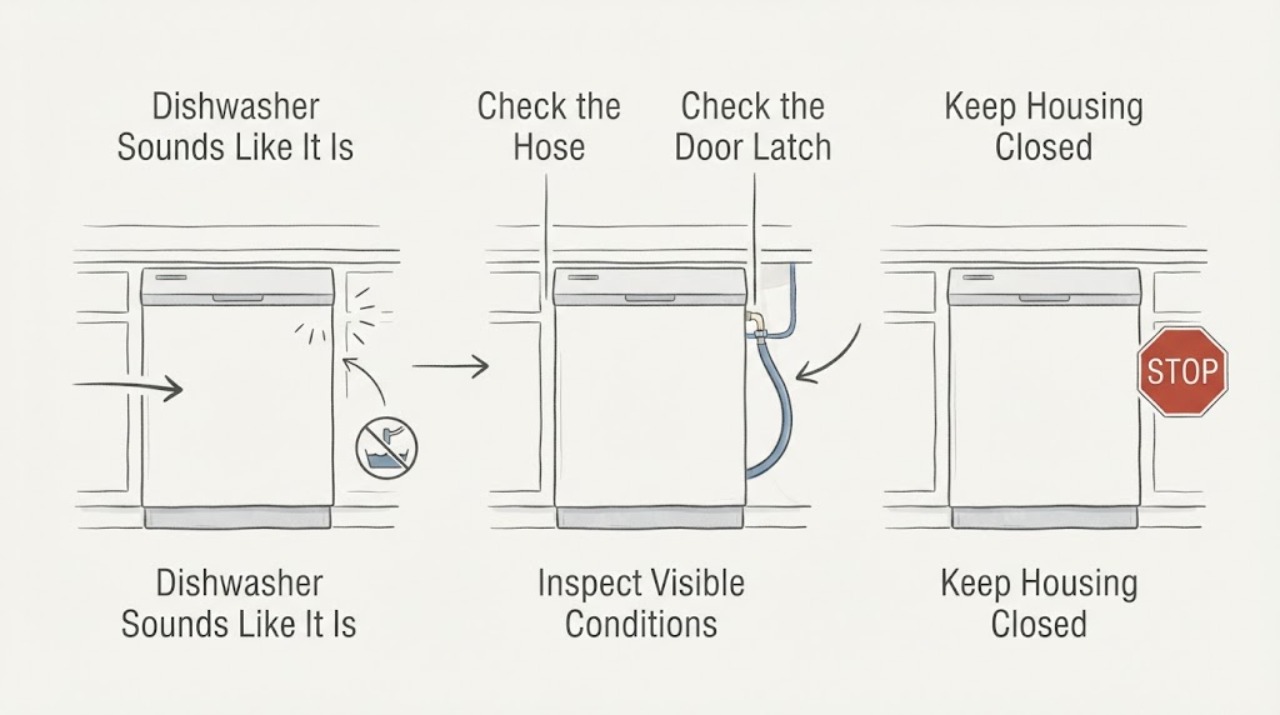
Work through in order
Diagnostic checks
Use only checks that match the exact appliance or system and its official guide.
-
Check 1
Stop the cycle and listen or observe only from outside the closed dishwasher. Record whether the drain sound occurs only immediately after Start, whether it is followed by a clear water-entry or splashing sound, and whether the tub level later covers the filter area. Do not open panels or reach into moving or wet parts.
Expected result: The drain motor runs briefly and is followed by water entering, or the drain sound continues with no water-entry sound and the filter area stays uncovered.
Next step: If filling follows the initial drain, investigate only a separate wash-performance concern. If the drain sound persists and the tub stays empty, leave the machine stopped and complete the safe external checks below.
Stop if: Do not repeat-start the dishwasher to make it fill, bypass a door or float safety, or test wiring while energized.
Why this matters
Why: A brief initial drain followed by filling matches the documented cycle sequence. Continued pumping with no fill is a symptom to diagnose, not proof of a failed drain pump or a command to force another cycle.
-
Check 2
From a dry, stable position, verify that the dishwasher's water shutoff valve is open and that the visible supply line is not kinked, crushed, or obviously restricted. Do not loosen the fitting, remove the inlet valve, disconnect the hose, or reach behind the appliance.
Expected result: The shutoff is closed, the visible line is pinched or restricted, or the valve and line appear open and clear.
Next step: Correct only a clearly closed shutoff or visible line kink without moving the dishwasher. If the external supply is already correct and no water enters after the initial drain, stop using the unit and arrange service.
Stop if: Do not remove the inlet valve, perform a live voltage test, open a wet connection, or pull the dishwasher out of the cabinet.
Why this matters
Why: A closed valve or restricted supply can explain a no-fill symptom before any internal component is considered. A visually clear supply does not prove that the inlet valve or control is good; it only moves the diagnosis beyond the safe external check.
-
Check 3
Check the basic start conditions without forcing the appliance: confirm that the selected cycle is active, the door closes and latches normally, and the controls respond. Use the exact model guide for the normal Start/Cancel operation; do not repeatedly cancel and restart to make the pump or fill valve react.
Expected result: The door will not latch, the controls do not remain in a cycle, or the machine accepts the cycle but returns to a continuing drain sound with no water entering.
Next step: Correct only a plainly obstructed door load or visible closure issue. If the door and controls appear normal but the no-fill symptom remains, record the sequence and request qualified service rather than guessing at a component.
Stop if: Do not force the latch, remove the door panel, bypass a switch, or run a forced diagnostic or live test.
Why this matters
Why: A door or control-state problem can prevent a normal fill sequence. If the dishwasher accepts the cycle yet never progresses from draining, the observation does not identify whether the cause is a safety input, supply, drain-path condition, or internal control and valve logic.
-
Check 4
If the dishwasher was recently installed, moved, or connected to a new garbage disposal, inspect only the visible drain-hose routing and connection from a safe position. Compare the route with Frigidaire's installation guidance, including the specified minimum 32-inch height, and determine whether the disposer knockout plug was addressed in the installation documentation; do not disconnect anything.
Expected result: The visible hose is low, kinked, or routed differently after installation, or the disposer connection is new and the knockout-plug status is unknown; alternatively, the visible route appears correct.
Next step: For a recent installation or disposal change, give the installer the exact model and observed route and have the connection checked. If the route is visibly correct or cannot be inspected without moving the unit, keep the dishwasher off and arrange appliance service.
Stop if: Do not pull out the dishwasher, remove a disposer, cut or disconnect the drain hose, or work around pooled water or electrical connections.
Why this matters
Why: A drain-path or disposer-connection installation issue can let water leave or back up in an abnormal way and can be mistaken for a dishwasher that is draining instead of filling. A correct visible route makes an installation explanation less likely but cannot rule out an inaccessible blockage or internal fault.
-
Check 5
Prepare a service record instead of forcing another cycle: write down the exact model FDB1502RGM4, whether the drain sound starts immediately or later, whether any water ever reaches the filter, the status of the water valve and visible supply line, any recent installation or disposal work, and any displayed lights or message. Photograph only safe visible connections and the control panel.
Expected result: The external supply and visible installation are normal, but the dishwasher still drains or hums without a fill; or water is present at the bottom but does not cover the filter or the problem began after a plumbing change.
Next step: Leave the appliance off and arrange qualified appliance service, or contact the installer for a recent installation. Provide the record so the technician can distinguish the normal initial drain from a persistent no-fill sequence.
Stop if: Do not remove panels, dismantle the pump or inlet valve, apply power with covers removed, or keep starting cycles to obtain a different symptom.
Why this matters
Why: A persistent no-fill pattern after safe external checks needs a model-specific diagnosis. Some water below the filter after a completed cycle can be normal, while water covering the filter or recurring abnormal drainage points to a drain-path or service issue; neither observation authorizes disassembly.
Use your observations
Decision map
Find the observation that best matches what you see, then follow the next safe action.
-
PATH 01Next step
What you see
The dishwasher drains briefly at the beginning, then water enters and rises to cover the filter area.
Do this next
Do not replace a part based only on the initial sound. If washing is still abnormal, document the separate symptom and use the exact model guide or service path.
Why this path and its safety boundary
Why it matters: This is consistent with the documented FDB1502RGM-family sequence and is not, by itself, a no-fill or failed-drain-pump diagnosis.
-
PATH 02Next step
What you see
The drain sound continues after Start, no water-entry sound follows, and the tub never reaches the filter area.
Do this next
Keep the unit off after the safe valve, visible supply, door, and installation checks and arrange qualified appliance service. Do not force a fill or perform a live test.
Why this path and its safety boundary
Why it matters: The dishwasher is not completing the expected drain-to-fill transition. A supply problem, safety/control state, drain-path behavior, or internal fault remains possible; the sound alone cannot identify the part.
-
PATH 03Next step
What you see
The water shutoff is closed or the visible supply line is pinched or restricted.
Do this next
Open the shutoff or remove only a clearly visible kink from a dry safe position without moving the appliance; if the problem persists, stop and request service.
Why this path and its safety boundary
Why it matters: The external water supply is a plausible first cause and should be corrected before internal dishwasher parts are discussed.
-
PATH 04Next step
What you see
The symptom began after installation, a move, or a garbage-disposal replacement, and the hose route or knockout-plug status is uncertain.
Do this next
Have the installer or qualified technician verify the documented drain routing and disposer connection for this installation; do not pull out the dishwasher or disconnect plumbing yourself.
Why this path and its safety boundary
Why it matters: An installation drain-path issue can make water leave or back up unexpectedly and can mimic a dishwasher that is draining instead of filling.
-
PATH 05Next step
What you see
The valve is open, the visible supply and installation look correct, the door and controls behave normally, but the machine still pumps out or hums without filling.
Do this next
Leave the dishwasher off and arrange qualified appliance service with the model, timing, photos, and any lights or messages. Do not order a valve or pump from the sound alone.
Why this path and its safety boundary
Why it matters: The remaining possibilities cannot be separated safely from outside. A valve, float or door input, control state, drain path, or other internal condition may require model-specific testing.
Helpful context
Understand the symptom
The sound alone does not prove that the drain pump is failing. Frigidaire's FDB1502RGM-family owner guide describes a sequence in which the drain motor may be heard at the beginning of a cycle, followed by water splashing into the tub; it also says the first fill covers the filter area. The useful distinction is therefore what happens after the initial drain: water should enter and the level should rise, rather than the drain sound continuing with an empty tub.
Frigidaire's not-filling guidance starts with the external water supply: the valve must be open, nothing should block the valve, and the supply line must not be pinched or restricted. If a recent installation or garbage-disposal change preceded the symptom, the visible drain route also matters: Frigidaire describes a minimum 32-inch drain-hose height and says a disposer knockout plug must be removed. Those checks can explain water being pumped away or never retained, but they do not justify opening the machine or condemning a pump, valve, float, or control without a model-specific diagnosis.
When checks do not resolve it
Need a professional?
Arrange qualified appliance service when the drain-to-fill transition never occurs after the visible supply and installation checks, when the door or controls do not behave normally, when the source cannot be inspected without moving the unit, or when water, electrical exposure, smoke, burning odor, or an active leak is present. Contact the installer first when the symptom began after installation or a disposal change.
Safety scope: Do not remove the inlet valve, pump, panels, or wiring; perform a live electrical test; bypass a door or float safety; disconnect a water or drain hose; pull the dishwasher from the cabinet; or keep forcing cycles. Isolate water or power only from a dry, stable, readily accessible position and only when safe.
Have this ready
- Provide Frigidaire FDB1502RGM4, the market if known, the exact time the drain sound begins, whether water ever reaches the filter, the water-valve and visible supply status, recent installation or disposal work, photos of safe visible connections, and any lights or messages.
Common questions
FAQ
Is it normal for the Frigidaire dishwasher to sound like it is draining when I first press Start?
It can be. The opened FDB1502RGM-family owner guide says a cycle may begin with the drain motor, followed by water entering the tub. The concern is a drain sound that continues without a later fill and without water covering the filter area.
What should I check first if my FDB1502RGM4 will not fill?
From a dry, safe position, check that the dishwasher water valve is open and the visible supply line is not pinched or restricted. Also note whether the door latches and whether a recent installation or disposal change left the drain route or connection uncertain. Do not remove the valve or disconnect a hose.
Could a drain hose or garbage-disposal connection make it look like the dishwasher is draining instead of filling?
It can be a plausible installation explanation when the symptom follows a move, installation, or disposal replacement. Frigidaire's drain guidance calls for a minimum 32-inch hose height and removal of the disposer knockout plug, but the connection should be checked against the installation documentation without pulling out the appliance or dismantling plumbing.
Should I keep restarting the dishwasher until it fills?
No. Repeated or forced cycles can obscure the timing and keep water or electrical faults active. Record whether the initial drain ends, whether water ever reaches the filter, and the external supply and installation observations, then arrange service if the no-fill pattern remains.
Read the exact guide
Official sources
- Dishwasher - Drain Hose GuideFrigidaire Owner Support · The opened Frigidaire guide says the drain hose should be kept at a minimum height of 32 inches and that a disposer drain plug must be removed when a disposer is installed. These are installation checks, not evidence of a particular internal pump or valve failure on FDB1502RGM4.
- Frigidaire Dishwasher Use & Care Guide 154881701Frigidaire · The opened guide is the owner manual linked by the official FDB1502RGM product-support page. It documents the family cycle sequence: the drain motor may be heard at cycle start, water then enters, the first fill covers the filter area, the door must latch, and the hot-water faucet nearest the dishwasher is run until hot before starting. It does not establish a unique internal fault for the FDB1502RGM4 suffix.
- Product Support: Frigidaire 24'' Built-In Dishwasher Silver Mist-FDB1502RGMFrigidaire Canada · The official Frigidaire Canada support page identifies the FDB1502RGM 24-inch built-in dishwasher family, marks it discontinued, and links the family owner guide and installation instructions. The page does not define a unique FDB1502RGM4-only control sequence, so model-specific claims are kept at the documented family level.
- Why is water in the dishwasher after it runs?Frigidaire Owner Support · The opened Frigidaire article says some water at the bottom after a wash cycle can be normal, while water covering the filter screen warrants drainage checks including debris and a disposer knockout plug. It does not define the cause of a persistent no-fill symptom.
- Dishwasher - Not FillingFrigidaire Owner Support · The opened Frigidaire support article applies to dishwashers and directs the user to check that the water valves are open, nothing blocks the valve, and the supply line is not pinched or restricted. It does not authorize valve removal, live testing, or a model-independent part diagnosis.
Community feedback
Share a repair observation
Share a plain-text repair observation. Accepted observations are published automatically; this page may take a moment to update.