
Repair problem
Not Filling With Water Troubleshooting Guides
Published FixGraph guidance for diagnosing and responding to not filling with water.
Matching published guides
Choose a guide that matches the service, equipment, and conditions you are seeing.
-
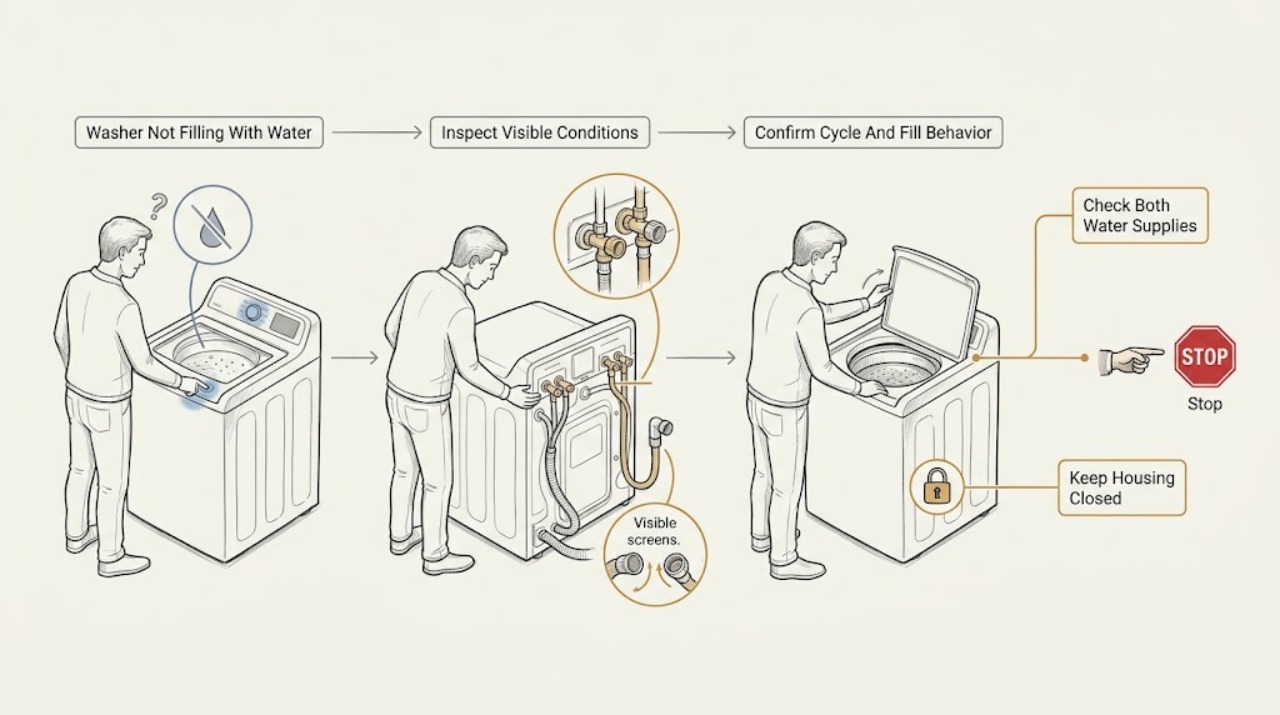
Amana Washer Not Filling With Water: Check the Supply and Controls Safely
An Amana washer that appears not to fill may be waiting during sensing, using a low-water or bulky cycle, missing one of its required hot or cold water supplies, restricted by a kinked hose or inlet screen, prevented from running by a lid or door condition, or filling and immediately siphoning through an incorrectly installed drain hose.
-
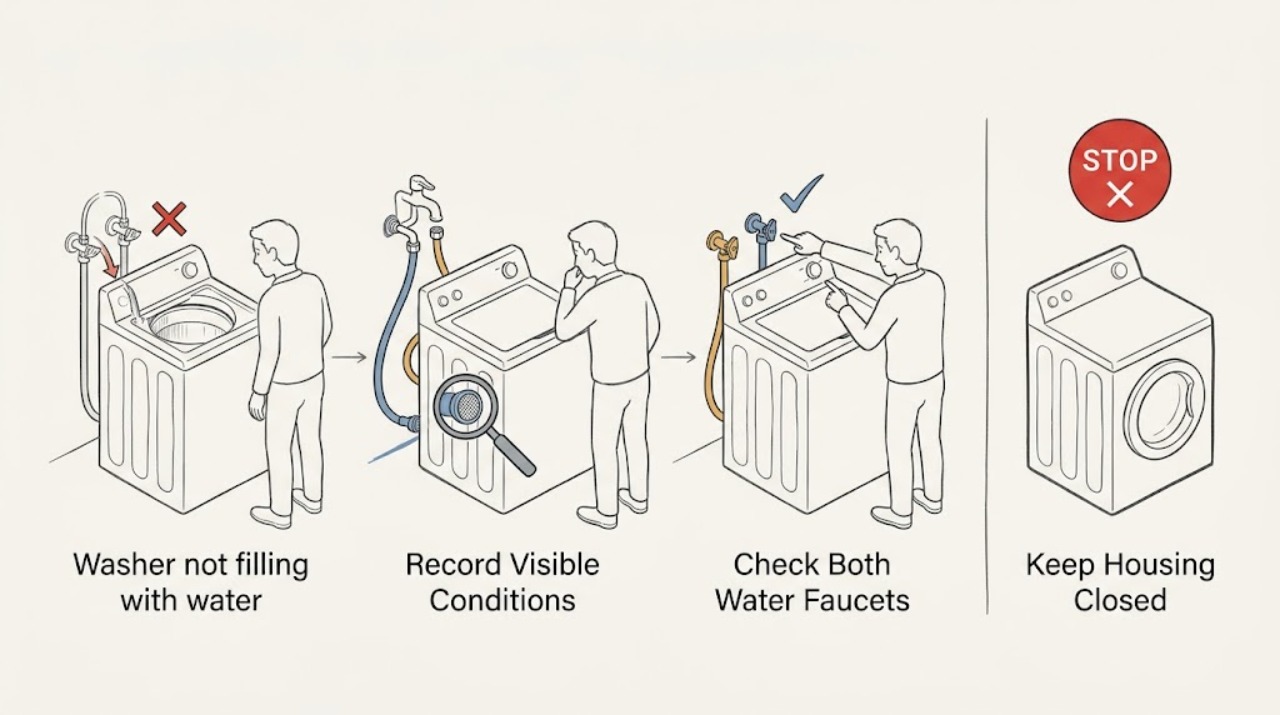
Electrolux washer not filling with water: What to Check and What to Do Next
Record the exact Electrolux model, display code, and whether the washer is completely dry, filling slowly, filling and draining at once, or stopping after the door locks. Start with safe exterior checks: both hot and cold household faucets should be on, the supply hoses should be connected to the matching inlets without kinks or cross-threading, and the inlet screens should not be visibly restricted.
-
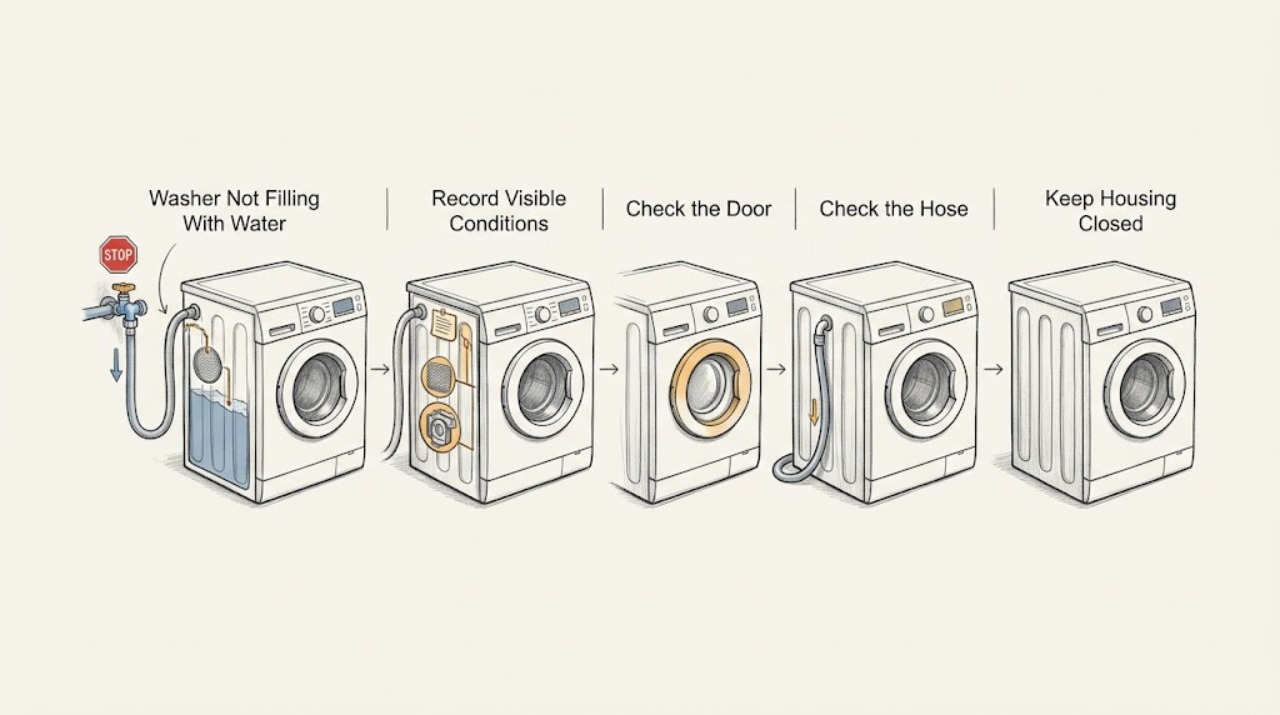
GE Washer Not Filling With Water: What to Check and What to Do Next
When a GE washer will not fill, first identify whether it is completely dry, filling slowly, filling and immediately siphoning away, or showing a water-supply or lid message. From a dry position confirm the cycle is not paused, both household water valves are open, and the hot and cold hoses are connected to the correct marked ports.
-
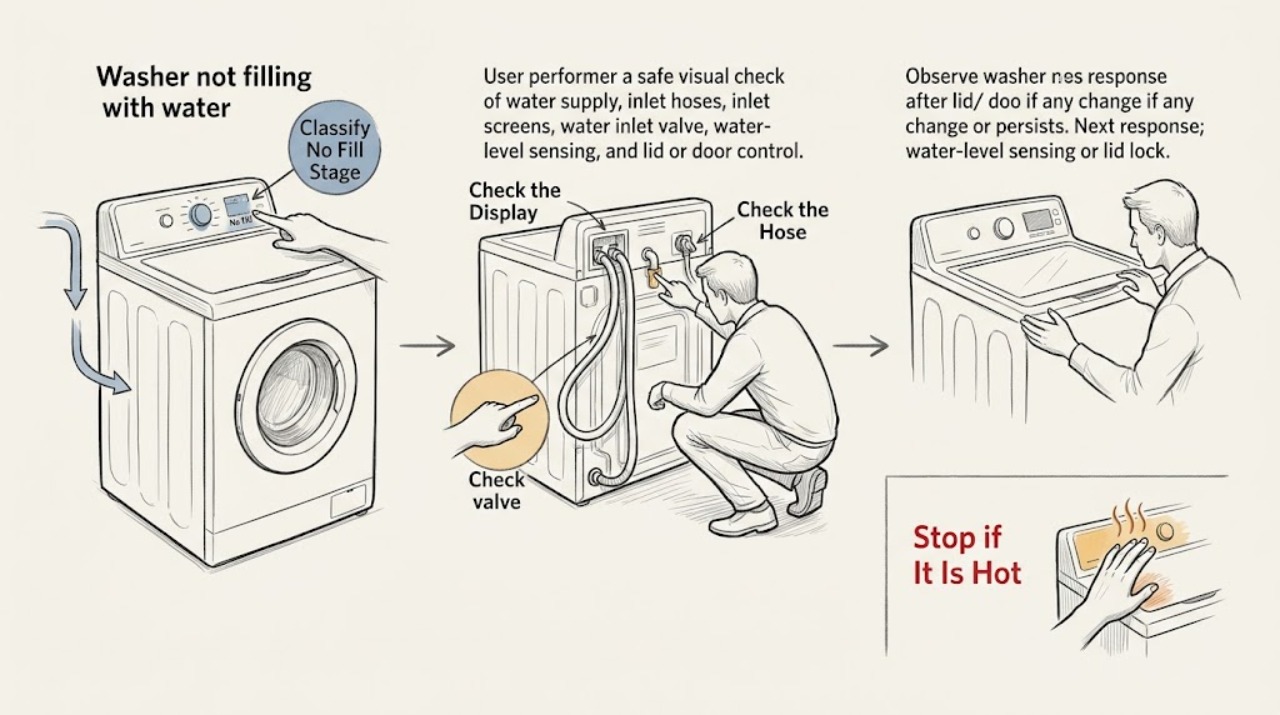
Hotpoint washer not filling with water: What to Check and What to Do Next
First decide whether the Hotpoint washer never starts filling, fills slowly, receives only hot or cold water, or begins filling and then stops. Confirm the cycle is not paused, the lid or door is closed, and both household water valves are open.
-
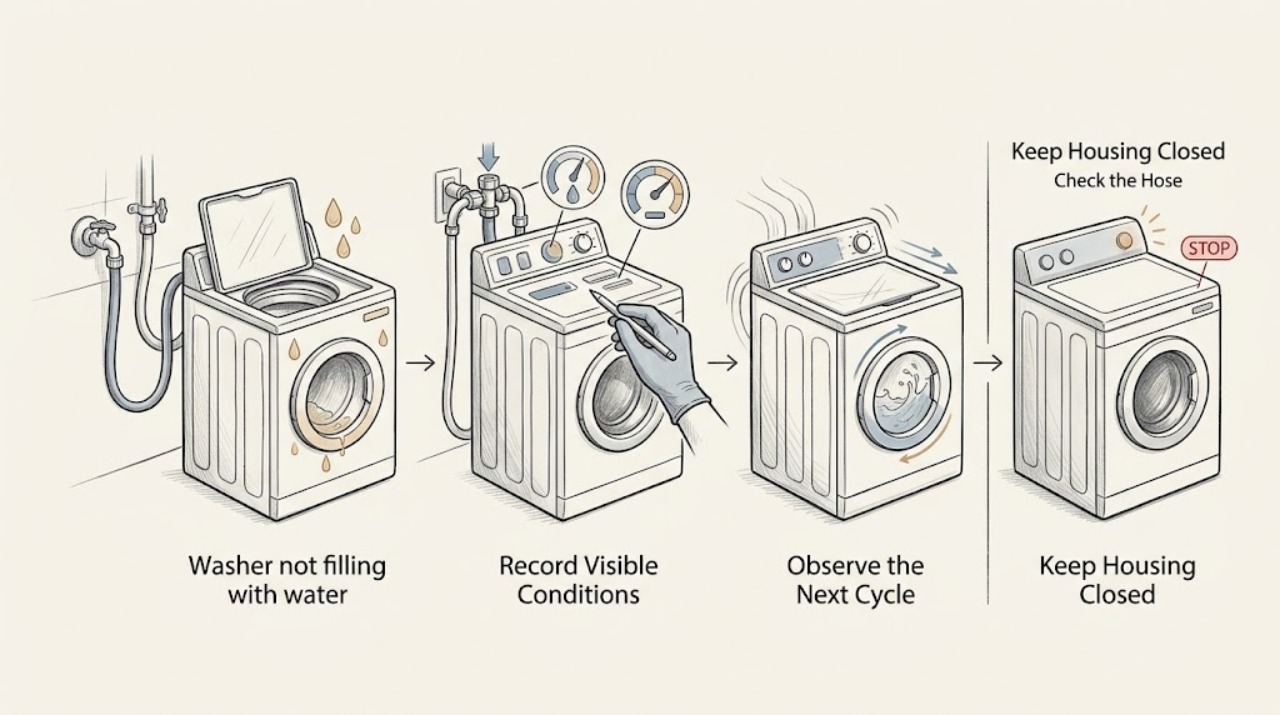
Lg washer not filling with water: What to Check and What to Do Next
An LG washer that is not filling may be waiting briefly while it senses the load, or it may have a closed or weak water supply, kinked hose, clogged inlet filter, frozen connection, lid or door condition, drain-hose siphoning, or an internal inlet-valve or control fault.
-
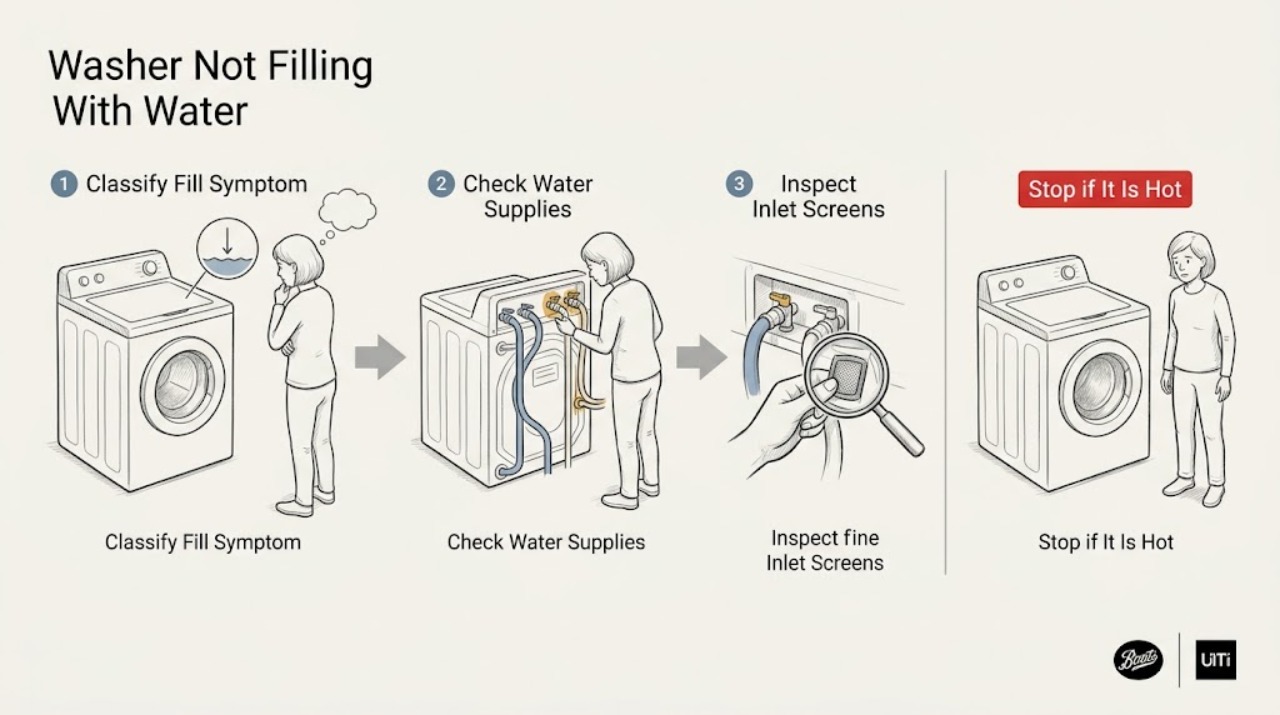
Maytag Washer Not Filling With Water: What to Check and What to Do Next
If a Maytag washer is not filling, first decide whether it is truly receiving no water or is pausing while it senses the load or uses a low-water cycle. Keep the lid or door closed as the exact model requires, verify that both hot and cold supply valves are open and both inlet hoses are connected and free of kinks, and check for a visible hose restriction.
-
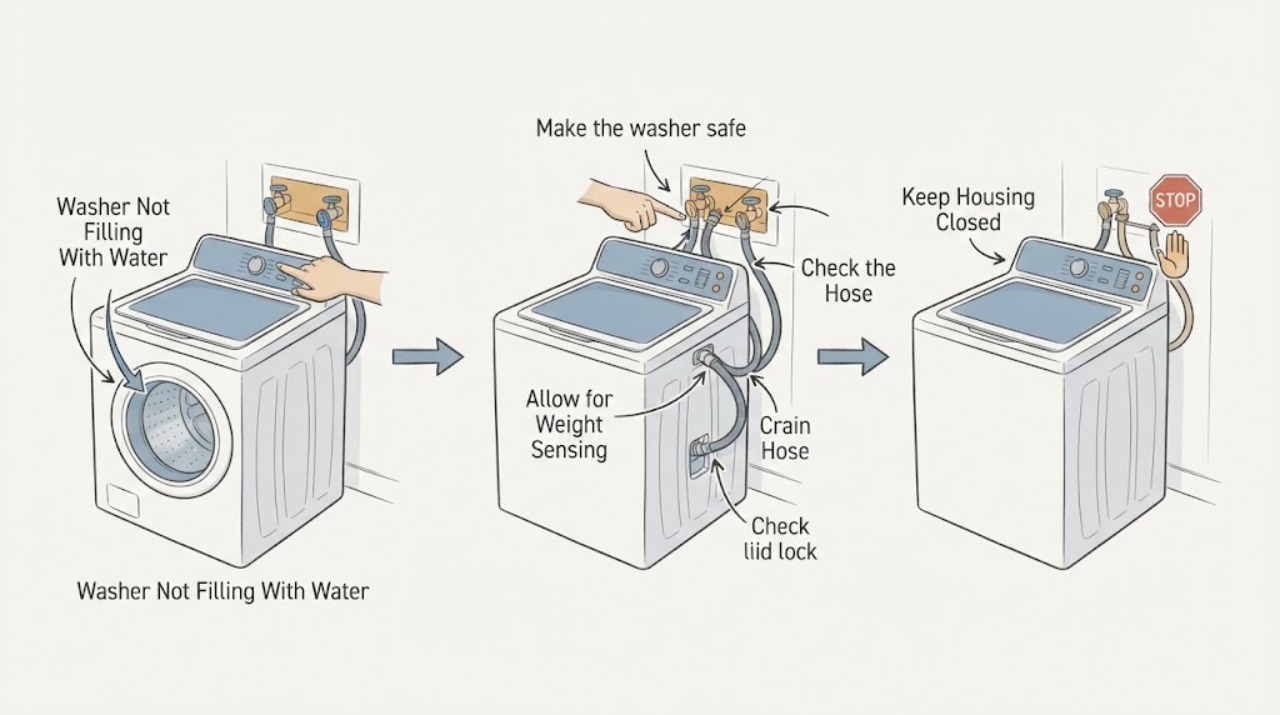
Samsung Washer Not Filling With Water: What to Check and What to Do Next
First decide whether the Samsung washer is truly receiving no water, is still in its normal weight-sensing delay, or is filling with less water than expected. Record any code or blinking lights.
-
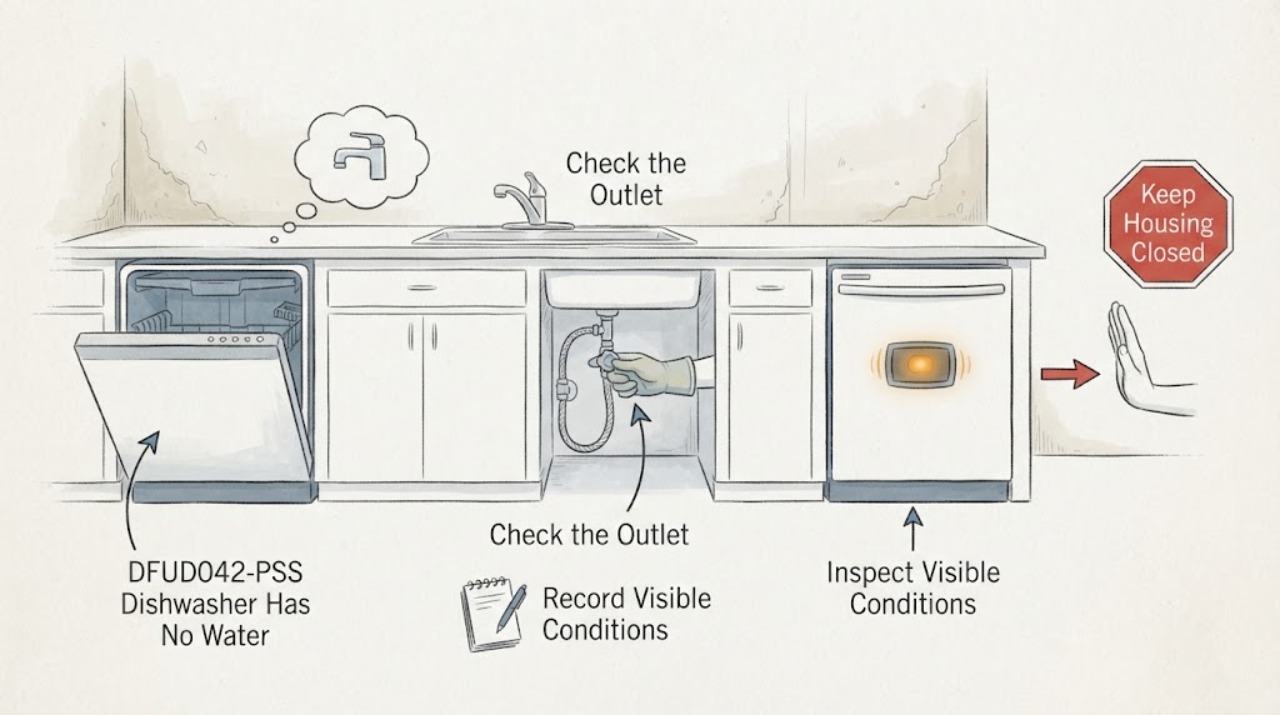
Viking DFUD042-PSS Dishwasher Has No Water After 10 Years Idle: Check the Supply Safely
Do not keep starting a Viking DFUD042-PSS dishwasher that has been idle for about 10 years just to see whether it fills. First keep the appliance off, check from a dry position that the under-sink water shutoff is available and that the visible supply line is not kinked, and look for leakage or corrosion without loosening a fitting.
-
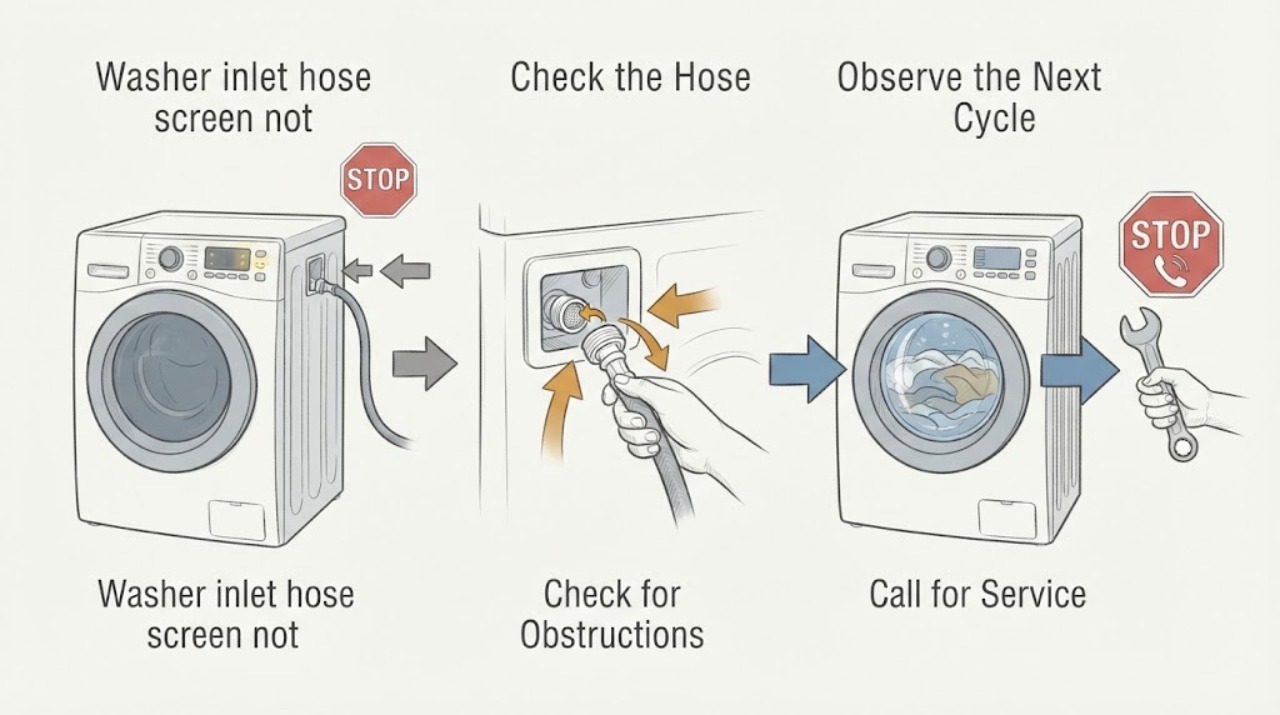
Washer inlet hose screen not filling with water: What to Check and What to Do Next
A washer that will not fill, or fills only slowly, may have a closed or weak household supply, a kinked inlet hose, a clogged inlet-hose or washer-valve screen, freezing, an anti-flood restriction, a drain hose that is siphoning water away, or an inlet valve, door-lock, pressure-sensing, or control fault. Turn off the water and disconnect power before separating a hose.
-
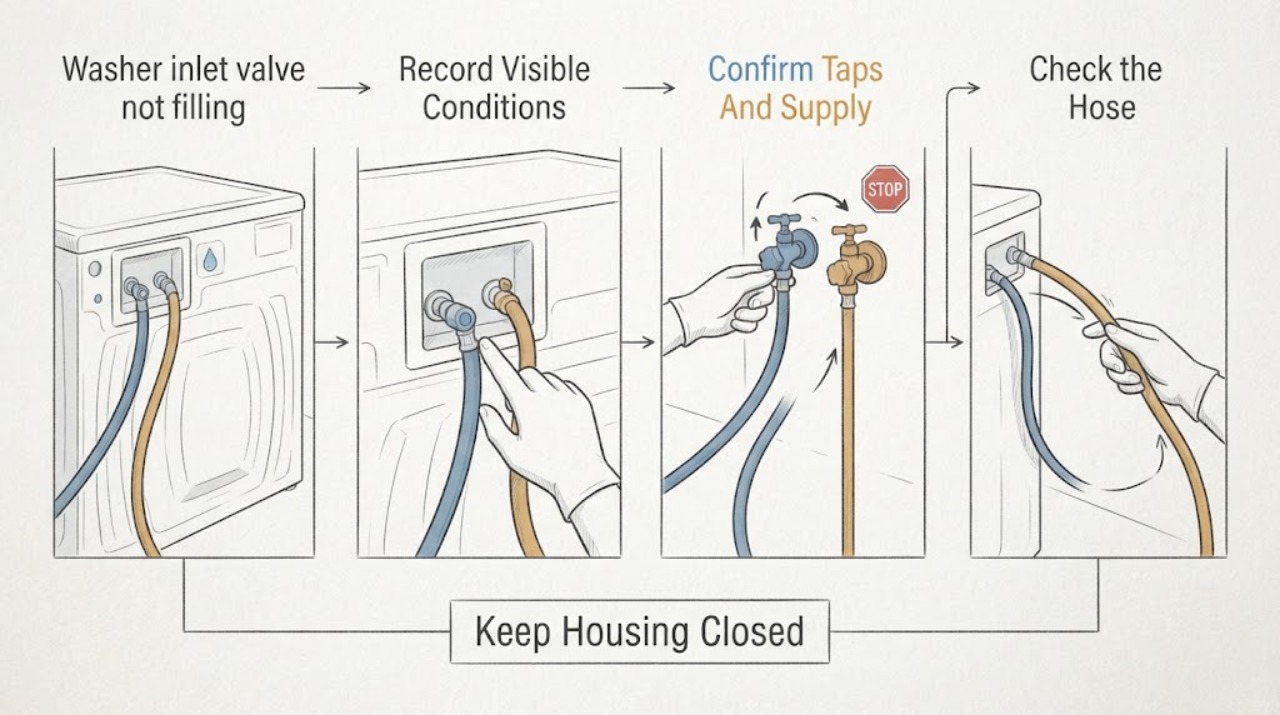
Washer inlet valve not filling with water: What to Check and What to Do Next
A washer that is not filling has not necessarily proved that its inlet valve is bad. First check the displayed error or fill behavior, confirm both household water taps are open, and inspect the hot and cold inlet hoses for kinks, crushing, freezing, damage, or crossed connections.
-
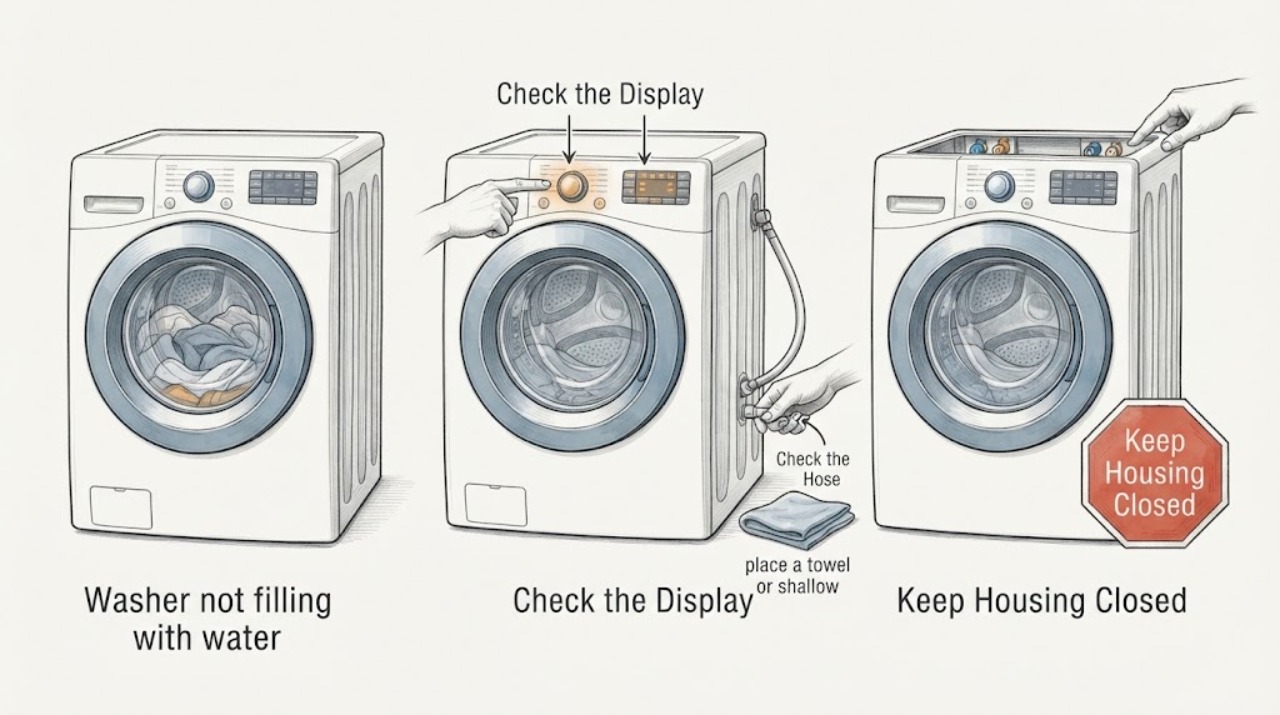
Washer not filling with water no water enters tub: What to Check and What to Do Next
If no water enters a washer tub, first check whether the cycle is still sensing the load or whether a fill error is present. Then confirm that the household water valves are fully open, hot and cold hoses are connected to the correct inlets, and neither hose is kinked, crushed, frozen, or damaged.
-
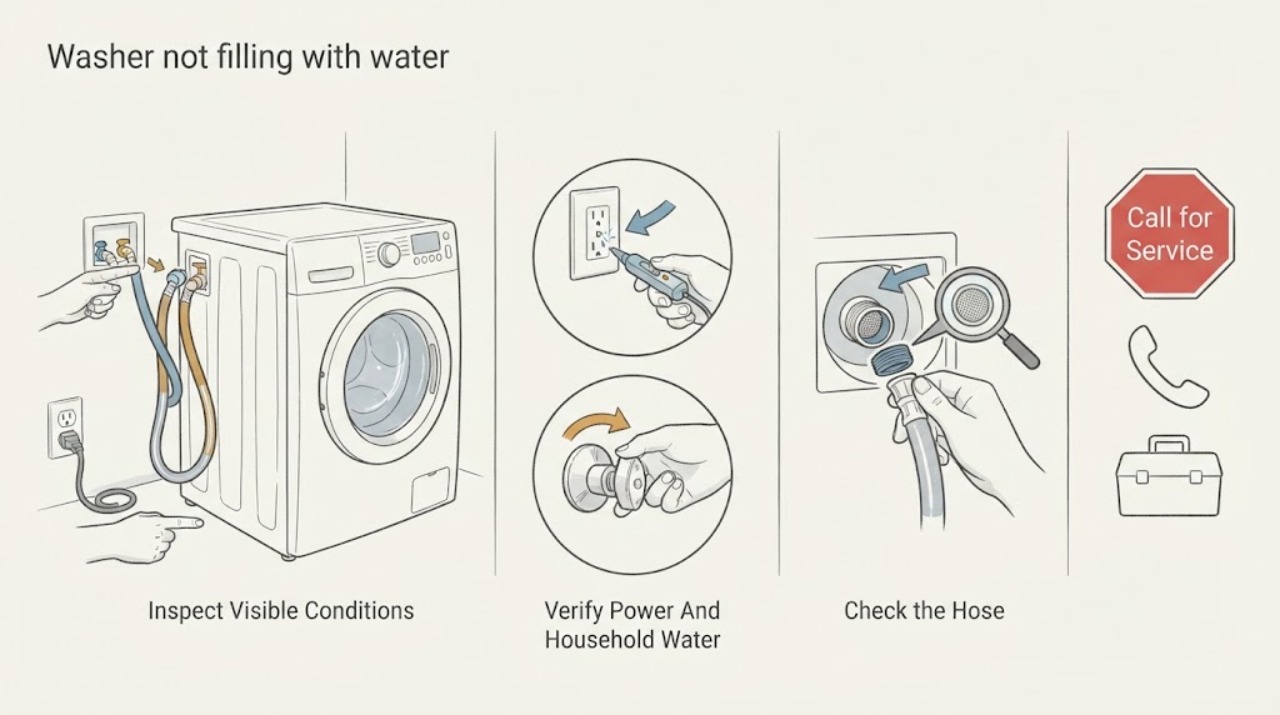
Washer not filling with water cycle starts: What to Check and What to Do Next
When a washer starts its cycle but no water enters, first decide whether it is in a normal sensing or lock step, actually calling for water, or filling and immediately losing water. Keep the lid or door closed and allow the model's initial sensing period to finish; some high-efficiency top-load cycles briefly sense before adding water.
-
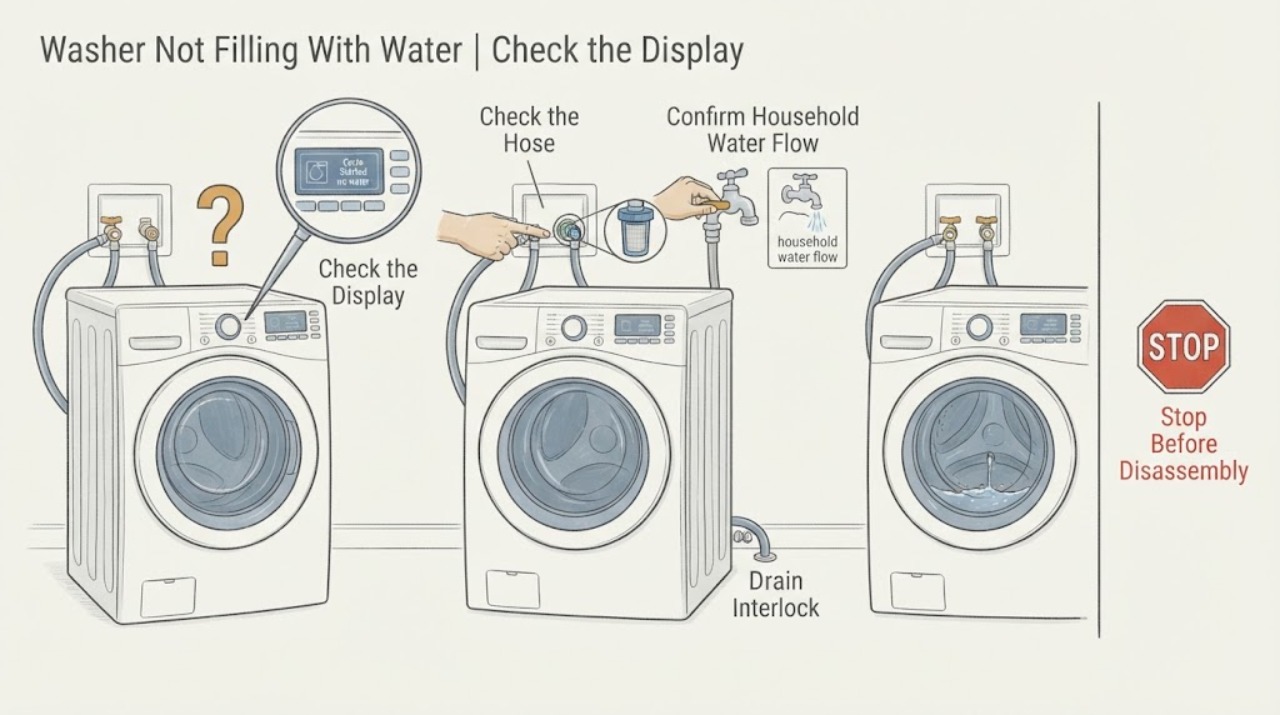
Washer Not Filling With Water While Supply Valves Are Open: What to Check and What to Do Next
If the washer's supply valves are open but the tub is not filling, check whether the washer is intentionally sensing the load, whether the door or lid is closed, and whether the display shows a water-inlet warning. Then inspect the visible inlet hoses for bends or crushing, confirm that water actually flows from the household faucet, and check the inlet filters only by the exact owner-manual procedure.
-
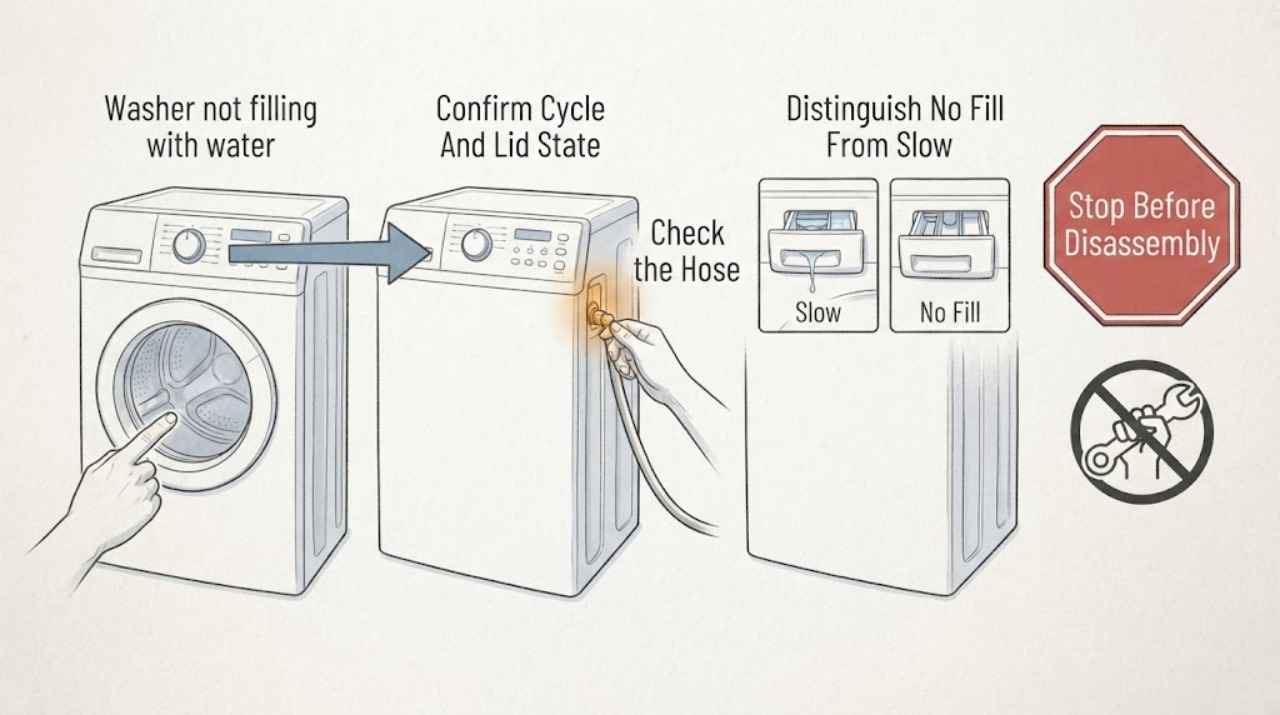
Washer not filling with water: What to Check and What to Do Next
If a washer is not filling, first confirm that a cycle has started with the lid or door closed, then check the household water supply and accessible inlet hoses. A kinked hose, closed valve, incorrect hose connection, or a drain hose that allows siphoning can stop or immediately remove incoming water.
-
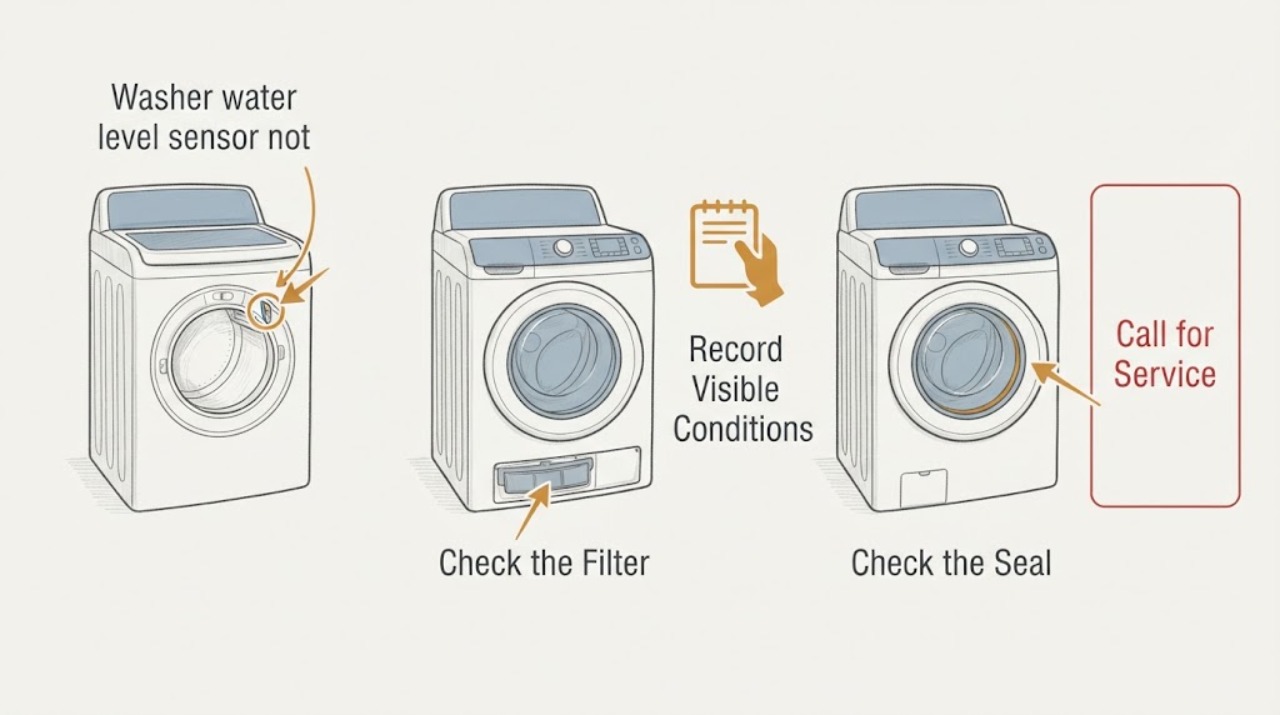
Washer water level sensor not filling with water: What to Check and What to Do Next
A washer described as having a water-level-sensor filling problem may not be receiving water at all, may be losing water down the drain as it fills, or may be receiving water that the pressure sensor cannot detect correctly. Start with the household faucets, inlet hoses and screens, drain-hose routing, lid or door closure, and the exact model's display message.
-
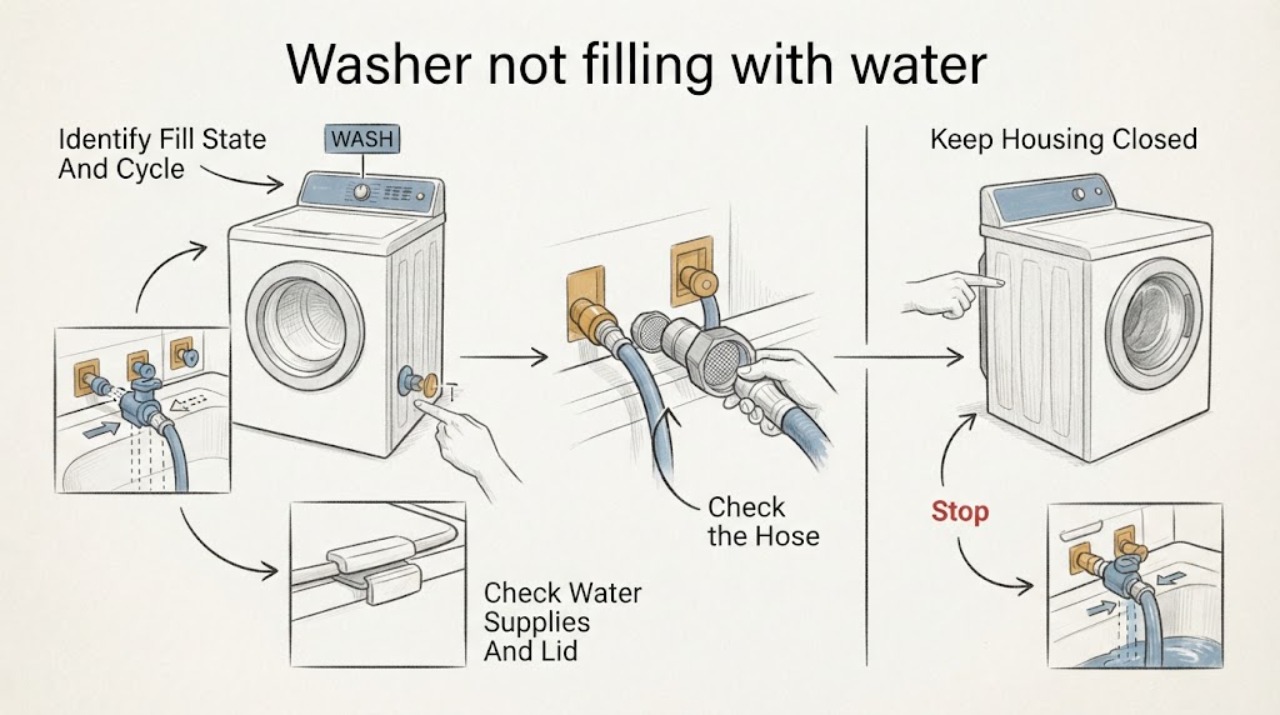
Whirlpool washer not filling with water: What to Check and What to Do Next
First record the exact Whirlpool model, top-load or front-load type, selected cycle, display or lights, and whether the washer is completely dry, filling slowly, or filling and draining at the same time. Confirm both household hot and cold water valves are open, both inlet hoses are connected to the correct sides, and the hoses are not kinked; Whirlpool says many models need pressure from both supplies even for a cold wash.