
On this page
Start here
Quick answer
Frigidaire dishwashers normally make water-fill, circulation, motor and drain sounds, and sound can change when spray arms alternate. Knocking or banging commonly warrants checking whether a tall dish, pan or utensil is touching a spray arm. With power off, correct only visible loading or spray-arm obstructions, keep the user-accessible filter/glass trap maintained, and check obvious installation/level conditions against the model manual. If the cabinet moves, the noise is grinding or scraping, or the symptom remains after these checks, stop using it and arrange qualified service; the sound alone does not prove a failed pump or motor.
Before you begin
Safety first
- Disconnect electrical power before service work. Keep enclosure panels in place; do not perform live tests, remove a pump/motor, reach into hidden wiring or keep running the dishwasher to force a diagnosis.
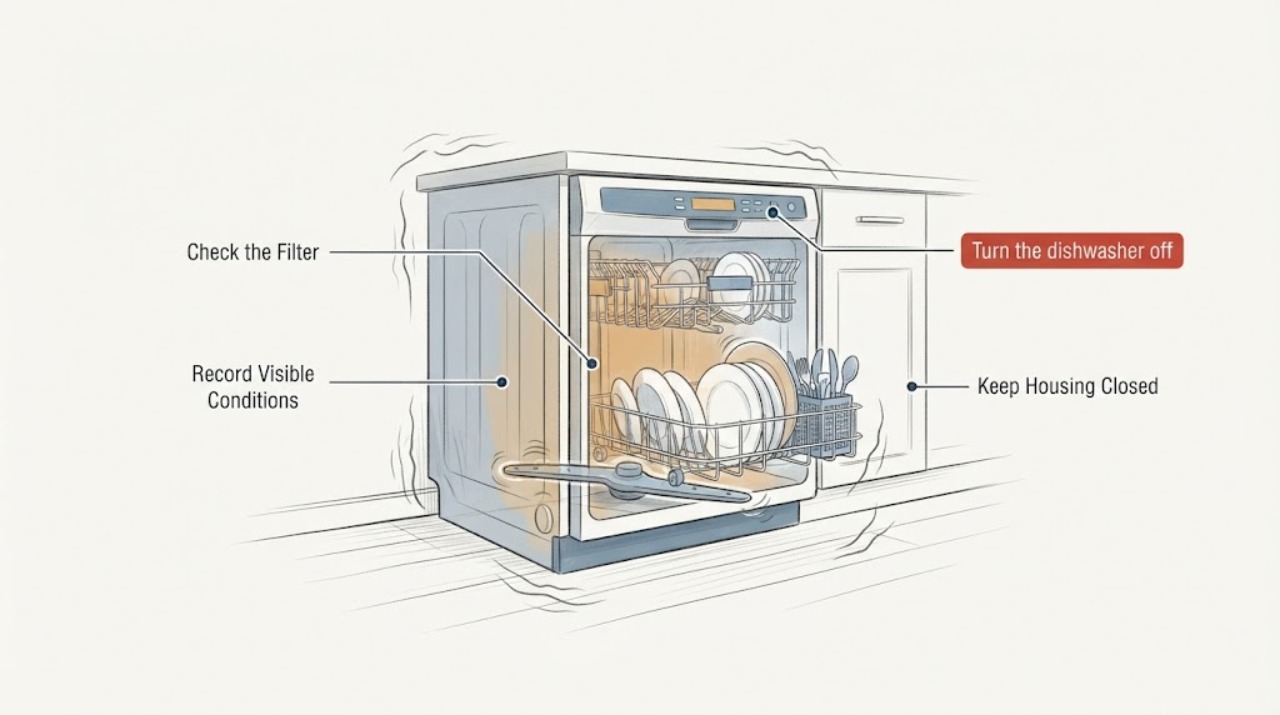
Work through in order
Diagnostic checks
Use only checks that match the exact appliance or system and its official guide.
-
Check 1
During one normal cycle, from outside the closed appliance, note whether the sound occurs during filling, spray-arm washing, draining, drying or when the wash action changes arms. Record whether the cabinet itself moves or only the sound changes.
Expected result: The sound matches a documented fill/spray/drain phase and stops or changes with the phase, or it is continuous/new and accompanied by cabinet movement or poor performance.
Next step: If phase-matched and mild, continue with loading checks. If new, continuous or performance-related, stop repeated testing and proceed to service assessment.
Why this matters
Why: Frigidaire identifies several phase-specific sounds as normal; a persistent new sound, structural movement or affected cleaning result needs more than sound identification.
-
Check 2
Turn the dishwasher off and allow hot surfaces to cool. Remove only accessible items that could touch a spray arm, then rotate the accessible spray arm by hand to confirm it is not blocked by a tall dish, pan handle or utensil.
Expected result: An item interferes with rotation, the spray arm moves freely, or the arm cannot be checked without removing panels.
Next step: Reposition only the obstructing load and run the model-supported cycle once. If the arm is damaged, blocked internally or requires panel removal, stop and arrange service.
Why this matters
Why: Frigidaire links knocking or banging to load interference and says rack items must not block spray-arm rotation. Free movement does not prove that an internal pump or motor is sound.
-
Check 3
With power disconnected, inspect and maintain only the user-accessible filter/glass-trap area according to the exact model manual; remove loose visible debris and refit the parts correctly. Do not reach into hidden pump wiring or remove the pump cover.
Expected result: The glass trap/filter area contains visible debris, is clear, or cannot be accessed safely using the manual.
Next step: Clean and refit only the documented accessible parts. If grinding/scraping persists or access requires disassembly, stop using the appliance and request qualified service.
Why this matters
Why: The Frigidaire manual says filters and the glass trap require maintenance, but a clear trap does not identify a motor or pump condition from sound alone.
-
Check 4
From outside the appliance, look for obvious movement against surrounding cabinetry and verify the dishwasher is level only as described in the model installation instructions; do not pull out a built-in unit or adjust feet while powered.
Expected result: The unit is visibly unstable or not level, installation support is loose, or the accessible installation appears stable.
Next step: For a new installation or visible installation issue, contact the installer or follow the exact installation guide. If the unit is stable but noise/vibration remains, use the service branch.
Why this matters
Why: Frigidaire’s opened manual directs a level check for installation-related problems and says model features/instructions vary. It does not make level status proof of a pump or motor fault.
-
Check 5
After the safe load, accessible filter and installation checks, do not repeat cycles to force a diagnosis. Note the sound recording, phase, cabinet movement, water/leak observations and cleaning performance for service.
Expected result: The sound is gone after an accessible correction, or it remains/returns with grinding, scraping, excessive vibration, leaks or poor washing.
Next step: For persistent or hazardous symptoms, disconnect power before any service handling and arrange a qualified Frigidaire technician. Keep enclosure panels in place and do not perform live electrical tests.
Why this matters
Why: Improvement supports an external load or installation condition. Persistence or a new mechanical sound is outside the verified user-check scope; it does not identify a specific part.
Use your observations
Decision map
Find the observation that best matches what you see, then follow the next safe action.
-
PATH 01Next step
What you see
The sound is a brief fill, spray, drain or fan sound that follows the cycle phase and the cabinet stays stable.
Do this next
Monitor normal operation and continue only with the load check if a dish or utensil is causing a knock.
Why this path and its safety boundary
Why it matters: Frigidaire identifies these operating sounds as normal for applicable dishwasher designs.
-
PATH 02Next step
What you see
A tall item, pan handle or utensil touches or blocks a spray arm.
Do this next
With power off, reposition the item and run the model-supported cycle once; stop if the sound remains or the arm cannot move freely.
Why this path and its safety boundary
Why it matters: The noise is consistent with a loading/spray-arm interference condition, not a confirmed pump or motor failure.
-
PATH 03Next step
What you see
The dishwasher cabinet moves, the unit is visibly unstable, or the symptom began after installation or relocation.
Do this next
Stop using it if movement risks damage, contact the installer for a new installation or follow the exact manual’s level instructions; do not pull out a built-in unit while powered.
Why this path and its safety boundary
Why it matters: An installation or level condition is plausible, but the family evidence does not establish a particular mechanical cause.
-
PATH 04Next step
What you see
Grinding, scraping, persistent loud vibration, a leak or poor washing continues after the accessible checks.
Do this next
Disconnect power before service handling, keep enclosure panels in place and arrange qualified Frigidaire service.
Why this path and its safety boundary
Why it matters: The symptom is outside the normal sound/loading boundary and needs qualified inspection; the evidence does not support naming a pump, motor or bearing remotely.
Helpful context
Understand the symptom
Match the sound to the programme phase
Frigidaire’s noise guide describes hissing during filling, wash-pump humming that starts and stops as spray arms alternate, a drain-pump hum while water is pumped out, and whooshing or clunking as spray arms move. A change in sound between spray arms can be normal. Record when the noise occurs before treating it as a fault.
Check loading before naming a component
Frigidaire says knocking or banging can occur when a dish, pot, pan or utensil interferes with spray-arm circulation. Tall items, pan handles and items protruding through a rack can block rotation. These checks are about the load and water path; they do not identify a failed pump or motor.
Know when vibration needs service
If the whole cabinet shifts, the noise is newly loud or scraping, or washing performance changes, do not keep running cycles to locate a part. Use the model manual and installation instructions for the unit’s level/installation checks. Disconnect power before service work and leave internal diagnosis to a qualified technician.
When checks do not resolve it
Need a professional?
Arrange qualified Frigidaire service when grinding or scraping persists, the cabinet vibrates or moves excessively, a leak or electrical concern appears, cleaning performance changes, or the sound remains after the manual-supported loading, accessible filter and installation checks. Do not diagnose a pump or motor from sound alone.
Safety scope: Disconnect electrical power before service work. Keep enclosure panels in place; do not perform live tests, remove a pump/motor, reach into hidden wiring or keep running the dishwasher to force a diagnosis.
Have this ready
- Provide the full model/serial information, sound recording, programme phase, whether the cabinet moves, load/spray-arm observations, filter/glass-trap result, installation history and any leak or cleaning-performance change.
Common questions
FAQ
Are dishwasher noises during filling and washing normal?
Often yes. Frigidaire lists water filling, circulation, motor, drain-pump and spray-arm sounds as normal operating sounds, with timing and model features affecting what is heard.
What causes a knocking or banging sound?
Frigidaire directs owners to check whether a dish, pot, pan or utensil is interfering with spray-arm movement. Turn power off before moving items and do not infer a failed pump from a load-related knock.
Can vibration alone prove the motor or pump is bad?
No. The opened official guidance supports phase, loading, filter/glass-trap and installation checks, but it does not identify a pump or motor failure from vibration alone. Persistent or excessive vibration needs qualified service.
Should I run the dishwasher with a panel removed to locate the noise?
No. Frigidaire’s manual says to disconnect power before servicing, keep enclosure panels in place during operation and use a qualified technician for repairs.
What if the noise continues after the load is corrected?
Stop repeated testing and arrange service if the noise is grinding, scraping, newly loud, accompanied by cabinet movement, a leak or poor washing. Provide the model and when in the cycle the sound occurs.
Read the exact guide
Official sources
- Dishwasher - Noise GuideFrigidaire Support · Opened Frigidaire official support article. It maps common water-fill, wash-pump, drain-pump, dispenser, ball-valve and spray-arm sounds without diagnosing a component from noise alone.
- Frigidaire Dishwasher Use & CareFrigidaire / Electrolux Home Products · Opened the brand-hosted Frigidaire use-and-care PDF. It documents normal sound changes between spray arms, loading that must not block spray-arm rotation, level checks, filter/glass-trap care, electrical safety and qualified repair boundaries.
- Dishwashers - What are normal dishwasher operations sounds?Frigidaire Support · Opened Frigidaire official support article. It identifies normal filling, water circulation, motor and optional drying-fan sounds and says to check loading when dishes cause spray-arm knocking or banging.
Community feedback
Share a repair observation
Share a plain-text repair observation. Accepted observations are published automatically; this page may take a moment to update.