
On this page
Start here
Quick answer
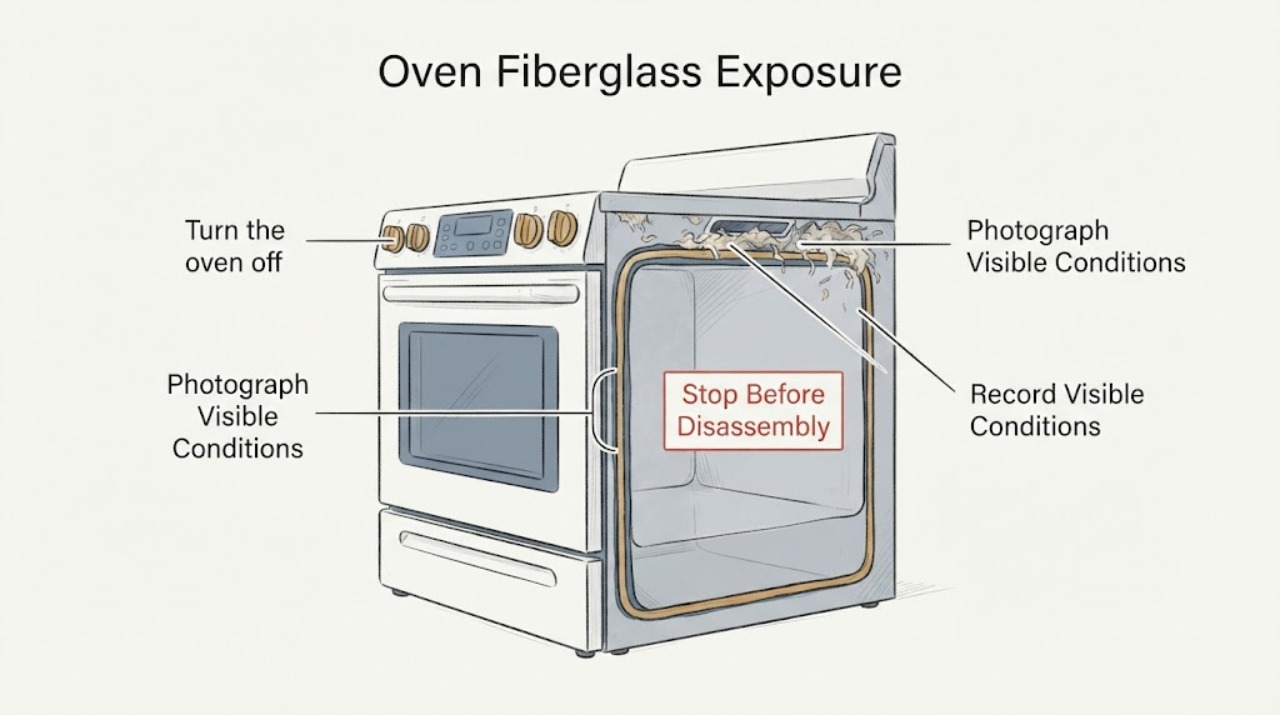
Stop using the Frigidaire oven if fibrous material is visible in the cavity, falls from an opening, or becomes airborne during heating. Do not touch it, blow it out, vacuum it, tape over an opening, remove insulation, or open the cabinet. Fibrous glass can irritate the eyes, skin, nose, throat and lungs, but a visual resemblance alone does not prove what the material is or identify the oven's intended vent design. Record the full model number, fuel type, exact location, whether particles move when the oven heats, and any smoke, gas smell or symptoms. Frigidaire says oven instructions vary by model, so have the exact model and photos assessed through the matched manual or qualified service before cooking again.
Work through in order
Diagnostic checks
Use only checks that match the exact appliance or system and its official guide.
-
Check 1
Turn the oven off and keep it out of service if loose fibers are in the cavity, falling from an opening, or becoming airborne. Keep people and pets away from the opening and do not restart the oven to see whether the material falls again.
Expected result: There are visible or airborne particles, smoke, flame, a gas smell, or visible electrical damage; or there is no confirmed material and only a visual suspicion.
Next step: For particles or suspected fibers, leave the oven off and continue only with non-contact identification. For smoke, flame or a gas smell, leave the area and use the appropriate emergency or gas-service response; do not open the appliance. If the material is unconfirmed, do not use the oven until the model and opening are assessed.
Why this matters
Why: Visible or moving material is an unresolved exposure and appliance condition. Smoke, flame, gas smell or electrical damage adds an immediate fire or gas hazard. A visual suspicion alone does not prove fiberglass.
-
Check 2
From outside the appliance and without tools, note whether the material is inside the cooking cavity, at a top or rear opening, around a light opening, or only behind an exterior panel. Take a photo from a safe distance; do not touch, brush, blow, vacuum or pull at the material.
Expected result: Material is in the food cavity or falls toward the cavity, is visible only behind an exterior opening, or cannot be distinguished from dust or another material.
Next step: Keep the oven unused for cavity or moving material. Preserve photos and stop at a professional assessment for exterior-only or uncertain material rather than attempting a cleanup or seal.
Why this matters
Why: Material entering the cooking cavity is a direct use concern. Material visible only at an exterior opening still cannot be interpreted without the exact model's vent and insulation layout. Appearance alone does not establish fiberglass.
-
Check 3
Record the complete Frigidaire model number from the appliance label, whether the oven is gas or electric, the opening's location, when the material was first seen, whether it moves during heating, and any recent cleaning, moving, repair or pest activity. Do not use a partial model or a similar Frigidaire model to select a part or procedure.
Expected result: The full model and fuel type are available, or the model is missing and the opening cannot be matched to an Owner's Manual.
Next step: Use the exact model with Frigidaire's manual/support path or give it to qualified service. If the model cannot be read, provide clear photos and do not generalize from another Frigidaire oven.
Why this matters
Why: Frigidaire says its oven instructions vary by model. Without the complete identity, the normal vent arrangement, insulation boundary and safe repair scope remain unresolved.
-
Check 4
If a person may have contacted the material, avoid rubbing the eyes or skin. For eye contact, irrigate immediately; for breathing exposure, move to fresh air. Note any irritation, coughing or breathing difficulty without attempting to diagnose the cause.
Expected result: There is no symptom, or eye, skin, nose, throat or breathing irritation is present or persists after leaving the area.
Next step: For persistent irritation or any breathing difficulty, seek medical advice or urgent care as appropriate and describe the possible fibrous-glass exposure. Do not return to the oven to clean it yourself.
Why this matters
Why: NIOSH lists irritation of the eyes, skin, nose and throat and breathing difficulty as possible symptoms and gives eye irrigation and fresh air as first aid. ATSDR describes short-term irritation as a possible effect but does not provide a diagnosis for a particular person.
-
Check 5
Give Frigidaire support or a qualified appliance technician the complete model number, fuel type, photos, exact location of the material, whether particles fall only during heating, and any smoke, odor or symptoms. Ask for a model-matched assessment of the vent, cover, insulation boundary and cavity cleanliness.
Expected result: The material is loose, recurring, in the cooking cavity, associated with a damaged opening, or cannot be safely identified from the outside.
Next step: Keep the oven out of service until the exact model and condition are assessed. Do not open panels, remove insulation, patch an opening, bypass a guard or order a generic high-temperature material.
Why this matters
Why: The remaining question is appliance-specific and may involve a gas or electric safety boundary. The available public sources do not support a universal cover, insulation replacement or cleaning procedure.
Use your observations
Decision map
Find the observation that best matches what you see, then follow the next safe action.
-
PATH 01Next step
What you see
Fibers or loose fibrous material are falling into the cooking cavity or becoming airborne when the oven heats.
Do this next
Stop use, avoid disturbing the material, record the exact model and photos, and obtain model-specific qualified service before using the oven again.
Why this path and its safety boundary
Why it matters: The reported use pattern is an unresolved exposure and the oven should not be treated as ready for cooking. The exact Reddit case reports this pattern on a Frigidaire FFGF3015LBG gas oven, but it does not establish that every Frigidaire oven has the same defect.
-
PATH 02Next step
What you see
Material is visible only at an opening or behind an exterior surface, with no confirmed particles in the cavity.
Do this next
Do not seal, remove or blow out the material. Keep the oven unused until the model-matched manual or qualified technician identifies the opening and its safe condition.
Why this path and its safety boundary
Why it matters: A visible opening cannot be classified as a normal flue, missing cover, displaced insulation or damage without the exact Frigidaire model documentation and inspection.
-
PATH 03Next step
What you see
Smoke, flame, gas smell, sparking, a hot or damaged connection, or an electrical burning odor accompanies the suspected exposure.
Do this next
Leave the oven off, move people away from an active hazard and contact emergency, gas or qualified appliance help as appropriate. Do not open the cabinet or attempt a repair.
Why this path and its safety boundary
Why it matters: The immediate priority is fire, gas or electrical safety; the material's identity is secondary and cannot justify another test cycle.
-
PATH 04Next step
What you see
No fibers can be confirmed, the model is missing, or the observed material could be dust or another substance.
Do this next
Keep the suspected source undisturbed, document the model and location with photos, and have Frigidaire support or qualified service identify it before cooking.
Why this path and its safety boundary
Why it matters: The evidence does not support calling the material fiberglass or choosing a cleanup or replacement procedure.
Helpful context
Understand the symptom
Treat visible fibers as an exposure and appliance-safety stop
If fibers, loose insulation-like material or airborne particles are visible in the oven cavity or coming through an opening, leave the oven off and do not cook in it while the source is unknown. NIOSH lists inhalation and skin or eye contact as exposure routes and lists irritation and breathing difficulty among possible symptoms. ATSDR says disturbing insulation can suspend fibers in air. Neither source confirms that every white or fuzzy material in an oven is fiberglass, so do not make a material or health diagnosis from appearance alone.
Do not clean or seal an unidentified oven opening
Do not blow particles through the oven, vacuum into an opening, scrape insulation, pull out material, apply tape or sealant, or open the outer cabinet. Those actions can disturb fibers and can change a gas or electric oven's venting, insulation and guarding. The Reddit report is useful for recognizing the symptom, but comments are not a Frigidaire repair instruction. A technician needs the exact model, fuel type and photos to decide whether the material is displaced insulation, a damaged or missing cover, an intended opening, or another material entirely.
Health response should stay within first-aid guidance
If fibers may have contacted the eyes, NIOSH's fibrous-glass entry says to irrigate the eyes immediately; for breathing exposure it lists fresh air as first aid. Avoid rubbing the eyes or skin. Seek prompt medical advice for breathing difficulty or persistent eye, skin, nose or throat irritation, and tell the clinician what was observed. Do not infer a long-term diagnosis, contamination level or safe cooking threshold from this article.
Model identity controls the repair boundary
Frigidaire states that its range, cooktop and oven products vary by model and that owners should use the matching Owner's Manual. Because this task has no model number, no vent cover, insulation layout, gasket, filter, replacement material or internal repair can be selected safely. Photograph the material without touching it, capture the full model tag, note whether the oven is gas or electric and whether the material moves only when heating, then give those details to Frigidaire support or a qualified appliance technician.
When checks do not resolve it
Need a professional?
Arrange qualified Frigidaire service before use if loose or airborne fibers are present, material enters the cooking cavity, the opening or insulation boundary appears damaged, the exact model cannot be matched, or any smoke, gas smell, electrical odor or visible damage is present. Seek medical advice for persistent irritation or breathing difficulty.
Have this ready
- Complete model number, fuel type, photos taken without touching the material, location inside or outside the cavity, whether particles move during heating, recent cleaning or repair history, smoke or odor observations, and any health symptoms.
Common questions
FAQ
Is every white or fuzzy material in a Frigidaire oven fiberglass?
No. Appearance alone does not identify the material. Keep the oven off if particles are loose or entering the cavity, document the exact model and location, and have the opening assessed before attempting cleanup or repair.
Can I vacuum or blow fiberglass out of the oven?
Do not blow, vacuum, brush, pull or scrape material from an unidentified oven opening. ATSDR says disturbing insulation can suspend fibers in air, and a model-specific service assessment is needed to identify the opening and safe cleaning method.
What symptoms can fibrous glass cause?
NIOSH lists irritation of the eyes, skin, nose and throat and breathing difficulty among possible symptoms. It lists immediate eye irrigation and fresh air for breathing exposure. Seek medical advice for persistent irritation or breathing difficulty rather than making a diagnosis from this article.
Why is the full Frigidaire model number necessary?
Frigidaire says that range, cooktop and oven instructions vary by model and directs owners to the matching Owner's Manual. The model is needed to determine what an opening is, whether a cover or insulation boundary belongs there, and which service information applies.
Read the exact guide
Official sources
- CDC - NIOSH Pocket Guide to Chemical Hazards - Fibrous glass dustNational Institute for Occupational Safety and Health (CDC) · Official hazard reference used only for conservative exposure-response wording, not for an oven diagnosis.
- Synthetic Vitreous Fibers | ToxFAQs™ | ATSDRAgency for Toxic Substances and Disease Registry (CDC) · Official ATSDR fact sheet; it describes possible exposure effects and avoidance, not appliance construction or a personal diagnosis.
- Fiberglass coming from opening on top of ovenReddit, r/appliancerepair · Exact opened Reddit post identifies a Frigidaire FFGF3015LBG gas oven and reports loose material in a top interior opening with particles falling during operation. It does not verify a universal design or completed repair.
- How do I use my display or controls?Frigidaire · Opened Frigidaire owner-support page. It applies to ranges, cooktops and ovens and says products vary by model and owners should reference the Owner's Manual.
- Fibrous GlassNational Institute for Occupational Safety and Health (CDC) · Official NIOSH health and safety information; it does not identify the material or construction of a particular oven.
Community feedback
Share a repair observation
Share a plain-text repair observation. Accepted observations are published automatically; this page may take a moment to update.