
On this page
Start here
Quick answer
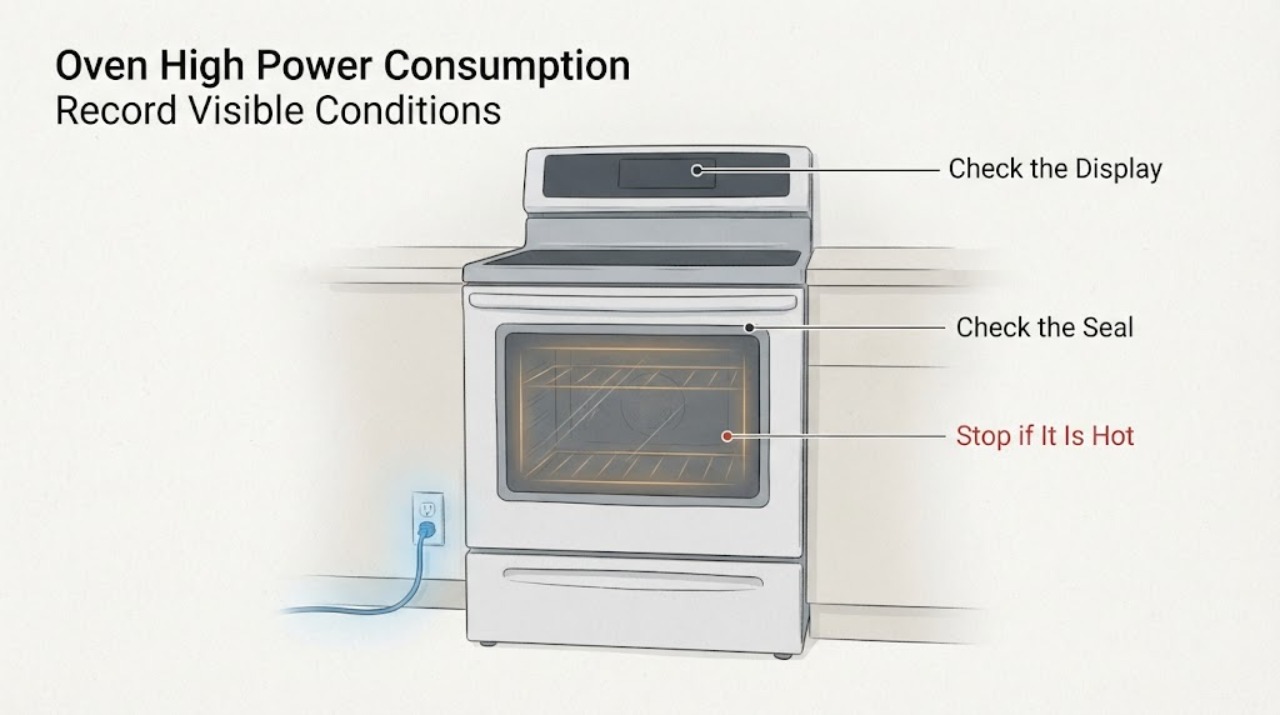
Do not diagnose high oven power consumption from a utility bill alone. Record the exact model, fuel type, mode, set temperature, preheat time and total run time, then compare one controlled bake with the oven empty during preheat and the door closed. Frigidaire says a torn or poorly sealing gasket can cause heat loss, while an electric oven that struggles to preheat may have an installation or supply-voltage issue; both conditions can change how long the oven runs, but neither proves a wattage fault. Also separate normal cooking from model-dependent Convection Convert, Quick Preheat, Steam Clean or Self Clean cycles. If the oven draws power while it should be off, repeatedly runs without reaching temperature, trips protection, smells hot or shows damaged wiring, stop using it and have the exact model and supply checked by qualified service or an electrician.
Work through in order
Diagnostic checks
Use only checks that match the exact appliance or system and its official guide.
-
Check 1
Record the complete model/serial information, electric or gas fuel type, mode, set temperature, preheat duration, cooking duration and the exact interval or meter observation that led to the high-consumption concern.
Expected result: The concern is a long run time, a measured electrical draw, a higher bill, or power use while the oven is off; the model and operating condition are known or still missing.
Next step: Use the recorded model and condition to select the relevant preheat, gasket, mode or supply branch. If the model is missing, find it on the interior trim or frame before ordering parts or judging normal consumption.
Why this matters
Why: These observations are not interchangeable. Frigidaire's model-specific instructions and electrical requirements determine what can be compared, while a family page cannot supply a universal wattage threshold.
-
Check 2
For one comparable test, use the same Bake or documented mode and temperature, allow the oven to complete its preheat indication, keep the cavity empty during preheat unless a model-specific feature says otherwise, and keep the door closed.
Expected result: The oven reaches preheat in a repeatable time, takes unusually long, or is repeatedly cancelled and restarted before reaching temperature.
Next step: Compare only completed cycles under the same conditions. If a controlled electric oven still struggles to preheat, continue to the gasket and qualified supply-check branches.
Why this matters
Why: Frigidaire says full preheating can take up to 20 minutes and that proper preheating, a closed door and correct rack/bakeware use affect temperature performance; repeated restarts inflate run-time observations.
-
Check 3
When the oven is cool, inspect the visible door gasket for a tear, worn or detached section, missing area or poor visible seal; do not pull, rub, remove the gasket or open the door assembly.
Expected result: The gasket is visibly compromised, or it appears intact while the oven still has a long preheat or inconsistent temperature result.
Next step: Stop using the oven for a damaged seal until the exact model is assessed. If the gasket looks intact, continue with the mode and supply checks rather than guessing a replacement part.
Why this matters
Why: Frigidaire says a damaged gasket can allow heat loss. An intact visible gasket does not prove the heating system or electrical supply is normal.
-
Check 4
Mark whether the high-use observation occurred during ordinary Bake, Quick Preheat, Convection Bake/Convection Convert, Steam Clean or Self Clean, and verify that the feature exists on the exact model before comparing it with Bake.
Expected result: The increase occurs only during a named special mode, or it also occurs during ordinary Bake under controlled conditions.
Next step: Use the exact Use and Care manual for that mode. If the same abnormal behavior occurs in ordinary Bake, continue to service/supply escalation; do not change hidden settings from a generic sequence.
Why this matters
Why: Frigidaire documents separate model-dependent controls and cycles; Self Clean may run for a selected cleaning time and holds the door locked until cool, so its operation is not an ordinary cooking comparison.
-
Check 5
If an electric oven still has unusually long preheat, power while off, repeated breaker trips, smoke, burning odor or visible electrical damage after the external checks, leave it off and request qualified service or an electrician as appropriate.
Expected result: The concern is limited to a documented mode/run-time difference, or it persists during ordinary Bake and/or while the oven should be off.
Next step: Provide the model, measurement interval, mode and preheat data to the professional. Do not remove panels, probe live circuits, replace an element or bypass protection.
Why this matters
Why: Frigidaire identifies supply voltage, installation, gasket and temperature/calibration as possible service paths but does not identify a failed internal component from a consumption observation.
Use your observations
Decision map
Find the observation that best matches what you see, then follow the next safe action.
-
PATH 01Next step
What you see
The only evidence is a higher utility bill or an unlabelled meter reading, with no model, fuel type, mode or run-time record.
Do this next
Record the exact oven identity and one controlled cycle before calling the usage abnormal. Do not order a component from a bill change.
Why this path and its safety boundary
Why it matters: The observation cannot distinguish normal operating time, another household load, a special cleaning cycle or an appliance fault.
-
PATH 02Next step
What you see
The oven takes unusually long to reach temperature or cooking results vary, and the gasket is damaged or the door/preheat conditions are not controlled.
Do this next
Correct only the documented external cooking conditions, stop using a visibly damaged gasket, and arrange model-specific service if preheat remains abnormal.
Why this path and its safety boundary
Why it matters: Frigidaire identifies gasket heat loss, preheat procedure, rack position and bakeware as factors affecting temperature performance; the condition does not prove a high-wattage component.
-
PATH 03Next step
What you see
The observed increase occurs only during Quick Preheat, Convection, Steam Clean or Self Clean and the mode is confirmed on the model.
Do this next
Follow the exact manual for that feature and record ordinary Bake separately. Do not infer an electrical fault solely from the special-mode reading.
Why this path and its safety boundary
Why it matters: The operating condition differs from ordinary Bake; Frigidaire documents separate controls and cycle behavior and does not support comparing them as identical loads.
-
PATH 04Next step
What you see
The oven draws power while it should be off, repeatedly trips protection, shows damaged wiring, emits smoke or burning odor, or cannot reach temperature despite controlled use and an intact visible seal.
Do this next
Stop using the oven and arrange qualified appliance service; use a qualified electrician for supply or installation concerns. Do not open the cabinet or perform live tests.
Why this path and its safety boundary
Why it matters: The remaining issue may involve installation, supply or an internal control/heating system; Frigidaire's public pages do not identify the failed part from this symptom.
Helpful context
Understand the symptom
Define what “high consumption” means
A higher bill, a plug-in monitor reading, a breaker concern and a long heating cycle are different observations. Record the model/serial information, electric or gas fuel type, selected mode, set temperature, preheat time, cooking time and whether the oven was fully off between tests. Without the model's rated data and a controlled interval, a number cannot be labeled normal or abnormal. Frigidaire's support pages provide operating and heat-loss checks, not a universal wattage threshold.
Control preheat and cooking conditions
For a comparable test, use the same mode and set temperature, allow the oven to reach its preheat indication, keep the cavity empty during preheat unless the model's special mode requires otherwise, and keep the door closed. Frigidaire says full preheat can take up to 20 minutes and that rack placement and bakeware affect cooking results. Repeatedly cancelling and restarting preheat creates extra run-time data that cannot be compared with a completed bake.
Check visible heat loss before suspecting a power fault
With the oven cool, inspect the visible door gasket for a tear, detachment or missing section without pulling or rubbing it. Frigidaire says a compromised gasket can let heat escape and that an electric oven struggling to preheat may not be receiving the proper electrical voltage. Do not remove panels or measure live voltage; installation and supply checks belong to a qualified electrician or service technician.
Separate normal modes from a persistent run problem
Record whether the apparent increase occurs only during Quick Preheat, Convection Bake/Convection Convert, Steam Clean or Self Clean. Frigidaire says these features are model-dependent and have their own controls; Self Clean can be set for a typical three-hour cleaning time and keeps the door locked until the oven cools. Treat the mode as a separate operating condition rather than comparing it with ordinary Bake. Do not change a model-specific setting from a generic button sequence.
Stop when the symptom becomes electrical or unsafe
If the meter shows substantial draw while the oven is supposed to be off, the oven keeps heating without reaching its set condition, a breaker trips, or there is smoke, burning odor or visible wiring damage, do not keep testing. Frigidaire's family guidance does not identify a failed element, thermostat, relay or control board from consumption alone. Leave the appliance off and provide the model, fuel type and recorded behavior to qualified service; an electrician should evaluate the installation or supply when the concern is electrical.
When checks do not resolve it
Need a professional?
Arrange qualified Frigidaire service when controlled ordinary-Bake use still has unusually long preheat or inconsistent temperature, when the door gasket is damaged, or when the oven consumes power while off. Use a qualified electrician for suspected installation or supply-voltage problems. Stop immediately for smoke, burning odor, repeated breaker trips or visible wiring damage. Do not diagnose or replace an element, thermostat, relay or control board from a consumption reading alone.
Common questions
FAQ
Does a higher electric bill prove that my Frigidaire oven is faulty?
No. A bill does not identify the appliance, operating mode or run time that caused the change. Record the exact model and compare a controlled ordinary-Bake cycle separately from Quick Preheat, Convection, Steam Clean and Self Clean before requesting a diagnosis.
Can a damaged oven door gasket increase energy use?
It can increase heat loss and contribute to poor temperature performance. Frigidaire says a torn, worn, detached or missing gasket can let heat escape; do not pull or rub the gasket, and arrange model-specific service if it is compromised.
What if my Frigidaire electric oven takes a long time to preheat?
Use one controlled test with the door closed and the oven empty during preheat, then check the visible gasket. Frigidaire says an electric oven that struggles to preheat may not be receiving proper electrical voltage, so persistent problems should go to qualified service or an electrician rather than a live DIY test.
Read the exact guide
Official sources
- Oven - Is too HotFrigidaire · Official Frigidaire family-level oven operation guidance; it does not supply a universal energy-use threshold.
- Ovens - How do I use Quick Preheat or Preheat?Frigidaire · Official Frigidaire oven guidance; availability and control behavior must be confirmed on the exact model.
- Ovens - How do I use Convection Bake?Frigidaire · Official Frigidaire Convection Bake guidance; exact controls and supported models remain manual-dependent.
- Oven - Is Not Hot EnoughFrigidaire · Official Frigidaire guidance for electric range ovens and electric wall ovens; model-specific procedures and measurements remain manual-dependent.
- Ovens - How do I set my oven or range to self-clean?Frigidaire · Official guidance only for models with Self Clean; its selectable cleaning duration and cool-down are kept separate from ordinary cooking comparisons.
- Where can I find my model and serial number?Frigidaire · Official Frigidaire identification guidance; used only to obtain the missing model before manual or service comparison.
- To set convection convertFrigidaire · Official model-specific Frigidaire PDF; the setting is included only as a conditional example and no universal button sequence is given in the article.
- Ovens - When and how do I use steam clean?Frigidaire · Official guidance only for models with Steam Clean; it is used to distinguish the feature from ordinary Bake, not to infer energy use.
Community feedback
Share a repair observation
Share a plain-text repair observation. Accepted observations are published automatically; this page may take a moment to update.