
On this page
Start here
Quick answer
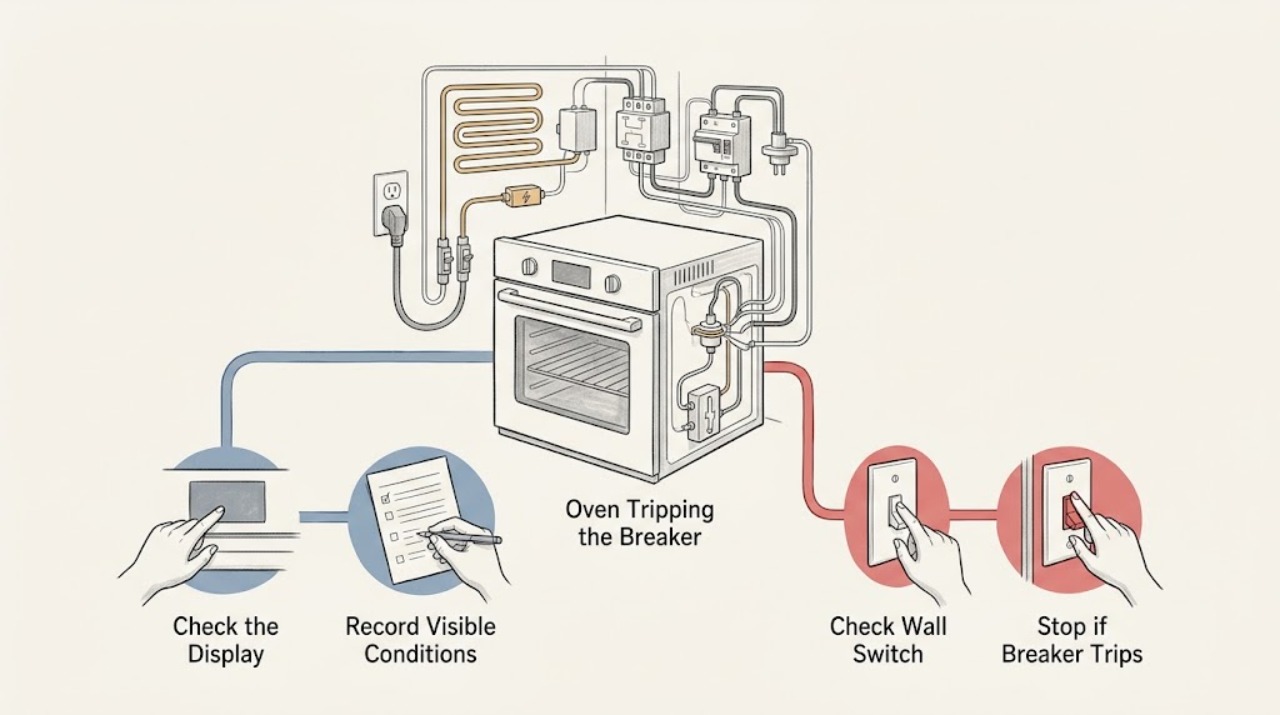
Treat a Frigidaire oven that trips its breaker as an electrical safety fault until the cause is known. Note whether the trip happens immediately when power is restored, when Bake or Broil starts, or only after the oven heats. Turn the oven off, and inspect only the accessible cord, outlet, and labeled breaker from a dry, safe position. A single safe reset may distinguish an interrupted supply, but do not keep resetting a breaker that trips again. If it trips immediately, trips when a heating function starts, follows a new installation, or comes with smoke, burning odor, heat damage, sparks, or a damaged cord, leave the circuit off when safe and arrange a qualified electrician or appliance technician.
Before you begin
Safety first
- Circuit capacity, installation, heating elements, relays, wiring, thermal devices, and the control board require qualified model-specific diagnosis.
Work through in order
Diagnostic checks
Use only checks that match the exact appliance or system and its official guide.
-
Check 1
Stop the oven and screen for immediate danger before touching the breaker: look and smell for smoke, sparks, arcing, a burning electrical odor, water near the controls or connection, a hot or damaged cord, melted insulation, or visible heat damage.
Expected result: No hazard is present, the oven is off, and the breaker is stable; or any smoke, odor, heat damage, water, spark, or cord damage is present.
Next step: If any hazard is present, keep clear, leave the circuit off when safe, and arrange urgent electrician or appliance service. Do not reset the breaker or open the oven. If no hazard is present, record the trip timing and continue.
Why this matters
Why: A clean safety screen permits only external checks. Any hazard means the trip is a protective event and further resets could worsen the fault.
-
Check 2
With the oven controls off, record exactly when the breaker trips: immediately when power is restored, when the display or control is touched, when Bake or Broil is selected, at the start of preheat, or only after the oven has been heating.
Expected result: The trip is immediate on power-up; it follows one heating function; it follows any heating function; or it is intermittent after the oven becomes hot.
Next step: Do not repeat the event to prove the pattern. Give this timing, the selected function, and any displayed message to the installer, electrician, or Frigidaire service technician.
Why this matters
Why: Immediate trips point toward supply, installation, or a shorted input path. Function-specific trips narrow the service inspection toward that load. A heat-related trip raises the possibility of thermal protection or a component that fails when hot.
-
Check 3
Inspect only the accessible power connection and the labeled oven circuit from a dry, safe position. Check for an unplugged or visibly damaged cord, a switch-controlled outlet, a loose-looking external connection, or other appliances sharing the circuit; do not remove panels or disturb wiring.
Expected result: The accessible connection is secure and undamaged; the oven was newly installed; or the connection, outlet, or circuit shows damage, uncertainty, or an overloaded arrangement.
Next step: For a new installation, contact the installer or a qualified electrician. For damage or an uncertain connection, leave the circuit off when safe. If the external connection looks normal, continue only to one safe reset decision.
Why this matters
Why: A new installation or questionable supply can cause a trip without proving an internal oven failure. Visible damage or uncertainty requires electrical assessment rather than a user repair.
-
Check 4
If there is no hazard and the breaker is clearly tripped, turn the oven controls off and restore the breaker once from a safe position. Wait for the control to stabilize without starting a heating function.
Expected result: The breaker holds and the display remains stable; it trips immediately again; or it holds until a heating function is selected and then trips.
Next step: If the breaker trips again at any point, stop resetting it, leave the circuit in the safe state, and arrange qualified service. If it holds, do not run a heating cycle solely to reproduce the fault; review the model manual and proceed to the error and control check.
Why this matters
Why: A stable reset suggests an interrupted supply but does not prove the oven is repaired. An immediate repeat trip points toward the circuit or appliance fault. A trip on heat demand narrows the service diagnosis toward the heating path or its control.
-
Check 5
Read the control display without opening the oven and compare any message or indicator with the model's Frigidaire manual. If the display reports an over-temperature or other safety condition, leave the oven off and allow it to cool as the manual directs.
Expected result: A documented thermal or other fault is shown; the display is blank after the trip; or no message appears but the breaker symptom remains.
Next step: Do not clear a recurring safety message by repeated resets. If the message returns, the display stays blank, or the breaker still trips, stop using the oven and arrange model-specific service.
Why this matters
Why: A documented thermal alert changes the next step to cooling and service if it returns. A blank display after a trip suggests the power or control path is still interrupted. No message does not rule out a heating or wiring fault.
-
Check 6
Prepare a service handoff instead of testing internal parts: record the model, breaker behavior, exact function selected, whether the trip is immediate or heat-related, any visible element damage, displayed message, recent cleaning or spill, and installation history.
Expected result: The symptom is repeatable from the recorded timing, or it cannot be safely repeated without another breaker trip.
Next step: Keep the oven out of service until the electrician or Frigidaire technician assesses it. Do not measure live voltage, bypass thermal protection, replace an element, or access the control or terminal block as a user.
Why this matters
Why: The timing and context are enough to direct a qualified diagnosis; deliberately avoiding another trip protects the circuit and appliance while preserving useful evidence.
Use your observations
Decision map
Find the observation that best matches what you see, then follow the next safe action.
-
PATH 01Next step
What you see
Smoke, sparks, burning odor, water near electrical parts, hot or damaged cord, or visible heat damage
Do this next
Stop using the oven, leave the circuit off when safe, and arrange urgent qualified electrical or appliance service. Do not reset or open the appliance.
-
PATH 02Next step
What you see
The breaker trips immediately when power is restored
Do this next
Do not reset it again. Have the house circuit, installation, and oven supply connection assessed by a qualified electrician or technician.
-
PATH 03Next step
What you see
The breaker trips only when Bake, Broil, or another heating function starts
Do this next
Leave the oven out of service and request appliance diagnosis of the heating path, controls, and wiring. Do not repeat the heating test.
-
PATH 04Next step
What you see
A thermal or other documented safety message appears
Do this next
Turn the oven off, allow it to cool as the model manual directs, and contact support if the message or breaker trip returns.
-
PATH 05Next step
What you see
The breaker holds after one safe restoration and no hazard is present
Do this next
Do not assume the fault is fixed. Review the model documentation, keep the timing notes, and arrange service if the oven trips again or shows any abnormal behavior.
Helpful context
Understand the symptom
A breaker trip is not the same as an oven that simply has a blank display. The timing is the most useful first clue: an immediate trip points toward the circuit, installation, or an input fault; a trip when Bake or Broil begins points toward the heating load or its wiring; a trip after the oven has heated can involve a thermal or component fault. Because the symptom involves mains power, user checks should stay outside the cabinet.
Before any reset, protect people and the kitchen. Stop using the oven if there is smoke, a burning electrical smell, visible arcing, a hot or damaged cord, water near electrical parts, or heat damage around the controls. Keep the circuit off when safe and arrange qualified help. Do not remove the rear cover, pull a built-in oven from the cabinet, loosen terminal connections, or test live voltage.
If no hazard is visible, make one controlled observation with the oven off: check the accessible supply connection, identify which breaker protects the oven, and note what other appliances were operating. A newly installed oven or a breaker that trips as soon as power is restored should be reviewed by the installer or an electrician. A breaker that trips only when a heating function starts needs appliance diagnosis rather than repeated resets.
Frigidaire's model documentation controls the safe reset and control procedure. If the display shows a thermal or other fault, follow the applicable manual, let the oven cool when instructed, and stop if the fault returns. Heating elements, relays, wiring, thermal cutoffs, and the control board are conditional service possibilities; a breaker symptom alone cannot identify which part is at fault.
Only after diagnosis
Potential parts
- bake or broil heating element
Consider this only when the breaker trips as a specific heating function starts and a technician confirms damage or an electrical fault in that element circuit.
Confirm the exact Frigidaire model and manufacturer fit information before any part decision. - oven control board or relay
Consider this only when the supply is verified and service testing isolates the trip to the control or relay path.
Use model-specific documentation and diagnostic findings; do not infer board fit from the symptom alone. - thermal fuse or high-limit device
Consider this only when a documented over-temperature event or technician testing links the fault to the thermal safety circuit.
A safety device must not be bypassed; confirm the model and cause before replacement. - power terminal block or wiring harness
Consider this only when an electrician or technician finds heat damage, a loose connection, or a supply-path fault after power is isolated.
Terminal and harness work is model-specific and should be performed by qualified personnel.
When checks do not resolve it
Need a professional?
Call an electrician or Frigidaire appliance technician when the breaker trips again, trips on a heating function, or the oven shows any electrical or thermal hazard.
Safety scope: Circuit capacity, installation, heating elements, relays, wiring, thermal devices, and the control board require qualified model-specific diagnosis.
Have this ready
- Provide the Frigidaire model, installation age, circuit or GFCI behavior, exact trip timing, selected cooking function, displayed message, visible cord or element condition, recent spill or cleaning, and whether another appliance was operating.
Common questions
FAQ
Why does my Frigidaire oven trip the breaker as soon as I turn it on?
An immediate trip can involve the household circuit, installation, power connection, or an internal appliance fault. Do not keep restoring power to test it. Leave the circuit safe and arrange qualified diagnosis.
What if the Frigidaire oven trips only when Bake or Broil starts?
The timing points the service inspection toward the selected heating path, its control, or wiring, but it does not identify a part. Stop repeating the heating test and arrange service.
Can I reset the Frigidaire oven breaker?
Only one safe restoration of a clearly tripped breaker may help identify an interrupted supply when there is no hazard and the oven is off. If it trips again, stop resetting it and call a qualified electrician or appliance technician.
What should I do if the oven shows a thermal warning after the trip?
Turn the oven off and allow it to cool as the model documentation directs. If the warning or breaker trip returns, contact Frigidaire support or arrange service rather than repeatedly clearing the message.
When is a breaker-tripping oven an emergency?
Treat smoke, sparks, burning electrical odor, water near electrical parts, visible heat damage, a hot or damaged cord, or repeated breaker trips as an immediate stop condition. Keep the oven out of service and arrange qualified help.
Read the exact guide
Official sources
- Owner Center Resource LibraryFrigidaire · Manufacturer resource library for model manuals, troubleshooting articles, and service support
- Oven Error Codes and Alarms GuideFrigidaire · Manufacturer guidance for controlled power reset, thermal safety alerts, cooling, and contacting support when an oven fault persists
Community feedback
Share a repair observation
Share a plain-text repair observation. Accepted observations are published automatically; this page may take a moment to update.