
On this page
Start here
Quick answer
A bad smell from a Frigidaire washing machine usually comes from moisture, residue, or laundry left in the tub rather than a part that can be named from odor alone. Remove clothing promptly, wipe accessible residue, leave the lid or door open to dry, and use the Tub Clean, System Clean, or Clean Washer cycle if your model provides one. Use the correct high-efficiency detergent and do not exceed the dispenser's maximum line. A sewage-like smell, standing water, visible mold, burning or electrical odor, leaking, or an odor that remains after the model-directed cleaning needs a more specific drain, seal, or service diagnosis.
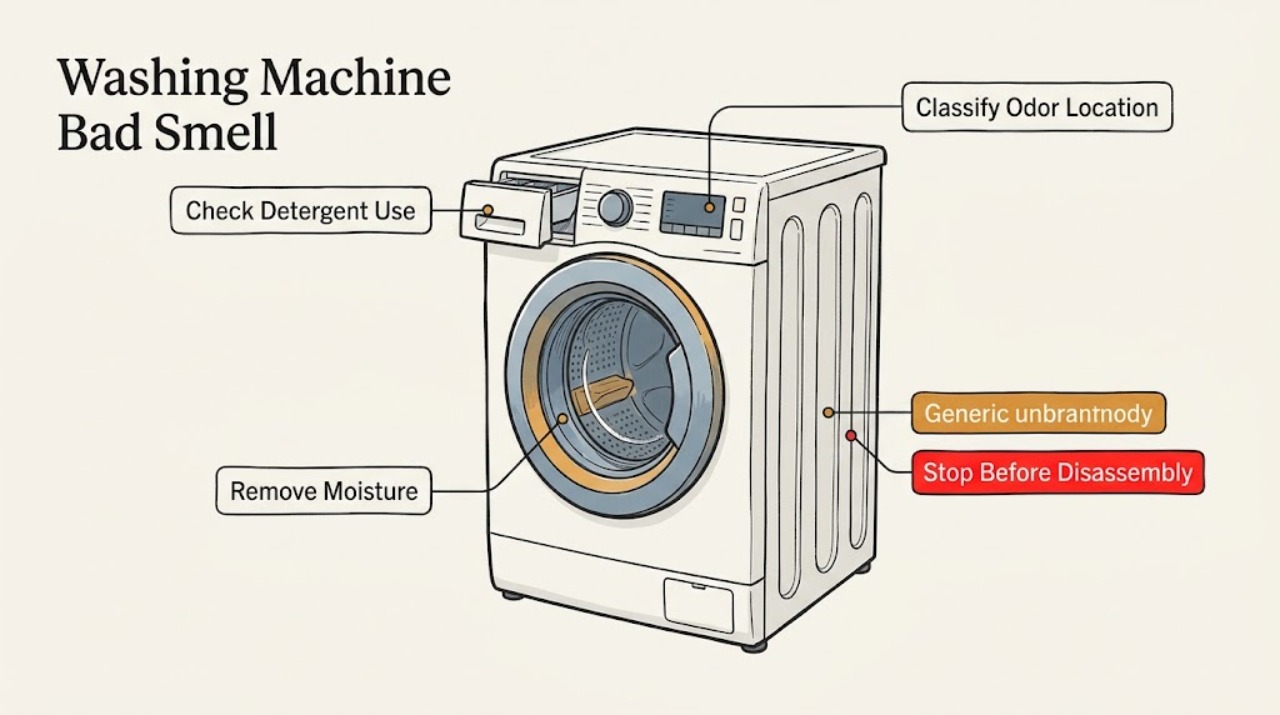
Work through in order
Diagnostic checks
Use only checks that match the exact appliance or system and its official guide.
-
Check 1
With the washer stopped and the laundry removed, identify whether the odor is musty or sour, detergent-like, sewage-like, burning or electrical, and note whether it is strongest in the tub, dispenser, lid or door seal, drain area, or on the clothing.
Expected result: The smell is strongest on damp surfaces or old laundry; residue is visible in the tub or dispenser; water remains after a cycle; or the smell is burning, electrical, or accompanied by smoke or leakage.
Next step: Continue with drying, detergent, and empty-cleaning checks only for a musty, sour, or residue odor. For burning, smoke, electrical odor, or active leakage, stop using the washer and arrange qualified service when safe.
Why this matters
Why: Damp surfaces, old laundry, and residue support a maintenance cause. Standing water makes drainage or a hidden water path more likely. Burning, electrical odor, smoke, or leakage is not a routine cleaning symptom.
-
Check 2
Remove wet clothing promptly, wipe accessible residue from the tub, lid or door area, and dispenser with a damp cloth or mild soap and water as appropriate for the model. Leave the lid or door open for ventilation when the location is safe and the manual permits it.
Expected result: The odor decreases after the washer and dispenser dry, or it remains in the empty machine despite clean accessible surfaces.
Next step: If the odor improves, keep using the drying habit and continue to the correct cleaning-cycle check. If it remains, do not cover it with fragrance; check the model manual and proceed to the service boundary if cleaning does not help.
Why this matters
Why: An improvement after drying supports trapped moisture or residue. An odor that remains in an empty washer suggests buildup in a less accessible area, drain issue, or another condition requiring a model-specific check.
-
Check 3
Read the detergent label and the washer manual, use detergent intended for the washer configuration, and keep liquid or powder below the dispenser maximum line. Put detergent packs in the location specified by Frigidaire for the model rather than placing them in a dispenser that is not designed for them.
Expected result: The dispenser is overfilled, residue or excess suds are present, the detergent type does not match the manual, or the detergent path is clean and correctly used.
Next step: Correct the detergent amount and location for the model, then run the model-directed rinse or empty cleaning cycle. Do not mix cleaning products or repeatedly increase detergent to solve an odor.
Why this matters
Why: Overfilling, excess suds, or an incorrect detergent path can leave buildup and prevent proper rinsing. A clean dispenser with correct use makes moisture, drainage, or a deeper residue path more likely.
-
Check 4
Check the owner manual or control panel for Tub Clean, System Clean, or Clean Washer and run that cycle exactly as the model directs, with no laundry if the manual specifies an empty tub. For a heavily soiled load, use the model's rinse-only option only as directed rather than adding unapproved chemicals.
Expected result: The empty cleaning cycle completes and the odor decreases; residue or suds remain; the washer cannot drain; or the odor is unchanged after the documented cycle.
Next step: Wipe visible residue, allow the washer to dry, and follow the manual's maintenance interval. If the odor remains after the model-directed cycle or the washer drains poorly, arrange qualified service.
Why this matters
Why: Frigidaire identifies a model-dependent tub-clean cycle as a way to clean and freshen the tub. Remaining odor, suds, or water indicates that routine cleaning has not identified or cleared the underlying condition.
-
Check 5
After a cycle, observe whether water remains in the tub, drains slowly, or returns with a sewage-like odor; inspect only visible hose and drain connections for an obvious issue without opening the cabinet or changing hidden plumbing. Also check the seal and surrounding floor for a leak or visible mold-like residue.
Expected result: Water remains, the drain is slow, a sewage-like odor returns, the seal leaks, visible mold-like residue persists, or the machine is dry and drains normally but still smells.
Next step: Stop using the washer if it leaks, smells electrical or burning, or shows visible damage. Otherwise provide the model, odor pattern, drain behavior, and cleaning steps already tried to Frigidaire Support or a qualified technician.
Why this matters
Why: Standing water, slow drainage, sewage odor, or leakage can maintain odor and requires a drain or seal diagnosis. Persistent odor in a dry, normally draining machine suggests an internal or model-specific condition rather than a detergent choice alone.
Use your observations
Decision map
Find the observation that best matches what you see, then follow the next safe action.
-
PATH 01Next step
What you see
The odor is musty or sour and decreases when the tub, dispenser, and seal are dried.
Do this next
Remove laundry promptly, ventilate the washer, use correct detergent, and run the model-directed Tub Clean, System Clean, or Clean Washer cycle at the manual's interval.
-
PATH 02Next step
What you see
The dispenser is overfilled, the detergent is unsuitable, or excess suds and residue are visible.
Do this next
Correct the detergent type, amount, and placement, then run an appropriate rinse or empty-cleaning cycle according to the manual.
-
PATH 03Next step
What you see
Water remains, drains slowly, or a sewage-like odor returns.
Do this next
Stop repeating cleaning cycles and arrange a qualified drain-path inspection, providing the model and the observed drainage behavior.
-
PATH 04Next step
What you see
The washer leaks, has visible mold-like residue that persists, or the smell remains after the model-directed cleaning cycle.
Do this next
Keep the washer off if continued use could spread water or damage, and arrange Frigidaire or qualified appliance service.
-
PATH 05Next step
What you see
There is smoke, a burning or electrical odor, unusual heat, or visible damage.
Do this next
Stop using the washer and disconnect power only if safe; arrange qualified service rather than opening the cabinet or running another cycle.
Helpful context
Understand the symptom
Start with the source of the smell
Note whether the smell is strongest in the empty tub, on wet laundry, around the door or lid, in the detergent dispenser, or near the drain. A musty or sour odor after laundry sits points toward trapped moisture or residue. A sewage-like smell can indicate a drain-path problem, while a burning or electrical odor is a stop condition. The machine's exact configuration matters, so top-load advice should not be applied to a front-load model when the controls or access points differ.
Drying and detergent habits matter
Frigidaire recommends removing clothing promptly, avoiding moisture buildup, and leaving the lid open when possible. It also recommends the model's Tub Clean, System Clean, or Clean Washer cycle at the interval specified by the owner manual. Too much detergent or the wrong detergent type can leave residue that holds moisture, so use the product guidance for the exact washer rather than adding more soap to mask the odor.
Know when cleaning is not enough
If the odor persists after accessible cleaning and the model-directed empty cleaning cycle, look for standing water, slow draining, a damaged seal, or visible mold-like residue and arrange service when the cause is not accessible. Do not open the cabinet, disturb hidden plumbing, or keep running cycles when there is smoke, a burning smell, leakage, or electrical risk.
Only after diagnosis
Potential parts
- washer door or tub seal
Consider this category only if qualified diagnosis confirms a damaged seal that retains residue or leaks after accessible cleaning.
Confirm the complete model and the manufacturer's fit information before ordering. - drain hose or drain pump component
Consider this category only if service confirms slow drainage, standing water, or a sewage-like odor caused by a failed drain component.
Drain parts are model-specific; verify the exact model and approved fitment before purchase.
When checks do not resolve it
Need a professional?
Arrange qualified service for a sewage-like odor with standing water or slow drainage, a leak, visible persistent mold-like residue, an odor that remains after the manual-directed cleaning and drying steps, smoke, burning or electrical odor, unusual heat, or visible damage. Do not open the cabinet, alter hidden plumbing, mix cleaning chemicals, or use a generic replacement part based on odor alone.
Common questions
FAQ
Why does my Frigidaire washing machine smell bad?
The usual starting points are trapped moisture, laundry left in the tub, detergent residue, a dispenser or seal that stays damp, or a model-specific tub-cleaning need. Standing water, sewage odor, leakage, smoke, or burning odor needs a different service path.
How do I clean a Frigidaire washer that smells musty?
Remove clothing promptly, wipe accessible residue, leave the lid or door open to dry when safe, and run the Tub Clean, System Clean, or Clean Washer cycle if the model provides it. Follow the owner manual for the exact cycle and cleaning product instructions.
Can too much detergent cause an odor in a Frigidaire washer?
Yes. Excess detergent or the wrong detergent path can leave residue and suds. Use the detergent type and amount specified for the model, stay below the dispenser maximum line, and place detergent packs where the guide directs.
When should I call for Frigidaire washer odor service?
Arrange service for a sewage-like odor with standing water or slow drainage, a leak, persistent mold-like residue, an odor that remains after the model-directed cleaning steps, smoke, burning or electrical odor, unusual heat, or visible damage.
Read the exact guide
Official sources
- WashersFrigidaire Owner Support · Frigidaire washer troubleshooting and model-specific support routing
- Top Load Washers - How do I care and clean my Frigidaire Top Load washer?Frigidaire Owner Support · Frigidaire top-load washer odor prevention and tub-care guidance
- Laundry Washers - Detergent GuideFrigidaire Owner Support · Frigidaire front-load and top-load washer detergent use
Community feedback
Share a repair observation
Share a plain-text repair observation. Accepted observations are published automatically; this page may take a moment to update.