
On this page
Start here
Quick answer
Do not operate or clean a GE cooktop when its ceramic glass surface is cracked or pitted. GE says a cracked surface needs service and that this applies to radiant, induction and gas-on-glass cooktops. If the cooktop is part of a range, GE also says not to use the oven until the cooktop is repaired because the oven vents toward the cooktop. Leave the controls off, do not test the burners, scrape, seal or remove the glass, and arrange service with the exact model number ready.
Before you begin
Safety first
- Do not operate or clean the cracked surface, test burners, use the oven on a range with a damaged cooktop, apply a patch or sealant, remove the glass, open panels, or perform electrical or gas tests.
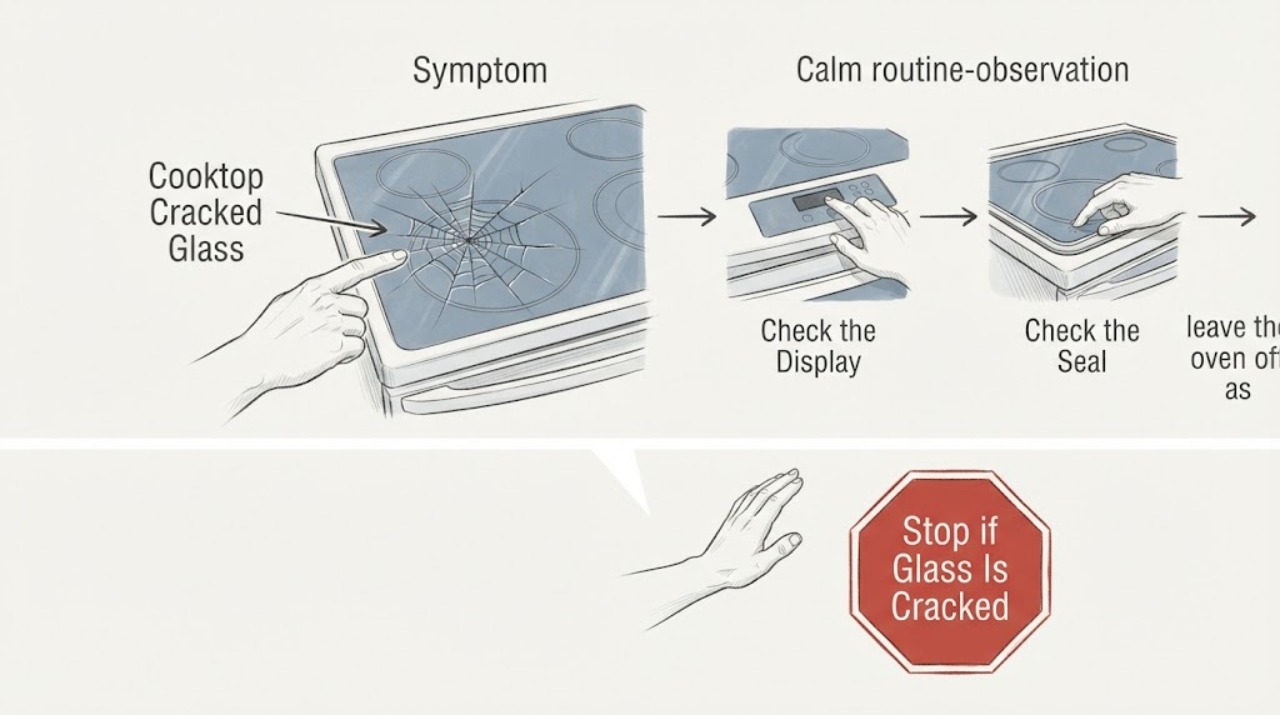
Work through in order
Diagnostic checks
Use only checks that match the exact appliance or system and its official guide.
-
Check 1
Turn every cooktop control off and stop using the appliance when the ceramic glass is visibly cracked, broken or pitted.
Expected result: The line is a true crack or break, the glass has a pit or indentation, or the condition cannot be distinguished safely from outside.
Next step: Keep the cooktop out of service and arrange qualified service. Do not test a burner or place cookware on the damaged area.
Why this matters
Why: GE treats a cracked or pitted ceramic surface as a service condition; the damaged surface is not a normal scratch or a user-cleaning problem.
-
Check 2
Do not wipe, scrape, polish, cover, glue or seal the cracked area, and do not remove the cooktop glass or an underside panel.
Expected result: There is residue, a spill, a sharp edge, loose glass or a surface that is still warm; or the appliance is cool but the break remains.
Next step: Keep people away from the damaged surface, leave it untouched, and provide photos and the model number to the service provider. Seek urgent help for active smoke, flame or a gas odor.
Why this matters
Why: GE warns that cleaning solutions or spillovers can penetrate broken glass and create an electric-shock risk. A cool surface is not evidence that a damaged panel is safe to clean or repair by the user.
-
Check 3
If the cracked glass is on a GE range, leave the oven off as well; if it is a separate cooktop, keep that cooktop off and do not use the oven unless it is a separate appliance with no venting or heat path through the damaged unit.
Expected result: The damaged surface is part of a range, or the appliance arrangement is unclear.
Next step: Treat an unclear combination as out of service until the appliance layout is confirmed by the model manual or service technician; do not infer the vent path from appearance alone.
Why this matters
Why: GE says a range oven vents out toward the cooktop and does not recommend oven use until the cooktop is repaired. The source does not establish that every separate wall oven is affected.
-
Check 4
From outside and without tools, photograph the damage and record the appliance type and surface type, then locate the accessible model tag using GE's cooktop locator.
Expected result: The tag is accessible under a surface unit, beneath or beside the cooktop, under a control knob, or on the bottom; or it cannot be reached without lifting or opening the appliance.
Next step: Use the visible model information for service. If it cannot be found safely, have the technician identify the appliance; do not lift the glass or remove panels to obtain it.
Why this matters
Why: The full model determines the correct manual, service scope and replacement surface. An inaccessible tag is a reason to stop rather than dismantle the appliance.
-
Check 5
Give the service provider the exact model, serial number if safely accessible, surface type, crack location, photos and the event that preceded the damage.
Expected result: The damage followed impact, thermal shock, a spill or an unknown event; or there is smoke, flame, gas odor, exposed wiring or continuing heat.
Next step: Keep the appliance off and arrange qualified service. For active fire or a gas emergency, leave the area and use the appropriate emergency or gas-service response rather than inspecting the appliance.
Why this matters
Why: The event history helps service assess the surface and surrounding components, but it does not prove the cause or make a replacement panel interchangeable. Smoke, flame, gas odor or electrical exposure is an immediate hazard.
Use your observations
Decision map
Find the observation that best matches what you see, then follow the next safe action.
-
PATH 01Next step
What you see
The surface has a true crack, broken section, pit or indentation rather than only a removable mark.
Do this next
Leave the cooktop off and arrange qualified service; do not clean, seal, scrape or test it.
Why this path and its safety boundary
Why it matters: GE identifies a cracked or pitted ceramic cooktop as needing service across radiant, induction and gas-on-glass surfaces.
-
PATH 02Next step
What you see
The damaged glass is the cooktop surface of a GE range.
Do this next
Keep both the cooktop and range oven off until the damaged surface is repaired.
Why this path and its safety boundary
Why it matters: GE says the range oven vents toward the cooktop, so oven use is also discouraged until the cooktop is repaired.
-
PATH 03Next step
What you see
The damaged unit is a separate cooktop and its model tag can be read without tools.
Do this next
Record the model and surface type, then arrange service; do not order a glass panel until GE or the service provider confirms fitment.
Why this path and its safety boundary
Why it matters: The appliance identity can be supplied to the manual, parts and service workflow, but it does not make the surface safe to operate.
-
PATH 04Next step
What you see
Smoke, flame, gas odor, exposed wiring, active sparking or a hot/damaged power connection is present.
Do this next
Move away, use emergency or gas-service response as appropriate, and do not touch, clean, power-test or dismantle the cooktop.
Why this path and its safety boundary
Why it matters: The situation exceeds a cracked-glass diagnosis and may involve an immediate fire, gas or electrical hazard.
Helpful context
Understand the symptom
Treat a real crack as a stop-use condition
A crack, broken area or pit in the ceramic glass is different from a removable mark. GE's cracked-glass guidance says a cracked or pitted cooktop needs service and covers radiant, induction and gas-on-glass surfaces. Keep every surface control off and do not place cookware on the damaged area while waiting for an assessment.
Do not clean, scrape or seal the damaged surface
GE's safety instructions say not to operate or clean a cooktop when the glass is broken or cracked because cleaning solutions and spillovers can penetrate the break and create an electric-shock risk. Do not use a scraper on the crack, apply a patch or sealant, remove the glass, or open the underside to inspect it. Those are service tasks, and the surface may be hot or sharp even after the controls are off.
Ranges need an oven-use decision too
If the glass surface is part of a GE range rather than a separate cooktop, leave the oven off as well. GE states that a range oven vents out toward the cooktop, so it does not recommend oven use until the cooktop is fixed. Do not try one burner or one oven cycle to see whether the crack changes.
Record the exact identity without dismantling the appliance
Before requesting service, photograph the crack from a safe distance and record whether the appliance is a separate cooktop or a range, and whether it is electric, induction or gas-on-glass. GE's cooktop locator lists tag locations including beneath an electric surface unit, under the cooktop, under a control knob and on the bottom of the unit. Do not lift the cooktop or reach under it to find a tag; use only a label that is accessible without tools.
Let service determine the replacement surface
A replacement glass or complete surface must be matched to the appliance identity and design. GE's parts search requires the model number to show the applicable parts list, so do not order a panel from a similar-looking GE cooktop or assume that a radiant, induction and gas-on-glass surface is interchangeable. Give the technician the model, serial number if accessible, surface type, crack location and whether the damage followed impact, thermal shock or a spill.
When checks do not resolve it
Need a professional?
Call qualified appliance service as soon as a GE cooktop is cracked or pitted. Keep the cooktop off while waiting; on a GE range, keep the oven off too. Escalate immediately through the appropriate emergency or gas-service channel for smoke, flame or a gas odor.
Safety scope: Do not operate or clean the cracked surface, test burners, use the oven on a range with a damaged cooktop, apply a patch or sealant, remove the glass, open panels, or perform electrical or gas tests.
Have this ready
- Provide the exact model, serial number if safely accessible, whether the unit is a separate cooktop or range, radiant/induction/gas-on-glass type, crack location and photos, and what happened before the damage.
Common questions
FAQ
Can I still use a GE cooktop with a small crack?
No. GE says a cracked ceramic cooktop surface needs service and does not recommend using the cooktop until it is repaired. The guidance applies to radiant, induction and gas-on-glass surfaces; a small appearance does not create a user-safe exception.
Can I use the oven if the glass cooktop on my GE range is cracked?
GE does not recommend using the oven on a range until the cooktop is fixed because the oven vents toward the cooktop. This statement is about a range; do not transfer it to a separate wall oven without checking the exact appliance arrangement and manual.
Can I clean or glue a cracked GE glass cooktop?
Do not clean, scrape, glue or seal the cracked area. GE's safety instructions warn that cleaning solutions or spillovers can penetrate broken glass and create an electric-shock risk, and direct owners to qualified service.
How do I find the model number for a GE cooktop?
GE lists possible tag locations under an electric surface unit, beneath the cooktop on the rear right, under the front-right electric unit, under a control knob, or on the bottom. Use only a location that is accessible without lifting the cooktop or opening panels.
Read the exact guide
Official sources
- Cooktop - Glass CrackedGE Appliances · Opened GE's official cracked-glass guidance. It explicitly covers radiant, induction and gas-on-glass cooktops, requires service for a cracked or pitted surface, advises against cooktop use until repair, and extends the stop-use recommendation to the oven of a range that vents toward the cooktop.
- Important Safety InstructionsGE Appliances · Opened the GE-hosted official manual and verified its cooktop safety section. It says not to operate or clean a broken or cracked cooktop because cleaning solutions and spillovers can penetrate and create an electric-shock risk, and it directs owners to service. It supports the safety boundary, not a universal model-specific repair procedure.
- GE Appliances Parts SearchGE Appliances · Opened GE's official parts search. It requires the appliance model number to return the applicable repair-parts list, supporting model-specific fitment caution for a replacement glass surface.
- GE Appliances Model and Serial Number Locator - CooktopsGE Appliances · Opened GE's official cooktop locator. It provides accessible tag locations and model-number format guidance, allowing the owner to identify the appliance without inferring a replacement surface from appearance.
Community feedback
Share a repair observation
Share a plain-text repair observation. Accepted observations are published automatically; this page may take a moment to update.