
GE appliance guidance
GE Cooktop Repair Guides
Troubleshooting and repair guidance for published GE Cooktop problems, symptoms, and maintenance questions.
Published GE Cooktop guides
Choose the guide whose symptom or condition most closely matches what you are seeing.
-
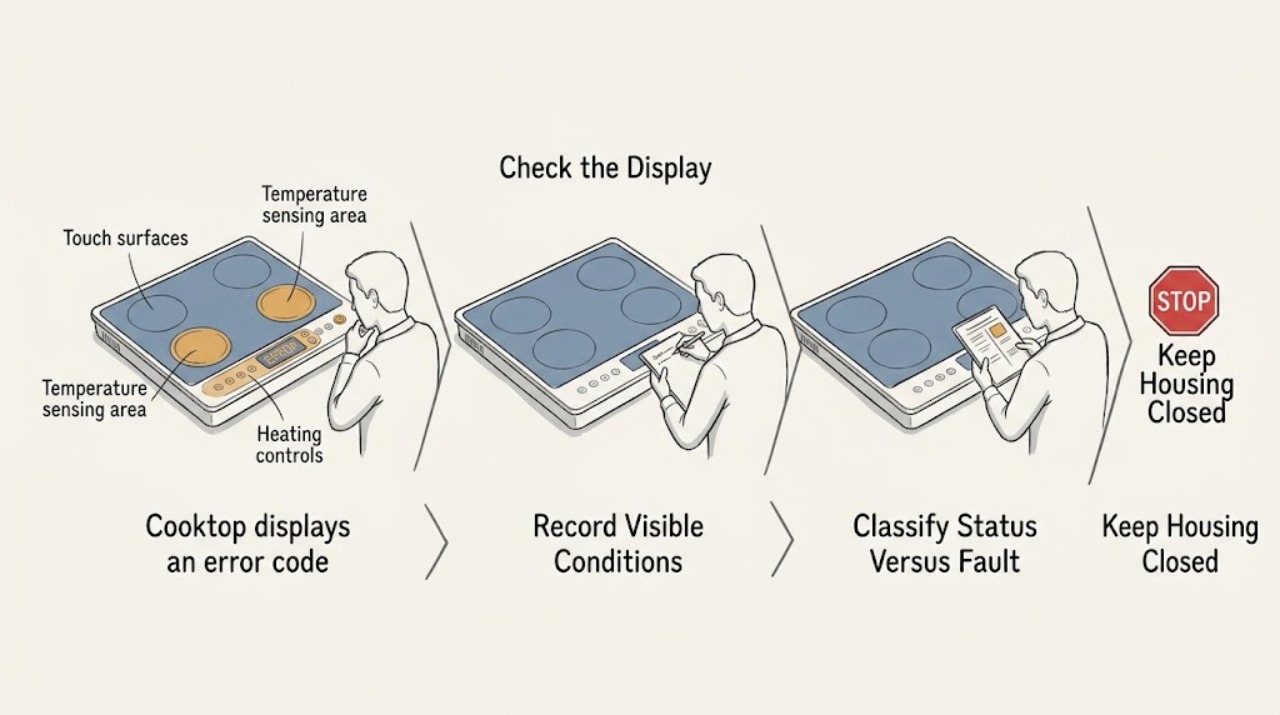
Ge cooktop displays an error code: What to Check and What to Do Next
A GE cooktop display can show a true fault code, a normal hot-surface or pan-detection message, or an initialization message that is specific to some models. Photograph or write down the exact letters, numbers, and symbols before clearing anything, and use the model's owner manual because GE does not use one universal code list for every cooktop.
-
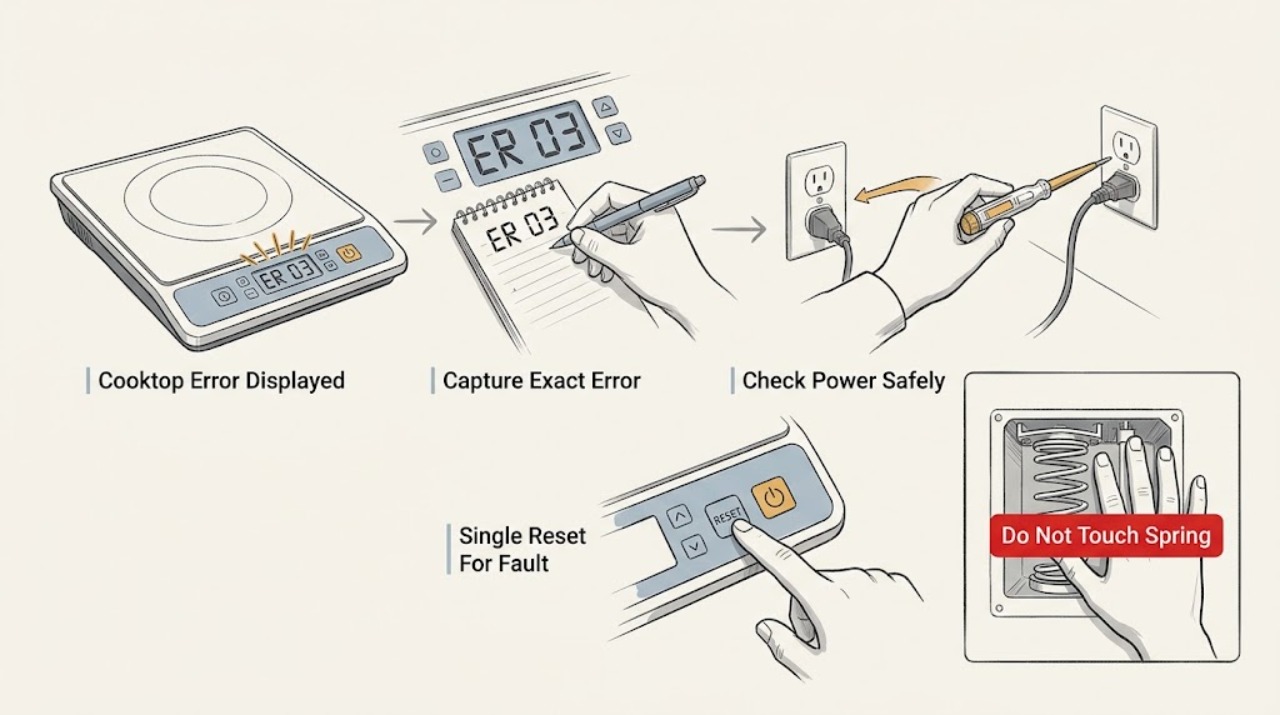
GE Cooktop Error Displayed: Identify the Message and Decide What to Do
Treat a GE cooktop error display as model-specific: photograph the exact characters, note whether the cooktop is otherwise responsive, and record the model before trying a reset. GE says an electronic FXX fault should be diagnosed by a trained service technician; switching the cooktop circuit off for 30 seconds may clear a code sometimes, but service is required in most cases.
-
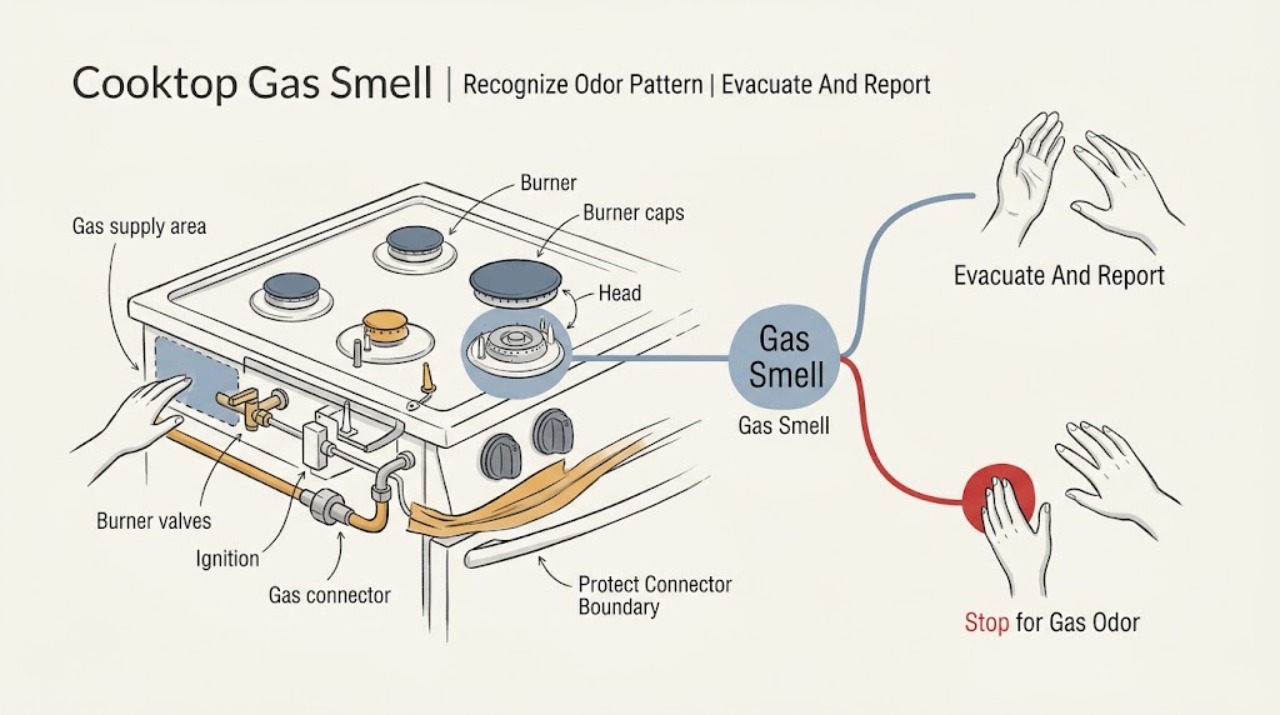
GE Cooktop Gas Smell: Leave Safely and Arrange Gas Service
If a GE gas cooktop smells like unburned gas or rotten eggs, stop using it and treat the odor as a gas emergency: do not light a burner, touch electrical switches, use a device inside, or move the cooktop. Extinguish an open flame only if it is safe to do so, clear everyone from the area, leave, and call the gas supplier or emergency responders from outside.
-
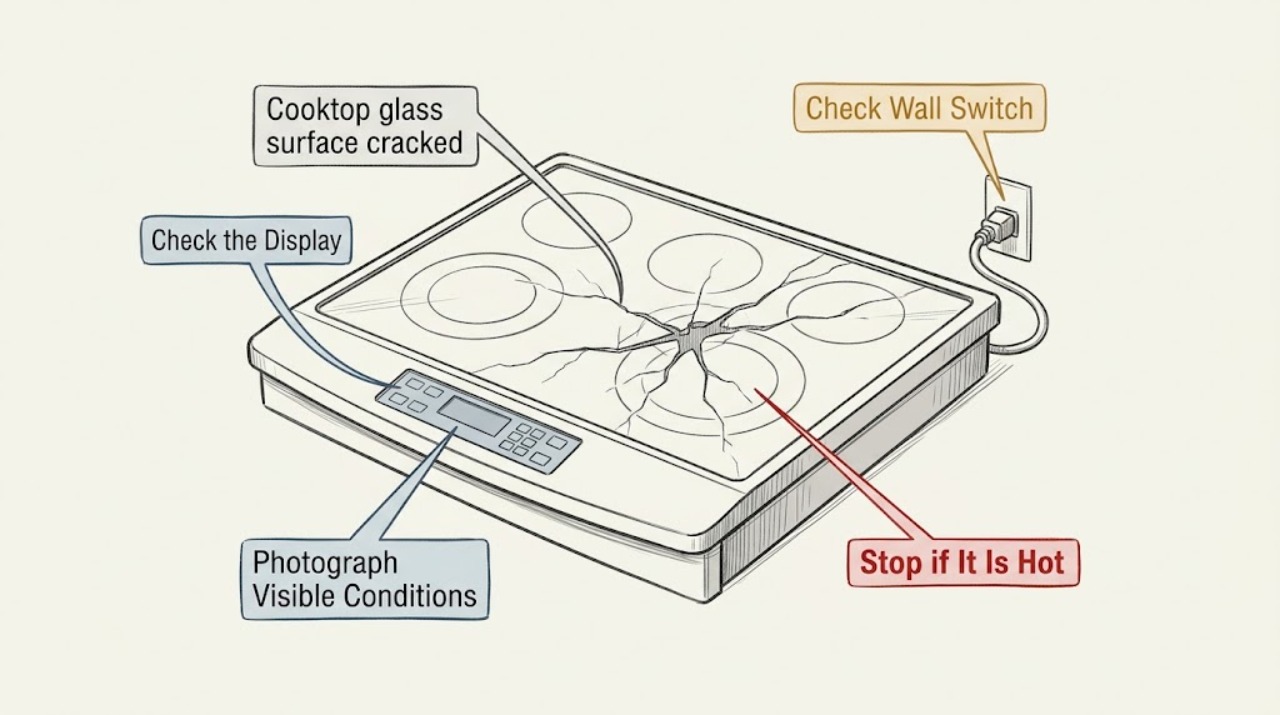
GE cooktop glass surface cracked: What to Check and What to Do Next
Do not use or clean a GE cooktop if its ceramic glass surface is cracked, broken, or pitted. Turn all controls off, keep cookware and people away from the damaged area, and isolate the electrical supply at the breaker only if you can do so safely; a gas-on-glass model may also require the gas supply to be handled by a qualified professional.
-
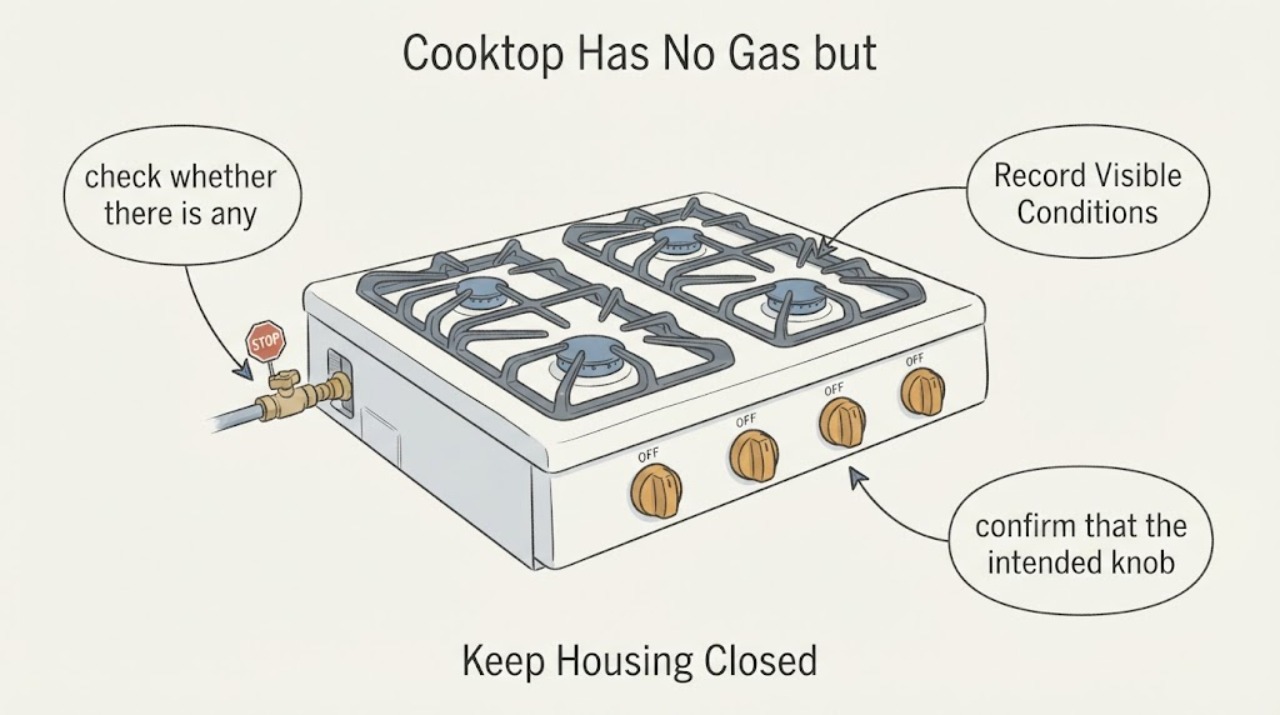
GE Cooktop Has No Gas but the Oven Works: Safe Checks Before Service
If the oven on a GE gas range works but none of the surface burners produces a usable flame, first make sure there is no unburned-gas odor. If you smell gas or are unsure, do not light a burner, touch electrical switches, or use a phone inside; leave and call the gas supplier or emergency responders from outside.
-
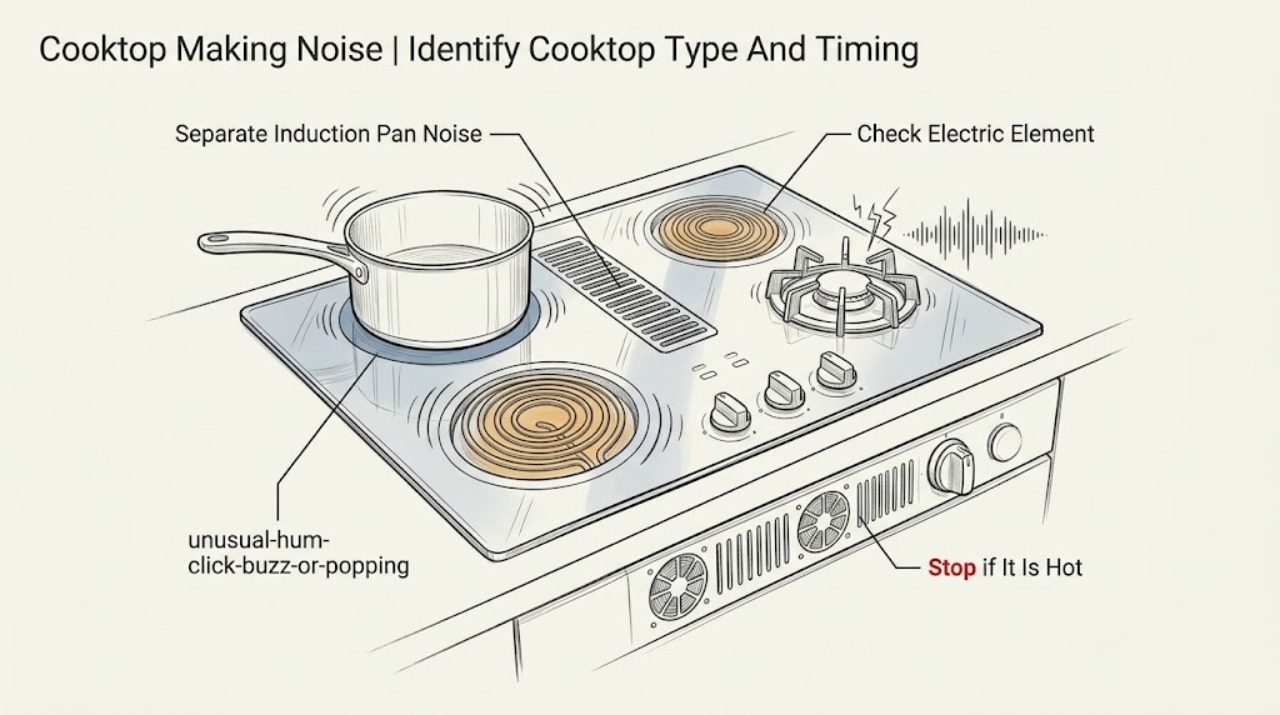
GE Cooktop Making Noise: Identify Normal Hums, Clicks, and Safety Stops
A GE cooktop can make a normal hum, buzz, click, or light pop when its heating system cycles or when induction cookware vibrates, but the right check depends on whether the cooktop is induction, radiant electric, electric coil, or gas. First record whether the sound occurs only while heating, after a setting changes, or while the controls are off.
-
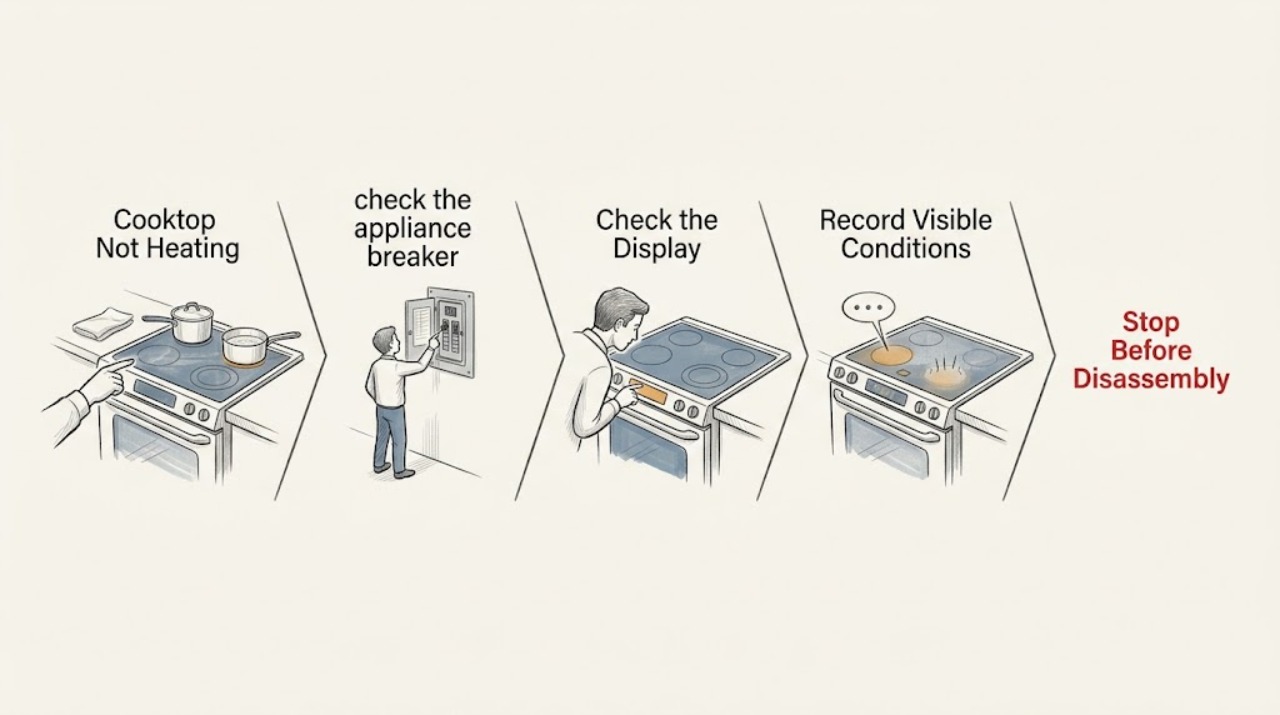
GE Cooktop Not Heating: Check the Burner, Pan, and Power Path
For a GE cooktop that is not heating, first determine whether one surface unit, the warming zone, or every unit is affected. With the controls off and the surface cool, verify the correct control, power supply, burner or module seating, and a flat smooth pan; a warming zone may not glow red even when it is operating. If a correctly selected unit stays cold, a breaker trips again, or built-in wiring needs inspection, stop and arrange qualified appliance service.
-
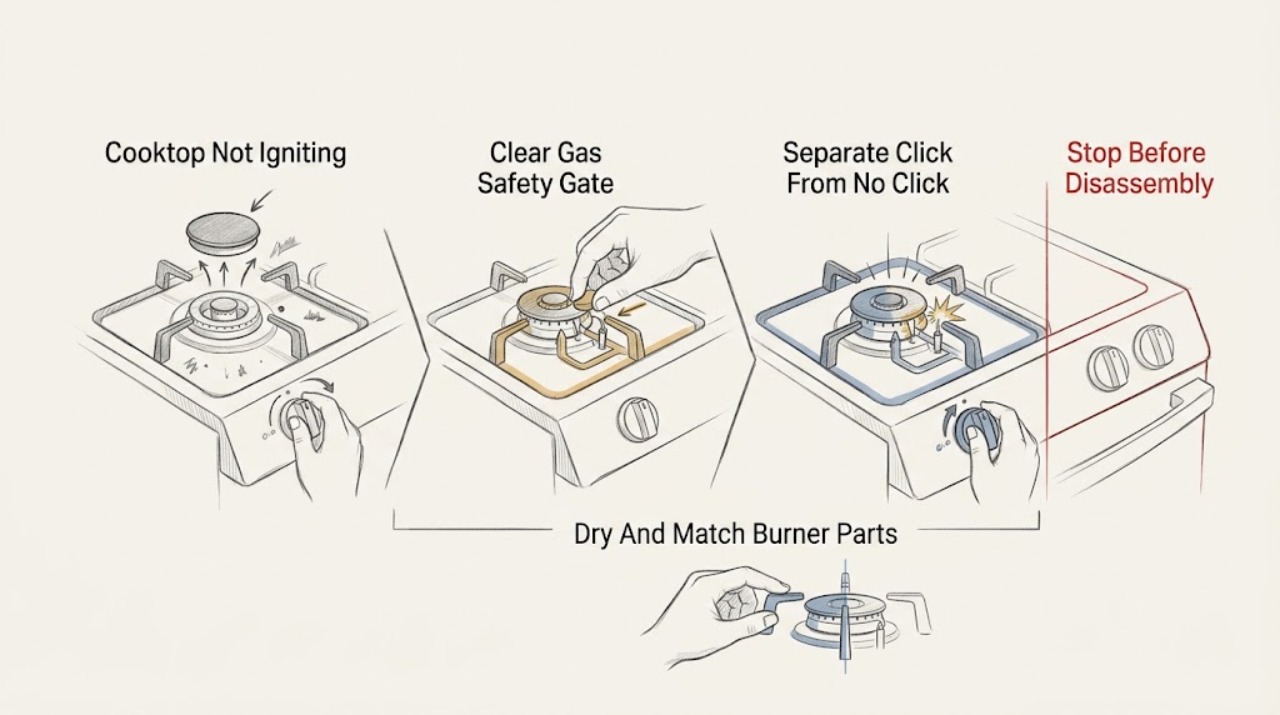
GE Cooktop Not Igniting: Check Clicks, Burner Setup, and Power Safely
If a GE gas cooktop will not ignite, first make sure there is no gas odor. If you smell unburned gas, stop and leave rather than trying another burner.
-
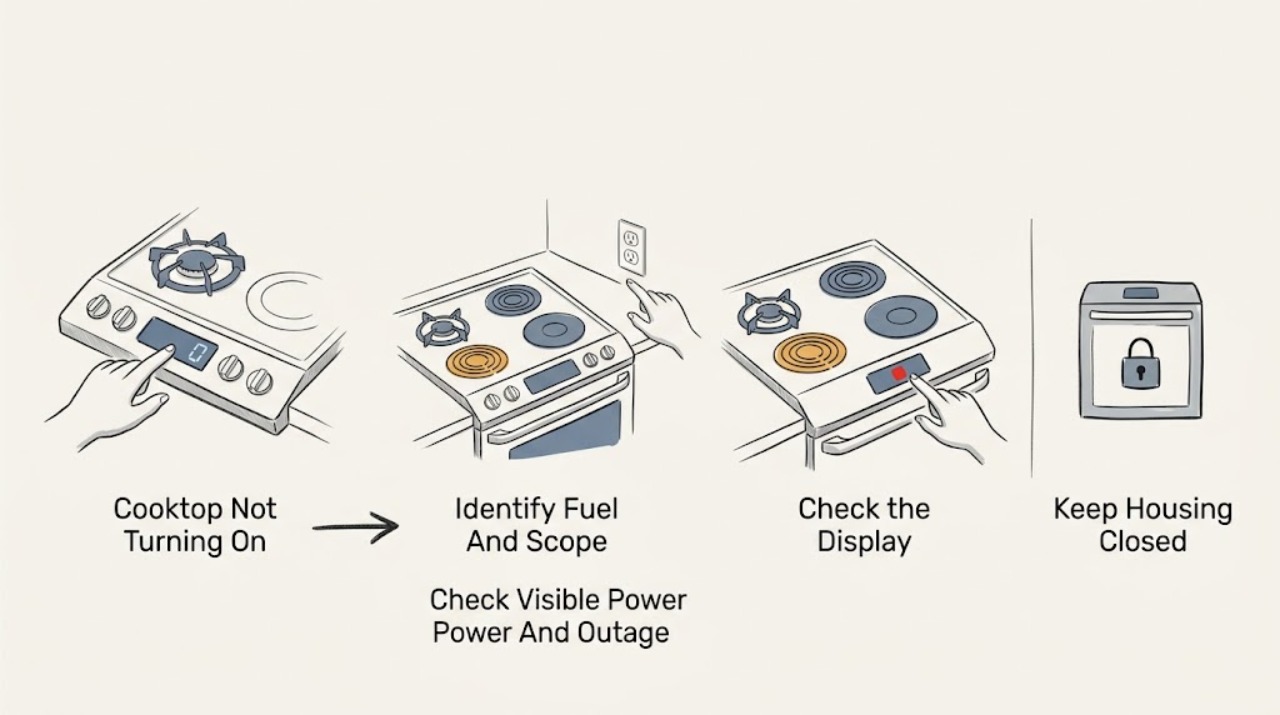
GE Cooktop Not Turning On: Safe Checks Before Service
A GE cooktop that will not turn on may have no household power, a recent outage, a control or lock state, a wet or misaligned gas burner, a failed igniter, a radiant coil or receptacle issue, or an internal control fault. First identify whether the cooktop is gas, electric, radiant, or induction and whether every zone is affected.
-
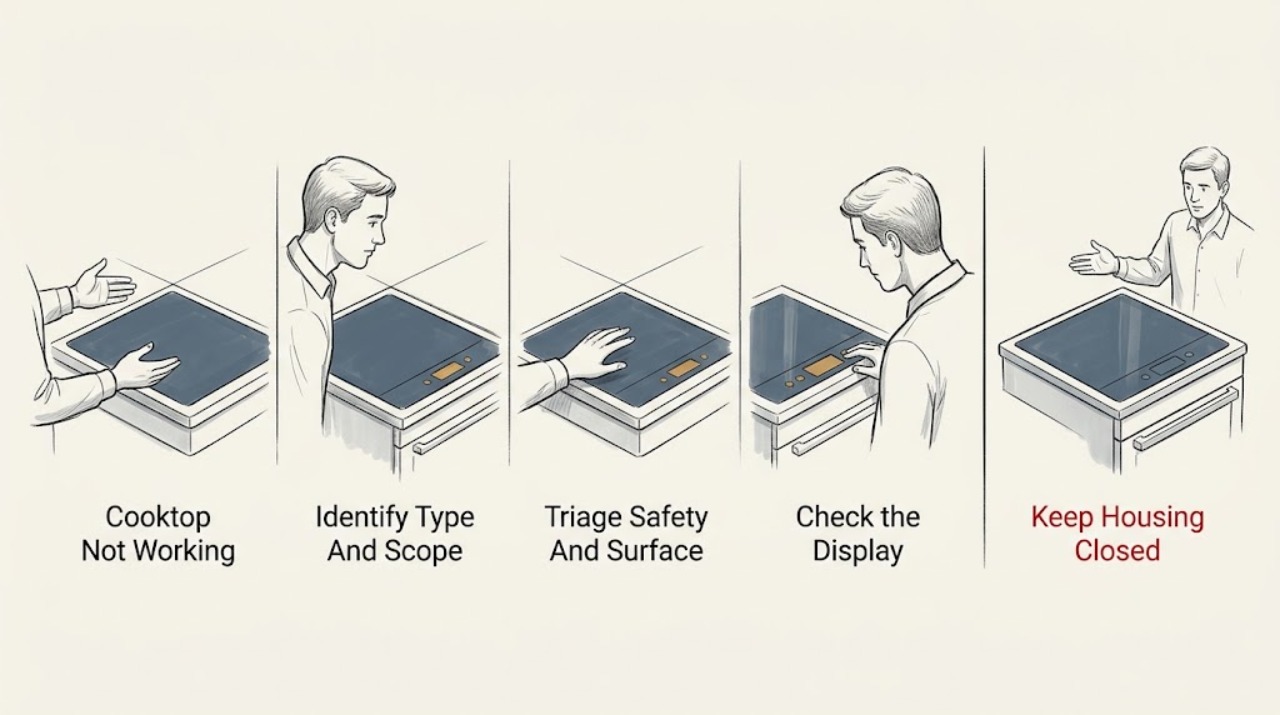
GE Cooktop Not Working: Identify the Fuel and Control Problem First
Start by determining whether the GE cooktop is gas, electric coil or radiant, or induction, and whether one burner or the entire cooktop is affected. With the surface cool, verify that the control is unlocked, the intended burner and setting are selected, and the appliance has power.
-
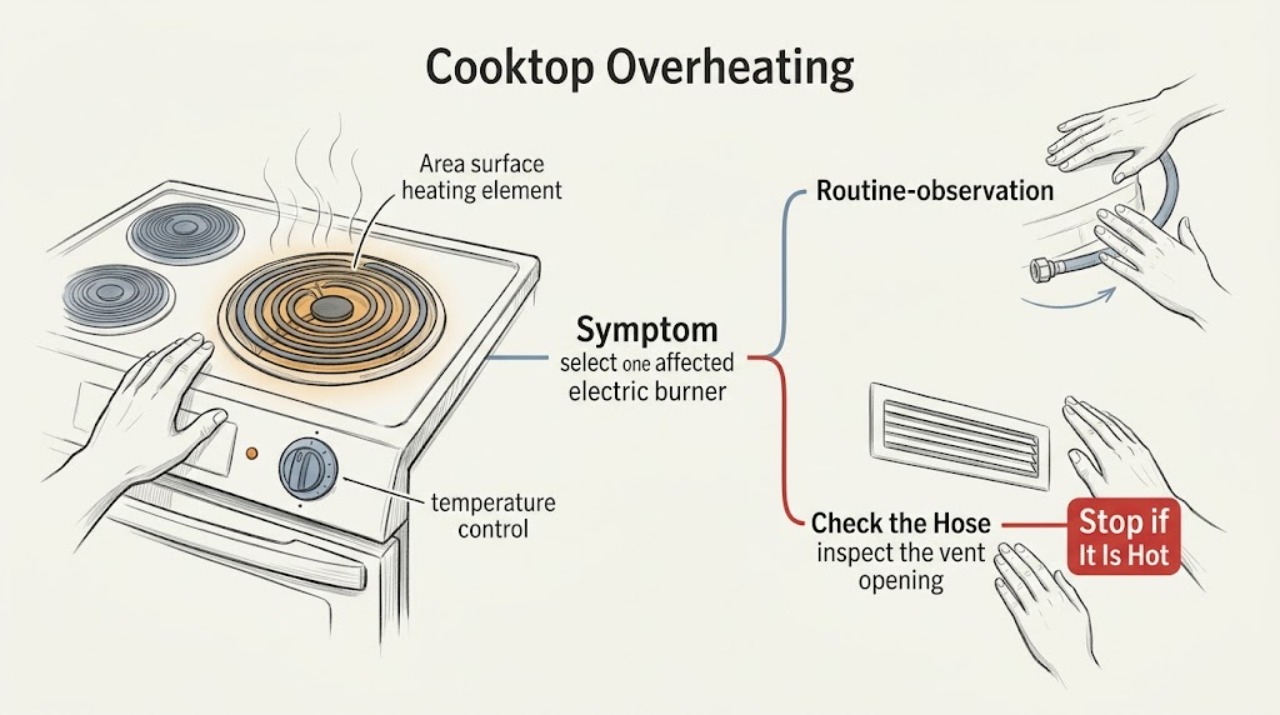
Ge Cooktop Overheating
A GE electric cooktop can feel very hot while operating normally because radiant glass and the pan retain heat, and surface elements cycle on and off to hold the selected setting. Start with the pan's size and flatness, make sure any applicable oven vent is clear, and confirm that a burner actually stops heating when its control is turned to Off.
-
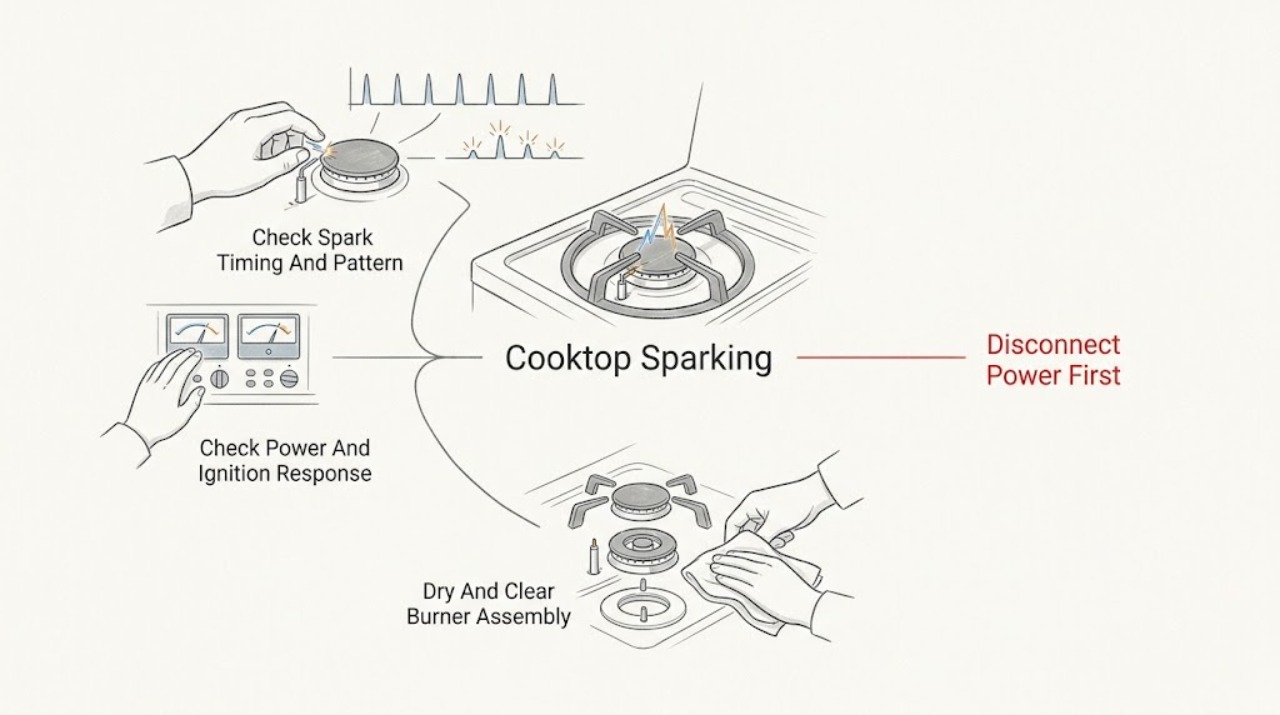
GE Cooktop Sparking: What Is Normal and What to Check
A GE gas cooktop normally makes repeated sparks while a burner knob is at Lite and the burner is igniting; on many sealed-burner models, several igniters may spark together by design. Sparking that continues after every knob is Off, or sparks without a flame, is not something to keep operating.
-
Ge cooktop touch controls not working: What to Check and What to Do Next
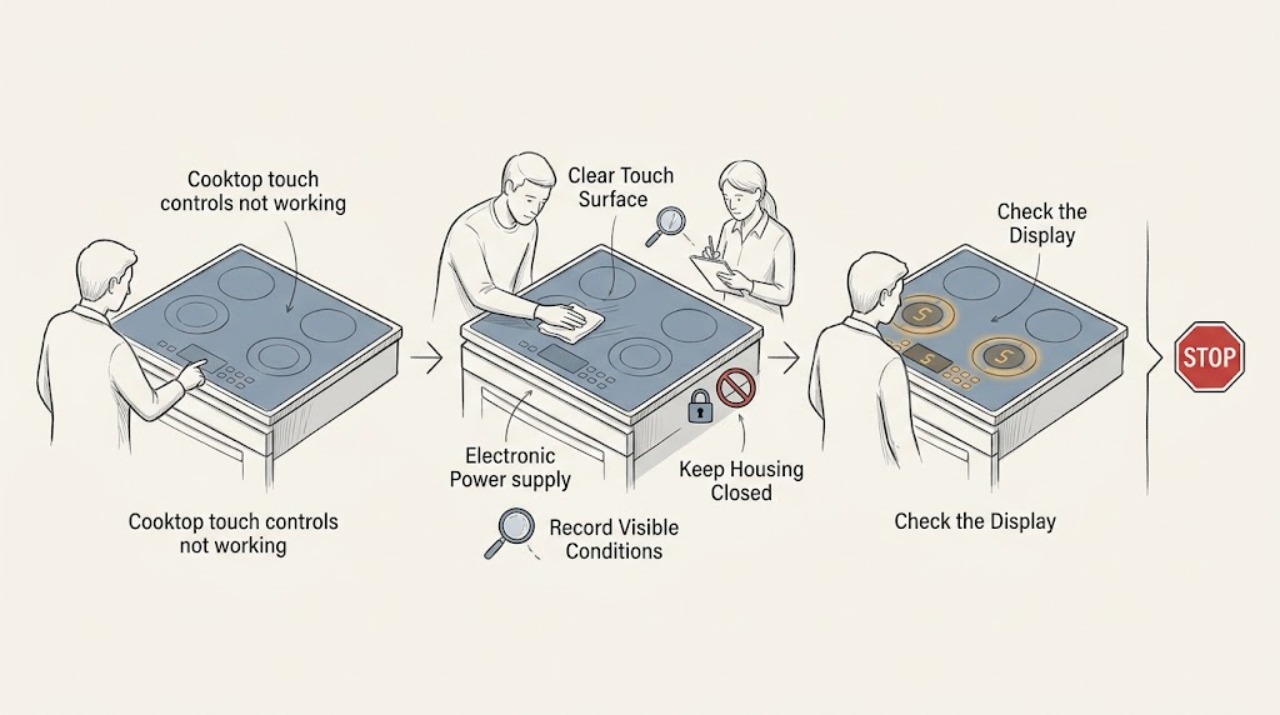
Start by noting whether the whole GE cooktop is unresponsive, only one zone is affected, the display shows a lock or WAIT message, or the panel is blank. Confirm the exact model and use its manual: GE says a control lock can prevent electronic pads from responding, and select touch-button cooktops can remain unusable during initialization.
-
GE JGP970SEKSS Gas Cooktop Burner Still Hot With the Gas Off
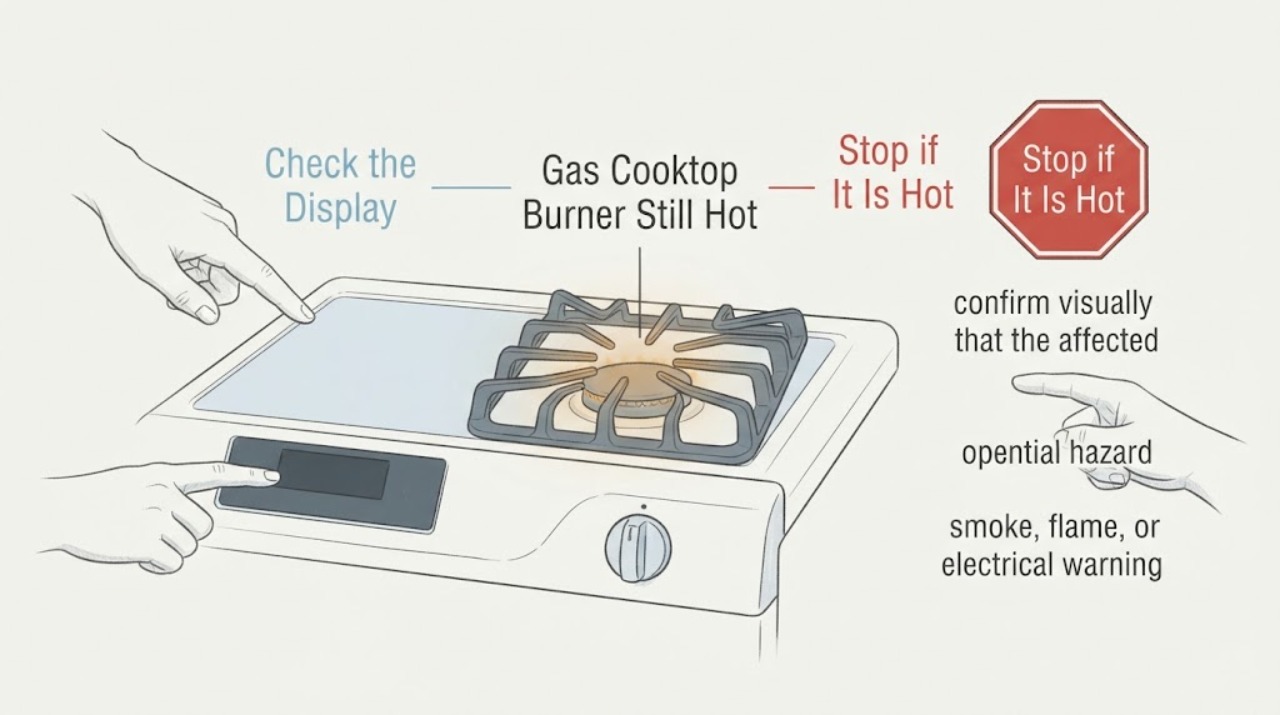
The JGP970SEKSS is a built-in gas cooktop, not an electric radiant cooktop: GE's manual says the surface burners use electric ignition without standing pilot flames and that a burner is turned off by turning its control clockwise to OFF. A grate or burner cap can remain warm after cooking, but a visible flame, hissing, gas odor, or heat that is being actively produced while the control is OFF is not something to test by relighting.