
On this page
Start here
Quick answer
Treat the smell by its character and timing. GE says a slight odor can be normal when a new cooktop is used for the first time because new parts and insulating materials are heating, but a lingering odor is not typical. Turn the controls off and let the surface cool before cleaning spilled food or residue with a damp cloth. Do not deliberately heat an empty pan to test the cooktop: GE notes that induction heat is transferred from cookware and that a burner may lower its setting or turn off when the surface gets very hot, commonly when a pan is empty or has boiled dry. If the smell is electrical, sharp, or burning, or you see smoke, sparking, melted material, a cracked glass surface, or a damaged cord, stop using the cooktop, isolate power only if safe, and arrange qualified service.
Before you begin
Safety first
- Turn controls off and let the GE induction cooktop cool before cleaning. Disconnect power before maintenance only when safe and dry. Never deliberately heat an empty pan to reproduce the smell, use the cooktop with cracked glass or visible electrical damage, remove the cabinet or glass, or test live induction wiring as an ordinary-user step.
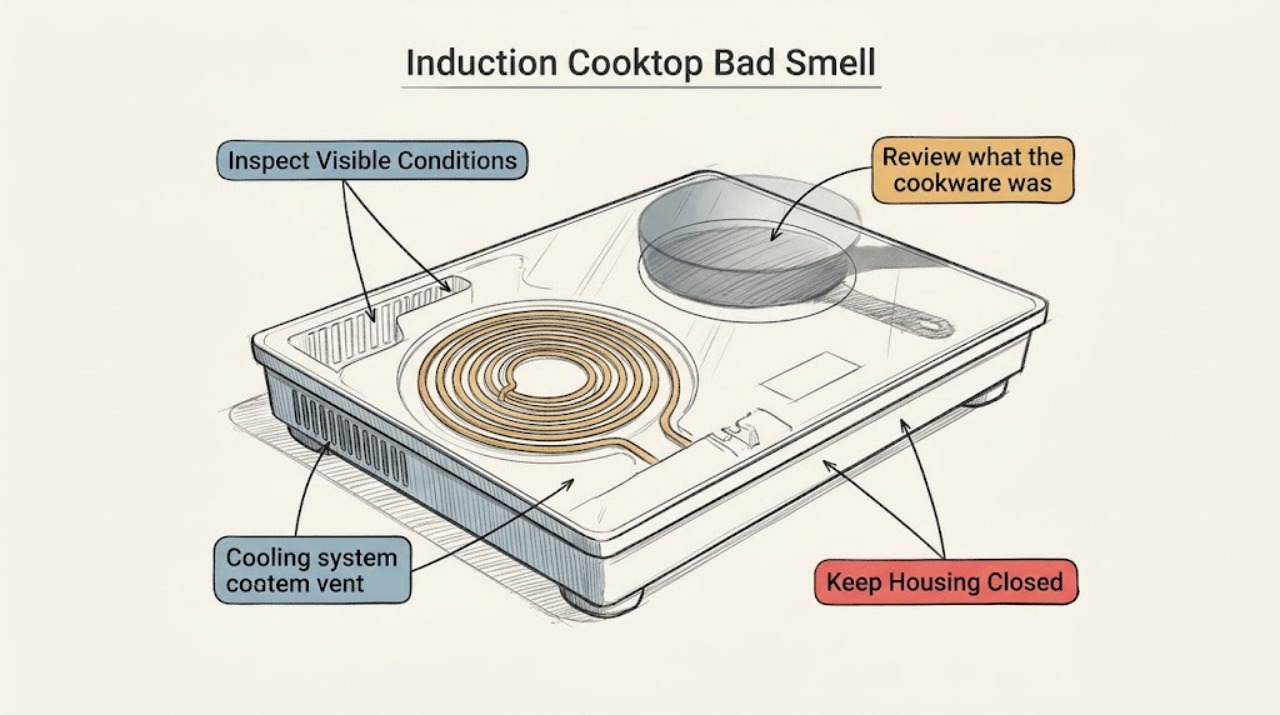
Work through in order
Diagnostic checks
Use only checks that match the exact appliance or system and its official guide.
-
Check 1
Turn the cooking controls off and classify the smell from a safe distance: faint and limited to the first use of a new cooktop, food or spill odor, hot cookware or boiled-dry-pan odor, or sharp electrical, chemical, plastic, or burning odor. Note whether any smoke, error, sparking, or visible damage accompanies it.
Expected result: The smell is slight and only occurs during first use, follows food or cookware, or is lingering/electrical/burning with smoke, sparks, melting, or a damaged surface.
Next step: For any electrical, plastic, burning, or smoke-related symptom, keep the cooktop off and proceed to the professional-help branch. For a faint first-use or food-related smell without hazards, allow cooling and perform the cool-surface check.
Why this matters
Why: GE says a slight first-use odor can come from new parts and insulating materials, while a lingering odor is not typical. A hazard sign changes the problem from cleaning or first-use behavior to an immediate stop and service branch.
-
Check 2
After the glass and cookware are completely cool, inspect the visible cooking area and the pan bottom for spilled food, grease, paper, plastic, packaging residue, or material trapped between the pan and glass. Do not scrape aggressively or move damaged glass.
Expected result: Residue or a loose foreign material is visible, or the surface and cookware are clean but the smell persists.
Next step: Remove only loose material and clean the cool glass with the model-approved method. Do not use flammable or harsh chemicals and do not operate again if the glass is cracked, chipped, or distorted; persistent odor moves to the service branch.
Why this matters
Why: A spill or material heated against cookware can produce a food or scorched-residue odor. A clean surface with a returning smell makes a simple spill less likely, especially if the smell is electrical or occurs without food.
-
Check 3
Review what the cookware was doing when the smell appeared: whether a pan was empty, boiled dry, too close to another hot pan, or carrying a spill onto the glass. Also note whether the odor follows one pan or appears with different clean cookware.
Expected result: The smell occurs only with one dirty or overheated pan, or it appears with multiple clean pans and normal contents.
Next step: Clean or retire cookware that is damaged or contaminated, and do not deliberately reproduce an empty-pan or boiled-dry condition. If the smell returns with normal cookware and food, stop using the affected element and arrange service.
Why this matters
Why: GE says induction burners can reduce power or turn off when the surface temperature becomes very hot, commonly because a pan is empty or has boiled dry. A smell tied to one pan is more consistent with cookware or residue; a repeat smell across clean cookware needs appliance diagnosis.
-
Check 4
Run one ordinary cooking test only if the cooktop is cool, the surface is intact, no electrical or burning odor was present, and the visible area is clean. Use a suitable pan with food or liquid, stay nearby, and observe whether the smell appears immediately, only as the pan heats, or not at all.
Expected result: The smell is absent, returns with a particular element or pan, or returns immediately with a normal pan and contents.
Next step: If the test is normal, resume use cautiously and clean spills promptly. If the smell returns, turn the controls off, stop testing that element, document which element and cookware were involved, and request qualified service.
Why this matters
Why: An absent smell after cleaning supports a residue or cookware explanation but does not justify ignoring a future recurrence. A repeat smell from one element or during normal cooking suggests a cooktop-side fault or installation issue rather than ordinary first-use odor.
-
Check 5
Check the control display and cooling behavior during and after the safe test: note an overheat-related power reduction or shutoff, a persistent warning, a fan that continues cooling, or controls that become unresponsive. Do not remove panels to inspect the coil or electronics.
Expected result: The burner reduces power or turns off when the surface is very hot and recovers after cooling, or the smell persists with an error, unresponsive control, or visible electrical symptom.
Next step: Allow a normal cooling period and avoid empty cookware. If the warning or odor recurs after cooling, keep the cooktop off and provide the exact display behavior to an authorized technician.
Why this matters
Why: GE describes power reduction or shutoff as a response to a very hot induction surface, particularly with an empty or dry pan. A persistent odor, error, or unresponsive control after cooling is not established as a normal induction behavior and requires service evaluation.
-
Check 6
If the smell is electrical, burning, or accompanied by smoke, sparking, heat damage, or a cracked glass surface, switch the cooktop off and isolate its power at the accessible disconnect only if doing so is safe, dry, and does not require touching damaged equipment.
Expected result: The hazard stops when power is isolated, or smoke/odor, heat damage, sparking, or repeated electrical protection trips continue or return.
Next step: Leave the cooktop out of use, do not restore power for another test, and seek qualified appliance or electrical service. If there is active smoke or fire, leave the area and contact emergency services as appropriate.
Why this matters
Why: These symptoms are outside ordinary cleaning and first-use troubleshooting. GE instructs users to disconnect power before maintenance, and a persistent or hazardous smell can involve wiring, the control, coil, cooling system, or another component that cannot be identified safely from the odor alone.
Use your observations
Decision map
Find the observation that best matches what you see, then follow the next safe action.
-
PATH 01Next step
What you see
The cooktop is new and the odor is slight, brief, and not electrical, smoky, or accompanied by damage.
Do this next
Let the cooktop cool, clean the surface according to the manual, and monitor a normal supervised use. If the odor lingers or becomes stronger, stop and request service.
-
PATH 02Next step
What you see
The smell follows a spill, food residue, or one pan, and there are no electrical or visible damage signs.
Do this next
Allow cooling, remove loose residue, clean the glass and cookware using the model-approved method, and perform at most one ordinary supervised test with food or liquid.
-
PATH 03Next step
What you see
A burner reduces power or turns off after an empty pan, boiled-dry pan, or very hot cooking area.
Do this next
Turn the control off, let the cooktop cool, and avoid deliberately heating empty cookware. If the odor or warning returns with normal cookware and contents, stop use and arrange service.
-
PATH 04Next step
What you see
The smell lingers, occurs with clean cookware, or smells electrical, chemical, burning, or like melting plastic.
Do this next
Keep the cooktop off and request qualified service. Do not remove the glass, panels, coil, control, or wiring and do not run further tests.
-
PATH 05Next step
What you see
Smoke, active sparking, fire, a cracked or shattered glass surface, or severe heat damage is present.
Do this next
Stop immediately, leave the appliance off, isolate power only if it is safe and dry, leave the area if needed, and seek urgent professional or emergency help.
Helpful context
Understand the symptom
First separate a normal new-appliance odor from a fault
A faint smell during the first use of a new GE cooktop can come from new parts and insulating materials warming. That should be a short-lived condition. A smell that lingers, becomes stronger, appears on an established cooktop, or smells electrical or like melting plastic is not something to mask with another cooking cycle.
Induction heat can make the diagnosis misleading
The glass itself is not the primary heat source on an induction cooktop; heat transfers back from the cookware. The surface can still become warm or hot around a pan, and an overheated cooking area can trigger a lower power setting or shutoff. Food residue under a pan, a pan that has boiled dry, or a pan-related smell can therefore occur without proving an internal electrical failure.
Stop before investigating a dangerous odor
Do not lean over smoke or continue heating to identify an electrical smell. Turn the controls off, keep children away, and let the cooktop cool. If there is sparking, smoke, visible melting, a cracked glass surface, or a hot or damaged supply connection, leave the cooktop off and use qualified service.
Only after diagnosis
Potential parts
- induction control or power module
Consider this category only after a qualified technician confirms an electrical or control fault with residue, cookware, and normal overheat behavior ruled out.
Confirm the complete GE model and manufacturer fit information before ordering; do not infer compatibility from an odor symptom. - induction coil or cooling fan assembly
Consider this category only when a technician confirms an element-specific heat or cooling fault after the surface and cookware checks are clear.
Use model-specific diagnosis and fit information; do not remove panels or replace an internal assembly as a trial. - glass cooktop surface
Consider this category only if the glass is confirmed cracked or damaged and a technician identifies the exact replacement for the model.
Match the complete GE model and revision; a similar-looking glass surface is not proof of fit or safe installation.
When checks do not resolve it
Need a professional?
Contact GE or a qualified appliance technician when a new-cooktop odor does not fade, any odor returns with clean cookware and normal contents, an element repeatedly triggers an overheat response, a warning or control fault appears, or diagnosis would require opening the cooktop or testing the coil, wiring, controls, or cooling system.
Common questions
FAQ
Is a smell normal from a new GE induction cooktop?
GE says a slight odor during first use can come from new parts and insulating materials heating. It should not become a lingering odor. If it persists, becomes stronger, smells electrical or like melting plastic, or comes with smoke, stop using the cooktop and arrange service.
Why does my GE induction cooktop smell when I cook?
Check for food or residue under the pan, a pan that overheated or boiled dry, and whether the smell follows one piece of cookware. GE explains that induction transfers heat from cookware and that a very hot surface can reduce power or turn a burner off. A smell with clean cookware and normal contents needs service evaluation.
Should I run an empty pan to find the source of the smell?
No. Do not deliberately reproduce an overheating condition. Use only a normal supervised cooking test with suitable cookware and food or liquid after the cooktop is cool, clean, and free of hazard signs.
What should I do if my GE induction cooktop smells electrical?
Turn the controls off and stop using it. If there is smoke, sparking, melting, a cracked surface, or a damaged connection, isolate power only if safe and dry and seek qualified service. Do not remove the glass or panels or restore power for another test.
Read the exact guide
Official sources
- Electric Range & Cooktop - Induction Cooktop FAQsGE Appliances · GE induction cooktops, including heating mechanics, cookware, controls, and cleaning guidance
- Electric Range & Cooktop - Glass Smooth Top Surface Seems Too HotGE Appliances · GE electric and induction cooktops with warm or hot smooth-glass surfaces and maintenance safety
- Induction Range & Cooktop - Burners Change Setting or Turned Off During UseGE Appliances · GE induction ranges and cooktops that reduce burner power or turn off during use
- 1.0GE Appliances · GE induction cooktop glass-surface care, cleaning, and first-use residue guidance
- Ranges and Cooktops - Odor From New CooktopGE Appliances · GE ranges and cooktops with an odor during or after initial use
Community feedback
Share a repair observation
Share a plain-text repair observation. Accepted observations are published automatically; this page may take a moment to update.