
On this page
Start here
Quick answer
If a Hoover dryer smells bad, stop it and let it cool before deciding whether the odor is damp or musty, chemical, or burning. Clean the lint filter, inspect the accessible condenser or exhaust path according to the exact model, and remove residue from the drum and door seal. Use a smaller, suitable load and avoid running the dryer with a restricted vent. A burning smell that persists after cleaning, smoke, scorch marks, melting, unusual noise, or a repeated shutdown is a stop condition: keep the dryer off and arrange qualified Hoover service.
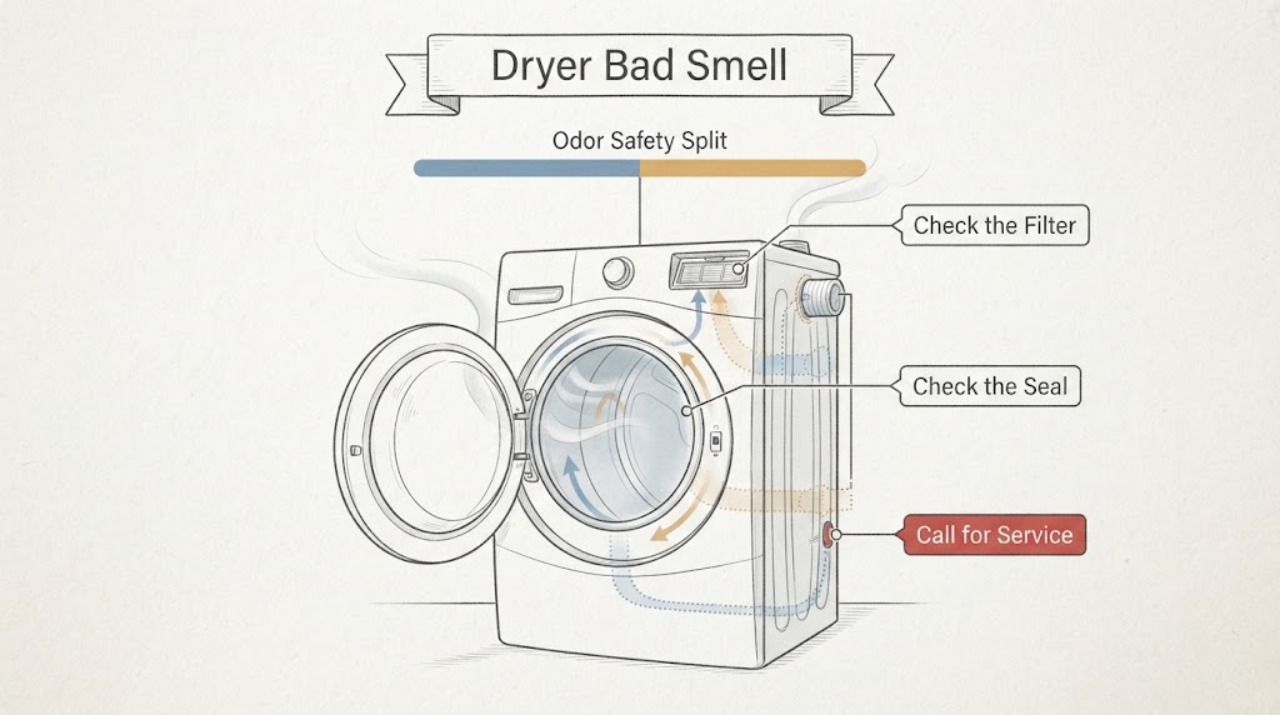
Work through in order
Diagnostic checks
Use only checks that match the exact appliance or system and its official guide.
-
Check 1
Stop the cycle, set the controls Off, and let the dryer cool. Classify the odor from a safe distance as musty or damp, chemical or fabric-product, hot lint, burning plastic, electrical, or accompanied by smoke. If there is smoke, flame, melting, or visible scorching, disconnect power at the accessible plug or switch only if safe and do not restart.
Expected result: The smell is mild and musty, disappears when the dryer is cool, or is sharp, burning, electrical, accompanied by smoke, or returns immediately.
Next step: For smoke, scorching, melting, or an electrical odor, keep the dryer off and arrange urgent qualified service. Otherwise continue only after the dryer is fully cool.
Why this matters
Why: A mild musty odor can come from damp laundry or residue, while a burning or electrical odor changes the problem to a potential fire or component fault. A smell that returns immediately is not a normal cleaning adjustment.
-
Check 2
Disconnect the dryer from the mains before examining it. Remove and clean the door-recess lint filter, checking for a film or packed fluff. If the exact Hoover model is a condenser dryer and its manual allows user access, remove and clean the condenser as instructed, then let washable parts dry completely before refitting them. Do not open the cabinet or reach into a hot machine.
Expected result: The filter or condenser is packed with lint, coated with residue, wet, damaged, or clean and unobstructed.
Next step: Refit only dry, correctly seated parts and make one supervised test with no unusual odor present. If the filter or condenser is damaged, or the smell returns, stop and request service.
Why this matters
Why: Hoover states that lint and fluff buildup can lead to a burning smell. A coated or blocked filter can also restrict airflow. If the lint path is already clean and the smell continues, cleaning alone is unlikely to explain it.
-
Check 3
With power disconnected and the drum cool, inspect the drum, door seal, and accessible lint path for spilled detergent, fabric-product residue, mold-like buildup, foreign material, or a small item rubbing against the drum. Wipe user-accessible surfaces with the model-approved method and dry them fully; do not use flammable cleaners or scrape internal parts.
Expected result: Residue or a foreign item is present; the seal is damaged; or the drum and visible seal are clean and intact.
Next step: Remove only loose, accessible residue or foreign material using the manual's cleaning instructions. If the seal is damaged, the drum rubs, or the odor is burning, leave the dryer off and arrange service.
Why this matters
Why: Residue and damp buildup can create a musty or chemical smell and may transfer to clothes. A damaged seal or rubbing object can create heat or noise. Clean, intact visible surfaces make an internal source more likely.
-
Check 4
After cleaning and cooling, check the accessible external vent or duct for lint, crushing, kinks, or weak airflow, and confirm the front and rear ventilation areas are not covered. Use a small, suitable load and the cycle and temperature recommended for the fabric in the exact Hoover manual; do not overload the drum or run the dryer unattended.
Expected result: Airflow is weak or blocked, the load was packed or unsuitable, the selected heat was excessive for the fabric, or the external path and load are normal.
Next step: Correct only loose external obstructions and the load or cycle selection. Have inaccessible ductwork serviced. Stop immediately if the odor returns during the small supervised test.
Why this matters
Why: Restricted airflow and an unsuitable load can keep heat and moisture in the dryer, making odors and drying problems worse. Normal visible airflow and a suitable load make an internal heater, motor, wiring, or control issue more likely if the smell returns.
-
Check 5
Record the model number, odor type, where it is strongest, load and cycle, filter and condenser condition, external airflow, unusual noise, shutdown, and any scorch or melting marks. Do not remove panels, bypass a thermal safety device, test energized wiring, or access the heater, motor, or gas components.
Expected result: The odor returns after the visible cleaning and airflow checks, the dryer stops mid-cycle, the cabinet or plug becomes hot, a breaker trips, or there is smoke, scorching, or electrical odor.
Next step: Keep the dryer disconnected or Off and contact Hoover service or a qualified appliance technician. Provide the recorded observations and do not operate the dryer while the fault remains.
Why this matters
Why: These results can involve an internal heater, thermostat, motor, drum drive, wiring, or airflow fault. A recurring burning smell is not proof that a filter is the only cause and requires model-specific professional diagnosis.
Use your observations
Decision map
Find the observation that best matches what you see, then follow the next safe action.
-
PATH 01Next step
What you see
There is smoke, flame, melting, scorching, an electrical smell, or a hot plug or cabinet.
Do this next
Stop using the dryer, disconnect power only if safe, keep clear of the hazard, and arrange urgent qualified service. Do not run another cycle to test it.
-
PATH 02Next step
What you see
The odor is musty or chemical and visible drum, seal, filter, and condenser residue is present.
Do this next
Clean and dry only the model-supported user areas, leave the door open for safe air circulation after cleaning, and make one supervised test. Escalate if the odor returns.
-
PATH 03Next step
What you see
The filter, condenser, external duct, or front ventilation path is blocked or airflow is weak.
Do this next
Clean the applicable filter or condenser and have inaccessible ductwork cleared according to the Hoover manual before resuming normal loads.
-
PATH 04Next step
What you see
The load was overloaded or the cycle and heat did not match the fabric.
Do this next
Reduce or resort the load and select the model-appropriate cycle. Stop if the odor or excessive heat returns with a small, suitable load.
-
PATH 05Next step
What you see
Cleaning, airflow, load, and cycle checks are normal but the burning smell returns or the dryer stops.
Do this next
Keep the dryer Off and request service for an internal heater, motor, sensor, wiring, or control diagnosis.
Helpful context
Understand the symptom
Classify the odor before restarting
A musty smell from damp laundry is different from a sharp burning odor, hot plastic smell, or electrical smell. The latter can indicate lint, a blocked airflow path, a rubbing component, or an electrical fault. Turn the dryer off, let it cool, and do not run another cycle merely to reproduce a hazardous odor.
Clean only the model-supported user areas
Hoover's advice centre says lint and fluff can cause a burning smell and gives filter and condenser cleaning guidance for applicable tumble dryers. The location of a condenser, the way it is removed, and the approved cleaning method vary by model, so use the exact manual before opening a lower cover or rinsing a component.
A returning burning odor needs service
If the smell returns with a clean filter, clear accessible airflow, and a suitable load, the remaining cause may be inside the heater, motor, wiring, sensor, or drum drive. Keep the dryer out of service instead of bypassing thermal protection or opening the cabinet.
Only after diagnosis
Potential parts
- thermal cutoff or thermostat
Consider this category only when qualified service confirms a temperature-control fault after lint, condenser, airflow, load, and cycle causes are excluded.
Confirm the exact Hoover model and approved parts information; never bypass a thermal safety device. - heating element or heater assembly
Consider this category only when service confirms abnormal heating or a heater fault after the dryer is safely isolated.
Electric and gas dryer heating systems differ by model; do not select a heater from the smell alone. - blower wheel or drive motor
Consider this category only when qualified diagnosis finds inadequate internal airflow, rubbing, or motor overheating despite a clear external lint path.
Verify exact model fitment and safe power isolation before any internal component replacement.
When checks do not resolve it
Need a professional?
Request Hoover service when the smell persists or returns after safe cleaning and airflow checks, or immediately for smoke, scorching, melting, electrical odor, repeated shutdown, or a tripped breaker.
Have this ready
- Provide the model or product code, odor description, where it was strongest, load and cycle, filter and condenser condition, external airflow, unusual sounds, and any heat, smoke, or shutdown behavior.
Common questions
FAQ
Why does my Hoover dryer smell like burning?
Lint or fluff buildup can produce a burning smell, especially when the filter, condenser, or accessible airflow path is restricted. Disconnect the dryer before examining it, clean only model-supported areas, and stop if the smell returns or there is smoke, scorching, or melting.
Can a musty smell come from a Hoover tumble dryer?
Yes. Damp laundry, residue, or buildup at the drum, seal, filter, or condenser can create a musty or chemical odor. Clean and dry the user-accessible areas according to the exact model manual, then make one supervised test rather than running repeated cycles.
Should I keep using the dryer if the smell goes away?
Only after the dryer is cool and the visible filter, condenser or vent, drum, seal, load, and cycle checks are complete. If a burning or electrical smell returns, or the dryer overheats or stops, keep it off and request service.
Is it safe to replace a Hoover dryer thermal fuse because it smells bad?
No component should be selected from an odor alone. A thermal part may have operated because of restricted airflow or another fault, and bypassing it is unsafe. Have qualified service identify the cause and verify the exact model-specific repair.
Read the exact guide
Official sources
- Hoover Advice CentreHoover · Hoover appliance advice and repair support
- User manualHoover · Hoover appliance advice and model-specific support
- Customer Support – HooverHoover · Hoover product support and service information
- How to Clean a Tumble Dryer: A Step-By-Step GuideHoover UK · Hoover tumble dryers
- Burning smell - Hoover Advice CentreHoover Advice Centre · Hoover tumble dryers
Community feedback
Share a repair observation
Share a plain-text repair observation. Accepted observations are published automatically; this page may take a moment to update.