
On this page
Start here
Quick answer
A bad smell from a Hotpoint dryer can come from damp residue in the drum or lint buildup, but a burning, electrical, smoky, chemical, or melting smell must be treated as a fire or appliance fault. Stop the dryer, let it cool, and disconnect the mains before examining it if the plug and route are safe. For a mild stale odor, clean the door lint filter and housing, wipe and dry the drum and drying sensor, and clean the condenser, evaporator filter, or vent hose only when that component matches your dryer type and manual. Do not restart after smoke, scorching, melting, an electrical trip, or a strong recurring burning odor; keep the dryer out of use and arrange qualified Hotpoint service.
Work through in order
Diagnostic checks
Use only checks that match the exact appliance or system and its official guide.
-
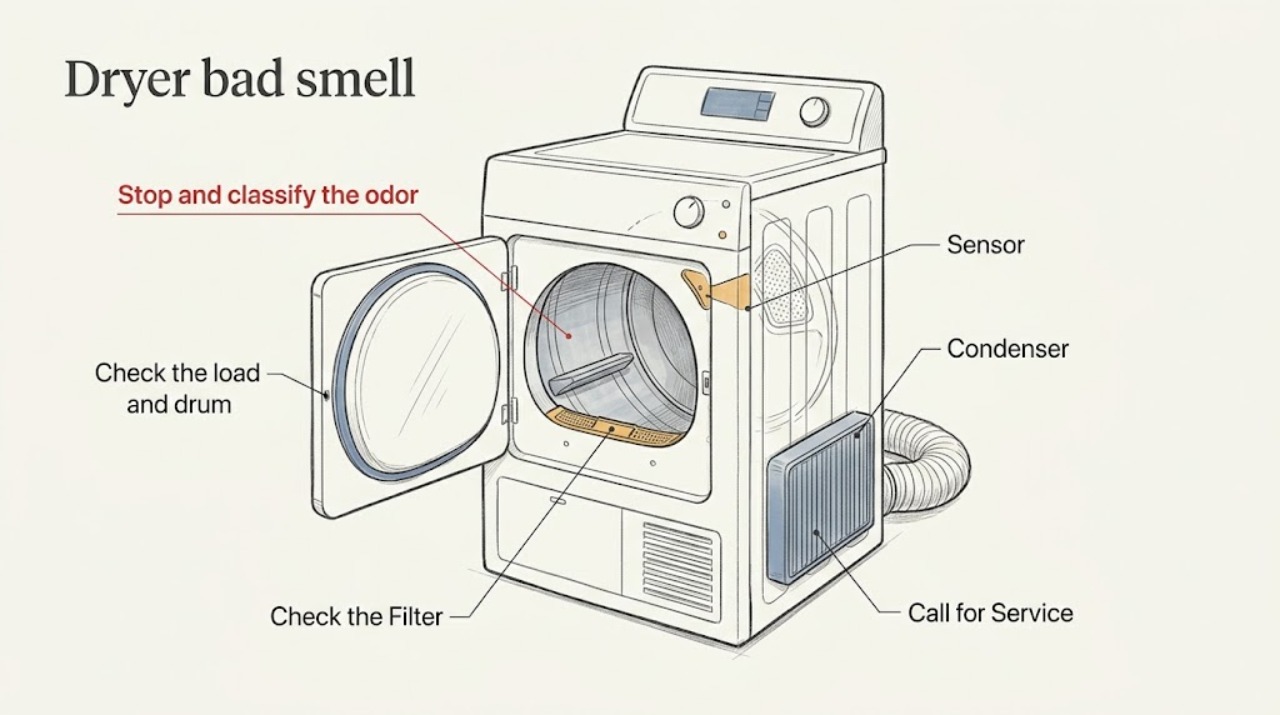
Stop and classify the odor safely
Cancel the cycle if the controls respond normally, switch the dryer off, and keep clear of hot laundry and the appliance. If there is smoke, a burning or melting smell, scorching, a hot or damaged plug or cord, an electrical trip, or an active fire, disconnect the mains only when the route is safe; otherwise leave and contact emergency services from a safe location. Do not open panels or spray anything into the dryer.
Expected result: The odor may be mild and stale, hot lint-like, chemical, smoky, electrical, or burning, and it may come from the drum, filter area, outlet, cord, rear vent, or cabinet.
Next step: For a stop condition, keep the dryer disconnected and arrange qualified service; use emergency help for fire or dangerous smoke. If the dryer is cool and the odor is only mild and stale, continue to the model-specific maintenance checks.
Why this matters
Why: A mild stale smell can justify a cool, unplugged cleaning check. Smoke, scorching, melting, an electrical symptom, or a strong recurring burning odor is a stop condition and cannot be cleared by a user test cycle.
-
Check the load and drum for residue
With the dryer cool and unplugged, remove the laundry and check whether any item is scorched, contaminated with oil or another flammable substance, made with foam rubber, or not marked suitable for tumble drying. Inspect the drum and inside of the door for lint, residue, or damp fabric left behind. Do not put a stained or scorched item back into the dryer and do not scrape hot surfaces.
Expected result: An unsafe fabric, flammable residue, scorched item, or visible drum residue gives a plausible source for the smell. A clean drum and suitable load point toward the filters, air path, or an internal fault instead.
Next step: Follow the garment care instructions and keep any scorched or chemically contaminated item out of the dryer. If the odor is mild and no unsafe item is involved, wipe the drum and door as described by Hotpoint and allow them to dry before the next check.
Why this matters
Why: Removing an unsuitable load prevents the odor from being recreated, but it does not certify the machine. A scorched garment or chemical odor after drying warrants service before reuse, even if the drum looks clean.
-
Clean the lint filter and drying sensor
After the appliance has cooled and is disconnected, lift out the door lint filter and remove the buildup. Clean the filter housing as the model guide permits, and ensure a washed filter is fully dry before refitting. If your Hotpoint dryer has accessible metal drying-sensor bars behind the filter, wipe them with a soft cloth and dry them; do not use abrasive cleaners or reach into the heater or fan area.
Expected result: Heavy lint, a dirty housing, or residue on the sensor can explain a stale or hot-lint odor and can affect drying duration. A clean and correctly seated filter with an odor that remains unchanged points beyond this maintenance step.
Next step: Refit the completely dry filter securely and continue with the component-specific condenser, evaporator, or vent check. If the filter is damaged, missing, or the smell was burning or electrical, do not run the dryer.
Why this matters
Why: Hotpoint recommends regular lint-filter and sensor cleaning to maintain efficient operation and help prevent odors. A clean filter does not rule out lint deeper in the air path or an electrical, motor, or heating fault.
-
Clean the model-specific moisture and airflow path
Identify the dryer type from the product label or manual. On a condenser dryer, clean and dry the condenser as the Hotpoint guide describes. On a heat-pump dryer, clean the evaporator filter with the permitted soft brush or vacuum method and keep sharp fins protected. On a vented dryer, disconnect the mains and inspect the vent hose for lint or restriction, cleaning it only as the model instructions permit. Keep air inlets and outlets clear and never remove a cover that is not intended for user maintenance.
Expected result: A clogged condenser, evaporator filter, or vent hose can hold moisture and lint and make odors or long drying times worse. A clear, correctly refitted path with a recurring odor suggests residue elsewhere or an internal fault.
Next step: Refit each dry component and cover securely. Do not perform a powered retest after smoke, scorching, melting, an electrical symptom, or a strong burning odor; otherwise proceed to one cautious retest only if the exact guide permits it.
Why this matters
Why: Hotpoint explicitly ties odor prevention and efficient operation to cleaning the type-specific component. These are external maintenance checks, not proof that the heater, fan, wiring, or control is safe.
-
Use one controlled retest or stop for service
Only when the dryer is cool, undamaged, free of smoke or burning odor, and all permitted cleaning is complete, run one model-approved cycle with a suitable load while remaining nearby. Observe whether the smell diminishes, returns immediately, or is accompanied by excessive heat, smoke, a warning, a trip, unusual noise, or a damaged cord or plug. Do not interrupt a normal cool-down by opening panels or moving the machine.
Expected result: The mild stale odor may disappear after the drum, filter, sensor, and correct air path are clean, or the same odor or a more serious symptom may return.
Next step: Stop immediately for any serious or recurring odor, switch off, disconnect if safe, and keep the dryer out of use until qualified Hotpoint service diagnoses it. Do not replace or bypass internal parts based on smell alone.
Why this matters
Why: Improvement supports residue or maintenance as a contributor, but recurrence means the cause has not been established. A burning, electrical, smoky, or melting odor is never cleared by a temporary improvement.
Use your observations
Decision map
Find the observation that best matches what you see, then follow the next safe action.
-
PATH 01Safety boundary
What you see
The odor is smoke-like, burning, electrical, chemical, or melting, or there is scorching, a hot or damaged cord or plug, an electrical trip, or active fire.
Do this next
Stop immediately and disconnect the appliance only if safe. Evacuate and contact emergency services for active fire or dangerous smoke; otherwise keep the dryer disconnected and arrange qualified appliance and, when needed, electrical service.
Why this path and its safety boundary
Safety stop: True
-
PATH 02Next step
What you see
The smell is mild, stale, or damp and there is no smoke, scorching, electrical symptom, or unsafe load.
Do this next
With the dryer cool and unplugged, clean the lint filter and housing, wipe and dry the drum and sensor, and use the exact model guide for the applicable condenser, evaporator filter, or vent hose.
-
PATH 03Next step
What you see
The filter, filter housing, condenser, evaporator filter, or vent hose contains substantial lint or residue.
Do this next
Clean the accessible component according to the Hotpoint model instructions, refit it only when dry and secure, and avoid running the dryer without a required filter or cover. Do not treat cleaning as a cure for a burning or electrical odor.
-
PATH 04Safety boundary
What you see
The load contains an item not suitable for tumble drying, flammable residue, foam rubber, or a scorched garment.
Do this next
Keep the item out of the dryer and follow its care instructions. If there was scorching, smoke, or a chemical smell, keep the appliance disconnected and arrange service before using it again.
Why this path and its safety boundary
Safety stop: True
-
PATH 05Safety boundary
What you see
The odor returns after the permitted cleaning checks, comes from the plug, outlet, controls, rear, or cabinet, or is accompanied by abnormal noise, excessive heat, a warning, or a trip.
Do this next
Stop the dryer, disconnect it if safe, and arrange qualified Hotpoint service. Do not open panels, test live wiring, bypass a safety device, or keep running cycles to locate the smell.
Why this path and its safety boundary
Safety stop: True
Helpful context
Understand the symptom
Identify the smell before deciding whether cleaning is appropriate
A stale or damp smell can follow laundry left in the drum or residue on the drum, filter, or sensor. A hot lint smell may indicate restricted airflow or accumulated fluff. A smell like burning plastic, scorched fabric, smoke, or an electrical fault is not a cleaning prompt: stop and isolate the dryer if safe. Smell alone cannot prove that an internal part is sound, so do not run repeated cycles to compare odors.
Use the dryer type and exact model guide
Hotpoint's cleaning guidance separates condenser, heat-pump, and vented dryers. A condenser model may have a condenser; a heat-pump model may have an evaporator filter; a vented model has a vent hose. Do not remove a component that your dryer does not have, and do not place a damp filter back into service. The product code and exact Hotpoint manual take precedence over a generic cleaning sequence.
Know when a smell needs professional diagnosis
If the odor returns immediately after safe cleaning, comes from the plug, cord, outlet, controls, or behind the cabinet, or is accompanied by heat damage, smoke, unusual noise, or a trip, the cause may be internal or supply-side. Keep the appliance unplugged and provide the technician with the smell type, location, load, programme, and maintenance already completed.
Only after diagnosis
Potential parts
- lint, condenser, or evaporator filter
Consider a replacement only if the exact filter is damaged, missing, or cannot be cleaned and seated correctly; a new filter does not clear a burning or electrical odor.
Confirm the complete Hotpoint product code and manufacturer fit information before ordering any filter. - internal airflow or electrical component
A fan, heater, thermal protector, sensor, wiring, or control component is conditional on qualified diagnosis after permitted external cleaning fails or a serious odor occurs.
Do not choose an internal component from smell alone; qualified service must identify the fault and verify exact model compatibility.
When checks do not resolve it
Need a professional?
Professional help is required for any serious or recurring odor, especially when safe filter, drum, sensor, condenser, evaporator, and vent checks do not resolve it.
Common questions
FAQ
Why does my Hotpoint dryer smell musty?
A mild stale or damp odor can come from residue in the drum, lint filter, sensor, condenser, evaporator filter, or vent hose. With the dryer cool and disconnected, clean only the components that match your model and let washed parts dry before refitting. A recurring or stronger odor needs service.
What should I do if my Hotpoint dryer smells like burning?
Stop the dryer immediately, keep clear of smoke or fire, and disconnect it only if the plug and route are safe. Do not restart it to see whether the smell clears. Keep it out of use and arrange qualified service; use emergency help for active fire or dangerous smoke.
Can lint cause a bad smell in a Hotpoint dryer?
Hotpoint says lint buildup and a clogged filter can contribute to odors and inefficient operation. Clean the cool, disconnected appliance's applicable lint filter and air-path components, but do not assume lint caused a burning, electrical, or smoky smell or continue testing after such a symptom.
Can I use a scented product to hide a Hotpoint dryer smell?
Do not use fragrance or another product to mask an unexplained odor. First distinguish a mild residue smell from burning, electrical, chemical, or smoky odor, and never add liquids or products to a hot or powered dryer. Clean only as the exact manual permits and use service for a persistent or serious smell.
Read the exact guide
Official sources
- Hotpoint Appliances Safety NoticesHotpoint · Official safety-notice guidance for checking affected Hotpoint appliances and refraining from use when a safety risk applies.
- Hotpoint Service Help and AdviceHotpoint · Official Hotpoint support boundary for filter maintenance, manuals, fault information, and certified repair.
- Steps to keep your heat pump tumble dryer running efficientlyHotpoint · Official heat-pump filter, drum, sensor, and location guidance used only for applicable heat-pump models.
- Step-by-Step Guide on How to Clean Your Tumble DryerHotpoint · Hotpoint's official cleaning and odor-prevention guidance for lint filter, drum, sensor, condenser, evaporator filter, and vented-hose maintenance.
Community feedback
Share a repair observation
Share a plain-text repair observation. Accepted observations are published automatically; this page may take a moment to update.