
On this page
Start here
Quick answer
Some Hotpoint refrigerator sounds are expected: the pump or compressor, gas moving through the pipes, defrost air movement and the fans in a frost-free appliance can all be audible. A new appliance may also sound different from an older one. First record the sound and when it occurs, then check from outside that the cabinet is stable, all four corners sit on the floor and pipework or the cabinet is not vibrating against a wall. Hotpoint says leveling may require a second person. Do not open the sealed system, remove panels or diagnose a compressor or fan from sound alone. If the sound is newly sharp, rapidly worsening, accompanied by a temperature or electrical problem, or remains after the safe position check, use the model manual and arrange qualified service.
Before you begin
Safety first
- Do not open panels, bend refrigerant pipework, access the compressor or fans, or diagnose a sealed-system fault from sound alone. Use a second person and the exact manual for any leveling adjustment.
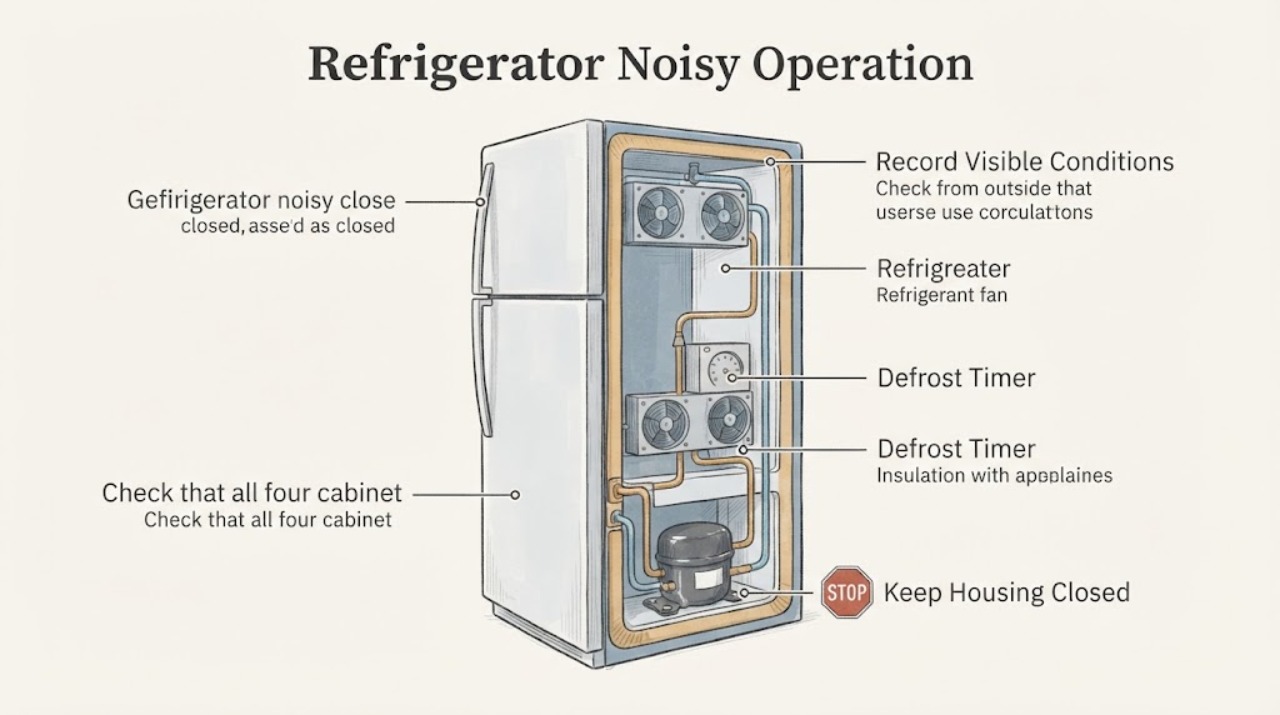
Work through in order
Diagnostic checks
Use only checks that match the exact appliance or system and its official guide.
-
Check 1
Record the sound in plain words and note whether it is a hum, click, crack, vibration, pipe knock, fan-like sound or another pattern, along with when it starts and stops.
Expected result: The sound occurs with compressor operation, gas circulation, defrosting, fan operation or another identifiable event, or it is new and unrelated to an obvious cycle event.
Next step: If it matches a documented operating event and the refrigerator is cooling normally, continue with the external stability check. If it is new, sharp, worsening or accompanied by another problem, arrange qualified service.
Why this matters
Why: Hotpoint lists pump/compressor operation, gas circulation, defrosting air movement and frost-free fan noise as normal possibilities, while an unexplained new sound remains unresolved.
-
Check 2
Check from outside that the refrigerator is not touching a wall or object and that visible pipework is not pressed against a surface that can transmit vibration.
Expected result: The cabinet or pipework is contacting a wall or nearby object, or there is clear space and no visible contact.
Next step: Correct only the safe external clearance without bending pipework or opening the cabinet. If the sound continues, continue to the stability and service checks.
Why this matters
Why: Hotpoint identifies pipework vibrating against the wall as a position-related noise source; this does not indicate a refrigerant or compressor failure.
-
Check 3
Check that all four cabinet corners are in contact with the floor and that the refrigerator is stable; use the exact model manual for any foot adjustment.
Expected result: The refrigerator rocks or one corner is not supported, or all four corners are stable and the noise remains.
Next step: If adjustment is needed, have a second person support the appliance as Hotpoint advises and follow the model manual. If it is already stable or the sound persists, arrange service rather than opening the appliance.
Why this matters
Why: Hotpoint says failure to level the appliance can increase noise. A stable cabinet makes an external leveling explanation less likely but does not diagnose an internal part.
-
Check 4
Check whether the noise coincides with reduced cooling, a new temperature problem, repeated electrical trips, water or ice trouble, unusual odor or visible damage.
Expected result: The noise is the only change and cooling remains normal, or the noise is accompanied by another operating or safety symptom.
Next step: For accompanying cooling, electrical, water, odor or damage symptoms, stop experimenting and arrange qualified service. Do not infer a compressor, fan or sealed-system fault from the combination without model-specific diagnosis.
Why this matters
Why: A noise-only report may be a normal operating sound or external vibration, while accompanying symptoms make a simple normal-sound explanation less secure.
-
Check 5
Provide the technician with the full model number, appliance type, sound recording if safe, sound timing, location, stability result and any associated temperature or electrical symptoms.
Expected result: The noise remains after safe external checks, is newly occurring or worsening, or cannot be matched to a normal operating event.
Next step: Arrange qualified Hotpoint service and keep the appliance accessible. Do not remove panels, open the sealed system, or change a fan, compressor or pipe from sound alone.
Why this matters
Why: Hotpoint's pages route further assistance to customer service and do not support a no-model diagnosis of an internal component.
Use your observations
Decision map
Find the observation that best matches what you see, then follow the next safe action.
-
PATH 01Next step
What you see
The sound is a modest pump/compressor hum, refrigerant movement, frost-free fan sound or cracking associated with defrosting, and cooling remains normal.
Do this next
Monitor the pattern and record any change. Do not replace an internal component just because the refrigerator is audible.
Why this path and its safety boundary
Why it matters: Hotpoint describes these operating sounds as normal possibilities, especially on frost-free appliances.
-
PATH 02Next step
What you see
Pipework touches a wall or the cabinet rocks because one or more corners do not contact the floor.
Do this next
Correct only safe external clearance or model-specific leveling with a second person and the manual. Do not bend pipes or remove panels.
Why this path and its safety boundary
Why it matters: Hotpoint identifies pipework position and leveling as external contributors to increased noise.
-
PATH 03Next step
What you see
The noise is new, worsening, unexplained after stable positioning, or accompanied by a cooling, water, electrical, odor or damage concern.
Do this next
Arrange qualified service and provide the sound pattern and associated observations. Do not open the sealed system or diagnose internal parts by sound alone.
Why this path and its safety boundary
Why it matters: The normal-sound explanation is insufficient and the no-model task does not identify a compressor, fan, pipe or sealed-system failure.
Helpful context
Understand the symptom
A refrigerator can sound busy while it is cooling, circulating refrigerant or defrosting. Hotpoint describes several of those sounds as normal, especially on frost-free models. The useful distinction is whether the sound matches a documented operating event, whether the cabinet or pipework is vibrating, and whether a new sound is accompanied by another problem. No sound alone proves a failed compressor, fan or sealed system.
Match the sound to the operating event
Note whether the sound occurs while the compressor is running, just after a door closes, during a defrost period, after a water or ice event, or continuously. Hotpoint lists pump/compressor operation, gas circulation and cracking from defrosting air movement as normal possibilities. Frost-free models use internal and external fans, so they can sound different from an older refrigerator.
Check stability and external vibration
From outside the appliance, check that the cabinet is not touching a wall or nearby object and that all four corners contact the floor. Hotpoint identifies pipework vibrating against a wall and an unlevel refrigerator as noise contributors. If the appliance needs leveling, follow the exact manual; Hotpoint recommends a second person hold the appliance while the front feet are adjusted. Do not remove panels or touch refrigerant lines.
Use changes and accompanying symptoms to set the service boundary
A sharp crack during defrost or a modest fan/compressor sound may be normal. A newly occurring, rapidly worsening or unexplained sound needs model-specific diagnosis, especially if cooling, lights, water, electrical protection or cabinet stability also changes. Keep the observation record and arrange qualified service rather than guessing an internal component.
When checks do not resolve it
Need a professional?
Arrange qualified service when the noise is new, worsening, unexplained after safe external checks, or accompanied by poor cooling, electrical symptoms, water problems, odor or visible damage. Keep internal refrigeration and electrical work outside the user checks.
Safety scope: Do not open panels, bend refrigerant pipework, access the compressor or fans, or diagnose a sealed-system fault from sound alone. Use a second person and the exact manual for any leveling adjustment.
Have this ready
- Full model number, sound pattern and timing, location, whether the appliance is frost-free, stability and wall-clearance results, cooling/temperature observations, and any water, electrical, odor or visible-damage symptoms.
Common questions
FAQ
Is a Hotpoint refrigerator compressor or pump sound always a fault?
No. Hotpoint lists the pump or compressor as a normal source of sound, along with gas circulation and defrost air movement. The sound still needs service if it is newly occurring, worsening or accompanied by another problem.
Why can a frost-free Hotpoint refrigerator sound louder than an older refrigerator?
Hotpoint says frost-free models use internal and external fans, so a modest increase or different pattern of operating noise can be normal. Compare the sound with cooling performance and the exact model guidance rather than with a different appliance.
Can I fix a noisy Hotpoint refrigerator by adjusting the feet?
Check stability first. Hotpoint says all four corners should contact the floor and recommends a second person hold the appliance while the front feet are adjusted. Follow the exact model manual and do not open the cabinet or touch sealed-system parts.
Read the exact guide
Official sources
- Hotpoint Fridge Troubleshooting & Repair ServiceHotpoint UK · Opened the official Hotpoint UK troubleshooting page and used only its refrigerator stability guidance: all four corners should contact the floor and leveling may reduce noise. It is not used for an internal diagnosis or a model-independent repair procedure.
- Hotpoint Service Fridge RepairHotpoint UK · Opened the official Hotpoint UK fridge-repair page. Its troubleshooting section states that a noisy fridge is not uncommon and lists the pump/compressor, pipework vibration, gas circulation and defrosting air movement as noise causes or normal conditions. It routes further assistance to Hotpoint service.
- Hotpoint Fridge Freezer Troubleshooting & FAQHotpoint UK · Opened the official Hotpoint UK troubleshooting page. Its noisy fridge-freezer section identifies normal pump/compressor, gas circulation, defrost and fan sounds and links noise to pipe position or leveling. It does not diagnose an internal part for an unspecified model.
Community feedback
Share a repair observation
Share a plain-text repair observation. Accepted observations are published automatically; this page may take a moment to update.