
On this page
Start here
Quick answer
Stop the washer-dryer immediately for smoke, a sharp burning or electrical smell, a hot plug or cord, repeated breaker trips, visible scorching, a leak near electricity, or abnormal heat. If the smell is musty and the machine is otherwise stable, identify whether it comes from the door seal, detergent drawer, drum, drain area, or drying path. Hotpoint says low-temperature washing can allow bacteria and undissolved detergent to build up, while residue and damp can collect in the seal and drawer; a blocked filter can also affect draining and drying. Clean only accessible parts as the exact manual permits, run the model's approved maintenance cycle, and leave the door open to dry. A smell that returns, comes from the motor or heater area, or appears with a fault code needs qualified service.
Work through in order
Diagnostic checks
Use only checks that match the exact appliance or system and its official guide.
-
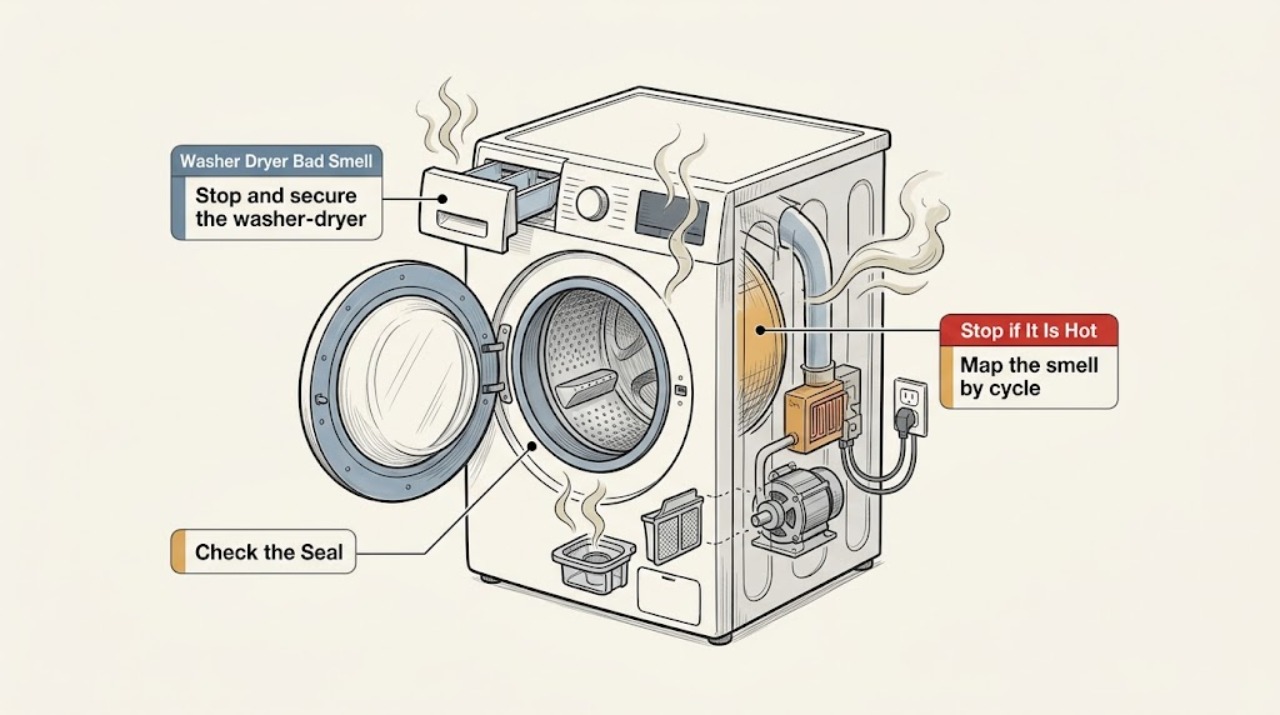
Stop and secure the washer-dryer when the smell is hazardous
Press pause or cancel and wait for the drum and drying system to stop. If there is smoke, a sharp burning or electrical odor, visible scorching, a hot plug or cord, repeated breaker trips, a leak near an electrical connection, or abnormal heat, keep people away and disconnect power only from a safe dry location. Do not touch hot panels, open the cabinet, or reach into a moving drum.
Expected result: The smell is musty or detergent-like with no heat or smoke, or it is acrid, electrical, rubber-like with rising heat, or accompanied by smoke, sparks, a fault code, or a trip.
Next step: For any hazardous sign, keep the washer-dryer off and arrange qualified appliance service. Do not run another wash or dry cycle to reproduce the smell. If the area is safe and the odor is plainly musty, continue with external checks.
Why this matters
Why: A hygiene or residue odor can be investigated after the appliance is stopped and safe. Heat, smoke, electrical signs, or a persistent rubber or burning odor can indicate a heater, motor, belt, wiring, or airflow fault and is a stop condition.
-
Map the smell by cycle and location
With the machine stopped and cool, note whether the smell appears during washing, draining, spinning, or drying. From the outside and at accessible openings only, identify whether it is strongest at the door seal, dispenser drawer, drum, drain area, lint-filter area, rear or side air outlet, plug, or control area. Do not remove panels or place hands near the heater, motor, belt, fan, or pump.
Expected result: The odor is strongest around damp laundry or the seal, in the drawer, at the drain filter, in the drying airflow, or near an electrical or motor area.
Next step: Follow the matching branch and record the smell's timing, location, and whether it occurs only on dry cycles. Stop if the smell intensifies or any heat, smoke, or electrical warning appears.
Why this matters
Why: A damp or residue location supports cleaning and drying maintenance. A drying-path odor can relate to lint or restricted airflow, while an odor near the motor, heater, plug, or controls requires service rather than surface cleaning.
-
Inspect and clean the accessible seal and dispenser
After power is off and the surfaces are cool, inspect the door seal folds and dispenser drawer for lint, trapped fabric, detergent film, or standing moisture. Remove only plainly accessible residue; clean the drawer as the model manual permits and dry it before refitting. Wipe the seal with a suitable damp cloth or approved cleaner, and never mix cleaning chemicals or force a seal that is torn or loose.
Expected result: Residue, mildew-like material, or trapped water is visible, the seal or drawer is damaged, or both areas are clean and dry.
Next step: If accessible residue is removed and the odor fades, keep the door and drawer slightly open between uses as the manual allows. If the seal is damaged, water leaks, or the smell persists, arrange service.
Why this matters
Why: Hotpoint identifies the door seal and dispenser drawer as common places for residue and damp to accumulate. A damaged seal can retain moisture or cause leaks and is not fixed by adding more cleaner.
-
Use the approved maintenance cycle for a musty odor
Remove all laundry and check the exact Hotpoint manual for a washer-clean or service-wash program and its permitted cleaning product. Run only the model-approved empty maintenance cycle; do not add extra detergent, combine bleach with other cleaners, or use a temperature or chemical treatment not specified for the appliance. Let the interior air-dry afterward with the door open as permitted.
Expected result: The odor is gone after the approved empty cycle, returns quickly, remains despite a clean drum, or becomes hot, acrid, or electrical during the cycle.
Next step: Use the correct detergent amount and remove wet laundry promptly. If the odor returns or changes character, stop using the appliance and request service rather than repeating increasingly strong cleaning cycles.
Why this matters
Why: A successful maintenance cycle supports residue or damp as the cause. Rapid recurrence can indicate a hidden seal, drain, detergent, or airflow issue. A hot or electrical odor during the cycle overrides cleaning and requires an immediate stop.
-
Check the accessible drain filter and hose safely
If water remains in the drum, clothes smell sour, or drainage is slow, switch the machine off and unplug it from a safe dry location. Once the water is cool and the exact manual permits access, place towels and a container below the filter, remove only the user-accessible filter, rinse visible lint or residue, and refit the cap securely. Check the accessible drain hose for a kink; do not open a hot filter path, reach into a pump, or remove fixed covers.
Expected result: The filter contains lint or sludge, the hose is kinked, water drains normally, or water is hot, the filter is inaccessible, or a leak appears after refitting.
Next step: Clean and refit only the accessible part allowed by the manual, then check for leaks before a cautious test. If the drain fault or odor remains, keep the appliance off and arrange service.
Why this matters
Why: Hotpoint links a blocked filter with odor, slower drainage, and clothes taking longer to dry. Hot water, an inaccessible filter, or a leaking cap creates a safety boundary and needs model-specific help.
-
Check lint and drying airflow without opening the cabinet
For an odor that appears only while drying, stop the program and let the appliance cool. Clean the user-accessible lint filter or filters according to the model manual, remove visible lint from the door opening, and make sure the external air path is not blocked. Do not bypass a filter, spray cleaner into the air path, or open the heater, fan, or rear cover.
Expected result: Lint is built up, drying has become slower, airflow is restricted, or the filter and external path are clean but the smell returns on dry cycles.
Next step: Dry the filter fully and follow the manual before a supervised test. If the smell is hot, acrid, smoky, or recurrent with a clean airflow path, stop using the drying function and request service.
Why this matters
Why: Hotpoint advises regular lint-filter cleaning for efficient dryer operation. Lint, poor airflow, or residue can make a dry-cycle odor more likely, while a recurrent odor with a clean path can involve the heater, fan, motor, or wiring.
-
Record evidence and escalate persistent or electrical odors
Record the full model information, cycle and setting, whether the drum was empty, exact odor description, first location, duration, lint and filter condition, drain status, recent installation or repair, fault code, heat, smoke, leaks, and breaker behavior. Do not open the cabinet, test energized wiring, replace a heater or motor speculatively, or continue repeated cycles.
Expected result: The smell returns after safe cleaning, comes from the rear or control area, appears during heating or drying, is paired with a fault code, or caused a trip, smoke, visible damage, or abnormal heat.
Next step: Keep the appliance off, or disable only the drying function if the manual explicitly permits safe operation and there is no hazardous sign; otherwise stop all use and contact Hotpoint support or a qualified appliance technician with the recorded evidence.
Why this matters
Why: Persistent or localized hot odors can involve a heater, fan, motor, belt, pump, control, or wiring fault that cannot be confirmed safely from external cleaning. Repeated operation can worsen a fault or fire risk.
Use your observations
Decision map
Find the observation that best matches what you see, then follow the next safe action.
-
PATH 01Next step
What you see
The odor is musty, sour, or detergent-like, with no smoke, heat, leak, electrical warning, or abnormal machine behavior.
Do this next
Arrange qualified service and follow the exact model guidance.
Why this path and its safety boundary
Why it matters: If the smell fades, remove wet laundry promptly and use the manual's routine cleaning schedule; rapid recurrence needs further assessment.
-
PATH 02Next step
What you see
The smell is linked with standing water, slow drainage, wet clothes, or a dirty accessible filter or hose.
Do this next
Arrange qualified service and follow the exact model guidance.
Why this path and its safety boundary
Why it matters: A permitted accessible blockage may be cleared; hot water, an inaccessible pump, a leak, or a recurring odor requires service.
-
PATH 03Next step
What you see
The odor occurs only during drying, and visible lint or a restricted external air path is present without smoke or electrical signs.
Do this next
Arrange qualified service and follow the exact model guidance.
Why this path and its safety boundary
Why it matters: If the odor does not return, maintain the filter as directed; a returning hot or acrid smell requires the drying function to remain off and service.
-
PATH 04Next step
What you see
There is smoke, a sharp burning or electrical smell, visible scorching, a hot cord or plug, a leak near electricity, abnormal heat, repeated breaker trips, or a fault code with heating or motor behavior.
Do this next
Arrange qualified service and follow the exact model guidance.
Why this path and its safety boundary
Why it matters: The washer-dryer remains out of service until the heater, fan, motor, belt, pump, controls, wiring, and airflow are assessed safely.
Helpful context
Understand the symptom
Treat a burning smell differently from a musty smell
Musty or sour odors often track damp fabric, detergent residue, a dirty seal, drawer, drum, or drain filter. A burning, acrid, or electrical odor is not a cleaning diagnosis: stop the cycle, keep clear of smoke and hot surfaces, and isolate power only from a safe dry location. Do not keep restarting the appliance to see whether the smell disappears.
Washer-dryer designs and manuals vary
The location of the drain filter, lint filters, condenser or air path, heater, and service access differs by Hotpoint model. Use the model-matching manual for any cleaning cycle, filter access, detergent guidance, or drying maintenance. Do not pour chemicals into an unknown opening, combine cleaners, or remove fixed covers.
When checks do not resolve it
Need a professional?
Request service for a persistent or localized odor from the heater, motor, pump, rear cabinet, controls, or drying path, or for any smoke, electrical symptom, heat damage, leak near electricity, fault code, or repeated trip.
Common questions
FAQ
Why does my Hotpoint washer-dryer smell musty?
Hotpoint says damp, mildew, bacteria, dirt, limescale, and soap residue can build up with repeated cycles, especially around the door seal and dispenser drawer. Clean accessible areas as the manual permits, run the approved empty maintenance cycle, clean the permitted filter, and leave the door open to dry.
Why does the smell appear only when drying?
Check whether lint is building up or airflow has reduced, and clean only the user-accessible filter or air path specified by the exact manual. A hot, acrid, smoky, or electrical smell, or one that returns with a clean filter, is a stop condition requiring service.
Should I keep running a Hotpoint washer-dryer with a burning smell?
No. Stop the cycle and keep it off for smoke, a sharp burning or electrical odor, visible scorching, abnormal heat, a hot cord or plug, repeated breaker trips, or a leak near electricity. Isolate power only from a safe dry location and arrange qualified service; do not open the cabinet or repeat the test.
Can a blocked filter cause a bad smell?
Yes. Hotpoint says a blocked washing-machine filter can leave clothes smelling unclean and can slow draining, which may also make clothes take longer to dry. Power down safely and clean only the accessible filter permitted by the model manual; stop if water is hot, access is unsafe, or a leak appears.
Read the exact guide
Official sources
- Hotpoint’s Washing Machine Cleaning GuideHotpoint UK Appliances Limited · Hotpoint's official cleaning guidance for washing machines and washer-dryers; use the seal, drawer, drum, filter, residue, and drying advice only where the exact model manual permits.
- Hotpoint Service Help and AdviceHotpoint UK Appliances Limited · Hotpoint's official support hub; use its lint-filter, installation, manuals, and support boundaries for compatible Hotpoint laundry appliances.
- Washing Machine Troubleshooting - Quick fixes & Tips - HotpointHotpoint UK Appliances Limited · Hotpoint's official troubleshooting page; its odor, detergent, cleaning, and model-manual guidance is used for the washing side of a washer-dryer.
- Hotpoint Washer-Dryer Error Codes - Quick Troubleshooting GuideHotpoint UK Appliances Limited · Hotpoint's official washer-dryer error-code guide; use it to recognize heating, motor, pump, control, and drying faults and defer to the exact model manual.
Community feedback
Share a repair observation
Share a plain-text repair observation. Accepted observations are published automatically; this page may take a moment to update.