
On this page
Start here
Quick answer
A bad smell from an LG washer-dryer is usually separated by odor and timing: musty odor after wet laundry sits points toward moisture, gasket or tub residue, while an odor during drying can come from the hot gasket, lint or dust near the heater, or sewer gas if the drain hose remains connected during drying. Stop immediately for smoke, sharp electrical or melting-plastic odor, a gas smell, sparking, unusual heat, or a tripped circuit. For an ordinary musty smell, remove laundry promptly, wipe accessible gasket and door surfaces, leave the door and dispenser open to dry, clean the drain pump filter only when the model and manual permit it, and run the exact model's Tub Clean cycle with a compatible oxygen-based washer cleaner. Never mix cleaners or use chlorine or acidic products contrary to LG's guidance. If the odor remains after repeated manual-approved cleaning, or comes from the electrical or heater area, keep the appliance out of service and request qualified repair.
Before you begin
Safety first
- This article supports safe odor classification, ordinary accessible cleaning, and model-approved Tub Clean or filter procedures only. Stop for burning, electrical, gas, smoke, abnormal heat, leaks, or standing water near electrical parts. Do not open the cabinet or access a heater, wiring, motor, or pump internally.
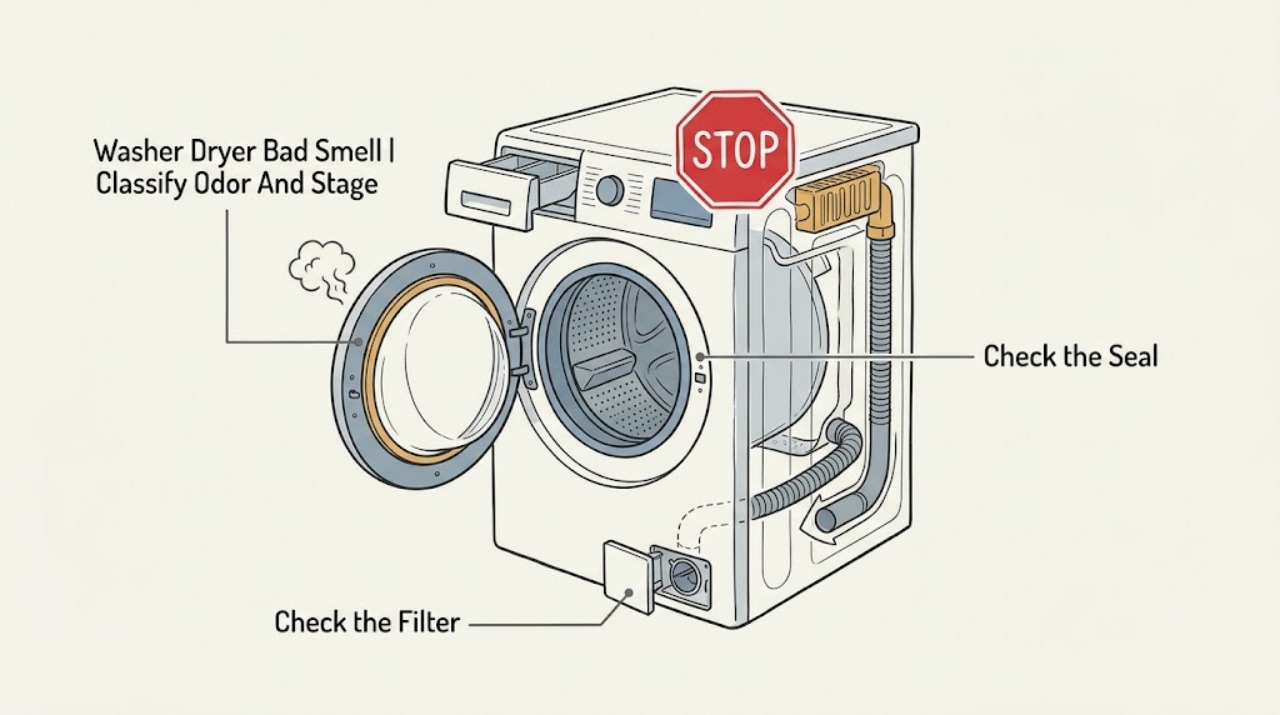
Work through in order
Diagnostic checks
Use only checks that match the exact appliance or system and its official guide.
-
Check 1
Stop the cycle and record whether the smell is musty, sour, sewer-like, detergent-like, rubbery, burning, electrical, or gas-like. Note whether it appears after washing, while draining, during drying, or while the machine is idle, and whether it comes from the door gasket, dispenser, drain area, rear, or lower cabinet.
Expected result: Musty odor after wet laundry, sewer odor during drying, and burning odor during a heated cycle lead to different checks; smoke, sparks, or melting are hazards rather than cleaning symptoms.
Next step: For smoke, gas odor, electrical odor, melting, unusual heat, or a repeated trip, stop and isolate the machine only when safe. Otherwise continue with the matching ordinary odor check.
Stop if: Do not sniff closely at the appliance, restart a burning smell, or reach behind a wet machine.
Why this matters
Why: Odor timing identifies whether moisture and residue, drain routing, or the drying and electrical area is the most plausible starting point without proving a failed component.
-
Check 2
For a musty odor, remove laundry promptly, turn the machine off, and inspect the accessible door gasket, door glass, and detergent drawer for hair, lint, residue, or retained water. Wipe only the visible surfaces with a method allowed by the LG manual, then leave the door and drawer open to dry.
Expected result: Foreign material in the gasket groove or residue around the drum and drawer can retain moisture; no visible residue with a persistent smell shifts the check toward drainage or internal buildup.
Next step: Continue with the model-approved Tub Clean and drain checks. Do not pull the gasket out, force the door, or remove a panel.
Stop if: Stop for a torn gasket, damaged glass, a locked door with water inside, mold that cannot be safely contained, or water near electrical parts.
Why this matters
Why: LG says wet laundry, gasket contamination, and detergent residue can contribute to odor, but wiping the visible gasket does not prove that the tub, drain filter, or concealed hose is clean.
-
Check 3
If the LG model is a front-load washer or combo and its manual identifies a user-accessible drain pump filter, empty and turn off the machine, disconnect power safely, and follow the model procedure with a shallow pan or towels. Do not open a filter on a top-load model or without confirming the procedure.
Expected result: LG says a clogged drain pump filter can cause poor draining and leave water in the drum, and that the filter collects lint and small objects. A large, hot, foul, or uncontrolled flow is not an ordinary filter check.
Next step: Clean and reseat the filter only as the manual directs, then check whether drainage and odor improve. Stop and arrange service if the filter will not seal, water continues to remain, or the odor is not musty.
Stop if: Stop for uncontrolled water, sewage contamination, a damaged filter seal, electrical exposure, or any need to remove a cabinet panel.
Why this matters
Why: Retained water can sustain musty odor, but a clear filter or a model without that filter leaves the drain hose, pump, tub, or another source unresolved.
-
Check 4
With the drum empty and the door and dispenser able to close normally, choose the exact model's Tub Clean cycle. Use only the oxygen-based washer cleaner and amount specified by the cleaner label and LG guidance; if the model lacks Tub Clean, follow its manual's equivalent sanitation cycle instead.
Expected result: A musty smell may lessen after a complete cleaning cycle, while heavy residue, persistent odor, overflow, unusual noise, or a new burning smell means the cleaning process should stop.
Next step: Ventilate and dry the washer after the cycle by leaving the door and dispenser open as the model guidance permits. If odor persists after the recommended repeated cleanings, request repair.
Stop if: Do not combine cleaners, use chlorine or acidic products contrary to LG guidance, add laundry, or continue if smoke, harsh odor, leak, or abnormal heat appears.
Why this matters
Why: LG says Tub Clean removes detergent buildup and residue and recommends regular use; it does not establish that repeated odor is safe to solve with more cleaner when an internal or electrical source is possible.
-
Check 5
For an odor that occurs only during drying, record whether the drain hose remains connected to the household drain and whether the lint, door gasket, and surrounding accessible surfaces are clean and dry. Change drain routing only as the exact LG manual permits; do not move a built-in combo or open the heater area.
Expected result: LG notes that a drain hose connected during drying can allow sewer gases to rise because of temperature differences, while heat can warm the rubber gasket and lint or dust near the heater can smell during drying.
Next step: Follow LG's model-specific drying and drain instructions, clean only accessible lint and gasket surfaces, and stop using the drying function if the odor persists or is sharp, electrical, or accompanied by heat damage.
Stop if: Stop for smoke, visible lint ignition, melting, a hot cord or outlet, a gas odor, or any need to access the heater or cabinet.
Why this matters
Why: Drain routing, normal new-appliance odor, gasket heat, or lint may explain a drying odor, but smoke, melting, or a persistent electrical smell is not a routine drying condition.
-
Check 6
After a permitted cleaning cycle finishes without a hazard, open the door and detergent dispenser to ventilate and dry remaining moisture, and remove wet laundry promptly after future washes. Do not leave the appliance running unattended while checking whether the smell returns.
Expected result: A smell that fades as the gasket, drum, and drawer dry supports a moisture or residue explanation; a smell that returns immediately, becomes stronger, or appears with heat or electrical symptoms requires service.
Next step: Monitor one permitted wash or dry use only when the machine is intact and odor-free. Stop at any recurrence of burning, melting, gas, smoke, leak, or unusual heat and keep the appliance out of service.
Stop if: Do not continue monitoring an odor that is burning, electrical, gas-like, or paired with a trip, smoke, leak, or abnormal temperature.
Why this matters
Why: Drying and ventilation can reduce ordinary musty buildup, but they cannot repair a blocked drain, concealed contamination, heater, motor, wiring, or control fault.
-
Check 7
Record the exact LG model, odor description, cycle stage, location, load history, drain and filter observations, cleaner used, cleaning cycles completed, and any heat, smoke, leak, noise, or electrical symptom. Use the LG support route for model-specific guidance.
Expected result: A clear record can distinguish musty moisture, a drain-related odor, a drying-only smell, and a burning or electrical condition that requires a technician.
Next step: Request qualified repair when odor persists after the manual-approved cleaning path, returns immediately, comes from the lower or electrical area, or is paired with poor drainage, a leak, smoke, or abnormal heat.
Stop if: Stop all user troubleshooting if the appliance cannot be safely isolated or the odor is worsening.
Why this matters
Why: The record helps service assess the tub, gasket, drain pump, hose, heater, lint path, motor, wiring, or control, but does not identify a replacement part by odor alone.
Use your observations
Decision map
Find the observation that best matches what you see, then follow the next safe action.
-
PATH 01Safety boundary
What you see
The odor is musty after washing or after wet laundry sat in the drum, with no smoke, heat, leak, or electrical symptom.
Do this next
Remove laundry promptly, wipe accessible gasket and drawer areas, check the applicable drain filter, and run the model-approved Tub Clean cycle with a compatible oxygen-based cleaner.
Why this path and its safety boundary
Why it matters: Moisture, gasket or drum residue, detergent buildup, or retained water from poor draining is plausible.
Safety stop: Stop if odor persists after the recommended cleanings, the gasket is damaged, or water remains in the drum.
-
PATH 02Safety boundary
What you see
The odor appears only during drying and is not smoke, gas, or a sharp electrical smell.
Do this next
Follow the model's drying and drain instructions, clean accessible lint and gasket surfaces, and stop the drying function if odor persists or intensifies.
Why this path and its safety boundary
Why it matters: LG notes that a new appliance, heated rubber gasket, lint or dust near the heater, or drain-hose routing can contribute to drying odor.
Safety stop: Stop for smoke, melting, a hot cord or outlet, visible ignition, or abnormal heat.
-
PATH 03Safety boundary
What you see
Musty odor remains after the applicable gasket, filter, ventilation, and repeated Tub Clean procedures.
Do this next
Keep the appliance out of service if odor is strong or accompanied by water and request qualified LG repair; provide the cleaning history and model.
Why this path and its safety boundary
Why it matters: Concealed residue, poor drainage, a hose or pump issue, or another internal condition remains possible.
Safety stop: Do not add stronger or mixed chemicals, remove panels, or keep repeating cycles indefinitely.
-
PATH 04Safety boundary
What you see
The smell is burning, melting-plastic, electrical, gas-like, or paired with smoke, sparks, abnormal heat, or a tripped circuit.
Do this next
Stop the cycle, leave the area as appropriate for a gas or fire hazard, and isolate power only when safe without touching wet or damaged electrical parts. Arrange qualified repair or the local emergency gas or fire response.
Why this path and its safety boundary
Why it matters: This is a safety hazard, not ordinary tub maintenance.
Safety stop: Do not restart, sniff closely, open the cabinet, clean the heater, or handle a hot cord or outlet.
-
PATH 05Safety boundary
What you see
The odor fades after the model-approved cleaning and drying routine, with no leak, heat, electrical, or drainage symptom.
Do this next
Keep the door and dispenser ventilated between uses, remove laundry promptly, and follow the model's maintenance schedule; stop if odor returns with another symptom.
Why this path and its safety boundary
Why it matters: Moisture or residue may have been the cause, but recurrence is not ruled out.
Safety stop: Do not continue use if a burning, gas, smoke, leak, or abnormal heat symptom appears.
Helpful context
Understand the symptom
Identify the odor before cleaning anything
A damp or musty smell after a load sits is a different problem from a sewer-like smell during drying or a burning, electrical, or melting odor. LG notes that wet laundry left in the washer can become musty, that residue and foreign material can collect around the drum and gasket, and that drain blockage can leave water behind. During drying, heat can warm the gasket and lint or dust near the heater can smell. Record the stage, location, and whether the odor follows washing, draining, or drying before choosing a cleaning step.
Use cleaner and electrical precautions together
Do not mix oxygen, chlorine, acidic, vinegar, or other cleaning products. Follow the cleaner label and LG's model-specific instructions, and keep the machine empty for a Tub Clean cycle. For a burning, melting, gas, or electrical smell, stop the cycle and disconnect power only if the plug and area are dry and safe; never open the cabinet or inspect a heater or wiring yourself.
Safety boundary
Stop conditions
- Stop for smoke, sparks, melting plastic, burning or electrical odor, gas odor, a hot cord or outlet, abnormal heat, or a tripped circuit.
- Stop for a leak, standing water near electrical parts, sewage overflow, a damaged gasket, or a filter or drain procedure that cannot be safely contained.
- Do not mix cleaners, use chlorine or acidic products contrary to LG guidance, open the cabinet, access the heater, or bypass a safety device.
- If odor continues after the model-approved cleaning path or returns immediately, keep the appliance out of service and request qualified repair.
When checks do not resolve it
Need a professional?
Request qualified LG or appliance repair when odor remains after the applicable gasket, drain-filter, ventilation, and repeated Tub Clean steps, returns immediately, comes from the lower or heater area, or is accompanied by poor drainage, standing water, a leak, smoke, burning or electrical smell, abnormal heat, or a tripped circuit. Use the local emergency or gas-safety route for a gas odor.
Safety scope: This article supports safe odor classification, ordinary accessible cleaning, and model-approved Tub Clean or filter procedures only. Stop for burning, electrical, gas, smoke, abnormal heat, leaks, or standing water near electrical parts. Do not open the cabinet or access a heater, wiring, motor, or pump internally.
Common questions
FAQ
Why does my LG washer-dryer smell musty?
Wet laundry left inside, moisture and residue around the gasket or drum, and poor draining from a clogged filter can contribute to musty odor. Remove laundry promptly, dry accessible surfaces, use the model-approved filter procedure if applicable, and run Tub Clean with a compatible oxygen-based cleaner.
Why does my LG washer-dryer smell during drying?
LG notes that a new appliance, heated gasket, lint or dust near the heater, or sewer gas entering through a connected drain hose can cause a drying odor. Follow the exact model's drying and drain instructions, but stop for smoke, melting, gas, sharp electrical odor, or abnormal heat.
Can I use bleach and vinegar together to clean an LG washer?
No. Do not mix cleaning products. LG recommends a compatible oxygen-based washing-machine cleaner for Tub Clean and warns that chlorine-based or acidic cleaners may discolor or corrode the appliance. Follow the cleaner label and model manual.
Does every LG washer have a drain pump filter?
No. LG says the drain pump filter is present on front-load washers and combo units, not top-load washers. Confirm the exact model and manual before opening any access panel; the unit should be empty, off, and drained of visible water for an applicable procedure.
When should I call for LG washer-dryer odor repair?
Request repair when odor persists after the applicable cleaning path, returns immediately, comes from the heater or electrical area, or is paired with poor drainage, standing water, leak, smoke, burning or gas odor, abnormal heat, or a tripped circuit. Do not open the cabinet.
Read the exact guide
Official sources
- LG Washer - Troubleshooting Odor / BuildupLG USA Support · Official LG USA support article for washers and washer-dryer combos; exact model procedures and cleaner instructions apply.
- LG USA SupportLG USA Support · Official LG support portal used to locate model-specific documentation and request repair when safe maintenance does not resolve the issue.
- [LG Front Load Washer] Burning Smell During UseLG USA Support · Official LG USA support article for front-load washers and washer-dryer combos; model content and heated-cycle behavior vary.
- [LG Washer Dryer] Strange Smell After DryingLG USA Support · Official LG USA support article for washer-dryer combos and washers; guide content can vary by model.
- LG Washer - How to Clean the Tub of Your LG Washing MachineLG USA Support · Official LG USA support article for washer-dryer combos and washers; images and controls vary by model.
- LG Washer – How to Clean the Drain Pump FilterLG USA Support · Official LG USA support article that explicitly limits this filter to front-load washers and combo units; top-load models do not have this filter.
Community feedback
Share a repair observation
Share a plain-text repair observation. Accepted observations are published automatically; this page may take a moment to update.