
On this page
Start here
Quick answer
Treat a severe smell from a Hotpoint BHWD129 as a classification problem, not something to mask with another wash. First stop using the washer dryer and identify whether the odor is musty and concentrated at the door seal or dispenser, sewer-like near the waste connection, confined to drying and hot damp air, or hot plastic, electrical, solvent-like, gas-like, smoky, or burning. The first group can support a dry, power-off inspection of visible residue; the second needs a drain or plumbing handoff; the third needs the exact model installation and service boundary; and the last group is an immediate stop-use and professional or emergency safety issue. Hotpoint identifies low-temperature use, bacteria, detergent build-up, damp, mildew, and residue at the seal or drawer as possible laundry odors, but the assigned BHWD129 is an older model whose full rating-plate identity should be confirmed before using model-specific instructions.
Before you begin
Safety first
- User checks are limited to safe smell classification, rating-plate and location recording, dry-position observations, and ordinary accessible cleaning allowed by the exact manual. Do not mix chemicals, pour drain products into the appliance, run a drying cycle to mask an odor, touch wet electrical areas, disconnect pressurized hoses, move the built-in machine, remove panels, reach into the pump, test live circuits, or return the appliance to use after a hazardous smell.
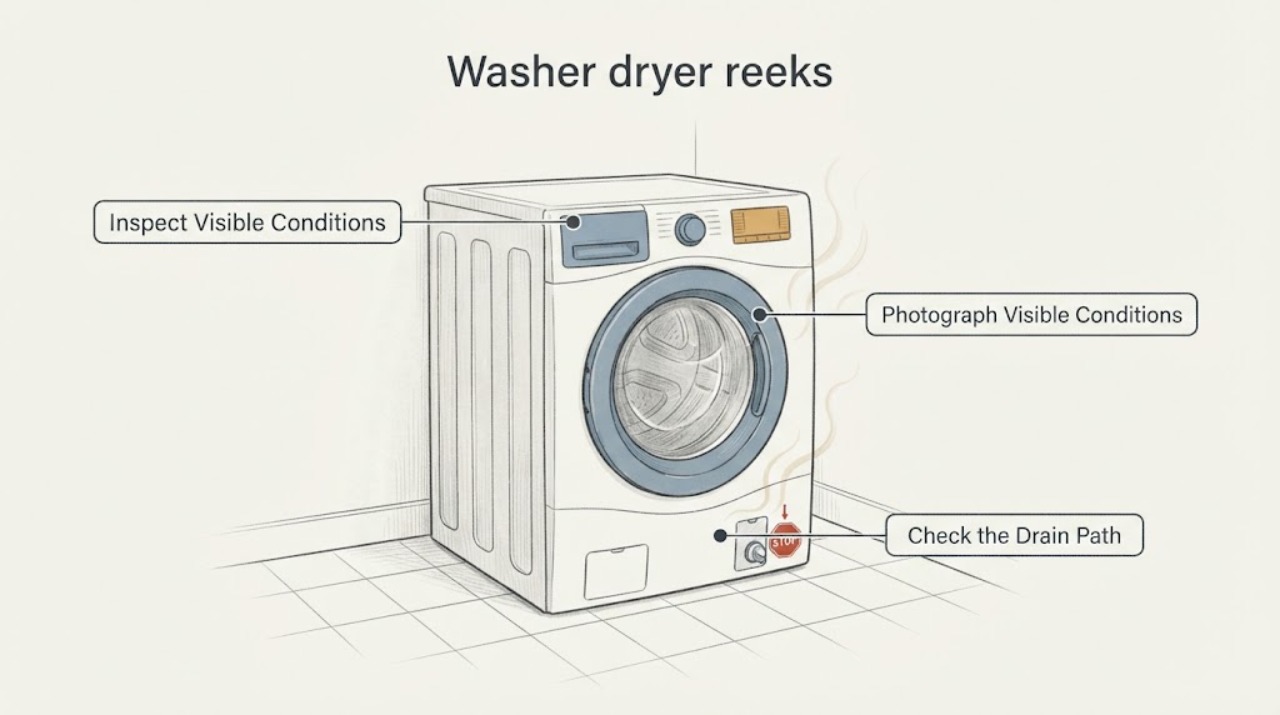
Work through in order
Diagnostic checks
Use only checks that match the exact appliance or system and its official guide.
-
Check 1
Stop the programme and classify the smell from a safe position without opening panels or deliberately heating the appliance. Compare a musty or mouldy odor, a sewer or drain odor, detergent or chemical odor, and hot plastic, electrical, solvent-like, gas-like, smoky, or burning odor. If the smell is hot, acrid, smoky, fuel-like, or associated with unusual heat or a protective-device trip, keep clear and do not switch, relight, or run the washer dryer.
Expected result: The smell is damp or musty; strongest at the door or drawer; strongest at the waste pipe; present only during drying; or hot, electrical, chemical, gas-like, smoky, or burning.
Next step: For a hazardous odor, leave the appliance off, keep people away, and use the landlord, qualified appliance or electrical professional, or local gas or emergency route appropriate to the hazard. For a non-hazardous odor, keep the appliance idle and continue only with dry-position observations.
Stop if: Do not mask the odor, repeat a wash or dry programme, operate switches near fumes, inspect wiring, or attempt a gas-leak or electrical test.
Why this matters
Why: The category changes the safe next step. Hotpoint's ordinary laundry odor guidance concerns residue, damp, mildew, bacteria, and detergent build-up; hot, electrical, fuel-like, smoke, or burning indications are not a cleaning diagnosis. Water, power, and any fire or gas risk must be handled before troubleshooting.
-
Check 2
Photograph the rating plate and record the full model, suffix, and serial number. From outside the cabinet, note where the odor is strongest: the folded door seal, dispenser drawer, drum opening, lower front, waste connection, rear area, or only when the drying function has been used. Do not move the built-in appliance just to reach a hidden label.
Expected result: The label reads BHWD 129 UK/1 or another suffix; the odor is localized at the seal or drawer; the waste connection; the rear; or only the drying phase; or the source remains unknown.
Next step: Give the complete identity, odor location, timing, and photographs to the landlord or service provider. Do not choose a part or drying procedure from the short model name or a similar appliance.
Stop if: Stop if identification requires moving the appliance, reaching behind a wet cabinet, removing trim, or touching wiring.
Why this matters
Why: Hotpoint's official material identifies BHWD 129 UK/1 as a washer-dryer part-fitment identity and says model fit must be checked. Location and phase separate visible laundry residue from plumbing odor and from a model-specific drying or internal service question, but do not prove a failed component.
-
Check 3
Only when the plug, hands, floor, and surrounding area are dry and accessible, isolate power before looking at visible user-accessible surfaces. Inspect the door-seal fold, dispenser drawer area, drum rim, and lower filter cover if the exact manual identifies it as user-accessible. Look for slime, lint, detergent residue, stagnant water, mould-like growth, a displaced or torn seal, or a wet floor; do not reach into the pump or remove cabinet panels.
Expected result: Residue or dampness is visible at the seal or drawer; the seal is damaged; the lower cover is wet; the drum retains water; or all visible areas are dry.
Next step: For light visible residue and no hazard, clean only the accessible surface with warm soapy water, rinse the cloth, and dry the area; follow the exact manual for any drawer or filter removal. For damage, retained water, hidden contamination, or a wet base, leave water and power off and request appliance or plumbing service through the landlord.
Stop if: Do not mix chemicals, pour drain products into the appliance, scrape the seal, force a drawer or filter, or clean a wet electrical area.
Why this matters
Why: Hotpoint's cleaning guide places common odor residue at the rubber door seal and dispenser drawer and describes unplugged, accessible cleaning and filter-care boundaries. A torn seal, hidden mould, retained water, or a wet lower cover can indicate a leak or drainage problem rather than a surface-cleaning problem.
-
Check 4
From a dry position, compare the odor around the visible drain hose, standpipe, sink trap, or waste connection without pulling the washer dryer forward or disconnecting a hose. Note whether the drum is left with water, the programme ends with water, the waste pipe gurgles, or the odor appears after pump-out. Do not pour chemicals into the waste or appliance.
Expected result: The smell is sewer-like at the waste route, the drum retains water, gurgling or slow household drainage is present, the drain route is visibly loose, or the route is dry and the odor is stronger at the seal or drawer.
Next step: Keep the water supply closed if water is accumulating, document the route, and ask the landlord to arrange the appropriate appliance or plumbing professional. If the route is dry and there is no retained water, continue with the odor-location record rather than dismantling the drain path.
Stop if: Do not disconnect a pressurized hose, pull out the built-in appliance, insert tools into a hidden drain, open the pump, or run a cycle as a pressure test.
Why this matters
Why: A drain or household waste pattern makes stored water, a waste-connection problem, or a plumbing issue more likely than ordinary seal residue. Hotpoint's troubleshooting guidance treats drainage as a separate check and advises using the manual and service route when the issue is not safely resolved; a dry waste route shifts attention back to the appliance or another odor source.
-
Check 5
Record whether the odor occurs during wash, after the machine sits closed, or only during drying, and whether the nearby air is merely damp or unusually hot. Check only visible room ventilation and the appliance's external surroundings; do not assume BHWD129 has a particular exhaust arrangement without the matching manual.
Expected result: The odor is present after the door stays closed; follows low-temperature or small-load use; occurs only with drying; or comes with unusually hot air, plastic smell, smoke, scorching, or a protective-device trip.
Next step: For a non-hazardous damp odor, leave the door and drawer ajar only when safe and permitted by the rental arrangement, let visible surfaces dry, and ask for the exact manual's maintenance cycle. For a drying-only or hot odor, stop the drying function and arrange model-specific service; report any room-ventilation or installation concern to the landlord.
Stop if: Do not run a drying cycle to burn off an odor, block or improvise an air path, dismantle the appliance, or continue after unusual heat, smoke, scorching, or electrical odor.
Why this matters
Why: Closed-door damp and residue support a maintenance branch. A drying-only odor requires the exact washer-dryer installation and service information, because the drying design and airflow cannot safely be inferred from the series name. Unusual heat, scorching, smoke, or electrical symptoms are stop-use conditions, not ventilation experiments.
-
Check 6
Prepare a landlord and service handoff containing the full model identity, smell category, exact location, wash or drying phase, retained-water or waste observations, visible residue or damage, photographs, and any protective-device or heat history. Do not order a seal, hose, filter, pump, or control part from the odor alone.
Expected result: The odor returns after visible cleaning and drying; the source is hidden; the appliance leaks or retains water; a drying-only symptom persists; or the smell is hazardous or cannot be classified.
Next step: Leave the appliance out of service when the source is unresolved or hazardous, keep the water supply closed where water is accumulating, and arrange qualified service through the landlord. Preserve photos and do not discard evidence of heat, smoke, leak, or contamination.
Stop if: Do not bypass a protective device, open the cabinet, dismantle a pump or seal, mix chemicals, conceal the odor, or return the washer dryer to use while a hazardous or unresolved smell remains.
Why this matters
Why: A returning or hidden odor needs an appliance or plumbing diagnosis. Hotpoint's service material directs unresolved washer-dryer problems to model-specific literature and professional help, while its parts page requires fitment checking against the model. A rental property also needs the landlord's documented repair route and does not justify invasive tenant work.
Use your observations
Decision map
Find the observation that best matches what you see, then follow the next safe action.
-
PATH 01Next step
What you see
The odor is musty or mould-like, strongest at the door-seal fold or dispenser, with visible residue and no active leak, unusual heat, smoke, or electrical odor.
Do this next
With power isolated safely, clean only accessible surfaces using the exact manual's ordinary care instructions, dry them, and leave the door or drawer open only if safe and allowed. If the smell returns or mould is hidden or extensive, request landlord-arranged service.
Why this path and its safety boundary
Why it matters: Damp, bacteria, detergent build-up, and residue are more plausible than a confirmed internal component failure; the smell should not automatically be treated as a drain fault.
-
PATH 02Next step
What you see
The odor is sewer-like near the standpipe or sink waste, the drum retains water, or the household drain gurgles or drains slowly.
Do this next
Keep the appliance idle and arrange the appropriate plumber or appliance technician through the landlord. Do not disconnect hoses, pour chemical drain treatment into the appliance, or run another cycle to reproduce the smell.
Why this path and its safety boundary
Why it matters: A waste or drainage path is more likely than simple door-seal residue, but the observation cannot identify whether the appliance drain, connection, or household plumbing is at fault.
-
PATH 03Next step
What you see
The odor is hot plastic, electrical, solvent-like, gas-like, smoky, or burning, or it comes with abnormal heat, sparks, smoke, or a protective-device trip.
Do this next
Stop use and keep clear. From a dry safe location isolate power only if that can be done without touching the appliance or wet areas; otherwise call the qualified professional or emergency/gas service appropriate to the hazard, and notify the landlord.
Why this path and its safety boundary
Why it matters: This is a fire, electrical, chemical, or gas safety concern, not a cleaning branch. The fact that the smell later disappeared does not prove the appliance is safe.
-
PATH 04Next step
What you see
The odor appears only during drying, especially with unusually hot air, persistent dampness, scorching, or a smell from the rear or hidden cabinet area.
Do this next
Stop using the drying function and give the landlord the full rating-plate identity, phase, location, and heat observations for model-specific service. Do not run the dryer again to compare loads or dismantle the cabinet.
Why this path and its safety boundary
Why it matters: A model-specific drying, installation, airflow, or internal fault remains possible. BHWD129's short identity does not safely establish its exact drying arrangement or a replaceable part.
-
PATH 05Next step
What you see
The source cannot be localized, the model suffix is missing, visible areas are dry, or the smell returns after ordinary visible cleaning and airing.
Do this next
Leave the machine out of service if the odor is severe or unexplained, preserve the timeline and photos, and obtain the exact manual and qualified appliance or plumbing assessment through the landlord.
Why this path and its safety boundary
Why it matters: The evidence is insufficient for a safe tenant diagnosis; hidden contamination, drainage, installation, drying, or internal electrical causes remain open.
Helpful context
Understand the symptom
A washer dryer that reeks in a rental can have more than one source: trapped damp and residue, a waste connection that is returning drain odor, or a heat or electrical problem. Do not pour a cleaner into the machine to cover the smell, mix cleaning products, or keep running cycles to see whether it disappears. Record the smell and its location for the landlord and service provider.
BHWD129 is commonly written by Hotpoint as BHWD 129 UK/1 on its official parts material. Read the complete rating plate, including the suffix and serial number, before relying on a manual or ordering a seal, hose, filter, or other part. The observations below are limited to dry, visible, user-accessible areas.
When checks do not resolve it
Need a professional?
Arrange landlord-coordinated appliance or plumbing service when the smell returns, the drum retains water, a drain route is suspected, the source is hidden, the odor occurs only during drying, visible seal or filter-cover damage is present, or any check would require moving the built-in washer dryer, opening a panel, touching wiring, disconnecting a hose, or entering the pump area. Treat smoke, burning or electrical odor, gas-like odor, unusual heat, sparks, active water near electricity, or a protective-device trip as urgent safety issues.
Common questions
FAQ
Does a mouldy smell prove the Hotpoint washer dryer needs a new door seal?
No. Hotpoint also identifies damp, bacteria, detergent build-up, and residue at the seal or dispenser as possible causes. Inspect only visible areas with power safely isolated; replace a seal only after the exact model and a qualified diagnosis confirm fit and need.
What if the smell is strongest near the drain?
Record whether the drum retains water, the waste gurgles, or the smell follows pump-out. Keep the appliance idle and ask the landlord to arrange appliance or plumbing service; do not pour chemicals into the machine or disconnect a hose just to test the theory.
The smell disappeared after restarting. Can I keep using the machine?
Not if the odor was hot, electrical, gas-like, smoky, burning, or accompanied by unusual heat, smoke, sparks, or a protection trip. A disappearing smell is not a safety clearance; stop use and arrange the appropriate professional assessment.
Read the exact guide
Official sources
- Washing Machine Troubleshooting - Quick fixes & Tips - HotpointHotpoint UK Appliances Limited · Manufacturer troubleshooting guidance for Hotpoint laundry appliances; the exact BHWD129 manual takes precedence
- Hotpoint's Washing Machine Cleaning GuideHotpoint UK Appliances Limited · Hotpoint laundry odor maintenance guidance; use the exact BHWD129 manual for model-specific procedures and do not extend generic chemical suggestions
- White Pw Control Panel Bhwd 129 Uk/1 J00294022Hotpoint UK Appliances Limited · Exact assigned BHWD129 family identity; full model plate required for manuals and parts
- Hotpoint Service Washer Dryer RepairHotpoint UK Appliances Limited · Hotpoint washer-dryer service guidance where model-specific literature and professional assessment are required
Community feedback
Share a repair observation
Share a plain-text repair observation. Accepted observations are published automatically; this page may take a moment to update.