
On this page
Start here
Quick answer
First check that the detergent is in the compartment your model uses: regular detergent normally goes in the compartment marked II or main wash, pre-wash detergent goes in I only when pre-wash is selected, and fabric softener belongs only in the flower or softener compartment. Follow the detergent label for the load and never exceed the drawer's maximum line. With the machine switched off and unplugged, remove the drawer according to the model manual, wash the removable parts in warm soapy water, brush away residue from the siphon insert and channels, rinse, dry completely, and refit it. Then check that the water tap is open, the inlet hose is not kinked, and the drawer jets and housing are not visibly blocked. A cold or quick programme, an overloaded drum, low water flow, or caked powder can leave residue even when the drawer is correctly filled. Do not mix cleaning chemicals. Stop for a leak, standing water near electrical parts, skin or eye irritation, smoke, burning smell, sparks, damaged wiring, or an abnormal shutdown; isolate power only from a safe, dry position and arrange qualified service.
Work through in order
Diagnostic checks
Use only checks that match the exact appliance or system and its official guide.
-
Check 1
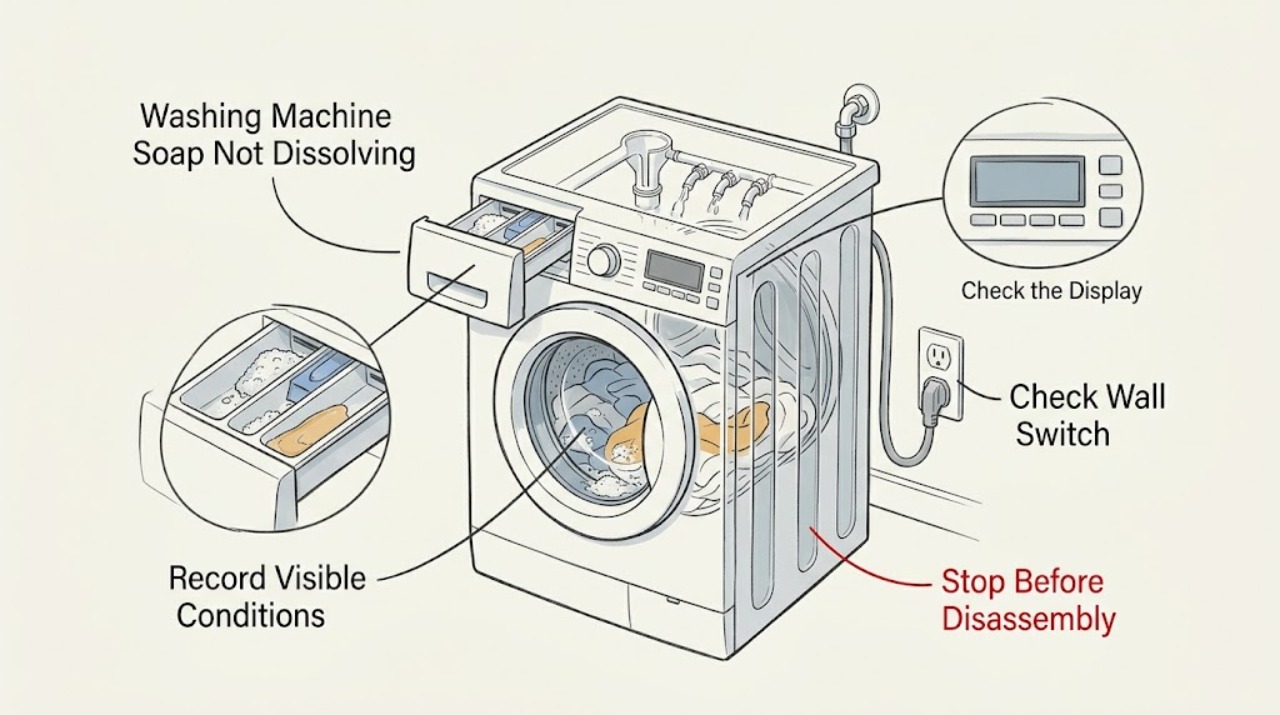
With the machine idle, pull the dispenser open and record which compartment contains the residue. Match the markings on that drawer to the manual: II or main wash is for regular powder or liquid detergent, I or pre-wash is for pre-wash detergent only when that option is selected, and the flower or softener section is for fabric softener only.
Expected result: Detergent in the pre-wash or softener section, or a compartment that is not used by the selected programme, can remain after the cycle. Residue only in the correct main-wash section points to dose, caking, water flow, or drawer cleanliness instead.
Next step: Move the product to the correct compartment on the next safe test, or continue to the dose and residue checks if the placement was already correct.
Why this matters
Why: Hotpoint says the three sections have different purposes and advises checking the model manual when drawer layouts vary.
-
Check 2
Compare the detergent type and amount with its label and the load. Do not fill above the drawer's maximum indicator. Check whether the powder is damp and caked, the liquid has thickened or dried, the dose was intended for a much larger load, or the machine was set to a cold, quick, or otherwise reduced-water programme.
Expected result: A dose that is too large or caked may not flush from the drawer and can create excess foam. A small dose in a heavily soiled or overloaded load can look like undissolved soap because washing performance is poor. A normal dose that remains in a clean drawer points more strongly to water delivery or a blocked jet.
Next step: Use the label-recommended product and dose for a small-to-normal load and select a suitable programme; do not compensate for residue by adding extra detergent.
Why this matters
Why: Hotpoint recommends following the detergent label and never exceeding maximum lines; it also links poor wash results and undissolved detergent with incorrect programmes, overloading, and low-temperature use.
-
Check 3
Switch the machine off and unplug it from a dry, safe position. Following the model-specific release instruction, remove the drawer without forcing it. Take out only the detachable inserts, including the softener siphon if fitted, and wash the parts in warm soapy water; use a small brush for visible residue, rinse with clean water, and dry all parts before reassembly.
Expected result: A stiff drawer, blocked siphon, visible powder or softener crust, or residue in the channels confirms that the dispenser can prevent the product from being flushed. If the parts are clean and the drawer moves freely, the next suspect is water entering the drawer or programme/load selection.
Next step: Refit every insert and the drawer correctly, then inspect the accessible drawer housing and jets. Use only the single cleaner or soap described by its label and never mix chemicals.
Why this matters
Why: Hotpoint recommends unplugging or switching off before removal, notes that release mechanisms vary by model, and recommends warm soapy water, brushing, rinsing, and complete drying.
-
Check 4
With the machine still unplugged, inspect the accessible drawer housing, water-entry holes, rails, and seals for detergent scale, mould, or a displaced insert. Wipe the housing with a damp cloth and let it dry; do not push tools deep into the water path or disassemble the inlet assembly.
Expected result: Residue across the jet openings or a mis-seated siphon can divert water and leave soap in the drawer. A clean, correctly assembled housing with no visible obstruction means the machine may not be delivering enough water to that section.
Next step: Reassemble the drawer and continue to the external water-supply check. If the housing is cracked, leaking, or cannot be cleaned without dismantling the machine, stop and arrange service.
Why this matters
Why: Hotpoint connects drawer build-up with blockages, leaks, and mould and advises regular cleaning of both the drawer and its housing.
-
Check 5
Check the external cold-water tap is fully open and the inlet hose is not kinked, crushed, loose, or visibly leaking. After the drawer is correctly refitted and only if the area is dry and safe, supervise one appropriate programme without touching moving or wet electrical parts; observe whether water reaches the detergent compartment. Do not remove the hose or filter to test pressure.
Expected result: No water or only a weak flow into the drawer, a tap indicator, a kink, or a leak points to a water-supply, inlet, valve, or pressure problem rather than detergent chemistry. Normal water flow with residue returning points back to dose, programme, drawer jets, or an internal dispenser fault.
Next step: Correct only an obvious, safe tap or hose-position issue. If water does not reach the drawer, the hose leaks, pressure is uncertain, or the machine stops mid-cycle, leave the appliance out of use and arrange qualified service.
Why this matters
Why: Hotpoint lists the cold-water supply, fill-hose kinks, blockages, leaks, and excessive water pressure as causes of filling or dispenser problems, and advises checking model instructions.
-
Check 6
After the drawer is clean and dry, use the correct product and label dose in a suitable compartment and run one normal programme with a small-to-normal, freely moving load. Do not use a quick programme for heavily soiled laundry merely to repeat the test. Record whether the soap dissolves, excessive foam appears, the drawer leaks, or the machine shows a light or code.
Expected result: A clean drawer and suitable load that now wash normally confirms residue, loading, or programme choice as the cause. Persistent residue with normal water entry suggests a dispenser jet, valve, control, or model-specific fault; leakage or an abnormal stop makes further testing unsafe.
Next step: If the fault persists, stop repeating cycles and give a qualified technician the model number, detergent type and dose, programme, load, drawer-cleaning result, water-flow observation, leak status, and any displayed warning.
Why this matters
Why: Hotpoint says overloading can prevent detergent from dissolving effectively and that quick or economy programmes may give poor results for heavily soiled items; its troubleshooting guidance directs unresolved faults to the manual or service.
Use your observations
Decision map
Find the observation that best matches what you see, then follow the next safe action.
-
PATH 01Next step
What you see
Detergent is in I/pre-wash or the flower/softener compartment, or the compartment does not match the selected programme.
Do this next
Use II/main wash for regular detergent, I only when pre-wash is selected, and the flower section only for softener, following the model manual and product label.
-
PATH 02Next step
What you see
Powder is caked, the dose is above the maximum line, foam is excessive, or the load is overloaded.
Do this next
Clean and dry the drawer, use the label dose, reduce the load, and select a suitable programme; do not add more detergent to correct poor results.
-
PATH 03Next step
What you see
The drawer, siphon insert, or water-entry jets contain visible residue or the drawer is stiff.
Do this next
Switch off and unplug, remove the drawer according to the model instructions, clean the removable parts with warm soapy water and a brush, rinse and dry, then refit without forcing it.
-
PATH 04Next step
What you see
The tap is closed, the inlet hose is kinked or leaking, water does not reach the drawer, or the machine stops during filling.
Do this next
Correct only a safe external tap or hose-position issue. Do not disconnect pressurised connections; arrange qualified service for weak or absent filling, leaks, pressure concerns, or a recurring stop.
-
PATH 05Next step
What you see
The drawer is clean and water flow appears normal, but residue returns after a suitable programme and normal load.
Do this next
Stop repeating tests and arrange model-specific service for the dispenser jets, inlet valve, controls, or another internal fault; provide the full observation record.
-
PATH 06Next step
What you see
There is a leak, standing water near electrics, detergent in the eyes or on irritated skin, smoke, burning smell, sparks, damaged wiring, repeated breaker trips, or an abnormal shutdown.
Do this next
Stop immediately. Do not touch wet electrical parts or operate controls. Isolate power only from a safe, dry position; follow the detergent label for exposure and obtain qualified or emergency help as appropriate. Do not resume testing until the hazard is cleared.
Helpful context
Understand the symptom
Confirm where the residue is coming from
Note whether the soap is still dry or caked in the drawer, whether liquid remains in a compartment, or whether detergent is on the clothes after the cycle. Record the programme, temperature, load size, and whether water visibly enters the drawer. Those observations separate a compartment or dose problem from a blocked drawer, weak water flow, an overloaded load, or a machine fault. Drawer symbols and release mechanisms vary by model, so use the model manual when the markings are unclear.
Use one cleaning product at a time and stop for hazards
Keep detergent away from eyes and prolonged skin contact and follow its label. Never mix bleach, vinegar, descaler, detergent, or other cleaners. Do not reach into a running machine, force a stiff drawer, disconnect a pressurised hose, or open electrical covers. If water reaches a plug or other electrical part, or if there is a burning smell, smoke, spark, damaged cord, repeated trip, or unexpected shutdown, stop and seek qualified help.
When checks do not resolve it
Need a professional?
Arrange qualified service when water does not reach the dispenser, the inlet hose or drawer leaks, the machine repeatedly stops while filling, or residue persists after correct placement, cleaning, dose, programme, load, and safe external supply checks., Stop immediately for standing water near electrical parts, smoke, burning smell, sparks, damaged wiring or cord, repeated breaker trips, or an abnormal shutdown; do not run another cycle., Do not force the drawer, bypass a siphon or door mechanism, remove pressurised hoses, open electrical covers, or diagnose the inlet valve and controls with live power., If detergent enters the eyes or causes persistent skin irritation, stop handling it, follow the product label's first-aid guidance, and seek appropriate medical advice if symptoms do not settle.
Common questions
FAQ
Which Hotpoint washing machine drawer compartment is for detergent?
Regular detergent normally goes in the compartment marked II or main wash. I is for pre-wash detergent only when pre-wash is selected, and the flower or softener section is for fabric softener. Check the model manual if the symbols differ.
Why is powder detergent still in my Hotpoint drawer?
Common possibilities are a wrong compartment, an excessive or damp dose, residue blocking the siphon or water jets, low or absent water flow, a quick or cold programme, or an overloaded load. Clean the drawer safely, use the label dose, and check the external tap and hose.
How do I clean a Hotpoint detergent drawer?
Switch off and unplug if safe, remove the drawer using the model-specific release, wash removable parts in warm soapy water, brush away residue, rinse, dry completely, clean the accessible housing, and refit the parts. Do not force the drawer or mix cleaners.
Can a quick or cold wash leave detergent undissolved?
It can contribute to residue or poor wash results, especially with an overloaded or heavily soiled load. Use the programme and dose recommended for the fabric and soil level instead of adding extra detergent.
What should I do if water is not reaching the detergent drawer?
Check only the external cold-water tap and inlet hose for a closed tap, kink, visible leak, or loose connection. Do not disconnect a pressurised hose. If flow remains weak or absent, or the machine stops while filling, arrange qualified service.
Is it safe to mix vinegar, bleach, or detergent to clean the drawer?
No. Do not mix cleaning chemicals. Use warm soapy water or a single product only as its label and model instructions allow, rinse thoroughly, and stop handling the appliance if there is an exposure, leak, smoke, burning smell, spark, or electrical hazard.
Read the exact guide
Official sources
- How to Remove Your Washing Machine Dispenser DrawerHotpoint · Hotpoint washing-machine dispenser drawer removal, model variation, and warm-soapy-water cleaning
- Simple Tips on How to Clean Your Washing MachineHotpoint · Hotpoint washing-machine detergent drawer, detachable parts, housing, residue, and safe routine cleaning
- Where to put detergent in a washing machineHotpoint · Hotpoint washing-machine detergent drawer compartments, detergent formats, dose limits, and drawer residue prevention
- Washing Machine Troubleshooting - Quick fixes & Tips - HotpointHotpoint · Hotpoint washing-machine fill hoses, water supply, dispenser blockage, leaks, programme choice, loading, low-temperature residue, and service boundaries
Community feedback
Share a repair observation
Share a plain-text repair observation. Accepted observations are published automatically; this page may take a moment to update.