
On this page
Start here
Quick answer
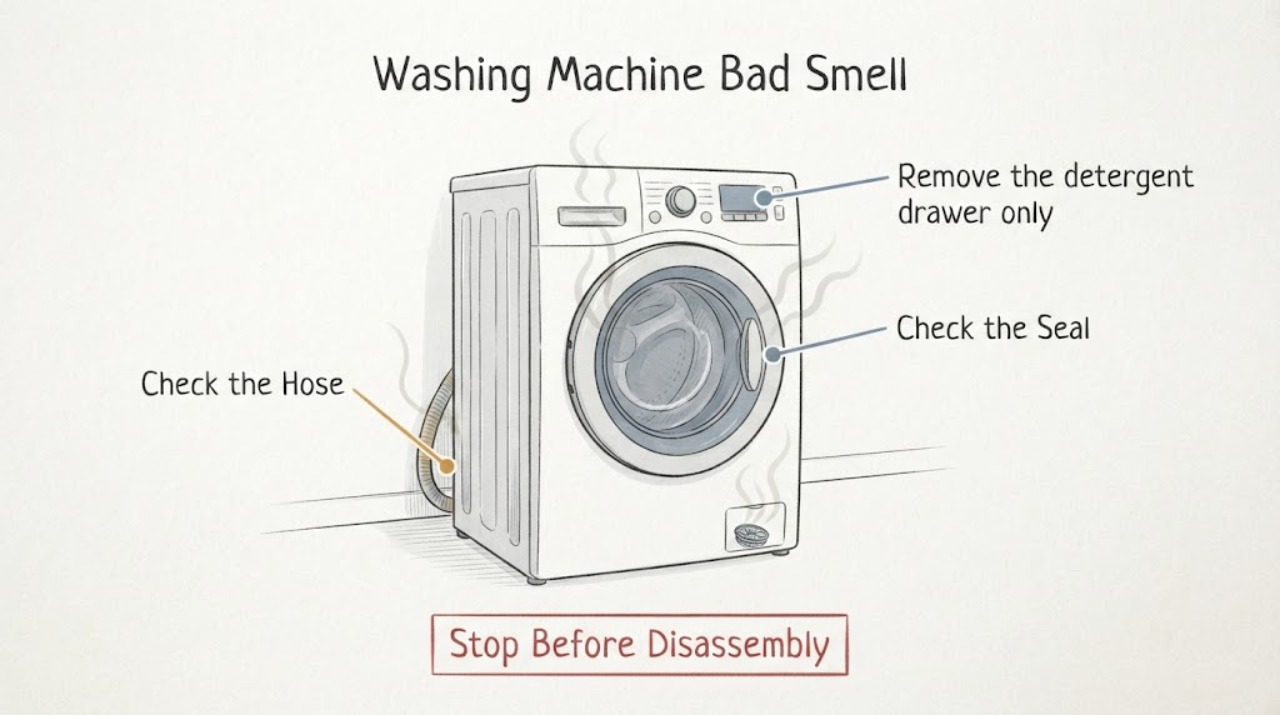
An Indesit washing machine that smells usually has moisture, detergent, or dirty water trapped in the door seal, detergent drawer, drum, drain hose, pump filter, or household waste connection. First classify the smell: a musty or sour smell supports a cleaning and drying path, while a sewage smell points toward the drain connection and a hot plastic, burning, or electrical smell is a stop condition. With the machine empty and safe, inspect the seal and drawer, clean removable residue with warm soapy water, check the drain path for standing dirty water or blockages, and use only the hottest or service wash that the exact manual permits. Indesit recommends a hot service wash for buildup from repeated low-temperature washing, but do not mix cleaning chemicals or run the machine if there is smoke, burning odor, arcing, a leak near electrics, or a hot plug.
Work through in order
Diagnostic checks
Use only checks that match the exact appliance or system and its official guide.
-
Check 1
With the machine off and dry, identify the smell at the open door, inside the rubber door seal, around the detergent drawer, near the drain hose or waste connection, and on freshly washed laundry. Do not put your face inside the drum or run a cycle while investigating.
Expected result: A musty, sour, or detergent smell is strongest at the seal or drawer; a sewage-like smell is strongest at the drain connection; a hot plastic, burning, or electrical smell comes from the plug, socket, controls, or motor area.
Next step: Follow the matching branch below. For burning odor, smoke, sparks, a hot plug, or a leak near electrical parts, stop using the machine immediately and do not continue cleaning tests.
Why this matters
Why: The location changes the next check. Residue and trapped moisture support a cleaning path, drain odor supports a waste-path check, and heat or electrical odor is a safety fault rather than a hygiene fault.
-
Check 2
After isolating the machine according to the model manual, inspect the lower fold of the door seal and the visible drum opening. Wipe away only loose lint, hair, sludge, or trapped items with a damp cloth; do not pull, cut, or remove the seal.
Expected result: Black or slimy residue, pooled water, trapped fabric, or a torn seal makes the seal a likely odor source. A clean, dry seal shifts attention to the drawer, drain path, or internal service issue.
Next step: Clean the accessible surface and dry it. If the seal is split, deformed, leaking, or cannot be cleaned without disassembly, stop and arrange service with the model number.
Why this matters
Why: Residue can remain wet between washes and transfer odor to laundry. A torn or leaking seal is not solved by more detergent and can create a water and electrical hazard.
-
Check 3
Remove the detergent drawer only if the model manual permits it. Rinse the drawer and its removable inserts in warm soapy water, clear visible undissolved detergent from the channels, and dry the parts before refitting them. Do not mix cleaners or pour chemicals into hidden openings.
Expected result: A sticky film, mould-like residue, blocked channel, or leftover conditioner supports the drawer as the odor source. A clean drawer with a continuing smell points elsewhere.
Next step: Refit the drawer correctly and leave it slightly open when the machine is not in use if the manual allows. If the drawer cannot be removed, leaks from its housing, or becomes dirty again immediately, request model-specific service.
Why this matters
Why: Indesit guidance notes that undissolved detergent and conditioner can build up and that a drawer blockage can leave residue behind. Cleaning the drawer is different from diagnosing an internal leak or pump fault.
-
Check 4
Inspect the drain hose and its visible connection to a standpipe or under-sink waste fitting without disconnecting a pressurised or full machine. Look for a kink, slow drainage, dirty water left in the drum, or a blocked household connection.
Expected result: A sewage smell at the sink connection, dirty water remaining after a cycle, a kinked hose, or a slow household drain supports a drain-path problem. A dry, clear connection with no retained water makes residue elsewhere more likely.
Next step: Clear only an accessible household blockage using the plumbing instructions, and follow the model manual for hose position. If water remains, the pump filter is inaccessible, or the hose leaks, stop and arrange service rather than opening the pump housing.
Why this matters
Why: Indesit identifies under-sink blockages and drain-hose positioning or obstruction as causes of odor or mid-cycle and emptying problems. The exact hose height and filter access vary by model.
-
Check 5
Check the pump-filter area only if the exact Indesit manual labels it as an owner check. First empty the machine as the manual directs, isolate power from a dry position, protect the floor, and open only the specified access cover; never reach into a powered or water-filled machine.
Expected result: The manual may show a filter with lint or small debris, or it may indicate that the model has a different drain arrangement. Water that continues to flow, a damaged cover, or a filter that will not move is an abnormal result.
Next step: Stop and call qualified service if the manual does not authorize the check, if water is near electrics, or if the filter cannot be safely accessed. Do not use tools to force it or dismantle the pump.
Why this matters
Why: A blocked filter can retain dirty water and cause odors, but the filter design and safe drain procedure are model-specific. A stuck filter or uncontrolled water can turn a cleaning attempt into a flood or electrical hazard.
-
Check 6
Once the seal, drawer, and accessible drain path are clean and there is no leak or safety smell, check the manual for an empty hot or service-wash programme. Use only the temperature, detergent, or approved cleaner specified for that model, and do not add multiple products.
Expected result: A model-approved empty maintenance wash reduces a smell associated with low-temperature detergent buildup; persistent smell, foam, a fault light, or dirty water afterward indicates that cleaning did not resolve the cause.
Next step: Let the machine finish and dry as directed. If odor returns promptly or any leak, code, unusual noise, or electrical symptom appears, stop using it and provide the record to service.
Why this matters
Why: Indesit recommends a hot service wash for buildup from repeated low-temperature washing, but not every model has the same programme or chemical allowance. A maintenance cycle cannot repair a pump, seal, drain, or electrical fault.
-
Check 7
After a normal wash, observe whether the machine drains fully and whether the smell returns before the next load. When the manual permits, wipe the seal dry and leave the door and detergent drawer ajar so the accessible surfaces can dry.
Expected result: No retained water and no returning odor supports a moisture and residue cause. Odor that returns immediately, water left in the drum, visible mould, or a new leak suggests a continuing drain, seal, or internal problem.
Next step: Record when the smell returns and which area is affected. Arrange service if the problem persists, especially if the machine leaks, stops, flashes a fault light, or cannot empty.
Why this matters
Why: Drying the accessible areas helps prevent recurrence but does not prove an internal component is healthy. Recurrent odor with retained water needs diagnosis rather than repeated chemical washes.
-
Check 8
Before requesting help, record the complete model number, smell type and location, whether the drum had standing water, the programme and temperature, any flashing lights or code, and whether the plug, socket, cabinet, or floor became hot or wet.
Expected result: A precise record separates residue maintenance from a waste blockage, leak, pump issue, or electrical fault and lets the technician use the correct model manual.
Next step: Give the record to Indesit support or a qualified appliance technician. Do not order a seal, pump, or control board until model fit and the cause are confirmed.
Why this matters
Why: Indesit troubleshooting and maintenance instructions vary across models; a part or cleaning product cannot be selected safely from the phrase bad smell alone.
Use your observations
Decision map
Find the observation that best matches what you see, then follow the next safe action.
-
PATH 01Next step
What you see
Do this next
Clean the accessible seal and drawer with warm soapy water, dry them, and use only a model-approved empty hot or service wash. Leave the door and drawer ajar when permitted.
Why this path and its safety boundary
Why it matters: The smell is musty, sour, or detergent-like and is strongest at the seal or drawer.
-
PATH 02Next step
What you see
Do this next
Check the visible drain hose and household waste connection for kinks or blockage, following the manual for hose position. Stop if water can reach electrical parts or if the pump or filter cannot be safely accessed.
Why this path and its safety boundary
Why it matters: The smell is sewage-like, or dirty water remains in the drum or drain connection.
-
PATH 03Next step
What you see
Do this next
Stop the machine immediately. From a dry safe position isolate power if possible, do not reset a tripped circuit repeatedly, and arrange qualified electrical or appliance help. If there is smoke or fire, leave and contact emergency help from a safe location.
Why this path and its safety boundary
Why it matters: The smell is hot plastic, burning, or electrical, or the plug/socket is hot.
-
PATH 04Next step
What you see
Do this next
Stop using the machine, close the water supply if it is filling or leaking, keep water away from the plug and controls, and request model-specific service. Do not remove the seal or pump housing as a smell treatment.
Why this path and its safety boundary
Why it matters: A door-seal tear, leak, standing water, fault light, or repeated drain failure is visible.
-
PATH 05Next step
What you see
Do this next
Keep the seal and drawer dry, leave the door and drawer ajar when allowed, use the recommended detergent amount and programme, and monitor the next washes. Return to service if the smell quickly returns.
Why this path and its safety boundary
Why it matters: The smell improves after accessible cleaning and one manual-approved maintenance wash, with no leak or safety symptom.
-
PATH 06Next step
What you see
Do this next
Do not add stronger or mixed chemicals and do not keep repeating hot cycles. Leave the machine off and provide the model and symptom record to qualified service.
Why this path and its safety boundary
Why it matters: The smell persists after cleaning, or a maintenance wash creates foam, a fault light, noise, a leak, or retained water.
Helpful context
Understand the symptom
A bad smell is useful evidence when you record where it is strongest and when it appears. Smell the dry doorway, the rubber seal, the detergent drawer, the drain area, and the laundry after a cycle without putting your face into the machine. Musty, sour, or detergent smells usually follow trapped moisture or residue. A sewage-like smell points toward the waste connection or stagnant water. A hot plastic, burning, or electrical smell is not a cleaning problem: stop using the machine.
Indesit has many washing-machine models and programmes. The exact filter location, service-wash name, temperature choices, drain-hose arrangement, and chemical instructions belong to the model manual. The checks below stay external or involve removable, user-serviceable items only.
Do not mask an electrical or water-safety fault
Do not keep running cycles to cover an unexplained smell. If the smell is burning or electrical, the plug or socket is hot, the breaker trips, smoke or sparks appear, or water is reaching the plug or controls, stop, isolate power only from a dry safe position, close the water supply if the machine is filling or leaking, and get qualified help. Never combine bleach, descaler, detergent, vinegar, or other cleaners.
Clean, dry, then confirm
After the cause is identified, clean the drawer and accessible seal, clear only the drain connection that the manual identifies as user-serviceable, and leave the door and drawer open enough to dry when the machine is not in use. Run a model-approved empty maintenance wash only when there is no safety warning. If the smell returns quickly, dirty water remains, the machine leaks, or a fault light appears, stop and request service rather than adding more chemicals.
Safety boundary
Stop conditions
- Stop immediately for a burning, hot-plastic, or electrical smell, smoke, sparks, a hot plug or socket, repeated breaker trips, or a control or cabinet that becomes unusually hot.
- Stop for a leak or standing water near the plug, controls, or other electrical parts. Isolate power only from a dry safe position, close the water supply if needed, and do not touch wet electrics.
- Do not mix bleach, descaler, detergent, vinegar, or other cleaners. Do not force a filter, remove a pump or door seal, bypass a safety, or open the cabinet to chase an odor.
Only after diagnosis
Potential parts
- door seal
Consider this category only when the exact model manual or service diagnosis confirms a torn, deformed, leaking, or uncleanable seal; a musty smell alone does not justify replacement.
Confirm the complete model number and fit information before ordering. Do not remove or stretch the seal as an odor-cleaning step. - drain pump or pump filter assembly
Consider this category only after the visible drain hose, household waste connection, and any model-approved filter check are clear but dirty water or repeat odor remains.
Pump and filter arrangements vary by model. A qualified technician should confirm the cause and compatibility before replacement. - detergent drawer or dispenser support
Consider this category only if the drawer or its support is cracked, cannot be cleaned, leaks, or remains blocked after the manual-approved cleaning procedure.
Confirm the model and drawer layout; do not assume a similarly shaped drawer fits another Indesit machine. - internal hose or wiring service component
Consider internal service parts only when a qualified technician identifies a continuing leak, odor source, or electrical fault inside the cabinet.
Do not open the cabinet or choose an internal part from smell alone. The exact model and service diagnosis determine the safe repair.
When checks do not resolve it
Need a professional?
Arrange qualified Indesit or appliance service when the smell persists after one model-approved cleaning path, returns quickly, is accompanied by retained water, a leak, a damaged seal, a fault light, unusual noise, or incomplete draining, or comes from the plug, socket, motor, or controls. Use electrical or emergency help for smoke, arcing, fire, or immediate electrical danger.
Have this ready
- Provide the complete model number, odor type and location, programme and temperature, when it appears, standing-water status, visible residue or leaks, fault lights or code, and any hot plug, smoke, noise, or breaker event.
Common questions
FAQ
Why does my Indesit washing machine smell musty after a wash?
Repeated low-temperature washing can leave bacteria and undissolved detergent buildup. Check the door seal and drawer, clean accessible residue with warm soapy water, and use only the hottest or service wash that the exact manual permits.
Can I pour bleach and descaler together to remove the smell?
No. Do not mix cleaning chemicals. Follow the model manual and use only one approved product or maintenance programme at a time; if the smell persists, request service rather than increasing the chemical strength.
Could a drain problem cause a bad smell?
Yes. A blocked or poorly arranged drain hose, under-sink connection, pump filter, or household waste path can leave dirty water or sewage odor. Check only the external, model-approved items and stop if water is near electrics or the machine cannot be safely emptied.
Should I keep running hot cycles if the smell returns?
No. One manual-approved maintenance wash can address residue, but repeated odor, retained water, a leak, a fault light, unusual noise, or a burning or electrical smell needs diagnosis. Do not use repeated cycles to mask a fault.
What should I do if the smell is burning or electrical?
Stop the machine immediately and do not run another cycle. Isolate power only from a dry safe position, keep away from smoke, sparks, hot plugs, and wet electrics, and seek qualified appliance or electrical help; leave and contact emergency help for fire or immediate danger.
Read the exact guide
Official sources
- Help & Advice | Indesit ServiceIndesit Service · Supports cautious handling of drain blockages, standing water, model-specific filters, and escalation when a fault remains.
- Indesit | Washing Machine Faq | Indesit ServiceIndesit Service · Directly covers smell, low-temperature detergent buildup, hot service wash, drain connections, mid-cycle stops, drain blockages, and model variation.
- How to Videos - Washing Machines | Indesit ServiceIndesit Service · Confirms the manufacturer's washing-machine maintenance resource and links to the clean-a-smelly-machine and drain/pump procedures; exact steps remain model-specific.
- Indesit Parts - Shop Genuine Spare & AccessoriesIndesit Parts · Provides the manufacturer-linked fresh-and-clean steps for detergent drawer, door seal, and model-approved hot or service wash maintenance.
Community feedback
Share a repair observation
Share a plain-text repair observation. Accepted observations are published automatically; this page may take a moment to update.