
On this page
Start here
Quick answer
Classify the smell before trying a cleaner. A stale, sour, or food-like odor with visible soil usually follows a cool-down, model-approved cleaning, and drain observation. A smell that follows standing water points toward residual soil or incomplete draining. A mild new-plastic smell after installation must be handled only as the exact model guide permits. A hot, scorched, electrical, smoky, or melting-plastic smell is a stop condition: turn the dishwasher off, keep clear, and arrange qualified appliance or electrical service. Kenmore publishes dishwasher designs with different filters, spray systems, heating features, and leak detection, so identify the model before removing a filter or selecting a cleaning cycle. Do not mix cleaners, pour drain opener into the dishwasher, reach around a hot element, or open the door panel, pump, heater, or wiring.
Before you begin
Safety first
- This article covers cool-down, visible observation, and model-approved ordinary cleaning only. Do not open panels, touch internal heater, pump, motor, control, or wiring, perform live tests, mix cleaners, or continue operation through a burning, smoky, hot, electrical, or water-near-electricity symptom.
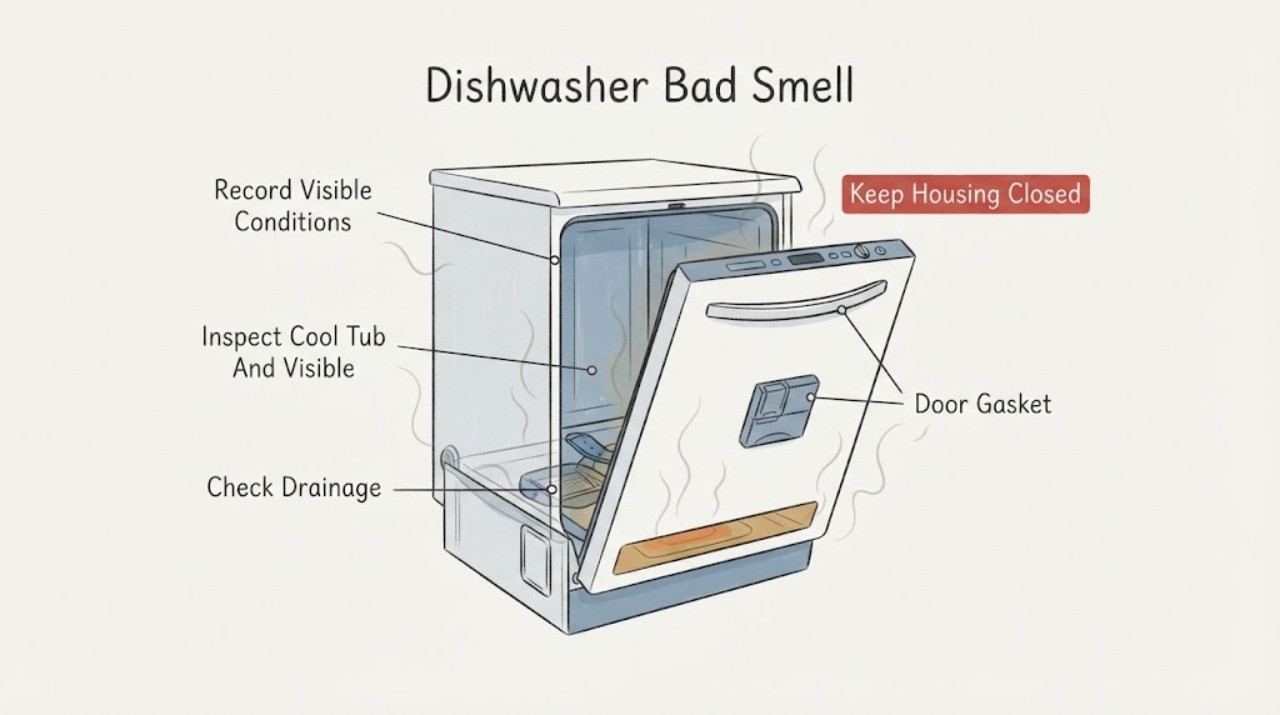
Work through in order
Diagnostic checks
Use only checks that match the exact appliance or system and its official guide.
-
Check 1
Stop the current cycle if needed, let the dishwasher cool, photograph the model label inside the door, and describe the odor without leaning into the tub: stale or food-like, musty, detergent or chemical, new plastic, hot plastic, electrical, or smoke-like. Note whether it appears after a cycle, with standing water, or when heating begins.
Expected result: The smell is food-like or musty with visible soil, appears with water left in the tub, is a mild new-plastic smell after installation, or is hot, scorched, electrical, smoky, or accompanied by heat.
Next step: Choose the matching branch below. Do not continue a cycle or begin cleaning for a hot, smoky, electrical, or heat-related smell.
Stop if: Stop immediately for smoke, sparks, melting plastic, a hot plug or cabinet, burning odor, repeated breaker trips, or water near electrical parts.
Why this matters
Why: Food or standing-water odor has a low-risk visible cleaning and drain route. A new-plastic odor needs the exact model's start-up guidance. Hot, scorched, electrical, smoky, or heat-related odor is not a cleaning problem.
-
Check 2
After the tub and heating area have cooled, remove the lower rack only as the exact model manual permits and inspect the visible tub bottom, filter or screen area, spray-arm area, door gasket, and trapped food or labels. Wipe only accessible residue with the approved method.
Expected result: Food soil, grease, a dirty gasket, labels, fragments, or a visibly dirty filter area is present; or the accessible interior is clean and the odor remains.
Next step: Clean only the identified accessible area using the exact model instructions, reinstall every removable filter correctly, and continue to the drain observation before running another full cycle.
Stop if: Do not touch a warm element, sharp glass, loose wiring, a damaged tub, or an unidentified pump or cover.
Why this matters
Why: Visible food soil can explain a stale odor. A clean visible area makes the drain, detergent, vent, or internal-component routes more relevant, but does not prove that a pump or heater has failed.
-
Check 3
With the cycle complete and the dishwasher cool, look at the bottom of the tub for standing or dirty water. From outside the appliance, inspect only visible drain-hose kinks, the sink or disposer connection, or a drain air gap when the installation has one; do not pull the dishwasher out or disassemble the pump.
Expected result: Water remains after a completed cycle, the water is dirty or foul, an external hose or air-gap area is visibly restricted, or the tub is dry but the odor returns.
Next step: Correct only an obvious external restriction permitted by the exact installation manual. Use qualified drain service for persistent standing water or an internal drainage problem.
Stop if: Do not pour drain opener into the dishwasher, force a pump cover, reach into standing water around energized components, or run repeated cycles to mask incomplete draining.
Why this matters
Why: Residual water can hold food soil and explain a recurring odor. A clean, dry tub shifts attention to filter or soil, detergent, vent, or an internal drain fault.
-
Check 4
If there is no electrical hazard, compare the smell with the detergent, rinse aid, and the dishwasher's first-use history. Check for caked detergent in the dispenser, excess foam, or a recent installation. Follow the exact model's cleaning or rinse-cycle directions only after the tub is cool and never combine products.
Expected result: The odor follows old detergent, excess suds, a new plastic interior, dishes left for a long time, or a permitted cleaning cycle; alternatively, the smell is sharp, hot, or returns when the heater operates.
Next step: Use fresh, model-approved dishwasher detergent and the manual's permitted cleaning method only for an ordinary odor. Use the professional-service branch for a heat-related smell.
Stop if: Do not mix cleaners, use dish soap or laundry detergent, or continue for foam overflow, hot plastic, smoke, or a burning smell.
Why this matters
Why: Detergent residue and first-use conditions are different from a drain fault. A smell that tracks heating, melting, or electrical operation is a stop condition, not a request for more detergent or a stronger cleaner.
-
Check 5
Record what changed after the permitted cool-down, visible cleaning, and drain observation. If the odor has cleared, run the next cycle only under the exact manual's normal settings and remain alert for a returning smell; do not run a cycle to test a known electrical or heat hazard.
Expected result: The odor clears and does not return, returns with standing water or poor cleaning, returns when heating begins, or persists despite a clean tub and normal drain.
Next step: Provide the exact model, odor description, cycle stage, water result, and visible residue to qualified service when the odor persists or returns under a hazardous condition.
Stop if: Stop using the dishwasher for smoke, burning odor, melted plastic, abnormal heat, repeated trips, leaks into electrical areas, or any internal heater, pump, motor, control, or wiring diagnosis.
Why this matters
Why: A cleared food or residual-water odor supports a maintenance route. A recurring odor with water or poor cleaning points to drain, filter, spray, or water-temperature service. A returning hot or electrical odor needs professional diagnosis.
Use your observations
Decision map
Find the observation that best matches what you see, then follow the next safe action.
-
PATH 01Safety boundary
What you see
The odor is stale, sour, or food-like and soil is visible on the tub, gasket, filter area, or dishes.
Do this next
Let the tub cool, clean permitted visible areas, use fresh approved detergent, and check the odor after a complete normal cycle. Persistent odor with clean surfaces needs drain or service evaluation.
Why this path and its safety boundary
Why it matters: Ordinary food soil is more likely than an electrical or heater fault.
Safety stop: Do not clean around a hot element or use an unapproved chemical.
-
PATH 02Safety boundary
What you see
Foul odor is accompanied by water left in the tub after the cycle is complete.
Do this next
Inspect only the visible external drain path allowed by the installation manual. Arrange drain-system service if water remains.
Why this path and its safety boundary
Why it matters: Residual water can retain food soil and make an otherwise clean dishwasher smell bad.
Safety stop: Do not open the pump or reach into standing water near electrical parts.
-
PATH 03Safety boundary
What you see
The odor is mild new plastic after installation and is not accompanied by heat, smoke, or a trip.
Do this next
Follow the exact Kenmore model's first-use guidance and monitor it. Stop and arrange service if the odor becomes hot, electrical, smoky, or persistent with abnormal heat.
Why this path and its safety boundary
Why it matters: This is a model-manual start-up question, not evidence of a failed heater or pump.
Safety stop: Do not mask a heat-related smell with a cleaning product or continue a hazardous cycle.
-
PATH 04Safety boundary
What you see
The smell tracks detergent residue, excessive foam, rinse aid, or a recent cleaning product.
Do this next
Stop adding products and use only the exact model's detergent and care instructions. Arrange service if the odor is sharp, corrosive, or unexplained.
Why this path and its safety boundary
Why it matters: Product residue or an incompatible product is more likely than food soil alone.
Safety stop: Do not mix vinegar, bleach, detergent, citric acid, or drain opener.
-
PATH 05Safety boundary
What you see
The odor is hot, scorched, electrical, or accompanied by melting plastic, smoke, abnormal heat, or a trip.
Do this next
Turn the dishwasher off and disconnect power only if safe. Keep clear of smoke or exposed wiring and arrange qualified appliance or electrical service.
Why this path and its safety boundary
Why it matters: This is not an ordinary food-odor or cleaning branch and may involve a heater, pump, wiring, or control.
Safety stop: Do not reopen the panel, retry the cycle, or reset a tripped breaker repeatedly.
-
PATH 06Safety boundary
What you see
The odor persists after the tub is clean, the cycle drains normally, and no detergent or start-up cause is visible.
Do this next
Stop experimenting with cleaners and provide the exact model, odor timing, cycle stage, water result, and residue observations to a qualified technician.
Why this path and its safety boundary
Why it matters: A persistent unexplained odor can require inspection of the drain, vent, heater, pump, motor, seal, or control area outside a user-level cleaning route.
Safety stop: Do not select a replacement heater, pump, gasket, or control without model-specific diagnosis.
Helpful context
Understand the symptom
The smell determines the safe route
A stale food smell with visible soil or residual water is a cool-tub cleaning and drain observation. A mild new-plastic smell after installation is a separate model-manual question. A sharp hot-plastic, electrical, or scorched smell is a stop condition, even if the dishes are dirty. Do not treat every odor as a reason to run a stronger cleaner.
Confirm the Kenmore model before removing a filter
Photograph the model label inside the door and use Kenmore's customer-care and manual path to locate the matching instructions. One current Kenmore dishwasher example uses a multi-stage filter and pressurized spray arms, but that product example does not establish the filter or wash system on every Kenmore model.
Cool and isolate before cleaning
The tub, heating area, and nearby water can remain hot after a cycle. Stop the control and wait until the dishwasher is cool before any permitted visible cleaning. Use only the product and cycle named in the exact manual; never combine bleach, vinegar, detergent, citric acid, drain opener, or other chemicals.
Safety boundary
Stop conditions
- Stop immediately for smoke, sparks, burning or electrical odor, melting plastic, abnormal heat, a hot plug or cabinet, exposed wiring, repeated breaker trips, or water near electrical parts.
- Do not reach into a hot tub or around a heating element; let the dishwasher cool before cleaning.
- Do not open the door panel, pump, heater, motor, control, wiring, or sealed drain compartment, and do not perform live electrical tests.
- Do not mix vinegar, bleach, detergent, citric acid, drain opener, or other cleaners; do not use dish soap or laundry detergent.
- Do not drill, force, or pry the drain system, repeatedly run cycles to hide standing water, or select an internal part without the exact model and qualified diagnosis.
When checks do not resolve it
Need a professional?
Arrange qualified Kenmore appliance service when a hot, scorched, electrical, smoky, or melting-plastic odor appears; when odor returns with heating; when standing water persists after permitted external drain checks; when leaks reach electrical areas; or when a clean, normally draining dishwasher still smells. Use the exact model manual for ordinary filter and tub care, not for internal heater, pump, motor, control, wiring, or vent repair.
Safety scope: This article covers cool-down, visible observation, and model-approved ordinary cleaning only. Do not open panels, touch internal heater, pump, motor, control, or wiring, perform live tests, mix cleaners, or continue operation through a burning, smoky, hot, electrical, or water-near-electricity symptom.
Common questions
FAQ
Why does my Kenmore dishwasher smell bad after a cycle?
First identify whether the odor is stale food, musty water, detergent, new plastic, or hot or electrical. Food soil and standing water follow the cool tub, visible cleaning, and drain route; a hot or scorched smell is a stop condition and needs qualified service.
Can standing water cause a bad smell in a Kenmore dishwasher?
Yes. Residual water can retain food soil and create a recurring odor. Inspect only visible external drain conditions allowed by the exact installation manual; persistent water needs drain-system service.
Is a new-plastic smell from a Kenmore dishwasher normal?
A mild smell after first installation is a separate model-manual condition, not proof of a failed part. Follow the exact model's start-up guidance, but stop for hot plastic, smoke, burning odor, abnormal heat, or a smell that appears when heating begins.
Should I pour bleach, vinegar, or drain cleaner into my Kenmore dishwasher?
Do not improvise or combine cleaners. Let the tub cool and use only the product and cleaning procedure named in the exact Kenmore manual. Never use drain opener, dish soap, or laundry detergent in the dishwasher.
When does a Kenmore dishwasher bad smell need service?
Arrange service when a hot, scorched, electrical, smoky, or melting-plastic odor appears; when odor returns with heating; when standing water persists after permitted external checks; when water reaches electrical areas; or when a clean, normally draining dishwasher still smells.
Read the exact guide
Official sources
- Customer CareKenmore · Kenmore dishwashers when the exact model documentation or repair route is needed
- 24-inch Built-in Dishwasher with UltraWash Plus System and Removable Third Rack WhiteKenmore · The named Kenmore 22-14622 product example; features are not universal across all Kenmore dishwashers
Community feedback
Share a repair observation
Share a plain-text repair observation. Accepted observations are published automatically; this page may take a moment to update.