
On this page
Start here
Quick answer
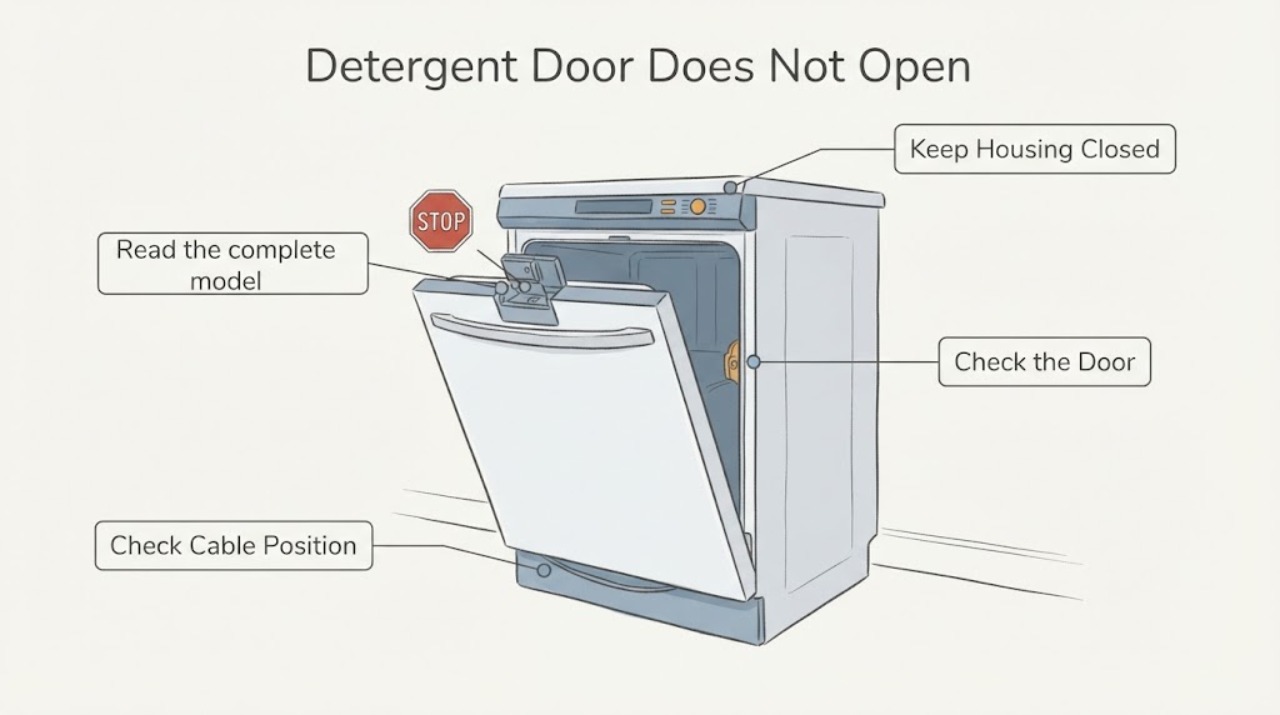
Do not pry or lubricate the detergent door. Kenmore's own manual page says appliance model numbers are at least 11 characters, so 15782 is a stock or shortened identifier rather than enough to select a model-specific dispenser part or procedure. First stop the dishwasher, let it cool, and isolate power safely; then use the complete rating-plate model and matching manual. With power disconnected, check whether a rack item or utensil blocks the dispenser, whether dried detergent or residue is restricting the lid, and whether the lid or hinge is visibly cracked, warped, or binding. If the load and accessible residue are clear but the door still will not release or open, leave detergent out and arrange model-specific appliance service rather than forcing the cover or opening the door panel.
Work through in order
Diagnostic checks
Use only checks that match the exact appliance or system and its official guide.
-
Check 1
Stop the dishwasher and wait until the tub is cool; if it is safe to do so, use the normal cancel or stop control once, then disconnect a plug from a dry position or have an electrician isolate a hardwired unit before inspecting the dispenser.
Expected result: The cycle stops and the door area is dry, or the unit is hot, wet near electrical parts, sparking, smoking, tripping the breaker, or cannot be safely isolated.
Next step: If any hazard is present, keep the dishwasher out of service and arrange qualified appliance or electrical help. Do not reach into a running or wet unit, reset a tripped breaker repeatedly, or remove the inner door.
Why this matters
Why: A dry, stopped dishwasher permits a limited external inspection. Heat, water, smoke, sparks, or an electrical trip turns this from a dispenser nuisance into a safety or service issue.
-
Check 2
Read the complete model and serial label and retrieve the matching Kenmore manual; do not treat 15782, a color or stock number, or a Kenmore family name as the full model.
Expected result: A complete model number and matching manual are available, or the label is missing, shortened, or different from 15782.
Next step: If the complete number cannot be confirmed, stop at external observations and have Kenmore or a qualified appliance technician identify the unit. Do not order a cover, spring, latch, or dispenser assembly from 15782 alone.
Why this matters
Why: Kenmore states that manual lookup requires the model number and that its model numbers are at least 11 characters. Without that identity, the dispenser geometry, release method, and allowable owner cleaning steps are unknown.
-
Check 3
With power disconnected and the door open, remove only a visibly interfering plate, pan handle, utensil, or rack item; check that nothing projects into the dispenser-lid path or presses against the inside of the door.
Expected result: A dish or utensil was touching the lid, the rack is overloaded, or the dispenser has clear space but the lid still cannot open fully.
Next step: Reload with clearance according to the matching manual. If the lid remains stuck with a clear load, leave the dispenser unused and arrange service; do not force the rack, lid, or door panel.
Why this matters
Why: A load obstruction is a plausible external explanation when the problem changes after the item is removed. A clear load makes a physical lid, hinge, latch, or release-control issue more likely, but does not identify which component failed.
-
Check 4
Inspect the accessible dispenser cup and lid for dried detergent, a clump, or residue at the edge; wipe only reachable surfaces with a soft damp cloth and let them dry, without inserting a tool, bending the cover, or applying lubricant or mixed chemicals.
Expected result: Residue is visibly preventing the lid from seating or moving, or the cup and lid are clean but the lid binds, cracks, or stops before its normal travel.
Next step: If gentle external cleaning restores free movement, use only the detergent and amount specified by the exact manual. If it does not, stop using the dispenser and request model-specific service; do not pry, drill, lubricate, or remove the door skin.
Why this matters
Why: Residue can interfere with a moving cover, and Kenmore notes that detergent mixtures can clump. A clean dispenser that still binds points toward a mechanical or release problem that cannot be distinguished safely from outside.
-
Check 5
Compare the observed lid position with the exact manual's detergent-compartment illustration or operating instructions; do not run a cycle solely to watch the lid and do not hold it open or closed by hand.
Expected result: The manual confirms a different dispenser layout or opening sequence, or the layout matches but the lid never releases or only opens partway.
Next step: Use the complete model manual for any owner-allowed cleaning only. For persistent partial opening, a broken hinge, a latch that will not release, or a dispenser that leaks detergent, keep the dishwasher out of service until a qualified technician inspects it.
Why this matters
Why: Kenmore's manuals page directs owners to model-specific literature, and the public Kenmore detergent article does not establish the release design of the assigned 15782 identifier. A mismatch is an identity problem, while a matching layout with failed travel is a service boundary.
-
Check 6
Record the full model, whether the lid was blocked or dirty, whether it moves freely when unpowered, the detergent type and condition, and whether dishes are still being cleaned; give those observations to service instead of naming a part.
Expected result: The issue resolves after a safe load or residue correction, or the lid remains restricted, detergent stays in the cup, cleaning is poor, or the dispenser is visibly damaged.
Next step: Use Kenmore customer care or qualified appliance service for a persistent or damaged dispenser. Do not operate with a cracked cover, exposed sharp edge, leaking detergent, or a door that must be forced shut.
Why this matters
Why: Resolution after an external correction supports a loading or residue cause. Persistence, visible damage, leftover detergent, or poor cleaning requires diagnosis of the exact dispenser and wash system; the symptom alone cannot select a spring, latch, cover, or control.
Use your observations
Decision map
Find the observation that best matches what you see, then follow the next safe action.
-
PATH 01Next step
What you see
A plate, pan handle, utensil, or overloaded rack visibly presses into the dispenser lid.
Do this next
With power disconnected, reposition only the visible item and confirm clearance from the exact manual. If the lid still does not open, stop and arrange service rather than forcing it.
Why this path and its safety boundary
Why it matters: The obstruction is more likely than a failed dispenser release, because Kenmore advises leaving room for water and cleaning solution to reach the load.
-
PATH 02Next step
What you see
The load is clear but dried detergent or residue is visible around the cup or lid edge.
Do this next
Clean only reachable surfaces gently with a soft damp cloth and follow the exact manual for detergent use. Do not pry, lubricate, or mix cleaning chemicals.
Why this path and its safety boundary
Why it matters: A removable residue obstruction is plausible; Kenmore describes detergent compartments and notes that detergent mixtures can clump, but this does not prove a particular hinge or latch fault.
-
PATH 03Next step
What you see
The cup and lid are clear, but the lid binds, is cracked or warped, stops partway, or never releases during normal operation.
Do this next
Leave detergent out and keep the dishwasher unused if the lid is damaged or must be forced. Arrange qualified appliance service with the complete model and serial information.
Why this path and its safety boundary
Why it matters: A dispenser cover, hinge, latch, actuator, or control may require model-specific diagnosis; 15782 alone cannot identify the part or safe access method.
-
PATH 04Next step
What you see
The only identifier available is Kenmore 15782, or the manual found does not match the dishwasher's label and dispenser layout.
Do this next
Read the rating label and obtain the exact manual through Kenmore. Do not substitute another Kenmore dishwasher's dispenser instructions or parts.
Why this path and its safety boundary
Why it matters: The appliance identity is unresolved. Kenmore says model numbers are at least 11 characters, so a shortened identifier cannot support a model-specific repair conclusion.
Helpful context
Understand the symptom
Treat 15782 as an incomplete identity
The assigned Kenmore 15782 number is not enough to identify the exact dishwasher platform. Kenmore's official manuals page says model numbers are at least 11 characters, and detergent-door hinges, latches, and release mechanisms vary by platform. Read the rating label around the inner door or tub opening and use the complete number and matching manual before ordering anything or attempting a repair.
A blocked lid and a failed release are different problems
A plate, pan handle, tall utensil, or overloaded rack can stop the dispenser lid from opening even when its release is working. Kenmore's loading guidance emphasizes keeping room for water and cleaning solution, while Kenmore's detergent guidance describes separate detergent compartments and warns that detergent mixtures can clump. Clear only what is visibly accessible; a lid that remains stuck with a clear load needs model-specific service, not force.
When checks do not resolve it
Need a professional?
Arrange qualified appliance service if the detergent door remains restricted after a clear-load and gentle external-residue check, if it is cracked or warped, if detergent remains undispensed, if the door must be forced, or if the full model cannot be established.
Have this ready
- Provide the complete model and serial label, the shortened 15782 identifier if it appears elsewhere, the matching manual, photos of accessible residue or damage, rack and load position, detergent type, and whether the cup was empty after a completed cycle.
Common questions
FAQ
Is Kenmore 15782 a complete dishwasher model number?
Not enough to assume that it is. Kenmore's official manuals page says model numbers are at least 11 characters. Treat 15782 as an incomplete or stock-style identifier until the rating plate supplies the full model, and do not select a dispenser part from it alone.
Could a dish keep the detergent door from opening?
Yes, if a plate, pan handle, utensil, or overloaded rack presses into the lid path. With power disconnected, clear only the visible obstruction and reload according to the matching manual. A clear load with a lid that still binds needs service rather than force.
Should I pry the lid open or add lubricant?
No. Prying can break the cover or latch and lubricant can contaminate detergent and dishes. Inspect and wipe only accessible residue with power disconnected; if the lid remains restricted, stop using the dispenser and have the exact model diagnosed.
Read the exact guide
Official sources
- How to Move AppliancesKenmore Livemore · General dishwasher handling safety; used only to keep electrical and plumbing isolation within safe boundaries.
- Quick Tips: 3 Ways to Care for Your DishwasherKenmore Livemore · General Kenmore care guidance; it does not authorize dispenser disassembly or a specific chemical treatment.
- How to Make DIY Dishwasher DetergentKenmore Livemore · General Kenmore dishwasher guidance, not a model-specific dispenser repair manual; used only for the existence of detergent compartments and the possibility of clumped residue.
- How Do You Load Your Dishwasher?Kenmore Livemore · General Kenmore loading guidance; exact rack and dispenser clearance remain model-specific.
- Kenmore ManualsKenmore · Official Kenmore manual lookup; establishes that the assigned five-digit 15782 identifier is not sufficient for model-specific instructions.
Community feedback
Share a repair observation
Share a plain-text repair observation. Accepted observations are published automatically; this page may take a moment to update.