
On this page
Start here
Quick answer
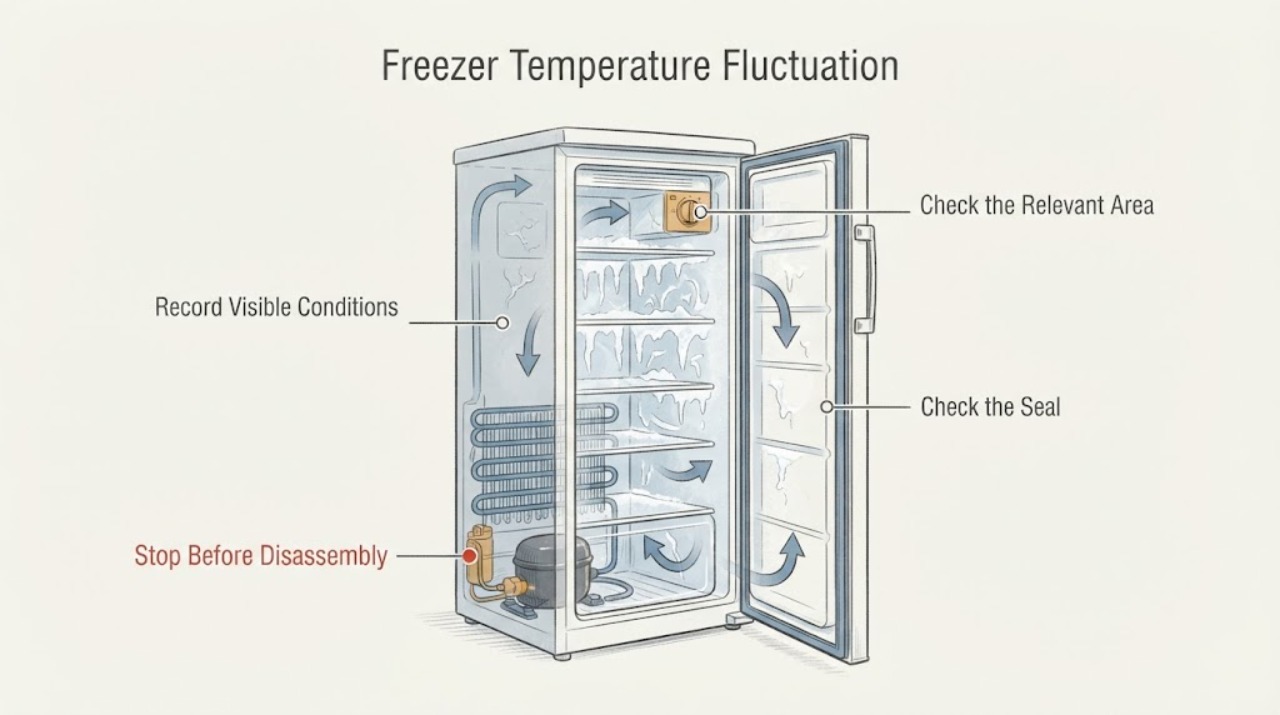
Start by confirming the exact Kenmore model and freezer form, then measure the temperature consistently rather than changing controls repeatedly. Kenmore sells freezers with different control and frost systems: an official chest-freezer page describes mechanical temperature adjustment, while an official upright-freezer page describes electronic controls and frost-free operation. Use the matching manual for the target setting, modes and any defrost procedure. Before service, check only safe external causes: door or lid closure and gasket contact, blocked visible airflow, frequent openings, recent warm loading, and heavy visible frost. Do not transfer a button sequence, temperature target or manual-defrost step between Kenmore platforms.
Work through in order
Diagnostic checks
Use only checks that match the exact appliance or system and its official guide.
-
Check 1
Record the full Kenmore model number and identify whether the unit is a chest freezer, upright freezer or refrigerator freezer compartment. Do not remove panels or move a loaded appliance to find the label.
Expected result: The model and freezer form are known, or one or both remain unknown.
Next step: Use Kenmore's model-number manual portal before applying any temperature target, special mode or defrost procedure.
Why this matters
Why: Kenmore publishes different platforms with mechanical versus electronic controls and frost-free versus other designs; the correct manual is identity-dependent.
-
Check 2
Place a suitable freezer thermometer in a consistent central location away from the door and record readings at comparable times while limiting door openings. Note recent warm loading, a mode change or a power interruption.
Expected result: The readings settle after a known event, or they continue to move without an obvious trigger.
Next step: Use the exact model manual for the target and stabilization interval. If the trend persists, continue with external checks and prepare a service handoff.
Why this matters
Why: A single reading can reflect a door opening or recovery period; a repeated trend without a clear event is a stronger sign of a performance problem.
-
Check 3
Close the door or lid and inspect the visible gasket contact around the full perimeter. Remove only packages or baskets that visibly prevent closure; do not pry, stretch or replace the gasket without model confirmation.
Expected result: The door or lid closes evenly and the gasket contacts the frame, or a gap, dirt, damage or obstruction is visible.
Next step: Correct only the visible obstruction and clean the gasket as the exact manual permits. If the gasket is damaged or the gap remains, request model-specific service.
Why this matters
Why: A closure gap allows warm air into the cabinet and can create frost and temperature swings; a sealed closure makes that cause less likely.
-
Check 4
With the appliance stopped, inspect only visible interior vents and panels for blocked airflow or heavy frost; keep hands and tools away from fans, wiring and refrigerant tubing.
Expected result: Visible air passages are blocked, heavy frost covers a panel, or the interior is clear.
Next step: Rearrange only items that visibly block airflow. For heavy frost, follow the exact manual; do not chip ice, use a heat source or disassemble the appliance.
Why this matters
Why: Blocked airflow or frost can change the temperature distribution, but the observation does not prove a failed defrost heater, fan or sealed system.
-
Check 5
Compare the current control or display with the exact Kenmore manual and note whether a rapid-freeze, vacation, alarm or other mode is active. Do not copy a setting or button sequence from another Kenmore model.
Expected result: The manual identifies the active mode and its expected behavior, or the model/manual does not match.
Next step: Return to the manual-approved normal mode only if the manual says to do so, then observe the documented stabilization period. If the model cannot be matched, stop control experimentation and request service.
Why this matters
Why: Kenmore platforms can use mechanical controls or electronic controls with special modes; an unfamiliar mode cannot be interpreted safely by brand name alone.
-
Check 6
Arrange qualified service if the temperature continues to fluctuate after the model-approved external checks, food is softening, the freezer shows persistent warning signs, or you see damaged wiring, a leak or abnormal heat.
Expected result: The symptom persists or a safety/food-preservation concern is present.
Next step: Protect the food, keep the appliance in a safe state and give service the model, readings, timeline, frost pattern and checks already performed. Do not open the sealed system or electrical panels.
Why this matters
Why: Temperature instability can involve controls, airflow, defrost or the sealed system, and the available symptom does not identify one component.
Use your observations
Decision map
Find the observation that best matches what you see, then follow the next safe action.
-
PATH 01Next step
What you see
The reading changes only after a door opening, warm load or documented cooling mode and then settles within the model manual's interval.
Do this next
Keep the door closed as practical and monitor using the manual's method; do not change settings repeatedly.
Why this path and its safety boundary
Why it matters: The result may reflect normal recovery or a mode-specific response rather than a confirmed failure.
-
PATH 02Next step
What you see
A door or lid gap, damaged gasket or package obstruction is visible.
Do this next
Remove only the obstruction and use the exact manual for gasket cleaning or replacement; request service if the seal remains compromised.
Why this path and its safety boundary
Why it matters: Warm air leakage is a supported external contributor to frost and unstable temperatures.
-
PATH 03Next step
What you see
Heavy visible frost or blocked airflow is present.
Do this next
Follow the exact model manual for frost handling. Do not chip ice, add heat or remove panels; escalate if the manual does not provide a safe user step.
Why this path and its safety boundary
Why it matters: Air circulation is affected, but the observation does not prove which defrost or fan component is at fault.
-
PATH 04Next step
What you see
The unit has a different control or frost platform than the manual being consulted, or the model cannot be identified.
Do this next
Stop changing settings and obtain the exact manual or qualified service.
Why this path and its safety boundary
Why it matters: Temperature targets, modes and defrost instructions are not safely transferable across Kenmore platforms.
-
PATH 05Next step
What you see
Temperature remains unstable, food is softening, or abnormal heat, leak, wiring damage or persistent warning signs appear.
Do this next
Protect the food and arrange qualified appliance service; do not open electrical panels or the sealed system.
Why this path and its safety boundary
Why it matters: The issue has crossed external troubleshooting and food-safety boundaries.
Helpful context
Understand the symptom
Identify the Kenmore platform first
Record the complete model number and whether the freezer is a chest unit, upright freezer or the freezer compartment of a refrigerator. An official Kenmore chest-freezer page describes a mechanical temperature adjustment, while an official upright model page describes electronic controls, Express Chill and frost-free operation. Those examples show why one Kenmore control or defrost procedure cannot be assumed for every unit.
Confirm a real fluctuation before changing settings
Use the same freezer thermometer location and compare readings over a consistent interval with the door kept closed as much as practical. Note when the reading changes: after a door opening, after adding warm food, during a mode or defrost event, or without an obvious trigger. Do not keep changing the dial or electronic setting before the model manual states what the control does.
Check the visible cold-air path
Look for packages holding a door or lid open, a dirty or visibly damaged gasket, blocked visible air passages, and unusual frost covering an interior panel. Kenmore identifies gasket condition and cold-air leaks as maintenance concerns; a frost-free model and a manual-defrost chest freezer need different next steps. Do not chip ice, use a heat source or remove panels.
Use only the exact manual for settings and modes
Some Kenmore models use a mechanical control while others use electronic controls and special cooling modes. Find the model manual through Kenmore's official manual portal before changing temperature targets, activating rapid-freeze features or interpreting a display. Make one documented change at a time and allow the manual's stated stabilization period; do not import settings from a different Kenmore model.
Protect food and escalate persistent instability
If food is softening, the freezer cannot hold a stable temperature, a warning persists, or the compressor or fan runs unusually without recovery, protect the food and arrange qualified service. The exact model is needed before a technician can distinguish control, airflow, defrost or sealed-system causes.
When checks do not resolve it
Need a professional?
Request qualified Kenmore or appliance service when temperature fluctuation persists after exact-model external checks, food is softening, frost returns heavily, the control is unresponsive, or any leak, damaged wiring or abnormal heat is present. Do not apply another platform's temperature setting or defrost procedure, and do not open the sealed system.
Have this ready
- full model number
- freezer form
- temperature readings and measurement location
- door/gasket and airflow observations
- frost pattern
- recent loading, power or mode changes
- food-preservation concern
Common questions
FAQ
What temperature should a Kenmore freezer be set to?
Use the exact model manual. Kenmore sells units with different control systems and features, so do not copy a numeric target or adjustment sequence from another model.
Can I manually defrost a Kenmore freezer with temperature fluctuations?
Not as a universal step. Some Kenmore models are described as frost-free while other models have different control and maintenance designs. Follow the exact manual and never chip ice, use a heat source or remove panels as a generic fix.
Could a door seal cause temperature fluctuation?
Yes, a visible gap or damaged gasket can allow warm air into the cabinet. Check closure and gasket contact externally, then use the model manual or service if the seal is damaged or still does not close.
Read the exact guide
Official sources
- Kenmore Elite 27002 20.5 cu. ft. Upright FreezerKenmore · Opened official Kenmore product page. It is a specific upright model example, used to show platform differences and not as a universal control or defrost procedure.
- Kenmore ManualsKenmore · Opened official Kenmore manual portal. It requires the model number and lists freezers and refrigerators among the supported product types; it is the source boundary for settings and defrost procedures.
- Appliance Maintenance Tips to Help Maximize EfficiencyKenmore / Livemore · Opened official Kenmore Livemore maintenance article. It supports external gasket and warning-sign checks; exact appliance manuals control model-specific settings and repair steps.
- 8.8 cu. ft. Chest Freezer - WhiteKenmore · Opened official Kenmore product page. It is one chest-freezer example, used only to show platform-specific mechanical control and not as a universal setting or defrost guide.
Community feedback
Share a repair observation
Share a plain-text repair observation. Accepted observations are published automatically; this page may take a moment to update.