
On this page
Start here
Quick answer
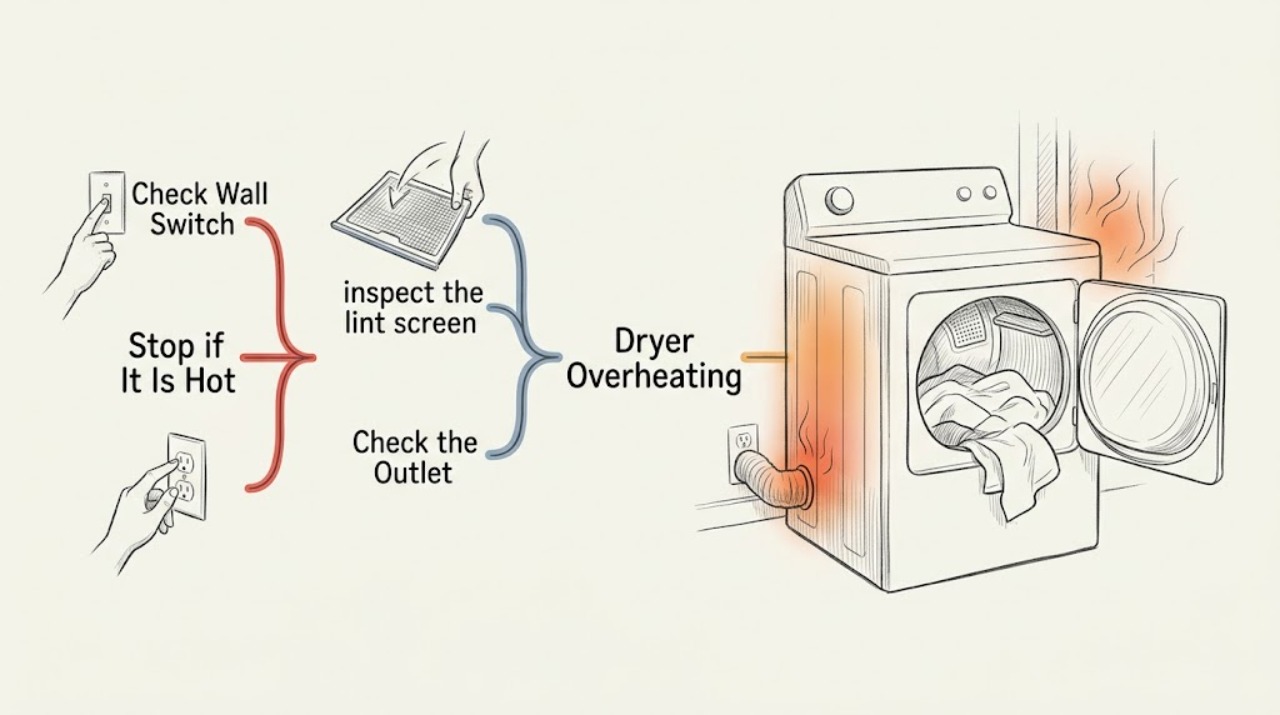
Stop the dryer now and do not continue test runs. Use the normal control to stop it and, only if the area is dry and there is no immediate electrical or fuel hazard, isolate its power at the accessible disconnect or breaker; keep clear of a hot drum and let it cool. Do not restart until the lint screen, accessible exhaust route, outside hood, load, and cycle have been assessed. KitchenAid warns that a blocked, crushed, or unsuitable vent reduces airflow and that a loose, damaged, blocked, or missing lint screen can cause overheating and damage. If there is a burning or gas odor, smoke, discoloration, sparking, water near electrical parts, or a repeated breaker trip, leave it off and obtain qualified help; do not open the cabinet or alter gas or electrical components.
Work through in order
Diagnostic checks
Use only checks that match the exact appliance or system and its official guide.
-
Check 1
Stop the cycle immediately, use the normal control to switch the dryer off, and if the area is dry and free of smoke, odor, sparks, and damaged wiring, isolate power at the accessible disconnect or breaker; do not touch the drum, cabinet, or exhaust while hot.
Expected result: Heat begins to fall without a safety symptom, or the dryer remains dangerously hot, continues to smell, smokes, sparks, or trips protection.
Next step: Keep the dryer off; for smoke, odor, sparks, water near electrical parts, or a repeated trip, leave the area as needed and obtain qualified help from a safe location.
Why this matters
Why: A cooling appliance can be inspected later, but persistent heat or any fire, fuel, or electrical symptom overrides all user checks.
-
Check 2
After the dryer is fully cool, inspect the lint screen and its housing for a loose fit, damage, lint, or detergent and softener residue; clean only the accessible screen as the model manual describes and reinstall it securely.
Expected result: The screen is secure and clear, or it is loose, damaged, blocked, missing, or coated with residue.
Next step: Leave the dryer off if the screen cannot be correctly fitted or remains damaged; obtain the model-specific screen or qualified service rather than running another cycle.
Why this matters
Why: KitchenAid warns that an improperly fitted or blocked screen can restrict airflow and cause overheating; a damaged or missing screen is not safe to operate.
-
Check 3
Inspect the accessible exhaust run from the dryer to the wall and the outside hood for lint, debris, crushing, kinks, or a blocked outlet; do not pull the dryer out unsafely or open the cabinet to clean internal lint.
Expected result: The visible route and hood are open, or airflow is restricted, the route is crushed or kinked, or no exhaust can be seen at the hood.
Next step: Keep the dryer off and arrange qualified vent-system cleaning or repair for any restriction, concealed lint, damaged duct, or absent exhaust; do not resume heated operation to test it.
Why this matters
Why: KitchenAid identifies blocked or crushed venting and unsuitable vent material as airflow and fire risks; an accessible visual check cannot clear concealed duct or cabinet lint.
-
Check 4
Record the cycle, temperature option, load size, and fabric condition; identify whether the load was tightly packed, whether the dryer was stopped before its cool-down, and whether any item carried oil, solvent, fuel, or another flammable substance.
Expected result: The overheating occurred with a dense or high-heat load, premature stopping, or a potentially flammable-soiled item, or it occurred with a normal load and cycle.
Next step: Do not dry potentially flammable-soiled items or repeat the cycle; provide the load and cycle details to qualified service, especially when overheating occurred under normal conditions.
Why this matters
Why: Load and cycle conditions can increase retained heat or fire risk, but normal settings with rising heat point more strongly toward airflow, supply, thermal, or control diagnosis.
-
Check 5
When the dryer and surrounding area are cool, inspect externally for melted or discolored vent material, heat marks, a scorched outlet or cord, lint around the hood, cabinet deformation, or heat damage to nearby walls and laundry; do not remove covers or touch wiring.
Expected result: No external damage is visible, or discoloration, melting, scorching, or damaged power or vent material is present.
Next step: Keep it isolated and arrange qualified appliance, electrical, or vent assessment; preserve photographs and the model number for the technician.
Why this matters
Why: Visible heat damage indicates that the dryer or installation may have exceeded safe temperature and must not be returned to service based on a cleaned screen alone.
-
Check 6
Use the model number and the overheating observations to request a qualified diagnosis without restarting the dryer; state whether the dryer is electric or gas and whether heat continued after the cycle was stopped.
Expected result: The dryer remains cool and undamaged after the accessible checks, or overheating persists, returns, or cannot be explained by a safe external cause.
Next step: Leave the dryer out of service until qualified personnel inspect the relevant system; do not bypass a thermal device, adjust gas parts, or perform live electrical measurements.
Why this matters
Why: Persistent or unexplained overheating can involve concealed lint, vent design, thermal protection, sensing, control, or—on a gas model—fuel and combustion components that are not homeowner repair items.
Use your observations
Decision map
Find the observation that best matches what you see, then follow the next safe action.
-
PATH 01Next step
What you see
The dryer is hot but there is no odor, smoke, spark, water, damage, or repeated protection trip.
Do this next
Arrange qualified service and follow the exact model guidance.
Why this path and its safety boundary
Why it matters: Keep it off and let it cool; inspect only the accessible lint screen, exhaust route, hood, load, and cycle information before arranging service.
-
PATH 02Next step
What you see
The lint screen is loose, damaged, blocked, missing, or coated with residue.
Do this next
Arrange qualified service and follow the exact model guidance.
Why this path and its safety boundary
Why it matters: Do not operate the dryer. Clean or refit the screen only as the model manual allows, and obtain the correct model-specific repair if it cannot be secured.
-
PATH 03Next step
What you see
The accessible vent or outside hood is blocked, crushed, kinked, or has no visible exhaust.
Do this next
Arrange qualified service and follow the exact model guidance.
Why this path and its safety boundary
Why it matters: Keep heated operation stopped and arrange qualified vent cleaning or repair; concealed duct or cabinet lint is not a homeowner panel-off task.
-
PATH 04Next step
What you see
Overheating occurred with a tightly packed load, high-heat cycle, premature stopping, or flammable-soiled items.
Do this next
Arrange qualified service and follow the exact model guidance.
Why this path and its safety boundary
Why it matters: Do not repeat the cycle or dry flammable-soiled items; preserve the load and cycle details for qualified assessment and follow the model's cooling and fabric-safety instructions.
-
PATH 05Next step
What you see
The dryer overheated on a normal load and cycle, or heat damage is visible externally.
Do this next
Arrange qualified service and follow the exact model guidance.
Why this path and its safety boundary
Why it matters: Leave the dryer isolated and arrange qualified appliance, electrical, and vent evaluation; do not infer a thermal part or control replacement from heat alone.
-
PATH 06Next step
What you see
There is a burning or gas odor, smoke, sparking, discoloration, melted material, water near electrical parts, or a repeated breaker trip.
Do this next
Arrange qualified service and follow the exact model guidance.
Why this path and its safety boundary
Why it matters: Stop immediately, keep clear of the hazard, and obtain qualified emergency or appliance help from a safe location; do not restart or open the dryer.
Helpful context
Understand the symptom
Treat overheating as a stop condition
An unusually hot cabinet, load, or exhaust is not a normal invitation to run another cycle. Stop first, keep children and flammable materials away, and let the drum and surrounding surfaces cool. A hot drum at the end of a normal cycle is not the same as heat that keeps rising, but without the model and context it is safer to preserve the symptom than to repeat it.
Airflow is the first accessible cause
Dryers need airflow as well as heat. Lint on the screen, residue that blocks the screen, a crushed run behind the dryer, or debris at the outside hood can trap heat. Check only accessible locations. Cabinet lint and inaccessible vent work require qualified cleaning rather than a panel-off inspection.
Do not confuse load settings with a safety fault
A dense load, a high-heat cycle, heat-sensitive or flammable-soiled items, and a blocked vent can change how hot the dryer feels. These observations help a technician, but they do not justify bypassing a thermal device, testing live power, or opening a gas dryer.
Safety boundary
Stop conditions
- Stop the dryer immediately for a burning or gas odor, smoke, sparking, flame abnormality, scorching, melting, or discoloration.
- Stop for water near the dryer, plug, outlet, or controls, a damaged cord, or a fuse or breaker that trips again; do not touch wet or damaged electrical areas.
- Do not continue heated cycles to test a blocked or weak vent, a damaged lint screen, abnormal heat, or a suspected thermal problem.
- Do not open panels, bypass a thermal or door safety, adjust internal gas components, handle combustion parts, or perform live electrical measurements.
- Do not dry items contaminated with flammable substances, and do not restart until qualified personnel clear an unexplained overheating or visible heat-damage condition.
Only after diagnosis
Potential parts
- lint screen or screen-housing component
Consider this category only if the screen is damaged or cannot seat correctly after safe cleaning and qualified or model-specific assessment confirms the component is the cause of restricted airflow.
Do not run without a secure screen or infer fit from overheating; confirm the complete model and manufacturer documentation. - vent-system component or service
Consider this category only when qualified inspection confirms that the vent material, hood, or connection is restricted, damaged, or incorrectly configured.
A hot dryer does not identify one vent component; use the model and installation requirements and have concealed work performed by a qualified vent professional. - thermal protection or temperature-sensing component
Consider this category only after airflow, lint, load, cycle, and supply conditions are ruled out and qualified service confirms an internal thermal or sensing fault.
Do not bypass a thermal device or select a part from the symptom alone; verify exact model-specific diagnosis and fit.
When checks do not resolve it
Need a professional?
Request qualified vent-system service for a blocked, crushed, kinked, concealed, or repeatedly restricted exhaust path, or when the outside hood has no normal airflow., Request qualified appliance service when the dryer overheats on a normal cycle, heat damage is visible, the lint screen cannot be secured, or overheating returns after accessible airflow issues are addressed., Request qualified electrical or gas-appliance help for smoke, burning or gas odor, sparking, damaged power, repeated protection trips, or any suspected fuel or combustion problem.
Have this ready
- Full KitchenAid model number and electric or gas type
- Cycle and temperature option
- Load and fabric or contamination details
- Whether the drum was running and whether heat continued after stopping
- Lint-screen and accessible vent observations
- Photos of discoloration, melting, scorching, or the outside hood
- Any odor, smoke, spark, water, or breaker event
Common questions
FAQ
What should I do first if my KitchenAid dryer is overheating?
Stop the cycle, isolate power safely if the area is dry and free of immediate hazards, and let the dryer cool. Do not restart it; inspect the accessible lint screen and exhaust path only after cooling and arrange qualified service for persistent or unexplained heat.
Can a blocked vent cause a KitchenAid dryer to overheat?
Yes. KitchenAid warns that blocked or crushed venting reduces airflow, and restricted airflow can increase heat and fire risk. Keep the dryer off and arrange qualified vent cleaning or repair for concealed or persistent restrictions.
Is a dirty lint screen enough to explain an overheating KitchenAid dryer?
It can contribute, especially if the screen is loose, damaged, blocked, missing, or coated with residue, but overheating can also involve the vent, load, supply, thermal protection, or control. Do not restart until the cause is safely assessed.
When is KitchenAid dryer overheating an emergency?
Treat burning or gas odor, smoke, sparking, scorching, melted material, water near electrical parts, or a repeated breaker trip as an immediate stop condition. Keep clear and obtain qualified help from a safe location.
Read the exact guide
Official sources
- TROUBLESHOOTING – DRYERKitchenAid · The opened KitchenAid dryer troubleshooting manual identifies restricted exhaust, lint, cycle/load conditions, supply issues, and gas supply-line conditions as distinct dryer performance checks.
- Owners ManualKitchenAid · The opened KitchenAid electric-dryer manual warns about overheating from a loose, damaged, blocked, or missing lint screen and blocked or crushed venting, and reserves internal cleaning and repair for qualified personnel.
- Owners Center | KitchenAidKitchenAid · The opened KitchenAid Owners Center provides model-specific appliance resources and lists several dryer model-number locations.
Community feedback
Share a repair observation
Share a plain-text repair observation. Accepted observations are published automatically; this page may take a moment to update.