
On this page
Start here
Quick answer
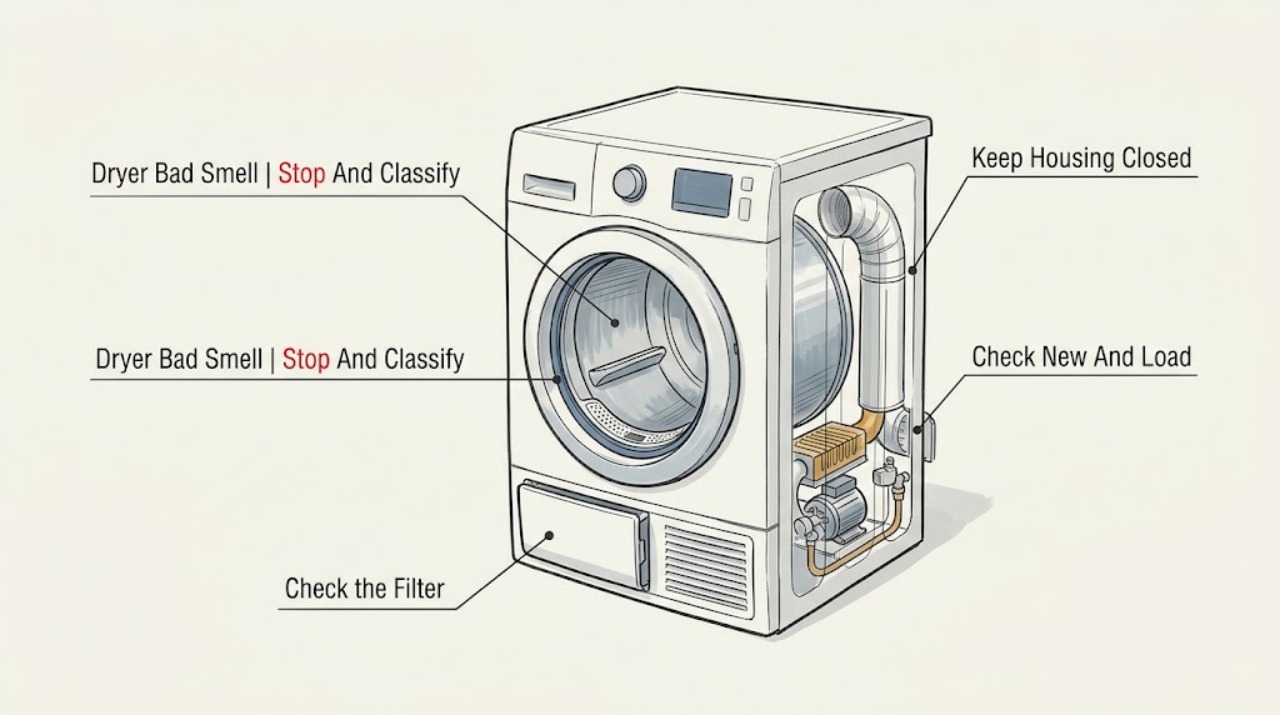
Classify the smell before running the LG dryer again. A mild odor from a genuinely new dryer or the first few heat cycles can fade as new materials warm, but that explanation does not cover smoke, a strong or worsening burning smell, a hot cabinet or outlet, sparks, poor airflow, or a gas odor. A musty or stale odor can come from a long-unused drum, detergent residue, damp laundry, or residue on the filter; a paint or varnish smell may come from nearby work. A hot, scorched, electrical, smoky, or gas-like smell is a stop condition: end the cycle, keep the dryer off, clear the area as appropriate, and use qualified service or the gas emergency path. When the dryer is cool and safely powered off, inspect the lint filter, visible drum, exhaust duct, load size, and outside vent. LG says clogged filters and ducts raise temperature and can create unsafe conditions; do not use the dryer until a severely restricted exhaust is cleaned and repaired. Never dry oil-, gasoline-, solvent-, or other flammable-contaminated items, and do not mix chemicals to mask an odor.
Before you begin
Safety first
- Keep the dryer off for smoke, fire, burning/electrical odor, scorching, overheating, sparks, poor/severely restricted airflow, repeated breaker trips, gas odor, or flammable-contaminated loads. Do not operate switches near suspected gas, open panels, bypass thermal/door protection, test live wiring, use flammable cleaners, or continue cycles to reproduce an odor.
Work through in order
Diagnostic checks
Use only checks that match the exact appliance or system and its official guide.
-
Check 1
Stop the cycle and identify where the odor is strongest and whether it is new-product, musty/stale, detergent or paint-like, hot/burning, smoky/electrical, or gas-like. Note smoke, heat, sparks, poor airflow, and load contents from outside the dryer.
Expected result: The odor is mild and fading on a new dryer, musty/stale, linked to residue or nearby work, hot/burning/smoky, or gas-like.
Next step: Keep the dryer off for any safety symptom. For suspected gas, leave and call the gas company or fire department from safety; for smoke/fire call emergency services.
Stop if: Do not sniff a hot drum, restart to reproduce the smell, operate switches near gas, or touch hot electrical parts.
Why this matters
Why: Only the first low-risk categories permit a cool, power-off maintenance check. Burning, smoke, overheating, sparks, or gas odor override all cleaning steps.
-
Check 2
When no hazard is present and the dryer is cool, note whether it is genuinely new, whether the smell began with a particular load, and whether items contain oil, gasoline, solvent, paint, varnish, or excessive detergent residue.
Expected result: The dryer is new with a mild fading odor, the load is contaminated, the load has residue, or the dryer is not new and the odor persists.
Next step: Keep contaminated items out of the dryer and follow product safety instructions. Ventilate nearby coatings safely; arrange service for a persistent appliance odor.
Stop if: Do not dry contaminated fabrics, add chemicals to the load, or use a new-dryer explanation for smoke, heat, sparks, gas, or worsening odor.
Why this matters
Why: LG allows a temporary initial-use odor explanation only for a new appliance; flammable or oily contamination can remain a fire risk, and persistent odor on an older machine needs diagnosis.
-
Check 3
After the dryer is cool and power is safely disconnected, remove the lint filter and inspect it for lint or detergent/softener residue. Clean and dry it exactly as the model manual permits and reinstall it firmly.
Expected result: The filter is full, coated, damaged, missing, clean, or the odor is hot/burning despite a clean filter.
Next step: Keep the dryer off until a clean, dry, undamaged filter is securely fitted. Follow the duct and service branch if the odor or overheating persists.
Stop if: Do not run without the filter, clean a hot machine, use flammable cleaners, or keep testing a burning smell.
Why this matters
Why: LG says a full or clogged filter can raise temperature; a damaged or absent filter is not safe to run. A clean filter does not clear a blocked duct or internal fault.
-
Check 4
With power disconnected and the drum cool, inspect the visible drum, rubber packing, and load area for lint, paper, stains, foreign objects, or signs of scorching. Remove only plainly accessible debris and use a damp cloth if the model manual permits.
Expected result: Lint or a foreign object is visible, a stain/residue is present, clothing is scorched, the drum is clean, or the cabinet area is inaccessible.
Next step: Remove an accessible object and use correctly sized, clean loads only after safety is established. Keep the dryer off for scorched items, cabinet lint, or recurring odor.
Stop if: Do not reach into a moving or hot drum, open the cabinet, or dry a load that has flammable contamination.
Why this matters
Why: LG connects dust/lint/foreign material and detergent residue with burning odors and says overloading can push clothes against the drum where they burn. Scorching or inaccessible lint needs service.
-
Check 5
When the dryer is cool and no burning or gas symptom is present, inspect the visible rear exhaust hose for crushing, kinks, holes, loose joints, and lint. Inspect the outside hood for visible blockage or a flap that cannot open; do not enter walls or use a heat cycle for a safety test.
Expected result: The filter is clean but the duct is restricted, d90/d95 or another airflow warning appears, outside airflow is weak, the duct is clear, or the source is inside walls.
Next step: Keep the dryer off until severe restriction is cleaned/repaired. Correct only a visible loose or crushed section permitted by the installation instructions; call a vent professional for hidden ductwork.
Stop if: Do not run with a severely restricted exhaust, install improvised ducting, or disassemble the dryer cabinet.
Why this matters
Why: LG says restricted ductwork raises temperature and can create an unsafe environment. Hidden length, bends, or wall blockage need professional vent cleaning, not repeated dryer cycles.
-
Check 6
For a non-hazardous stale odor, note whether the dryer was unused for a long time, laundry stayed damp, or painting/staining/varnishing occurred nearby. Ventilate only from a safe location and clean model-approved accessible surfaces without solvents.
Expected result: The odor follows long non-use, damp laundry, detergent residue, nearby coatings, or remains with a clean dry drum.
Next step: Remove damp loads promptly, allow the drum to dry, and wait until nearby fumes are gone before any permitted use. Service a recurring or unexplained odor.
Stop if: Do not use flammable solvents, heat a room with coating fumes, or mask an electrical/burning odor as musty.
Why this matters
Why: LG identifies new materials, residue, and surrounding paint/varnish fumes as possible odor sources; a clean drum with a persistent internal smell needs service.
-
Check 7
If the dryer is gas and a fuel-like smell is present, do not light anything, touch an electrical switch, or use a phone in the building. Clear everyone from the area and call the gas company or fire department from a safe location.
Expected result: The odor is confirmed or suspected to be gas, or no gas odor is present.
Next step: Leave the dryer and area untouched until qualified gas personnel inspect it. If the issue is not the gas line, arrange qualified dryer service.
Stop if: Do not relight, restart, inspect behind the dryer, or return to operate controls.
Why this matters
Why: LG treats gas odor as a gas-line safety event. The dryer cannot be safely diagnosed by a homeowner while gas may be present.
-
Check 8
Keep the dryer out of service when odor persists after permitted maintenance, a warning returns, airflow is poor, clothing is scorched, or any heat/smoke/electrical/gas symptom occurred. Record model, gas/electric type, load, odor timing, filter/duct observations, and display messages.
Expected result: The smell returns immediately, the dryer overheats, exhaust remains restricted, a code appears, or the source is inside the cabinet.
Next step: Arrange LG-authorized appliance service and, when appropriate, a professional vent cleaner, electrician, or gas technician. Restore use only after the relevant professional confirms safety.
Stop if: Do not open panels, test live wiring, bypass thermal or door protection, or keep running a smelly dryer.
Why this matters
Why: The remaining fault may involve a heater, motor, gas system, sensor, wiring, control, seal, or hidden vent and cannot be identified safely by odor alone.
Use your observations
Decision map
Find the observation that best matches what you see, then follow the next safe action.
-
PATH 01Safety boundary
What you see
Smoke, fire, sparks, hot cabinet/outlet, strong burning/electrical odor, scorching, or rapid overheating is present.
Do this next
End the cycle if safely possible, leave for smoke/fire, and call emergency help; otherwise keep power off and arrange qualified service.
Why this path and its safety boundary
Why it matters: The immediate risk is fire or shock, not ordinary residue.
Safety stop: Do not restart, reset a breaker repeatedly, or open the cabinet.
-
PATH 02Safety boundary
What you see
A gas-like odor is present around a gas LG dryer.
Do this next
Do not light appliances or operate switches/phones in the area; clear occupants and contact the gas company or fire department from safety.
Why this path and its safety boundary
Why it matters: A suspected gas leak requires evacuation and gas-safety response.
Safety stop: Do not relight or inspect the dryer.
-
PATH 03Safety boundary
What you see
The dryer is new and the odor is mild, temporary, and fading with no smoke, heat, gas, sparks, or poor airflow.
Do this next
Ventilate as directed and monitor only under the model manual; service if it persists, worsens, or any hazard appears.
Why this path and its safety boundary
Why it matters: LG says a new dryer may have a temporary initial-use odor as materials heat.
Safety stop: Do not use this explanation for an older dryer or strong burning/smoke.
-
PATH 04Safety boundary
What you see
Lint/filter residue, a foreign object, detergent residue, an overloaded load, or scorching is found.
Do this next
Clean only cool accessible areas, use clean correctly sized loads, and service recurrence or any cabinet lint/scorching.
Why this path and its safety boundary
Why it matters: Residue, lint, and poor load airflow can produce odors and raise heat; scorching is a stop condition.
Safety stop: Do not dry contaminated or scorched items or run without the filter.
-
PATH 05Safety boundary
What you see
The lint filter is clean but the duct is crushed/kinked/blocked, outside airflow is weak, or d90/d95/airflow warning appears.
Do this next
Keep the dryer off until visible or professional vent cleaning/repair is complete.
Why this path and its safety boundary
Why it matters: LG says severe exhaust restriction raises temperature and creates an unsafe environment.
Safety stop: Do not continue cycles with severe restriction.
-
PATH 06Safety boundary
What you see
The smell is stale/musty after non-use, damp laundry, or nearby paint/stain/varnish and no hazard is present.
Do this next
Dry the drum, remove laundry promptly, ventilate after coating fumes clear, and service a recurring internal odor.
Why this path and its safety boundary
Why it matters: The odor may be from moisture, residue, or room fumes rather than an internal fire fault.
Safety stop: Do not use solvents or heat the dryer around flammable fumes.
-
PATH 07Safety boundary
What you see
The odor remains or returns after filter, drum, load, and accessible duct checks, or comes from inside the cabinet.
Do this next
Keep the dryer off and arrange LG-authorized service and, if needed, professional vent/gas/electrical inspection.
Why this path and its safety boundary
Why it matters: An internal heater, motor, gas, sensor, wiring, control, seal, or hidden vent fault may remain.
Safety stop: Do not open panels, bypass protection, or keep testing.
Helpful context
Understand the symptom
A new-product odor is a narrow explanation
LG notes that plastic, rubber, insulation, motor, compressor, or heater materials can produce a temporary odor when a new dryer first heats. Ventilate according to the manual and watch the trend only if the odor is mild, fading, and there is no smoke, unusual heat, sparking, poor airflow, gas odor, or contaminated load. A strong, persistent, or worsening burning smell—especially on an older dryer—needs service rather than more test cycles.
Lint and airflow can turn an odor into a fire risk
LG says a full or clogged lint filter can raise temperature, while a clogged, crushed, kinked, or incorrectly installed exhaust duct restricts airflow. Check only accessible areas after the dryer cools and power is safely disconnected. If a severe restriction, hot cabinet, smoke, scorching, or a d90/d95 or similar airflow warning is present, keep the dryer off and have the exhaust system cleaned or repaired by a qualified professional.
Load and residue clues matter
LG identifies detergent residue on laundry, stains or foreign objects in the drum, and overloading as possible contributors to burning or stale odors. Sort loads by care label, remove visible foreign objects, and never put cooking-oil, gasoline, dry-cleaning-solvent, or other flammable-contaminated items in the dryer. A chemical, hot, or electrical smell that remains after the load is removed is an appliance safety issue.
Musty and surrounding-room odors use a different path
If the smell is stale or musty and there is no heat or fire symptom, consider a long-unused drum, damp laundry, filter residue, or nearby paint, stain, or varnish. Remove laundry promptly, clean only model-approved user-accessible surfaces, and ventilate after nearby work. Do not use solvents or another product to cover the odor; an odor that returns immediately or comes from inside the cabinet needs service.
Gas odor is not a troubleshooting experiment
For a gas LG dryer, a fuel-like smell requires the gas safety response. Do not light any appliance, operate switches, use a phone in the building, or keep inspecting the dryer. Clear the area and call the gas company or fire department from a safe location. Installation and gas service belong to qualified personnel.
Only after diagnosis
Potential parts
- dryer lint filter or filter housing
Consider only if a qualified diagnosis confirms a damaged filter or housing that cannot maintain safe filtration and airflow.
Confirm the complete LG model and filter design; do not run without a correctly seated filter. - dryer heater, motor, or gas ignition component
Consider only after qualified diagnosis identifies an internal heat, motor, or gas component as the source of a persistent odor.
Confirm exact model and fuel type; do not open panels or test live gas/electrical parts.
When checks do not resolve it
Need a professional?
Safety scope: Keep the dryer off for smoke, fire, burning/electrical odor, scorching, overheating, sparks, poor/severely restricted airflow, repeated breaker trips, gas odor, or flammable-contaminated loads. Do not operate switches near suspected gas, open panels, bypass thermal/door protection, test live wiring, use flammable cleaners, or continue cycles to reproduce an odor.
Common questions
FAQ
Is a burning smell from a new LG dryer normal?
LG says a mild, temporary odor can occur during initial heat cycles as new materials warm. It does not cover smoke, sparks, overheating, gas odor, poor airflow, contamination, or a strong, persistent, or worsening smell.
Can a clogged lint filter cause an LG dryer smell?
Yes. LG says a full or clogged filter can raise temperature and contribute to burning or discoloration. Clean it only when the dryer is cool and safely powered off, and keep the dryer off if the smell or heat persists.
What does a d90 or d95 warning have to do with odor?
LG uses d90/d95 for severe exhaust restriction. Restricted airflow can raise temperature and create an unsafe environment. Do not use the dryer until the filter, duct, hood, and any hidden ventilation restriction are cleaned or repaired.
Can detergent make a dryer smell like it is burning?
LG says excess detergent can leave residue on laundry that produces an odor when heated. Remove the load, use measured detergent, and keep the dryer off if the smell is hot, persistent, smoky, or electrical.
Can I dry clothes that had oil or gasoline on them after washing?
No. Keep oil-, gasoline-, solvent-, and other flammable-contaminated items out of the dryer. Follow the relevant product and appliance safety instructions instead of adding heat or chemicals.
What should I do if my LG gas dryer smells like gas?
Do not light anything, operate an electrical switch, use a phone in the area, or inspect the dryer. Clear everyone from the area and contact the gas company or fire department from a safe location.
When should an LG dryer bad smell receive service?
Arrange service for a persistent or recurring odor, smoke, scorching, overheating, sparks, poor airflow, severe duct restriction, a hot cabinet/outlet, repeated breaker trips, gas odor, or an odor from inside the cabinet.
Read the exact guide
Official sources
- LG Dryer - Troubleshooting Burning or DiscolorationLG USA Support · LG dryer burning/discoloration guidance; exact model controls.
- LG Dryer - What to Do If You Smell Gas Around Your LG DryerLG USA Support · LG gas-dryer safety guidance; local emergency and gas-supplier instructions control.
- LG Dryer – Why is My Dryer Not Heating, Not Drying or Taking a Long Time Drying?LG USA Support · LG dryer airflow guidance; exact model instructions control.
- [LG Dryer] A burning smell comes from the dryer during dryingLG USA Support · LG dryer odor guidance across models; exact model manual controls.
- LG Dryer - Understanding d90 and d95 Error CodesLG USA Support · LG dryer exhaust warning guidance; model-specific codes vary.
Community feedback
Share a repair observation
Share a plain-text repair observation. Accepted observations are published automatically; this page may take a moment to update.