
On this page
Start here
Quick answer
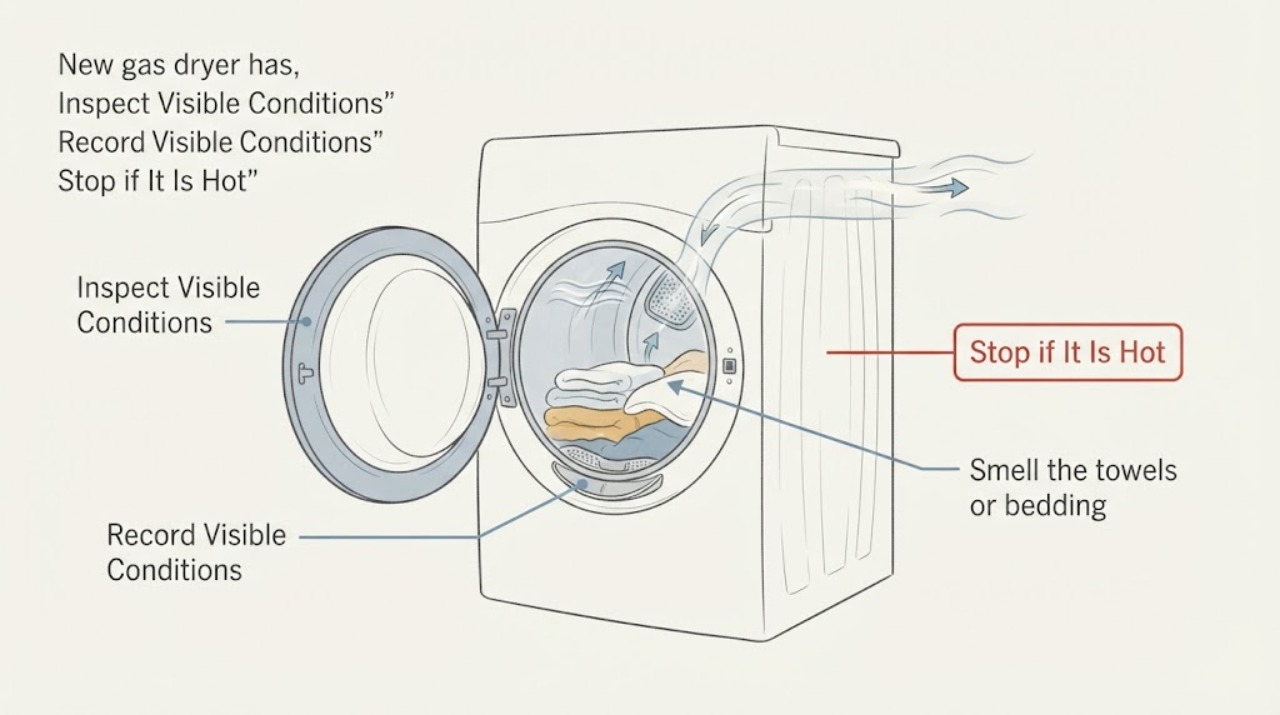
A musty smell on towels or bedding does not by itself prove that the new LG DLGX4001B gas dryer has mold or a failed part. First smell the fabric before it enters the dryer and separate a washer or laundry odor from an odor created only after drying. With the dryer cool, clean and dry the lint filter, wipe accessible gasket and sensor surfaces, check the drum for moisture or residue, and inspect the accessible exhaust path for kinks, lint, or a blocked outside hood. LG identifies DLGX4001B as a gas dryer and says a faint odor can occur during initial heated cycles, but gas odor, smoke, burning plastic or rubber, scorch marks, sparks, or a worsening odor is a stop-use event. Do not use harsh chemicals, open the cabinet, adjust gas, or keep running cycles to chase the smell; because this is a new appliance, document the symptom and use the installer, LG support, and warranty path promptly if it persists.
Work through in order
Diagnostic checks
Use only checks that match the exact appliance or system and its official guide.
-
Check 1
Stop the dryer and let it cool. From outside the cabinet, classify the smell as damp or musty, gas-like, hot lint, burning rubber or plastic, electrical or ozone-like, or an unknown sharp odor. Look only for smoke, sparks, melted material, scorch marks, a hot or discolored cord, or a gas smell; do not operate switches or try to ignite anything if the smell is gas-like.
Expected result: The odor is a faint damp/new-product smell with no damage, or it is gas-like, burning, electrical, accompanied by smoke/sparks, or getting stronger.
Next step: For any gas-like odor, leave the area without operating electrical switches and follow local gas-emergency guidance. For smoke, sparks, melting, scorching, or electrical odor, keep the dryer off and isolate power only from a safe, dry location before qualified help. For a faint non-hazardous new-product smell, keep the door open to ventilate while it is off.
Stop if: Do not run another cycle, reset a breaker repeatedly, open the cabinet, disconnect gas, or use a chemical deodorizer to mask a hazardous smell.
Why this matters
Why: A mild initial-use odor can come from heated new materials, but gas, smoke, electrical damage, melting, or worsening heat odor is not a lint-cleaning issue and can indicate fire, shock, or gas risk.
-
Check 2
Read the rating label and support record and confirm the complete model and regional suffix. LG's US support record identifies DLGX4001B.ABLEEUS as a 7.4 cu. ft. front-load gas dryer, while the product page identifies DLGX4001B as the black-steel gas model. Record the delivery/installation date and keep the installer and warranty details with the symptom report.
Expected result: The label matches DLGX4001B and the new installation is documented, or the suffix/market is different or incomplete.
Next step: Use only the exact DLGX4001B literature for user-accessible maintenance. If the model or installation cannot be confirmed, stop at external safety checks and ask the installer or LG support to identify the correct documentation.
Stop if: Do not move the gas dryer to inspect connections, adjust the gas valve, or perform an installation/service test with an unknown button sequence.
Why this matters
Why: The manual, vent arrangement, steam features, gas requirements, and warranty terms are model- and market-dependent. A missing suffix is not permission to use another LG dryer's access or test sequence.
-
Check 3
Smell the towels or bedding before they enter the dryer and compare them with the empty, cool drum. Check whether the same musty odor is already present after washing, whether it appears only on towels/bedding, and whether other dry loads pick it up. Remove wet laundry promptly from the washer and note any washer drain, detergent, or tub-clean concern without treating the washer as proven faulty.
Expected result: The fabric smells musty before drying, only bulky wet items trigger the complaint, the cool dryer drum itself smells, or the fabric is neutral before drying and smells only after the dryer runs.
Next step: If the odor starts in the washer, resolve that source and test a clean, fully dried towel only after the dryer passes its cool checks. If the empty drum smells or the odor appears only with heat, keep the dryer off and continue with filter, drum, steam, and exhaust checks; persistent odor on a new appliance goes to LG/installer support.
Stop if: Do not keep drying musty or contaminated fabric to cover the smell, and do not pour bleach, vinegar, solvent, or fragrance products into the dryer.
Why this matters
Why: An odor present before drying points first to laundry or washer moisture/residue handling. A cool drum odor points toward residue or retained moisture in the dryer. An odor created only by heat points toward heated residue, airflow, or a safety-related heat source and needs more caution.
-
Check 4
With power off and the drum cool, remove and clean the lint filter as the exact manual directs and let it dry completely before reinstalling. Wipe accessible lint from the door gasket and the moisture-sensor surface below or behind the filter using the method LG documents; inspect the drum for visible moisture, packing residue, stains, or a foreign object. Do not pull out the gasket or reach behind panels.
Expected result: The filter is clogged or damp, lint/residue is on the gasket or sensor, the drum has visible moisture/residue, or the accessible surfaces are clean and dry.
Next step: Correct only the visible, manual-approved cleaning issue and allow all cleaned parts to dry. If residue is melted, scorched, trapped, or returns after a safe maintenance check, leave the dryer off and use qualified service/warranty support.
Stop if: Do not use a wet filter, bypass the filter, scrape the drum with a sharp tool, use harsh chemicals, or disassemble the cabinet.
Why this matters
Why: Lint, detergent residue, or retained moisture can transfer odor to towels and bedding or alter drying. A clean, dry accessible area does not prove that the heater, burner, motor, belt, or internal air path is sound.
-
Check 5
Check the accessible exhaust route only when the dryer is cool and off: look for a crushed, kinked, loose, or lint-filled hose, a blocked outside hood, or a FlowSense/duct-clogging indication. If the dryer has TurboSteam and the drum is damp after a steam cycle, dry the cavity with a soft towel and follow the exact manual's steam-care instructions; do not open the gas dryer to inspect the burner or blower.
Expected result: The filter/duct warning is present, airflow appears restricted, the hose or outside hood is visibly damaged/blocked, the drum has steam condensation, or the accessible exhaust path is clear.
Next step: Clean the filter and remove only visible external lint; have a vent professional inspect a concealed or restricted duct. Dry visible condensation with the dryer off. If the warning or smell persists, stop use and arrange LG/qualified service rather than repeatedly running the dryer.
Stop if: Do not run the dryer with a blocked vent, use an unapproved exhaust configuration, reach into the blower/heater area, or treat a duct warning as permission to adjust gas.
Why this matters
Why: Restricted exhaust can retain hot humid air, lengthen drying, and increase lint/odor risk. Steam condensation can leave a damp drum. A clear external path does not exclude an internal heater, motor, sensor, or gas-control problem.
-
Check 6
Review the towel or bedding wash process without changing multiple variables at once. Note whether excess detergent, fabric softener, a long delay before drying, or an oversized/very wet load preceded the smell. Use the washer and dryer manuals for the correct load and cycle, and do not use the dryer as a deodorizing or sanitizing test.
Expected result: The smell follows delayed wet laundry, heavy detergent/softener residue, an oversized wet load, only the steam option, or it occurs with small clean loads as well.
Next step: Correct one documented laundry or cycle condition and compare only after the dryer is cool and hazard-free. If the odor remains or transfers to clean fabric, stop using the new dryer and request warranty/installer diagnosis.
Stop if: Do not add fragrance, chlorine, solvent, or other chemical products to the dryer, and do not continue heated cycles with a persistent or worsening odor.
Why this matters
Why: Laundry residue and retained moisture can create a musty odor before or during drying, while a smell that appears with small clean loads is less explained by the load alone. The pattern still cannot identify a dryer part.
-
Check 7
Prepare a new-appliance service handoff rather than opening the dryer. Record the exact model/suffix, serial, market, installation date, fuel type, load and wash history, whether the smell existed before drying, odor location and timing, filter/gasket/drum findings, FlowSense or display messages, exhaust observations, and any smoke, gas, scorch, or electrical symptom.
Expected result: The odor persists after cool, external maintenance checks; it returns on a small clean load; it is strongest at the rear, cord, burner, or internal area; or the new installation/documentation is incomplete.
Next step: Keep the dryer off and contact LG support, the installer, or a qualified gas-appliance technician. Ask for an exact-model diagnosis and vent/installation review before any component or gas adjustment is considered.
Stop if: Do not remove panels, test live circuits, adjust gas, bypass thermal protection, or order a heater, motor, belt, or control from the odor alone.
Why this matters
Why: An internal heater, burner, motor, belt, sensor, control, lint path, or installation fault cannot be distinguished safely by smell. New-appliance timing makes installer and warranty review more appropriate than a part guess.
Use your observations
Decision map
Find the observation that best matches what you see, then follow the next safe action.
-
PATH 01Next step
What you see
The dryer is new, the odor is faint and limited to early heated use, it fades while the dryer is off and ventilated, and there is no smoke, gas smell, discoloration, melting, or effect on clothing.
Do this next
Keep the dryer off between uses, ventilate as LG describes, complete only model-approved filter and drum maintenance, and contact LG/installer support if the odor does not fade promptly or returns on clean loads.
Why this path and its safety boundary
Why it matters: This pattern is compatible with LG's described temporary new-appliance odor, but it is not a blanket approval for continued use if the smell worsens or persists.
-
PATH 02Next step
What you see
The towel or bedding smells musty before drying, especially after sitting wet in the washer, while the cool DLGX4001B drum is neutral and a clean small load does not acquire the odor.
Do this next
Address prompt laundry removal, washer moisture/drain/detergent handling, and the washer's exact manual guidance. Recheck the dryer only with clean, neutral-smelling fabric after the dryer passes its external checks.
Why this path and its safety boundary
Why it matters: The evidence favors a laundry or washer moisture/residue source rather than proving a dryer defect. The dryer should not be used to conceal the original odor.
-
PATH 03Next step
What you see
The odor begins only after the dryer runs, the drum is damp after TurboSteam or a wet bulky load, or lint/residue is found on the filter, gasket, sensor, drum, or accessible exhaust path.
Do this next
With the dryer off, complete only the documented surface/filter maintenance, dry visible condensation, and have a concealed or restricted vent inspected professionally. If the odor returns, use LG warranty/service diagnosis.
Why this path and its safety boundary
Why it matters: Retained moisture, heated residue, lint, or restricted airflow is more plausible than a proven gas or control failure, but the machine should not be run while the odor persists.
-
PATH 04Next step
What you see
The smell is gas-like, electrical, burning rubber or plastic, or accompanied by smoke, sparks, melting, scorch marks, a hot supply, or a worsening odor during heat.
Do this next
Stop using the dryer. For suspected gas, leave without operating electrical switches and follow local gas-emergency guidance. For smoke or electrical/material damage, keep clear, isolate power only if safe, and obtain qualified emergency, electrical, gas, or appliance help.
Why this path and its safety boundary
Why it matters: This is an immediate gas, fire, or electrical stop condition, not a normal new-dryer smell or a filter-cleaning task.
-
PATH 05Next step
What you see
The odor persists on clean, neutral fabric after the cool filter, drum, gasket, sensor, and accessible exhaust checks, or it is strongest at an internal/rear area or the new installation cannot be verified.
Do this next
Leave the DLGX4001B off and use LG/installer warranty support or qualified gas-appliance service. Provide the complete model, installation record, odor timing/location, load history, and all observed safety signs.
Why this path and its safety boundary
Why it matters: An internal heat, gas, drive, sensor, control, or installation problem remains possible, but odor alone cannot select a component.
Helpful context
Understand the symptom
Musty is not the same as gas or burning odor
A damp-towel or mildew-like smell should be traced to the fabric and moisture path first. A gas-like smell, electrical or ozone odor, burning rubber or plastic, smoke, sparks, or scorched material is a different and urgent problem. LG confirms that DLGX4001B is a gas dryer and says a faint odor during initial heated cycles can occur as new materials warm, but that does not make a sharp, worsening, or persistent hazardous smell normal.
Towels and bedding expose shared laundry conditions
Towels and bulky bedding hold more moisture and lint than a small, fast-drying load. If the fabric smells musty before it enters the dryer, investigate the washer, drain handling, detergent residue, and prompt removal of wet laundry. If the smell begins only after the dryer runs, inspect the cool drum, filter, gasket, steam-related moisture, and exhaust path before assuming an internal dryer failure.
New appliance and installation take priority
The DLGX4001B support page provides the model's manuals and warranty route, and LG's installation guidance lists DLGX**01* models in its dryer installation-test family. Do not use an uncertain button combination or open the cabinet on a new gas appliance. Record the model suffix, installation date, load, odor timing and location, and use the installer or LG warranty support if the smell does not quickly fade or affects clothing.
When checks do not resolve it
Need a professional?
Use LG/installer warranty support promptly when a new DLGX4001B odor persists, transfers to clean fabric, appears on small neutral loads, returns after external maintenance, or needs installation/vent review. Stop immediately for gas odor, smoke, sparks, burning electrical/rubber/plastic odor, melting, scorch marks, a hot supply, or uncontrolled heat.
Have this ready
- Provide the complete DLGX4001B model and serial, regional suffix, installation and delivery date, gas type, washer/load timing, whether the fabric smelled before drying, odor description and location, filter/gasket/drum/sensor findings, steam use, vent/FlowSense observations, and any smoke, gas, scorch, or electrical symptom.
Common questions
FAQ
Is a smell from a brand-new LG DLGX4001B gas dryer always dangerous?
No. LG says a faint odor can occur during initial heated cycles as new materials warm and should dissipate. Gas odor, smoke, sparks, melting, scorch marks, electrical odor, or a worsening smell is different: stop using the dryer and obtain qualified help.
How can I tell whether the smell comes from the washer or dryer?
Smell the towels or bedding immediately after washing and before drying, then compare them with the cool, empty dryer drum. If the fabric already smells musty, investigate washer moisture, detergent, drain, and prompt laundry removal. If the odor begins only after drying, keep the dryer off and check its filter, drum, gasket, steam moisture, and exhaust path.
Can I run a chemical cleaner or fragrance through the dryer to remove mildew smell?
No. Do not use bleach, vinegar, solvents, fragrance products, or other chemicals in the dryer. With power off and the drum cool, use only the exact model's accessible filter and surface-maintenance instructions; persistent odor belongs with LG or qualified service, especially on a new gas appliance.
Read the exact guide
Official sources
- [LG Washer Dryer] Strange Smell After DryingLG Electronics · The opened LG washer-dryer guidance says a newly installed appliance may have an odor, wet laundry left in a washer can become musty, and moisture or detergent residue can create odors. It is not used to assign a dryer part or to claim that the standalone DLGX4001B shares a washer mechanism.
- Installation Check - Laundry DryerLG Electronics · The opened LG installation page lists DLGX**01* models in its installation-test family and explains that a slow temperature rise can indicate exhaust restriction while a rapid rise can have cycle or sensor-related explanations. The article uses the installation and vent boundary only; it does not instruct this user to enter a test mode with uncertain controls.
- 7.4 cu. ft. Front Load Gas Dryer - DLGX4001B | LG USALG Electronics · The opened LG product page labels DLGX4001B and identifies it as a 7.4 cu. ft. front-load gas dryer with TurboSteam and FlowSense duct-clogging/lint-filter indicators. Product marketing details are not used as a repair diagnosis.
- LG DLGX4001B: Support, Manuals, Warranty & More | LG USA Product Support PageLG Electronics · The opened LG support page identifies DLGX4001B.ABLEEUS, provides the owner's manual and user guide, and shows the model's warranty/support route. It is the identity and new-appliance service source; its US suffix must be checked against the appliance label.
- [LG Dryer lint] There is a lot of lint left on fabric after drying.LG Electronics · The opened LG page says a clogged or damaged filter can leave lint in the drum and on laundry, calls out towels as lint-generating loads, and directs cleaning or replacement through service when the mesh is damaged. It is used for cool external filter and load observations, not part ordering.
- [LG Dryer] A burning smell comes from the dryer during dryingLG Electronics · The opened LG guidance says initial heated cycles can produce a temporary new-dryer odor, and separately notes that dust, lint, foreign material, or excess laundry detergent residue can create odor when heated. It does not authorize continued operation when smoke, damage, gas odor, or a worsening smell is present.
- LG Dryer – How to Perform Dryer MaintenanceLG Electronics · The opened LG maintenance page directs users to clean the lint filter after every load, dry a washed filter completely, wipe the moisture sensor and door gasket, and dry drum condensation after the steam cycle. It warns that steam is not available on every model, so exact DLGX4001B manual instructions control.
- [LG Dryer] [Gas type] A display saying that the exhaust pipe is clogged appearsLG Electronics · The opened LG gas-dryer guidance says a clogged filter or exhaust pipe impairs airflow and drying, distinguishes a clean filter with a restricted exhaust path, and recommends service inspection when the indication persists. It supports external airflow triage, not cabinet or gas repair.
Community feedback
Share a repair observation
Share a plain-text repair observation. Accepted observations are published automatically; this page may take a moment to update.