
On this page
Start here
Quick answer
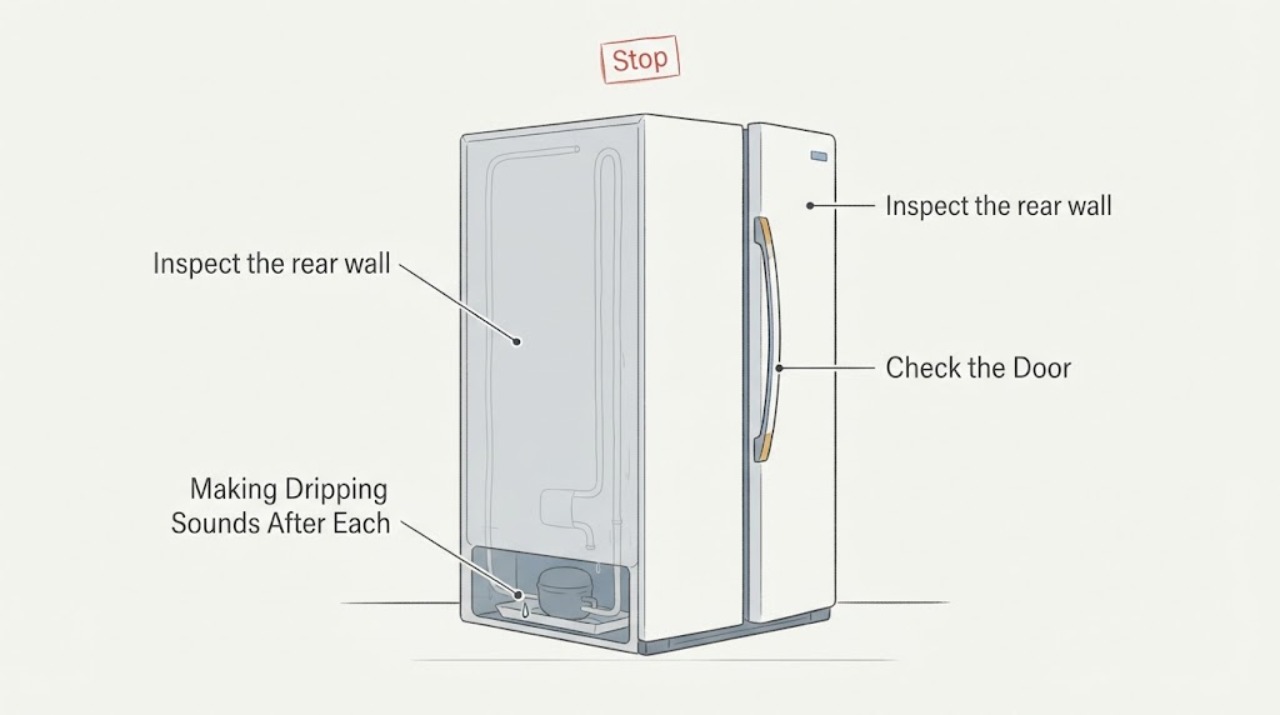
A dripping or water-like sound from a Liebherr CT 2131 is not enough to identify a failed part. Liebherr says operating appliances can produce technical flow or injection noises, and that droplets on the rear wall can be part of the defrost process. First decide whether you hear a sound only or also see water: inspect the rear-wall drain area and the floor without removing covers, keep food cold while checking the temperature, and arrange service if water pools, cooling is lost, or the sound is accompanied by another fault. Do not probe the drain with a sharp object or open the sealed refrigeration system.
Work through in order
Diagnostic checks
Use only checks that match the exact appliance or system and its official guide.
-
Check 1
Listen during one complete cooling cycle and note where the dripping-like sound comes from: inside near the rear wall, behind the cabinet, or at the floor. Record whether it is only a sound or whether a visible drip or puddle appears.
Expected result: There is only a short water-like or bubbling sound with no visible water, or there is an actual drip, pooling, or wet floor.
Next step: If there is no water and cooling remains normal, continue with the drain and temperature checks. If water is present, keep the area dry and continue only with external checks; use the service branch if the source is not obvious.
Why this matters
Why: Liebherr identifies flow or injection noises and bubbling or gurgling as technical operating sounds. A visible leak is a different condition and cannot be cleared as normal from the sound description alone.
-
Check 2
Inspect the rear wall and defrost-gutter opening from inside the refrigerator. Keep food and containers from touching the rear wall, and clear only loose visible debris at the opening using the exact CT 2131 instructions; do not push a sharp tool into the drain or remove an interior panel.
Expected result: You see small droplets that run toward the gutter, a blocked or dirty-looking opening, or water collecting on the refrigerator floor.
Next step: If the gutter is visibly obstructed and the exact instructions permit an external clean, clean it gently and monitor the next cycle. If water still pools, the opening cannot be safely accessed, or the drain path is hidden, stop and request Liebherr service.
Why this matters
Why: Liebherr says rear-wall droplets can be normal during defrosting and should drain through the defrost gutter. Its support guidance links water pooling to the drainage hole and says items touching the rear wall can contribute to the problem.
-
Check 3
Check the cabinet floor, the area beneath the appliance, door closure, and ventilation from outside. Do not tip the refrigerator or remove the rear cover while investigating the sound.
Expected result: The floor is dry and the door seals and ventilation appear normal, or there is recurring water, a door gap, restricted ventilation, or another visible fault.
Next step: Correct only an obvious external obstruction and monitor one cycle. If water returns, the door cannot seal, or the sound comes with loss of cooling, arrange service and provide the sound location and photos of any water.
Why this matters
Why: A dry cabinet with normal cooling keeps the symptom in the documented operating-noise or defrost-observation path. Recurring water, poor sealing, and inadequate ventilation can affect operation and need model-specific assessment rather than a guessed component diagnosis.
-
Check 4
Verify the refrigerator and freezer temperatures with the settings and thermometer procedure in the exact CT 2131 instructions, and check that the appliance is being used within its stated climate range. Keep the doors closed while the measurement stabilizes.
Expected result: Both compartments hold their required temperatures, or one compartment is warming, the setting is wrong, or the ambient conditions are outside the model range.
Next step: If temperatures are stable, use the noise and drain findings to decide whether monitoring is sufficient. If a compartment is warming or the climate conditions are unsuitable, protect perishable food and contact service rather than diagnosing the sealed system yourself.
Why this matters
Why: Liebherr lists temperature setting, door closure, ventilation, ambient climate, and door-opening frequency among causes of temperatures that are too warm. A dripping-like sound paired with warming is therefore a performance fault, not a noise-only finding.
-
Check 5
Match the serial-plate model and service number to Liebherr's operating-instructions portal before attempting any further cleaning or reset. If the sound persists after the documented external checks, submit a product-fault or service request with the exact identifiers, cycle timing, sound location, temperatures, and any water evidence.
Expected result: The exact manual is available and contains a matching drain or noise instruction, or the manual cannot be matched and the sound or water problem persists.
Next step: Follow only the matching manual's user-level instruction. If no matching instruction is available, or if the noise is accompanied by pooling, warming, electrical odor, or repeated fault behavior, stop user troubleshooting and request professional service.
Why this matters
Why: Liebherr says its manuals are retrieved with the service or serial number and asks for those identifiers when service needs to diagnose an appliance. A related CT listing cannot establish a hidden drain layout or an internal component failure for every revision.
Use your observations
Decision map
Find the observation that best matches what you see, then follow the next safe action.
-
PATH 01Next step
What you see
The appliance makes a brief dripping-like or bubbling sound, the rear wall has only small droplets, the cabinet is dry, and temperatures remain stable.
Do this next
Keep the rear-wall area clear, monitor the next cycle, and use the exact manual if the sound changes or becomes persistent and disruptive.
Why this path and its safety boundary
Why it matters: Liebherr describes technical flow noises and defrost-related rear-wall droplets as normal operating conditions.
-
PATH 02Next step
What you see
Water collects on the refrigerator floor or under the cabinet, or the rear-wall water does not drain through the gutter.
Do this next
Keep food and electrical areas dry, perform only the exact manual's external drain check, and request service if pooling returns or the drain cannot be safely accessed.
Why this path and its safety boundary
Why it matters: This is a drainage or leak finding rather than a sound-only operating condition.
-
PATH 03Next step
What you see
The dripping-like sound occurs with warming, a door that does not seal, restricted ventilation, or another fault symptom.
Do this next
Protect perishable food, record the measured temperatures and sound timing, and contact Liebherr service with the serial-plate information.
Why this path and its safety boundary
Why it matters: Liebherr's troubleshooting guidance treats temperature and installation conditions as factors that can affect operation; the combined symptom needs diagnosis beyond normal noise classification.
Helpful context
Understand the symptom
Confirm the appliance identity before using a manual
The supplied topic names the Liebherr CT 2131. Liebherr's opened product record uses a CT 2131 URL and explicitly lists accessories compatible with CT 2131, while the current page body presents a closely related CTPe211-26 product record. Use the serial plate and service number to obtain the exact operating instructions before applying any model-specific procedure; Liebherr says those identifiers are on the appliance plate.
A sound and a leak are different findings
Liebherr describes humming, hissing, bubbling, gurgling, flow and injection noises as technical operating sounds that cannot be eliminated entirely. It also says small rear-wall droplets can be functional during defrosting, with water directed through the defrost gutter. That does not make water on the cabinet floor, persistent pooling, or poor cooling normal; those findings require the drain and service branches below.
When checks do not resolve it
Need a professional?
Contact Liebherr service if there is recurring water, warming or freezing problems, an inaccessible or repeatedly blocked drain, an electrical or burning smell, or a persistent sound that does not fit the documented noise and defrost observations.
Common questions
FAQ
Can a Liebherr CT 2131 make a dripping-like sound during normal operation?
A sound alone does not identify a failed part. Liebherr says technical flow or injection noises, including bubbling or gurgling, can occur during operation, and that small rear-wall droplets can be part of defrosting. Confirm that there is no pooling and that temperatures remain stable.
What should I check if there is water inside the refrigerator?
Check whether the rear-wall gutter is draining and whether containers or food are touching the rear wall. Liebherr's support guidance says water pooling can be associated with the drainage hole; use only the matching model instructions for any cleaning and request service if pooling returns.
How do I obtain the exact Liebherr CT 2131 instructions?
Read the serial plate and service number inside the appliance, then enter the nine-digit service or serial number in Liebherr's operating-instructions portal. The current CT 2131 product record is a useful identity cross-check, but the exact revision's instructions should control any model-specific step.
When is a dripping sound a service issue?
Treat it as a service issue when the sound comes with water on the floor, repeated pooling, warming or freezing problems, an inaccessible drain, an electrical or burning odor, or a failed user-level check. Provide the model and service number, sound timing, temperature readings, and photos of any water.
Read the exact guide
Official sources
- Service and support — LiebherrLiebherr-Hausgeräte · Used for locating the serial plate and supplying exact appliance designation and serial information to service; not used for a CT 2131 internal repair procedure.
- CTPe211-26 SmartFrost refrigerator-freezer — Liebherr product recordLiebherr-Hausgeräte · Opened official URL contains the CT 2131 product identity in the URL and explicitly labels the accessory section as compatible with CT 2131. The current page body presents CTPe211-26, so this source is used for identity cross-check and SmartFrost/product context only, not for hidden CT 2131 repair geometry.
- FAQs — frequently asked questions about Liebherr refrigerators & freezersLiebherr · Used for general Liebherr guidance on rear-wall droplets, defrost-water drainage, technical operating noises, temperature checks, and service escalation; it is not used to assert a hidden CT 2131 component fault.
- Operating instructions for Liebherr refrigerators and freezersLiebherr · Used only to direct the reader to the exact manual lookup; the page does not expose CT 2131 technical steps in its opened content.
- Online Contact Us — Liebherr APACLiebherr · Used for the opened support guidance on rear-wall droplets, freezer/fridge water-leak triage, water pooling, external drain cleaning, noise classification, and escalation; exact model instructions still control any model-specific action.
Community feedback
Share a repair observation
Share a plain-text repair observation. Accepted observations are published automatically; this page may take a moment to update.