
On this page
Start here
Quick answer
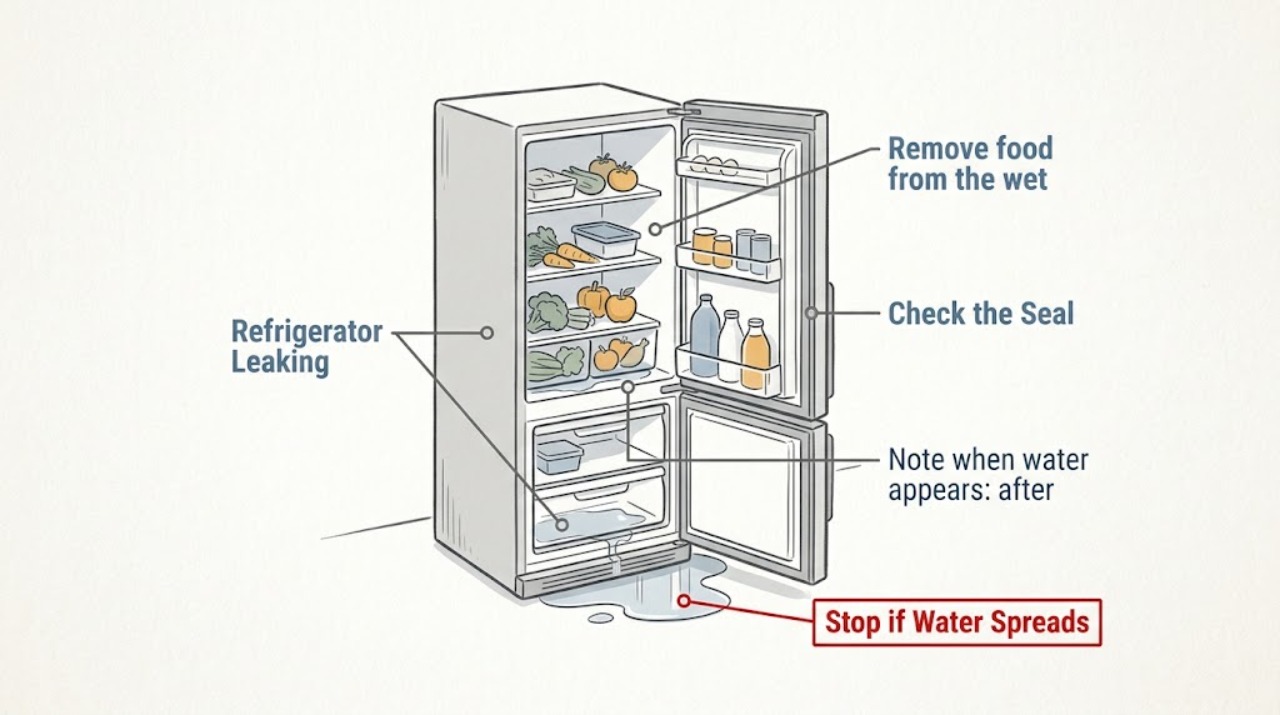
When a Liebherr refrigerator is leaking, find whether water begins at the rear-wall defrost gutter, under a drawer, around the door seal, or outside the appliance. A blocked gutter, damaged seal, overloaded storage area, warm food, or frequent door opening can create different water patterns. Dry the area and perform only accessible checks; persistent water, a damaged line, or water near electrical parts requires Liebherr service.
Before you begin
Safety first
- Do not remove panels, puncture a drain channel, or work around live electrical parts; use only model-approved accessible cleaning.
Work through in order
Diagnostic checks
Use only checks that match the exact appliance or system and its official guide.
-
Check 1
Remove food from the wet area and inspect the rear wall, defrost gutter, and drain opening for standing water or visible residue. Do not probe beyond the accessible opening.
Expected result: Water is pooled in the gutter or the opening is visibly blocked, or the gutter is clear and dry.
Next step: Clear only accessible residue using the model instructions, dry the compartment, and monitor for a return.
Why this matters
Why: Liebherr says defrost water should drain unhindered through the rear gutter; a blockage can send water into the compartment.
-
Check 2
Inspect the door gasket and the surface it touches for dirt, gaps, or distortion, and check whether packages touch the rear wall or hold the door open.
Expected result: The seal does not contact evenly or food is obstructing airflow/closure, or the seal and load are normal.
Next step: Clean the seal with water and a little dish soap, reposition food, and close the door gently. Arrange service for a damaged seal.
Why this matters
Why: Liebherr links a defective seal and poor storage to excess moisture, condensation, and water in the compartment.
-
Check 3
Note when water appears: after defrosting, after frequent opening, after warm food is stored, or continuously even when the compartment has been left closed. Check the floor and any accessible external drain area for spread.
Expected result: Water follows a usage/condensation pattern, or it continues independently and reaches the floor or electrical area.
Next step: Dry spills and reduce humidity sources only when safe. Stop using the appliance and request service for continuous leakage or electrical exposure.
Why this matters
Why: Humidity and defrost drainage can explain intermittent interior moisture; continuous spreading water needs a plumbing or appliance inspection.
Use your observations
Decision map
Find the observation that best matches what you see, then follow the next safe action.
-
PATH 01Next step
What you see
Water stops after the rear gutter is cleared and the compartment is dried
Do this next
Keep the accessible gutter opening clear and monitor the same location.
Why this path and its safety boundary
Why it matters: A defrost-drain restriction is supported.
-
PATH 02Next step
What you see
Condensation appears around a dirty/damaged seal or overloaded rear wall
Do this next
Correct the seal cleanliness and storage pattern; call service for a damaged gasket or recurring water.
Why this path and its safety boundary
Why it matters: Humid air entry and restricted circulation are more likely than a hidden pipe leak.
-
PATH 03Next step
What you see
Water continues to spread with a clear drain and seal, or reaches electrical parts
Do this next
Keep the appliance safe and obtain Liebherr service; do not dismantle the cabinet.
Why this path and its safety boundary
Why it matters: The source is not explained by routine condensation checks.
Helpful context
Understand the symptom
The puddle is not the source
Water can travel from a blocked rear drain or condensation before appearing at the front. Trace the first wet point and note whether the water is inside the compartment or on the floor.
When checks do not resolve it
Need a professional?
Stop using the refrigerator for spreading water or electrical exposure and arrange qualified service.
Safety scope: Do not remove panels, puncture a drain channel, or work around live electrical parts; use only model-approved accessible cleaning.
Have this ready
- Provide the model, first wet point, timing, seal/load result, drain observation, and whether water reaches the floor.
Common questions
FAQ
Why is there water inside my Liebherr refrigerator?
Liebherr lists a blocked defrost-water opening, a defective door seal, overloaded storage, warm food, and frequent door opening as possible moisture causes. Trace the first wet point rather than treating every puddle as the same fault.
Can I keep using a leaking refrigerator?
Only perform safe external checks. Stop and request service if water is continuous, spreads onto the floor, comes from a damaged line or seal, or approaches electrical parts.
Read the exact guide
Official sources
- Pourquoi il y a de l'eau dans mon réfrigérateur ?Liebherr · Liebherr refrigerator water, defrost-drain, seal, storage, and condensation guidance
- Service and support from LiebherrLiebherr · Liebherr refrigerator customer service
Community feedback
Share a repair observation
Share a plain-text repair observation. Accepted observations are published automatically; this page may take a moment to update.