
On this page
Start here
Quick answer
A Liebherr refrigerator can normally click when the refrigeration unit starts, hum as the compressor or fan runs, or gurgle as refrigerant moves. Diagnose an objectionable sound by its timing and location: vibration that changes when bottles or cabinet contact is removed is different from a new grinding sound, repeated fault indication, or noise with poor cooling. Do not open the cabinet to investigate internal refrigeration parts.
Before you begin
Safety first
- Do not remove covers, touch the compressor area, or work on the refrigeration circuit.
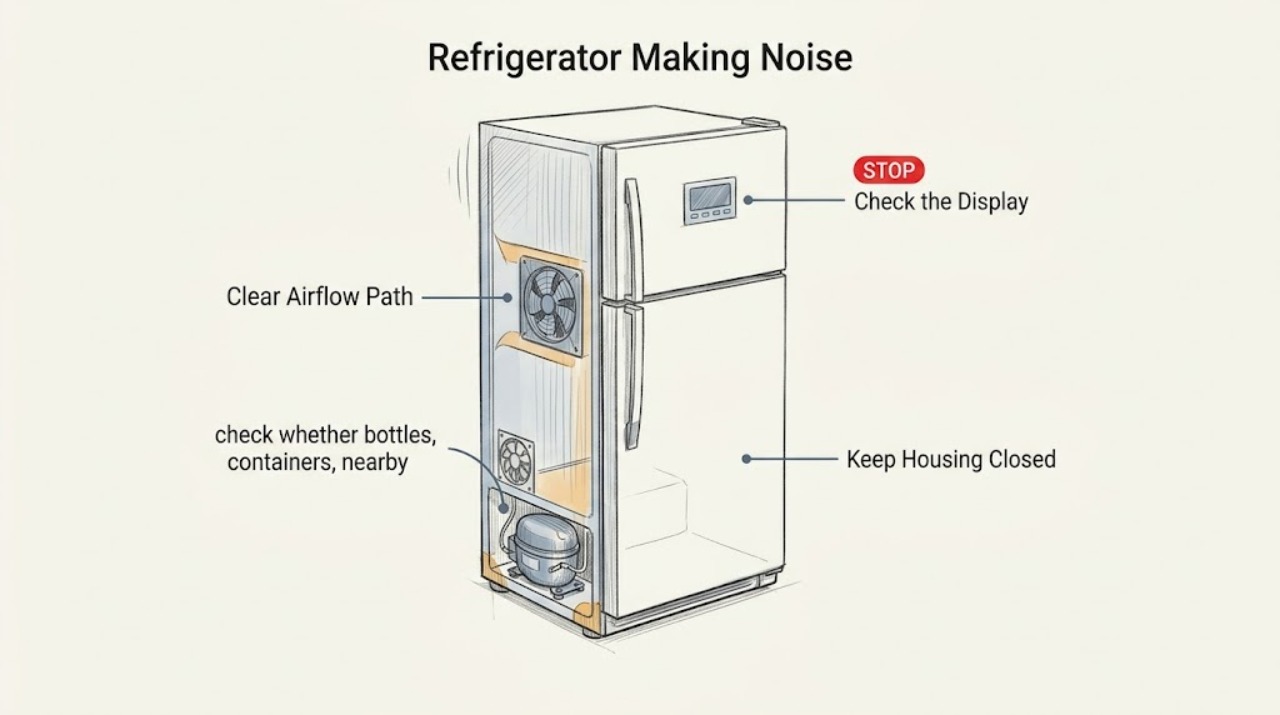
Work through in order
Diagnostic checks
Use only checks that match the exact appliance or system and its official guide.
-
Check 1
From outside the closed appliance, note whether the sound is a brief click, a steady low hum, bubbling or gurgling, airflow, or a rattling vibration, and whether it starts with a cooling cycle.
Expected result: The sound matches a short start/stop click, low hum, bubbling, fan airflow, or a new irregular noise.
Next step: Continue only with external checks for an irregular sound; do not remove panels or reach behind the appliance while it is powered.
Why this matters
Why: The first group corresponds to sound types Liebherr describes as normal on its manual; an irregular new sound needs further separation.
-
Check 2
With the appliance stationary, check whether bottles, containers, nearby furniture, or the wall are touching the cabinet and whether the unit sits firmly on its feet.
Expected result: Moving a container or clearing a contact changes the rattle, or the cabinet still vibrates with all nearby objects clear.
Next step: Separate containers and check the visible footing; use service if the cabinet cannot be stabilized without moving internal or electrical parts.
Why this matters
Why: A changed rattle supports transmitted vibration; persistent vibration can involve leveling or installation rather than a loose kitchen item.
-
Check 3
Compare the sound with the refrigerator temperature, display, and door condition after a normal closed-door period; note if it follows a long-open door or a fresh load.
Expected result: The hum follows increased cooling demand and temperature remains appropriate, or the noise accompanies a temperature alarm or poor cooling.
Next step: Allow a normal recovery period for a demand-related hum; if cooling does not recover or an alarm remains, arrange service.
Why this matters
Why: A temporary louder run can follow increased cooling demand; noise plus a temperature problem is a different service symptom.
-
Check 4
Listen once from the front and sides without touching the rear compressor area, and record whether the noise is intermittent, constant, scraping, or accompanied by an error indication.
Expected result: The sound is a documented low hum or airflow, or it is scraping, repeated knocking, or linked to a flashing fault indication.
Next step: Stop extended testing and give the recording and timing to qualified service for the second pattern.
Why this matters
Why: A documented operating sound can be normal; scraping, repeated impact, and fault indicators are not identified by this basic guide.
Use your observations
Decision map
Find the observation that best matches what you see, then follow the next safe action.
-
PATH 01Next step
What you see
A short click, low hum, bubbling sound, or fan airflow occurs with normal cooling
Do this next
Monitor it without opening the cabinet; seek help if the pattern changes or cooling deteriorates.
Why this path and its safety boundary
Why it matters: The sound fits Liebherr's listed normal refrigeration or airflow noises.
-
PATH 02Next step
What you see
Rattle changes after bottles or nearby contact is removed
Do this next
Keep the cabinet and containers separated and check visible leveling.
Why this path and its safety boundary
Why it matters: The immediate sound source is more likely vibration transmitted through containers or furniture.
-
PATH 03Next step
What you see
Scraping or knocking is new, persistent, or paired with an error or temperature alarm
Do this next
Stop investigating internally and arrange qualified appliance service.
Why this path and its safety boundary
Why it matters: The manual's normal-sound list does not establish this as routine operation.
Helpful context
Understand the symptom
Timing is more useful than loudness
Listen for when the sound begins: a short click at start or stop, a low hum during cooling, airflow that follows a fan, or a vibration transmitted through the cabinet. A sound that is new, metallic, scraping, or paired with a warning is not proven normal by volume alone.
When checks do not resolve it
Need a professional?
Arrange qualified service when the sound does not fit the listed operating noises or is accompanied by an error or cooling problem.
Safety scope: Do not remove covers, touch the compressor area, or work on the refrigeration circuit.
Have this ready
- Provide a short sound description or recording, when it starts, where it is loudest from outside, and the display and temperature behavior.
Common questions
FAQ
Is a Liebherr refrigerator hum always a failed compressor?
No. Liebherr describes low hum, a brief start-up hum, and some longer compressor operation as normal in stated conditions. Use cooling performance and any warning indication to decide when service is needed.
Can I remove the rear cover to locate a noise?
No. Keep powered refrigeration and electrical repairs to qualified service. Record the sound from outside and provide its timing and effect on cooling.
Read the exact guide
Official sources
- MalfunctionLiebherr-Hausgeräte · Liebherr refrigerator normal operating noises, vibration, and service boundaries
Community feedback
Share a repair observation
Share a plain-text repair observation. Accepted observations are published automatically; this page may take a moment to update.