
On this page
Start here
Quick answer
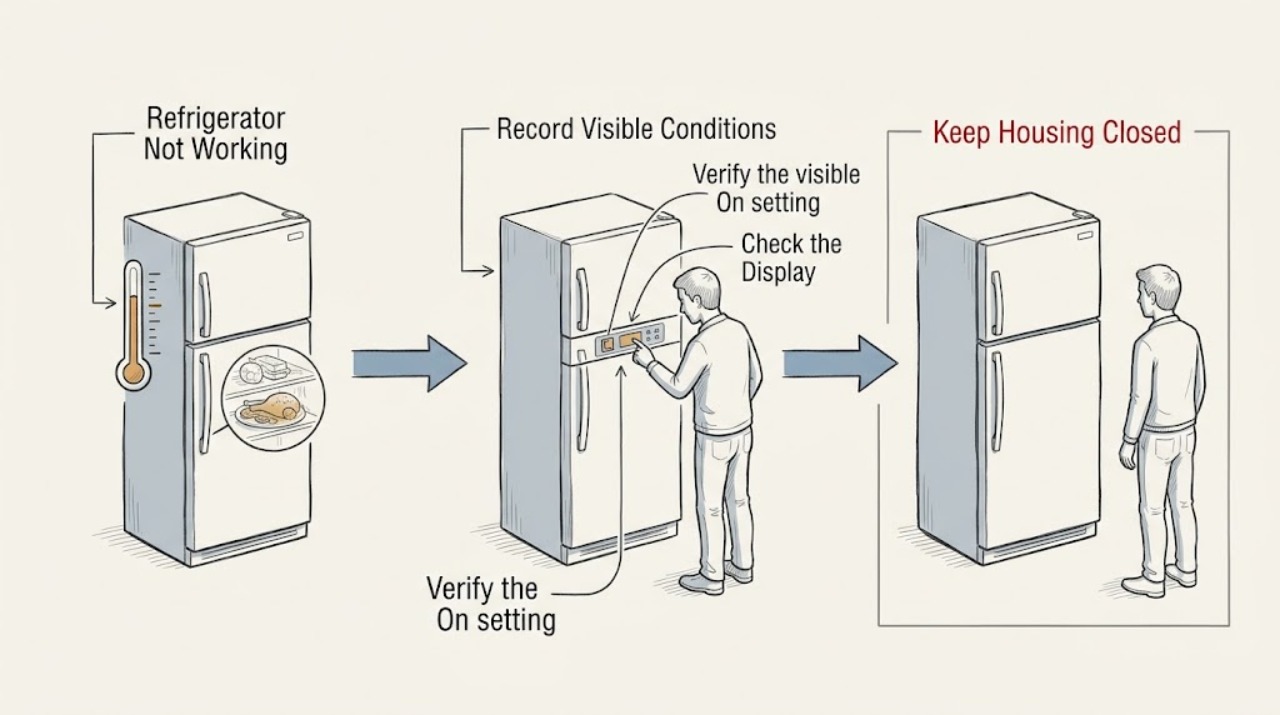
When a Liebherr refrigerator is not working, first describe what has actually stopped: the display, cooling, interior light, IceMaker, or one control. Check the visible power connection and look for a fault or temperature message before changing settings. If the appliance remains dead, shows a fault, or warms food, keep the doors closed, protect perishables, and arrange qualified service rather than opening the cabinet.
Before you begin
Safety first
- Do not remove covers, work on mains wiring, or open the refrigeration system. Keep the door closed while waiting.
Work through in order
Diagnostic checks
Use only checks that match the exact appliance or system and its official guide.
-
Check 1
Check the display, interior light, cooling sound, and any IceMaker or water function, recording which functions are present and which are absent.
Expected result: Everything is dark, or the display is active while only cooling, light, IceMaker, or dispensing is affected.
Next step: Use the corresponding external check and do not remove covers to investigate the inactive function.
Why this matters
Why: A fully dark appliance is a power or control-state problem; a live display narrows the issue to a function-specific diagnosis.
-
Check 2
Verify the visible On setting and power plug, checking for a loose connection or a damaged, hot, or pinched cord without moving the refrigerator.
Expected result: The appliance was switched off or the plug was loose, or the connection is correct but the refrigerator remains inactive.
Next step: Restore an intact connection once if safe; leave it off and seek service for persistent inactivity or damage.
Why this matters
Why: Liebherr lists switched-off state and plug seating as basic no-operation causes; a damaged connection needs a safety stop.
-
Check 3
Read the temperature display, alarm symbol, and any error code, and note whether the door has been left open or power was recently interrupted.
Expected result: A temperature or power alarm appears, an error code appears, or no message is shown.
Next step: Record the exact message and keep the door closed; do not clear a fault by repeatedly cycling power.
Why this matters
Why: An alarm after warm air or an interruption has a different recovery path from a component error; a displayed code is evidence for service rather than a guessing prompt.
-
Check 4
After one safe external check, observe the refrigerator without touching rear components and assess whether food is warming or the appliance returns to normal operation.
Expected result: Operation returns, only one function remains unavailable, or cooling and controls remain abnormal.
Next step: Move perishable food if cooling is lost and contact qualified service with the recorded symptoms.
Why this matters
Why: Recovery supports a transient power or control state; a persistent or combined failure needs model-specific diagnosis.
Use your observations
Decision map
Find the observation that best matches what you see, then follow the next safe action.
-
PATH 01Next step
What you see
The display, light, and cooling all return after an intact plug or On-setting correction
Do this next
Monitor it without repeated power cycling and seek help if the symptom returns.
Why this path and its safety boundary
Why it matters: The appliance was likely switched off or briefly disconnected rather than proven internally failed.
-
PATH 02Next step
What you see
The display works but only the light, IceMaker, water, or cooling function fails
Do this next
Use the relevant model instruction and arrange service for persistent failure.
Why this path and its safety boundary
Why it matters: A function-specific fault is more likely than total loss of power.
-
PATH 03Next step
What you see
The appliance stays inactive, displays an error, warms food, or has a damaged cord
Do this next
Keep the appliance closed, protect perishables, and request service.
Why this path and its safety boundary
Why it matters: The safe external checks have ended and a qualified diagnosis is required.
Helpful context
Understand the symptom
Name the failed function first
Not working can mean no display, no cooling, no light, or one accessory failing while the refrigerator still runs. That distinction changes the safe next check and prevents an IceMaker or light symptom from being treated as total power loss.
When checks do not resolve it
Need a professional?
Arrange qualified Liebherr service when the function-specific or total-operation symptom remains after the safe visible checks.
Safety scope: Do not remove covers, work on mains wiring, or open the refrigeration system. Keep the door closed while waiting.
Have this ready
- Provide the appliance designation, service and serial numbers, functions affected, display or alarm text, power history, and food-temperature concern.
Common questions
FAQ
What does not working mean on a Liebherr refrigerator?
Identify whether the display, cooling, interior light, IceMaker, or water function is affected. These are different symptoms and do not all indicate loss of power.
Should I keep cycling power to a refrigerator that shows an error?
No. Record the exact error and arrange service if it persists. Repeated cycling can erase useful timing information and does not identify the failed component.
Read the exact guide
Official sources
- MalfunctionLiebherr-Hausgeräte · Liebherr refrigerator operation, alarms, function-specific malfunctions, and customer service
Community feedback
Share a repair observation
Share a plain-text repair observation. Accepted observations are published automatically; this page may take a moment to update.