
On this page
Start here
Quick answer
Treat a Magic Chef oven gas smell as a safety question first. Confirm from the rating label or exact manual whether the appliance is gas, dual fuel, or electric; never assume an electric oven has no nearby fuel source. If you smell unburned gas, hear escaping gas, see an abnormal flame, have smoke or delayed ignition, or a carbon-monoxide alarm sounds or anyone feels ill, leave immediately without operating lights, switches, controls, or other electrical equipment, and follow local emergency or gas-supplier procedures from a safe location. Do not relight, move the range, test for a leak, or run another cycle to reproduce the odor. A brief odor during a model-documented ignition event is not the same as a persistent room odor, and a burnt-food or cleaner smell should be addressed only after the gas-safety branch is ruled out. Use the exact Magic Chef manual for model-specific operation; persistent, unexplained, or recurring odor needs qualified service.
Before you begin
Safety first
- This article covers fuel identification and safe front-access observation only. Do not move the range, inspect or alter gas connections, relight, open panels, adjust gas pressure, bypass a safety device, or perform live electrical work.
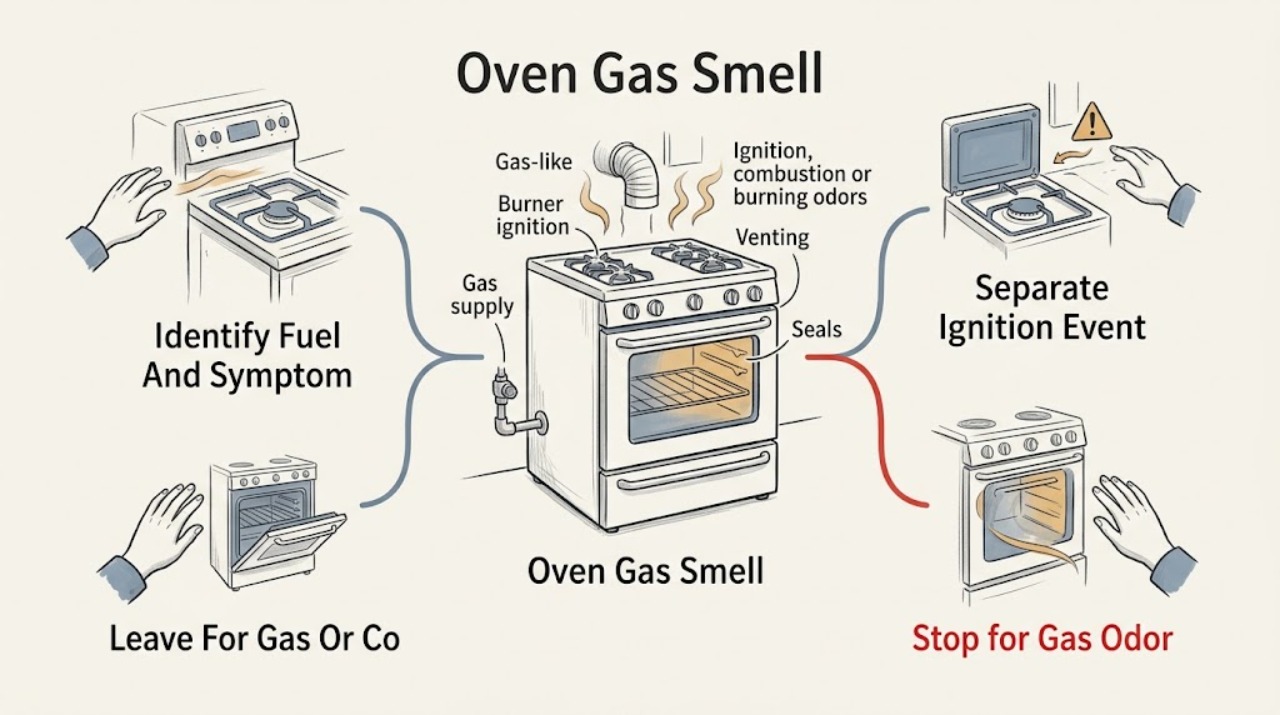
Work through in order
Diagnostic checks
Use only checks that match the exact appliance or system and its official guide.
-
Check 1
From a safe position with the oven off, record the exact Magic Chef model and identify gas, dual-fuel, or electric construction from the rating label or model manual; describe whether the smell is unburned gas, sulfur-like, hot metal, burnt food, cleaner, smoke, or electrical and when it appears.
Expected result: The odor is present in the room while the controls are off, appears only during ignition or heating, is strongest at the cavity or rear of the range, or is paired with an abnormal flame, smoke, a CO alarm, or symptoms.
Next step: If gas, smoke, abnormal flame, a CO alarm, or illness is present, use the emergency branch immediately. Otherwise use the exact model manual and the food, cleaner, or ignition branch without moving the appliance.
Stop if: Do not pull the oven out, sniff a connector, relight anything, operate electrical controls in a gas-filled area, or continue testing a strong or unexplained odor.
Why this matters
Why: Fuel type, timing, and location separate a possible gas leak or combustion event from food or surface residue. CO cannot be ruled in or out by smell alone.
-
Check 2
If the smell is unburned gas or sulfur-like, gas is heard escaping, a CO alarm sounds, or anyone has headache, dizziness, nausea, shortness of breath, confusion, or unusual fatigue, leave the building immediately and warn others only from a safe location.
Expected result: The odor or alarm is still present, the source is uncertain, symptoms are occurring, or the area is clear but the oven has not been inspected by qualified personnel.
Next step: From outside the affected area, follow local emergency, fire-department, gas-supplier, and medical procedures. Keep the oven off and do not re-enter or reuse it until the appropriate authority or qualified technician says it is safe.
Stop if: Do not light a flame, turn lights or appliances on or off, use electrical equipment, operate the oven controls, or move the range while the gas hazard is possible.
Why this matters
Why: A suspected leak or combustion-safety event cannot be cleared by a homeowner restart. CPSC says gas odor requires immediate exit and no electrical switching; its CO guidance notes that CO is odorless and symptoms may resemble illness.
-
Check 3
Only when there is no room gas odor, smoke, abnormal flame, alarm, heat damage, or illness, compare the symptom timing with the exact Magic Chef manual: note whether a faint odor occurs only at a documented ignition event or whether it lingers between cycles or returns on each attempt.
Expected result: The odor is brief and limited to an expected model-specific event with no other warning, or it persists between cycles, becomes stronger, appears after a failed ignition, or is accompanied by popping, delayed ignition, yellow or unstable flame, or smoke.
Next step: For any persistent, delayed, or abnormal ignition odor, stop using the oven and request qualified Magic Chef appliance and gas service. Do not repeat ignition attempts to compare the smell.
Stop if: Do not relight the burner, wait beside the oven for another attempt, remove burner covers, adjust gas pressure, or test a valve or igniter.
Why this matters
Why: Timing can distinguish a manual-documented operating characteristic from unburned gas accumulation or abnormal combustion. A persistent or abnormal pattern is not a normal relight invitation.
-
Check 4
If the exact manual permits ordinary observation during a normal, already-cleared operation, note from outside whether the flame is stable and expected for that model and whether the oven vent is unobstructed; do not put hands or tools near the burner, vent, or gas connection.
Expected result: The flame is delayed, unstable, unusually yellow, lifting, extinguishing, or producing smoke; the vent is blocked or hot air is not exhausting as expected; or the visible operation is normal but the odor returns.
Next step: Stop use for any abnormal flame, smoke, delayed ignition, blocked vent, or recurring gas odor and arrange qualified service. Never change an orifice, regulator, pressure setting, or gas connection as an owner adjustment.
Stop if: Do not open the burner or control area, alter the gas system, insert tools into the vent, or continue operation with a flame or smoke abnormality.
Why this matters
Why: Abnormal flame, delayed ignition, smoke, or poor venting can indicate a combustion or installation condition that requires service. A normal-looking brief flame does not clear an odor that persists in the room.
-
Check 5
If the oven is confirmed safe and the odor is clearly burnt food, grease, packaging, or cleaner rather than gas, let the cool cavity be inspected from the front for spills, foil, packaging, or residue and follow the exact Magic Chef cleaning instructions; do not use a flame to clear residue.
Expected result: A visible food spill or residue matches the odor and no gas or combustion warning exists, or the cavity is clean while the smell returns from the burner, rear, controls, or room.
Next step: Clean only with materials and access allowed by the model manual. If the smell returns after safe cleaning or is not clearly food or cleaner, keep the oven off and request qualified service.
Stop if: Do not use flammable solvents, burn off residue, scrape gas parts, remove panels, or treat a gas-like smell as food odor without qualified clearance.
Why this matters
Why: A cavity residue can create a burnt smell, but a clean cavity with a recurring odor shifts the concern toward fuel, ignition, venting, or an internal fault.
-
Check 6
After the safe identity, emergency, ignition, flame, vent, and cavity checks, document whether the odor persists with the oven off, returns whenever heat is requested, or is associated with a failed ignition, abnormal flame, smoke, alarm, or electrical symptom; keep the appliance off.
Expected result: The smell is gone after a verified food or cleaner cleanup, or it remains unexplained, returns during operation, or is paired with gas, smoke, heat damage, sparks, or a tripped breaker.
Next step: Request qualified Magic Chef appliance service; use gas-safety or emergency procedures first for any suspected leak, CO alarm, smoke, or illness. Provide the model, fuel type, timing, odor description, and safe observations.
Stop if: Do not restart to confirm the fault, bypass an interlock, work on live wiring, adjust gas pressure, or move the range to inspect its connector.
Why this matters
Why: A resolved surface cause supports a cleaning issue. Persistent or recurring odor can involve the gas supply, igniter, burner, valve, seal, venting, controls, or electrical system and needs model-specific diagnosis.
Use your observations
Decision map
Find the observation that best matches what you see, then follow the next safe action.
-
PATH 01Safety boundary
What you see
Unburned gas or sulfur-like odor, escaping-gas sound, a CO alarm, illness, smoke, or an unknown strong odor is present.
Do this next
Leave immediately, do not operate switches or controls, and follow local emergency, fire, gas-supplier, and medical procedures from a safe location. Do not reuse the oven until cleared.
Why this path and its safety boundary
Why it matters: Treat it as a gas, combustion, fire, or CO safety event rather than a routine oven adjustment.
Safety stop: Do not light a flame, relight, move the range, or use electrical equipment in the affected area.
-
PATH 02Next step
What you see
The appliance is new or the exact manual documents a brief ignition-related odor, and there is no room gas odor, smoke, abnormal flame, heat damage, alarm, or illness.
Do this next
Follow the exact Magic Chef manual and monitor only within its stated safe operation. Stop and request service if the odor persists, grows stronger, or changes character.
Why this path and its safety boundary
Why it matters: A narrow model-specific operating note may explain a brief event, but it does not justify repeated ignition attempts or a persistent room smell.
-
PATH 03Next step
What you see
The smell occurs after a failed start, lingers between cycles, returns on each attempt, or is paired with popping, delayed ignition, an unstable or yellow flame, or smoke.
Do this next
Stop use and arrange qualified Magic Chef gas-appliance service. Do not relight, adjust the burner, or test the valve or igniter.
Why this path and its safety boundary
Why it matters: Unburned fuel or abnormal combustion may be present; the appliance needs qualified diagnosis.
-
PATH 04Next step
What you see
The oven is confirmed safe, the smell clearly matches a visible food spill, grease, packaging, or cleaner residue, and no gas, flame, smoke, alarm, or electrical warning exists.
Do this next
Let the oven cool and follow the exact Magic Chef cleaning instructions. If the odor returns or cannot be identified confidently, keep the oven off and request service.
Why this path and its safety boundary
Why it matters: A cavity residue can create a burnt or chemical odor without a fuel fault.
-
PATH 05Next step
What you see
The rating label identifies an electric or dual-fuel appliance, but the odor is electrical, smoky, or present near the cord, outlet, controls, or another fuel appliance.
Do this next
Turn the appliance off only from a safe position, keep clear of hot or damaged connections, and arrange qualified appliance or electrical service. Treat any gas-like room odor under the emergency branch.
Why this path and its safety boundary
Why it matters: Fuel identity changes which components may be involved, but an electrical or nearby gas hazard still requires stop-use handling.
-
PATH 06Next step
What you see
The odor persists after safe cavity checks, or returns despite no visible food residue and no clearly documented model-specific explanation.
Do this next
Keep the oven out of use and request qualified Magic Chef service with the model, fuel type, odor timing, and observed symptoms. Do not perform a leak test or open the appliance.
Why this path and its safety boundary
Why it matters: A gas supply, igniter, burner, valve, seal, vent, control, or internal condition may remain.
Helpful context
Understand the symptom
Identify the fuel system without moving the appliance
Magic Chef has different products and model-specific instructions. Read the rating label or the exact manual from a safe, dry position to identify a gas, dual-fuel, or electric oven. A gas-like odor can come from a fuel connection or burner event; a pure electric oven may still be in a home with another fuel appliance, but its cavity should not be treated as a gas appliance without evidence. Do not pull the range forward to inspect a connector.
A gas odor is an evacuation decision
The CPSC gas-safety notice says to leave immediately when a gas leak is suspected and not to use lights, electrical switches, or ignition sources. If there is active smoke or fire, leave and use local emergency procedures. Carbon monoxide cannot be identified by smell; a sounding CO alarm or symptoms such as headache, nausea, dizziness, shortness of breath, confusion, or unusual fatigue also require fresh air and urgent help.
Do not turn a suspected leak into a home test
Do not light a match, relight a burner, cycle the oven again, brush a connector with a homemade test, operate a control in a gas-filled room, or move the appliance to see behind it. Qualified personnel must inspect the fuel system, ignition, burner, venting, and combustion condition. Only after the area and appliance have been cleared should a mild food or cleaner odor be considered separately.
Safety boundary
Stop conditions
- Leave immediately for unburned gas, escaping-gas sound, a CO alarm, illness, active smoke, or fire; do not operate lights, switches, controls, or other electrical equipment in the affected area.
- Stop for delayed ignition, abnormal or unstable flame, smoke, a strong or worsening odor, hot or damaged wiring, sparks, or a breaker trip.
- Do not relight, move the range, inspect a gas connector closely, test for leaks with a flame, alter gas pressure, or adjust an orifice or regulator.
- Do not open panels, bypass an interlock, perform live electrical work, or run another cycle to reproduce a gas-like or hazardous odor.
- Use only safe front-access observations and the exact Magic Chef manual; persistent or unexplained odor needs qualified service.
Only after diagnosis
Potential parts
- oven igniter or ignition assembly
Consider this category only when qualified diagnosis links a failed or delayed ignition and recurring odor to the model's ignition assembly.
Confirm the exact Magic Chef model and fuel system before any part decision; do not remove or test an igniter as an owner leak check. - oven gas valve or burner assembly
Consider this category only when qualified gas-appliance diagnosis finds a valve, burner, or combustion fault after the supply and installation are verified.
Confirm exact model and gas type through qualified service; never adjust pressure, alter an orifice, or replace a gas component as a home test. - oven door or cavity seal
Consider this category only when inspection confirms a damaged seal that contributes to heat or combustion-product escape and the exact model calls for replacement.
Confirm the exact Magic Chef model and seal design; a seal replacement cannot be used to clear a gas leak or CO concern.
When checks do not resolve it
Need a professional?
Request qualified Magic Chef appliance and gas service when the odor persists, returns after a safe cavity cleanup, follows a failed or delayed ignition, occurs with an abnormal flame or venting concern, or cannot be confidently identified. Stop immediately and use local emergency, gas-safety, fire, or medical procedures for unburned gas, suspected carbon monoxide, smoke, fire, illness, sparks, hot wiring, or a breaker trip.
Safety scope: This article covers fuel identification and safe front-access observation only. Do not move the range, inspect or alter gas connections, relight, open panels, adjust gas pressure, bypass a safety device, or perform live electrical work.
Common questions
FAQ
What should I do first if my Magic Chef oven smells like gas?
Leave immediately if the odor is unburned gas or sulfur-like, do not operate lights, switches, controls, or other electrical equipment in the area, and follow local emergency or gas-supplier procedures from a safe location. Do not move the range or try to relight it.
Can a short ignition odor be normal on a Magic Chef oven?
Only the exact model manual can establish a model-specific operating characteristic. A brief event with no room gas odor, smoke, abnormal flame, alarm, heat damage, or illness is a narrow branch; a persistent, strong, delayed, or recurring odor is not a reason to keep trying and needs qualified service.
How can I tell gas odor from burnt food?
Do not try to identify a gas odor by repeated heating. After the area and appliance are cleared as safe, inspect the cool cavity from the front for food, grease, packaging, or cleaner residue. A room-wide gas-like smell, delayed ignition, abnormal flame, smoke, or odor that returns during heating belongs to the gas-safety or service branch.
Does carbon monoxide smell like gas?
No. The CPSC explains that carbon monoxide is odorless and colorless. A CO alarm or symptoms such as headache, dizziness, nausea, shortness of breath, confusion, or unusual fatigue require fresh air and urgent help, even when no odor is present.
Should I move my Magic Chef range to inspect the gas connector?
No. CPSC warns that moving an appliance can damage an older gas connector. Do not pull the range forward, inspect a connector closely, or alter the gas system as an owner test; leave a suspected gas hazard and arrange qualified inspection.
When does a Magic Chef oven gas smell need service?
Request qualified service for any persistent, unexplained, recurring, delayed-ignition, abnormal-flame, smoke-associated, or internal odor after the area is safe. Stop immediately and use emergency or gas-safety procedures for unburned gas, a CO alarm, illness, smoke, fire, sparks, hot wiring, or a breaker trip.
Read the exact guide
Official sources
- Manual DownloadsMagic Chef · Official Magic Chef support page; the exact oven manual and controls depend on the model and region.
- Protect Your Family from Carbon Monoxide PoisoningU.S. Consumer Product Safety Commission · Federal consumer-safety guidance for homes with fuel-burning appliances and CO exposure concerns.
- Certain Older Gas Connectors May Be DangerousU.S. Consumer Product Safety Commission · Federal consumer-safety guidance for suspected gas leaks near household gas appliances, including warnings not to move an appliance to inspect a connector.
- The Magic Chef Help CenterMagic Chef · Official Magic Chef help center for Magic Chef products; available product support and controls vary by model.
Community feedback
Share a repair observation
Share a plain-text repair observation. Accepted observations are published automatically; this page may take a moment to update.