
On this page
Start here
Quick answer
A locked door on a Magic Chef washer-dryer combo is often a safety state, not a broken latch: the door stays locked while the drum is moving, while water is too high or hot, and during ventless drying until the unit reaches a safe temperature. Do not pull the door or bypass the lock. Record the display and stage, wait for the drum to stop and the unit to cool, then check that the cycle is not paused, the load is not too large for drying, and water can enter and drain. If the tub is cool and empty enough for the exact model procedure, the manual may allow an emergency drain and pump-filter check. Stop for a leak, smoke, burning smell, damaged cord, excessive heat, or a lock that remains engaged after the documented safe conditions. A recurring lock problem or an unresolved alert needs qualified service.
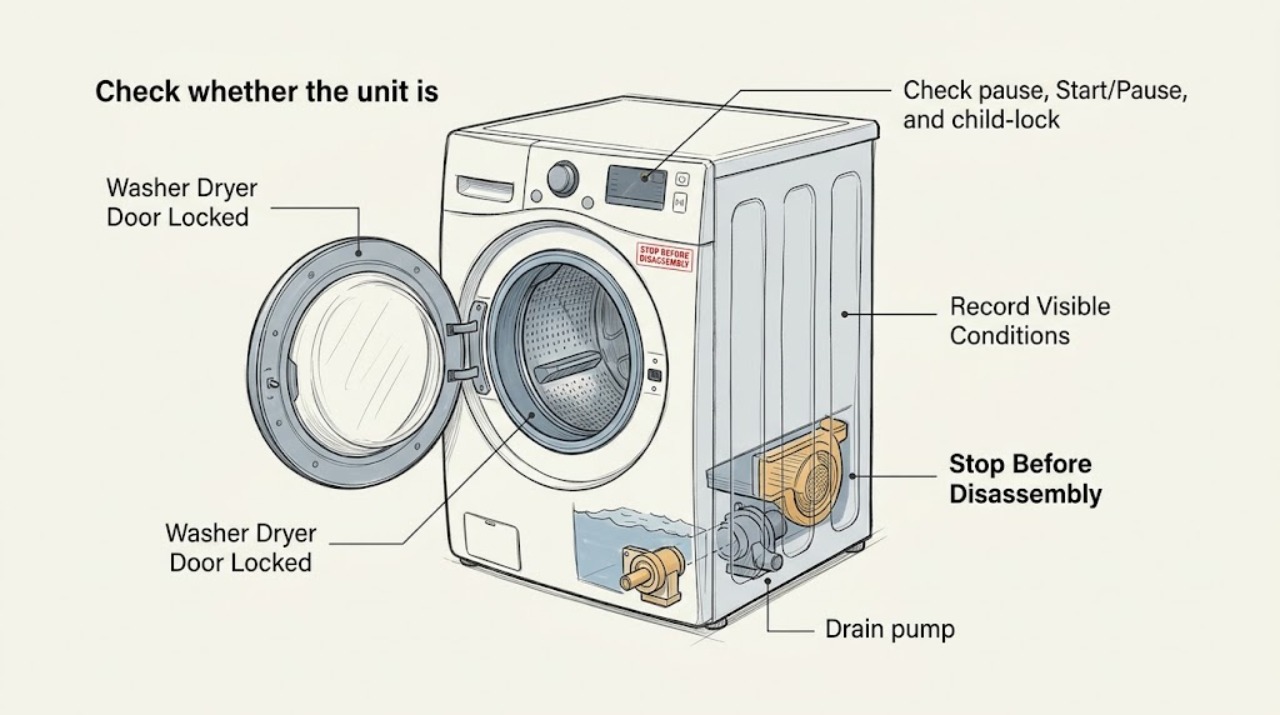
Work through in order
Diagnostic checks
Use only checks that match the exact appliance or system and its official guide.
-
Record the lock state and stop for hazards
Do not pull on the door. Note the display or alert, whether the machine is washing, draining, spinning, or drying, whether water is visible, and whether the door, cabinet, cord, or outlet is unusually hot. Listen only from a safe distance for a pump or motor that is still running.
Expected result: The door is locked during an active or hot stage with no hazard, or there is a leak, smoke, burning smell, damaged cord or outlet, excessive heat, or abnormal electrical behavior.
Next step: For smoke, burning odor, a damaged cord or outlet, or excessive heat, stop using the unit, disconnect power only if safe, and seek qualified help. For a leak, close the accessible water tap and protect the floor without touching wet electrical parts. Otherwise wait for the drum to stop and the contents to cool; do not bypass the lock.
Why this matters
Why: The lock can be a normal protection against movement, water level, or hot contents. A leak, smoke, electrical damage, or overheating is not a latch problem to troubleshoot by continuing operation.
-
Check whether the unit is still drying or cooling
If the lock appeared during a wash-and-dry or dry-only program, compare the display with the model manual's dry-cycle behavior and allow the documented cool-air period to finish. Keep the water supply connected as specified for the ventless unit, and do not open the door by force or remove hose attachments during drying.
Expected result: The display advances and the door releases after cooling, or the cycle stops, remains locked after cooling, shows an alert, overheats, or leaves water or very wet items behind.
Next step: If the door releases and the cycle completes, use smaller drying loads. If it remains locked, overheats, or stops repeatedly, leave the machine out of service and arrange qualified appliance service; do not use an emergency release as a routine reset.
Why this matters
Why: Magic Chef describes a ventless drying stage and says the door remains locked until the unit reaches a safe temperature. A lock that remains engaged after safe cooling, or a dry stage that repeatedly fails, points to a fault rather than a normal delay.
-
Check pause, Start/Pause, and child-lock conditions
When the machine is cool and no water or electrical hazard is present, inspect the display for a paused cycle or child-lock indicator. Follow the exact model manual for Start/Pause and child-lock controls; press a control only as documented and only with the door properly closed. Do not tamper with the control panel.
Expected result: The cycle resumes or the child lock clears using the documented control, or the panel remains unresponsive and the door stays locked.
Next step: If the cycle resumes normally, supervise it and note whether the door unlocks at the correct stage. If the panel remains unresponsive, record the display and stop repeated button presses; arrange service rather than opening the panel or bypassing the lock.
Why this matters
Why: The Magic Chef combo includes electronic controls and a child-lock feature, and its manual distinguishes Start/Pause from power and cycle selection. A control state can prevent normal completion without a failed door latch; an unresponsive panel or recurring lock indicates service is needed.
-
Check water level, inlet hoses, and visible leakage
With the cycle stopped, inspect that the hot and cold supply valves are open, the inlet hoses are not kinked, and the visible connections are dry and secure. Look at the drain hose routing for a kink or loose connection. Do not loosen a hose under pressure or handle the plug with wet hands.
Expected result: A valve is closed, an inlet or drain hose is kinked or loose, water is leaking, or the visible water path is normal while the lock remains.
Next step: Correct only an obvious valve or hose-routing issue, dry the area, and monitor one appropriate cycle. If water continues to leak, the hose is damaged, or the tub remains full, close the tap, keep the machine out of service, and arrange qualified appliance or plumbing help.
Why this matters
Why: The manual lists water supply and secure inlet and outlet connections as installation requirements. A fill or drain problem can keep the water level too high for the lock to release and can create a flood or shock hazard.
-
Use the manual drain and pump-filter procedure only when safe
If the tub is cool, the drum has stopped, and the machine can be safely emptied, turn it off, unplug it, close the tap, and follow the exact model manual for the emergency drain hose and pump filter with a vessel ready for water. Never open the filter during a cycle, while water is hot, or when water discharge cannot be controlled.
Expected result: The water drains and a loose object is found, the filter and hose are clear but the tub still will not empty, or it is not safe to drain the machine.
Next step: Reinstall the filter securely and check for leakage only after the manual procedure is complete. If the tub remains full, the filter will not reseat, the pump is abnormal, or the water is hot or uncontrolled, stop and arrange service rather than using the lock release or removing panels.
Why this matters
Why: Magic Chef says the pump filter should be inspected when the machine does not empty or spin and that objects can block the pump. A clear filter does not prove the pump, lock sensor, or internal drain path is working.
-
Check load size and the wash-to-dry transition
When the door releases and the drum is safe to open, compare the load with the model's dry-capacity guidance. Remove items only after the drum stops and the door unlocks; do not add garments while the lock is engaged. For a wash-only test, select a compatible wash or rinse program rather than forcing a dry transition with an oversized load.
Expected result: The load is packed beyond the smaller drying capacity, or a correctly sized load still leaves the lock engaged or stops at the same stage.
Next step: Run a smaller compatible load only after the door releases normally and no hazard is present. If the lock issue returns with a smaller load, stop normal use and arrange qualified service; do not force the door to unload it.
Why this matters
Why: Magic Chef states that the maximum drying load is smaller than the washing load. An oversized load can extend drying or prevent the expected stage transition, but a recurring lock with a correctly sized load needs a lock, sensor, drain, temperature, or control diagnosis.
-
Retest once and set the service boundary
Only after the unit is cool, dry externally, correctly loaded, and free of visible hose and electrical problems, run one short supervised wash or rinse test. Record the stage and alert, and stop immediately if the door locks unexpectedly, water remains, the cabinet overheats, or smoke, burning odor, or electrical symptoms appear.
Expected result: The test completes and the door releases normally, or the same lock state returns, an alert reappears, water remains, or the unit shows heat or electrical symptoms.
Next step: If the test completes, follow the manual's load and maintenance guidance. If the lock returns or the cycle fails, stop using the appliance and provide service with the model, program, stage, water condition, display, and checks already completed.
Why this matters
Why: A single successful test after correcting a pause, load, or drain condition supports an operating-state cause. A repeated lock indicates a fault that is not safely confirmed by bypassing the lock or dismantling the combo.
Use your observations
Decision map
Find the observation that best matches what you see, then follow the next safe action.
-
PATH 01Next step
What you see
The door is locked during an active wash, spin, or hot ventless dry stage and releases after movement stops or safe cooling.
Do this next
Treat the lock as a safety state, do not force it, and use the model's cycle and smaller dry-load guidance.
-
PATH 02Next step
What you see
The display shows a paused or child-lock state and the documented control restores operation without any hazard.
Do this next
Allow one supervised cycle to complete and confirm that the door releases at the expected stage.
-
PATH 03Next step
What you see
Water remains in the tub, the appliance is not draining, or an inlet or drain hose is leaking or restricted.
Do this next
Stop the cycle, close the accessible water tap, protect the floor, and use the cool, unplugged, manual drain/filter procedure only if water can be controlled. Arrange service if the problem persists.
-
PATH 04Next step
What you see
The door remains locked after documented safe cooling, with a correctly sized load and no visible water problem, or the alert returns.
Do this next
Discontinue use and arrange qualified appliance service. Do not bypass the lock, use repeated emergency releases, or remove panels.
-
PATH 05Next step
What you see
Smoke, burning odor, damaged cord or outlet, uncontrolled water, repeated breaker trips, or excessive heat is present.
Do this next
Stop immediately, disconnect power only if safe, close the water tap if safe, keep clear of wet electrical areas, and seek qualified or emergency assistance.
Helpful context
Understand the symptom
The same locked-door indicator can mean different things depending on the stage. During wash, spin, or dry, the machine protects against a moving drum, hot water, or hot contents. During ventless drying, the covered Magic Chef manual says the door remains locked until a safe temperature is reached. A lock that releases after the cycle cools is behaving differently from a lock that remains engaged with a cool, empty tub and a returning alert.
Keep this diagnosis at the controls and user-accessible areas. Never force the door, defeat the child or door lock, reach into a moving tub, spray the appliance, or remove cabinet panels. Turn the unit off and unplug it before cleaning or maintenance, close the water tap for maintenance, and allow hot contents to cool before handling the door or drain area.
When checks do not resolve it
Need a professional?
Arrange qualified appliance service when the door remains locked after the machine is cool and the tub is safely empty, the lock returns with a correctly sized load, an alert or control fault persists, draining fails, or any panel access would be required. Stop immediately for smoke, burning odor, damaged cord or outlet, uncontrolled water, repeated breaker trips, or excessive heat.
Common questions
FAQ
Why is my Magic Chef washer-dryer door locked after the cycle?
The door may still be locked while the drum or pump is moving, water is too high or hot, or a ventless dry cycle is cooling. Wait for the documented safe release conditions and do not force the door. If it remains locked when the tub is cool and safely empty, arrange service.
Can I force open a locked Magic Chef washer-dryer door?
No. Forcing or bypassing the lock can expose you to hot water, moving parts, or a damaged latch. Follow the exact model manual; use a manual drain procedure only when the unit is off, unplugged, cool, and safe to drain, and arrange service for a recurring lock.
Can an oversized load keep a Magic Chef combo door locked?
An oversized load can extend or disrupt the drying stage because the dry capacity is smaller than the wash capacity. Remove items only after the drum stops and the door unlocks. If the lock returns with a smaller load, stop using the appliance and arrange service.
Read the exact guide
Official sources
- 2.7 cu. ft. All-in-One Ventless Washer and Dryer Combo in WhiteMagic Chef · Magic Chef MCSCWD27W5 all-in-one ventless washer-dryer features, child lock, cycle design, and manual access
- 24” Combo Washer and Dryer User’s ManualMagic Chef · Magic Chef MCSCWD27W5, MCSCWD27S5, MCSFLW27W, MCSFLW27S, and MCSCWD27G5 safety, door lock, operation, drainage, and troubleshooting guidance
Community feedback
Share a repair observation
Share a plain-text repair observation. Accepted observations are published automatically; this page may take a moment to update.