
On this page
Start here
Quick answer
Start by separating food or stagnant-water odor from a new-plastic, petroleum, or varnish smell. Clean the filter, spray arms, door seals, interior, and accessible drain path, and use only the cleaner or rinse method allowed by the model instructions. A persistent burnt, electrical, or chemical odor is a stop-use symptom that needs service.
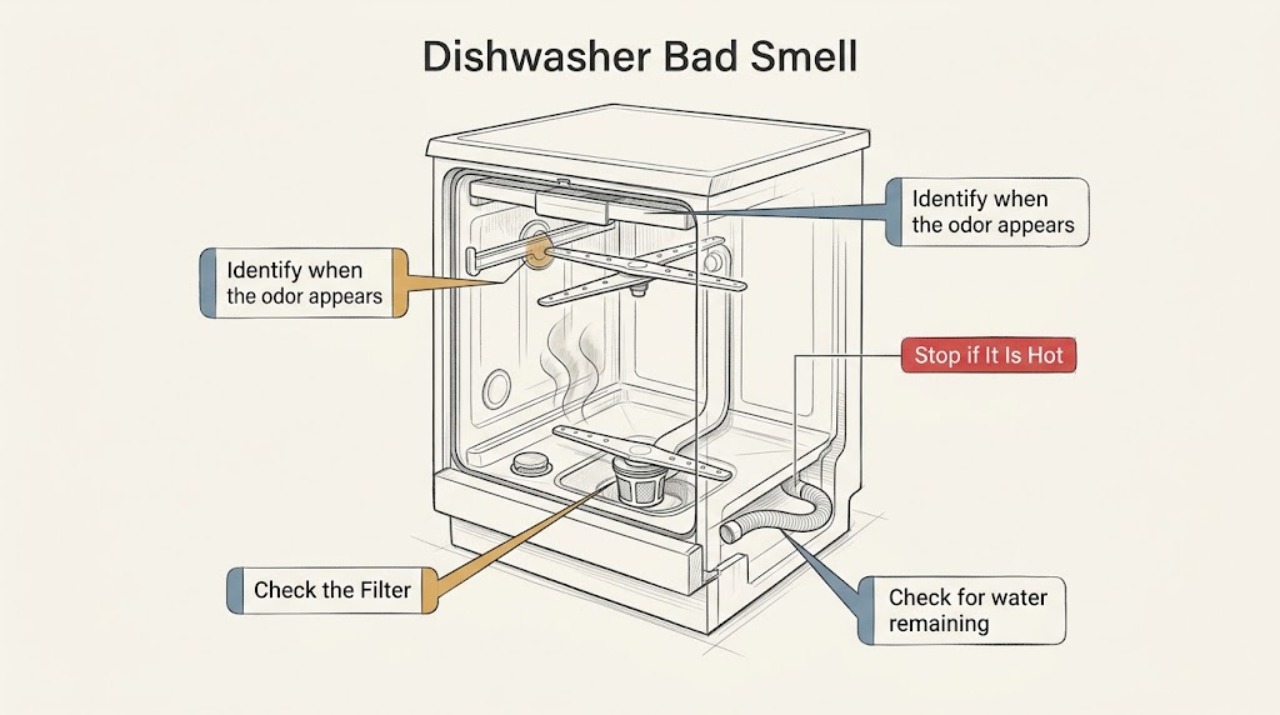
Work through in order
Diagnostic checks
Use only checks that match the exact appliance or system and its official guide.
-
Check 1
Identify when the odor appears and whether it resembles spoiled food, plastic, petroleum, varnish, burning, or a chemical product.
Expected result: The odor matches food or stagnant water, a documented new-material odor, or a sharp burning or chemical smell.
Next step: Stop using the dishwasher for burning or chemical odors; use the cleaning path only for ordinary food or maintenance odors.
Why this matters
Why: Odor timing and character distinguish maintenance from a condition that should not be tested by running another cycle.
-
Check 2
Remove and rinse the filter, inspect the spray arms and tub bottom for trapped food, and wipe the door seals with a damp cloth and mild detergent.
Expected result: Debris or residue is found and the odor decreases, or the surfaces are clean and the odor remains.
Next step: Continue to the drain-path check when cleaning does not resolve the smell.
Why this matters
Why: Maytag identifies food particles in the filter, spray arms, tub, and seals as common odor sources.
-
Check 3
Check for water remaining in the tub and inspect the accessible drain or garbage-disposer path for food or an obstruction; check the air gap if present.
Expected result: Standing water or an obstruction is present, or the tub drains normally.
Next step: Clear only the accessible path and do not keep running the unit if water remains or a leak appears.
Why this matters
Why: Stagnant water and blocked drainage can maintain odor even after the interior is wiped clean.
-
Check 4
Run the model-approved cleaning cycle or cleaner according to its manual, and avoid dish soap or mixing cleaning chemicals.
Expected result: The smell clears after cleaning, or it returns immediately or becomes sharper.
Next step: Arrange service for a returning, burnt, electrical, or chemical odor.
Why this matters
Why: A cleaning cycle can remove ordinary buildup; recurrence suggests ongoing drainage, residue, or an internal fault rather than a need for stronger chemicals.
Use your observations
Decision map
Find the observation that best matches what you see, then follow the next safe action.
-
PATH 01Next step
What you see
Food residue or stagnant water was found and the odor fades after cleaning
Do this next
Keep the filter and drain path clean and follow the model's regular maintenance schedule.
-
PATH 02Next step
What you see
The appliance is new and the odor is a mild plastic, petroleum, or varnish smell
Do this next
Monitor without adding unapproved chemicals; use service if the odor is intense, worsens, or does not behave as described for the model.
-
PATH 03Next step
What you see
The odor is burnt, electrical, chemical, or returns with heat or smoke
Do this next
Stop the dishwasher, disconnect power safely if needed, and arrange qualified service.
Helpful context
Understand the symptom
The smell type changes the next step
Food debris and stagnant water call for cleaning and drainage checks. Maytag also describes some new-appliance odors as temporary, but a burning or electrical smell should not be treated as routine.
When checks do not resolve it
Need a professional?
Stop using the dishwasher and arrange service for a burnt, electrical, chemical, smoky, or persistent odor, or when standing water, a leak, or an inaccessible drain fault remains.
Common questions
FAQ
What usually causes a bad smell in a Maytag dishwasher?
Maytag points to food debris in the filter, spray arms, tub, or seals and to stagnant water from a drainage problem. Clean those areas and check the accessible drain path first.
Is a plastic smell always a failure?
No. Maytag describes some plastic, petroleum, and varnish odors as temporary on applicable new appliances, but a burning, electrical, or chemical odor warrants stopping use and service.
Read the exact guide
Official sources
- Removing Odors in your DishwasherMaytag Product Help · Maytag dishwasher odor
- Not Draining - Water Remain at End of Cycle - DishwasherMaytag Product Help · Maytag dishwasher stagnant water affecting odor
- Food Odors - DishwasherMaytag Product Help · Maytag dishwasher food odor
Community feedback
Share a repair observation
Share a plain-text repair observation. Accepted observations are published automatically; this page may take a moment to update.