
On this page
Start here
Quick answer
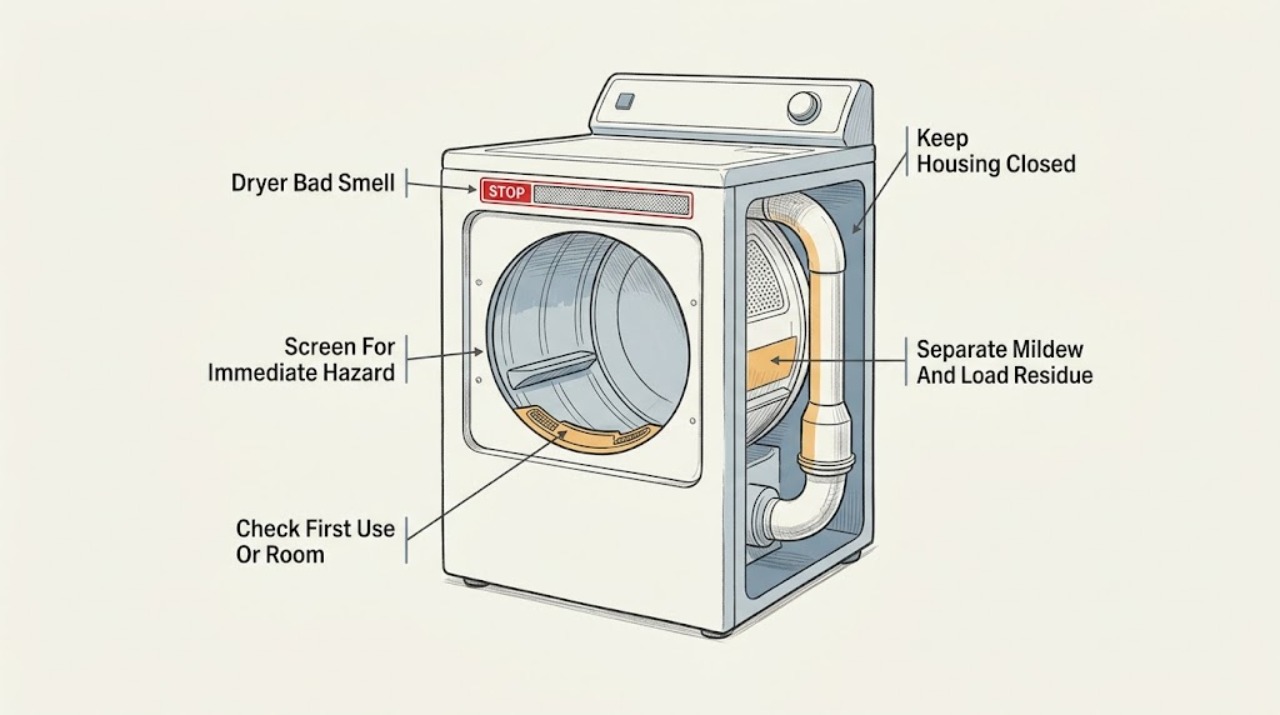
Stop a Maytag dryer and identify the smell before starting another cycle. A light oily or semi-burning odor during first use can be normal, but only follow Maytag's first-use guidance when there is no smoke, flame, gas odor, scorching, intense heat, or electrical damage. A musty smell can come from damp laundry or residue, while paint, stain, or varnish fumes can be pulled into the dryer from the room. A burning, melting-plastic, acrid electrical, or gas-like odor is a stop condition: do not run the dryer, do not test it again, and do not move or open it. For a gas smell, do not operate electrical switches or a phone inside; clear the area and contact the gas supplier or emergency services from outside or a neighbor's location. Keep the lint screen and exhaust path clear, and arrange qualified service when the odor returns, the dryer is unusually hot, drying takes longer, or the source is not obvious.
Work through in order
Diagnostic checks
Use only checks that match the exact appliance or system and its official guide.
-
Check 1
Stop the cycle and, from a safe position, identify whether the odor is raw gas, sharp electrical or melting plastic, scorching lint, smoke, or only a mild oily, musty, or chemical smell; do not light anything, operate switches, use a phone inside, or run another test cycle if gas is possible.
Expected result: You smell gas or hear hissing; see smoke or flame; smell burning electrical insulation or plastic; feel intense heat; or the odor is mild and there are no visible hazard signs.
Next step: For gas, leave the building and call the gas supplier or emergency services from outside or a neighbor's location. For smoke, flame, or severe burning, leave and call emergency services. Keep the dryer off and arrange qualified service for any electrical, plastic, scorching, or unexplained odor.
Why this matters
Why: Gas, smoke, scorching, melting material, and intense heat can indicate fire, explosion, or carbon-monoxide risk and are not cleaning problems. A mild odor without those signs can be investigated by timing and source, but it is not proof that the dryer is safe.
-
Check 2
If the dryer is new or the odor began after painting, staining, or varnishing nearby, record that timing and ventilate the room only when there is no gas or fire warning; do not run the dryer while those fumes remain.
Expected result: The dryer has not been used before; the smell tracks a recent room-finishing product; or the smell remains after the room is clear and ventilated.
Next step: For a genuinely new dryer with a mild odor and no hazard signs, follow the exact Maytag manual's first-use instruction; Maytag's general guidance describes an empty run of about 15 minutes. If the odor is strong, returns, or is not clearly first-use or room-related, leave the dryer off and request service.
Why this matters
Why: Maytag says a new gas or electric dryer may emit a semi-burning or oily odor. It also says the dryer pulls surrounding room air through the load, so paint, stain, or varnish fumes can transfer to clothes. A persistent odor after those conditions are gone is not explained by first use or room air alone.
-
Check 3
When the dryer is cool and there is no hazard smell, check whether damp clothing was left in the washer or dryer, whether the odor is musty and concentrated in the load, and whether a softener, detergent, dye, or residue is visible in the drum; do not use flammable solvent or fragrance to mask it.
Expected result: The load sat wet for a long time; the smell is musty and follows the clothes; or residue or staining is visible inside the drum.
Next step: Remove the load, rewash it, and clean the cool drum with a soft cloth and a mild nonflammable cleaner as directed by the model instructions. Wipe away cleaner and dry the drum completely. If the odor remains with no load or returns on a clean load, stop and arrange service.
Why this matters
Why: Maytag says a wet load left for a long time can develop mildew odor. Its drum guidance says lint, fabric softener, and detergent can accumulate and cause odors. Those observations support a load or surface-cleaning path, not a diagnosis of the heater, motor, or gas system.
-
Check 4
With the dryer off and cool, clean the lint screen according to the manual and look behind and around the appliance without moving it for loose lint, a crushed or restricted vent, or an outdoor hood that cannot open freely; do not use the dryer without a properly seated, undamaged lint screen.
Expected result: The lint screen is packed or damaged; lint is accumulating around the appliance; the duct is crushed or restricted; the outdoor hood is blocked; or the airflow path looks clear.
Next step: Remove only loose, accessible lint and replace a damaged screen with the exact model-approved type. Have the exhaust system professionally cleaned or corrected when it is crushed, concealed, restricted, or overdue for service. Do not restart if there is burning odor, intense heat, smoke, or a recurring smell.
Why this matters
Why: Maytag says lint accumulation can obstruct airflow and contribute to overheating and odor, while its safety manual and the U.S. Fire Administration call for a clean, intact lint screen and an unobstructed exhaust. A clear visible screen does not prove that the concealed duct or internal dryer is safe.
-
Check 5
Record whether the smell appears only during heat, at the start or end of a cycle, with a particular load, or even while the dryer is idle; also note unusually hot clothes, a hot exterior, longer drying, unusual noise, or an automatic shutoff.
Expected result: The odor appears with heat and excessive temperature; drying takes longer; the odor occurs only with one load; the dryer shuts off; or the smell is present while idle.
Next step: Keep the dryer off for any returning, heat-linked, idle, gas-like, or unexplained smell. Provide the technician with the odor description, cycle timing, dryer type, model, temperature symptoms, and vent observations.
Why this matters
Why: Heat-linked odor plus long cycles or hot clothes points toward restricted airflow or a component that needs diagnosis. A load-only odor supports residue or contamination. An odor while idle, a gas-like odor, or an unexplained automatic shutoff needs professional assessment rather than a user test.
-
Check 6
If the Maytag dryer is gas-powered and the odor is gas-like or accompanied by hissing, do not try to light any appliance, touch an electrical switch, use a phone in the building, inspect the connector, or move the dryer.
Expected result: The gas-like smell remains, the source is uncertain, or anyone has symptoms such as dizziness, headache, nausea, or breathing difficulty.
Next step: Clear everyone from the room or building, leave immediately, and contact the gas supplier or emergency services from outside or a neighbor's location. Do not return or restart the dryer until the appropriate authority or qualified professional says it is safe.
Why this matters
Why: Maytag's gas-dryer manual and CPSC guidance treat suspected gas as an evacuation emergency; moving a gas appliance can damage a connector. Symptoms increase the urgency and require fresh air and emergency help, not appliance troubleshooting.
Use your observations
Decision map
Find the observation that best matches what you see, then follow the next safe action.
-
PATH 01Next step
What you see
The smell is gas-like, there is hissing, smoke, flame, sparking, melting plastic, or severe burning.
Do this next
Do not operate the dryer or electrical controls and do not move it. Evacuate and contact the gas supplier or emergency services from outside or a neighbor's location; arrange qualified service before reuse.
-
PATH 02Next step
What you see
The dryer is new, the odor is mild and oily, and there are no signs of gas, smoke, scorching, intense heat, or electrical damage.
Do this next
Follow the exact Maytag model guidance for first use; Maytag's general page describes an empty run of about 15 minutes. Stop if the odor is strong, persists, or changes character.
-
PATH 03Next step
What you see
The odor follows recent paint or varnish work, a long-wet load, or visible drum residue and is not a burning or gas smell.
Do this next
Remove the load, ventilate when safe, rewash damp-smelling clothes, and clean the cool drum with a mild nonflammable cleaner. If the odor remains without the triggering condition, stop and request service.
-
PATH 04Next step
What you see
The lint screen or vent is restricted, drying takes longer, clothes or the cabinet are unusually hot, or the smell appears during heated operation.
Do this next
Keep the dryer off, clear only loose accessible lint, and have the complete exhaust path and dryer professionally inspected. Do not rely on a clean screen alone or run another test cycle.
-
PATH 05Next step
What you see
The smell returns, occurs while idle, follows no load or room trigger, or the source cannot be identified safely.
Do this next
Leave the dryer off and arrange qualified Maytag appliance service. Give the technician the model, gas or electric type, odor description, timing, heat symptoms, cycle behavior, and vent observations.
Helpful context
Understand the symptom
Classify the odor before treating it as a cleaning issue
Odor timing and character change the safe next step. A new-dryer oily smell, mildew from a wet load, and fumes from nearby paint are different from a sharp electrical odor, melting plastic, scorching lint, or raw gas. Do not cover a dangerous smell with cleaner or fragrance, and do not use a short test cycle to see whether a suspected gas or electrical problem goes away.
Safe cleaning applies only after the hazard screen is clear
If the smell is a non-hazardous residue or mustiness and the dryer is cool and isolated from power, Maytag describes cleaning the drum with a mild, nonflammable cleaner and a soft cloth, then wiping and drying it thoroughly. Clean the lint screen after each load and keep the exhaust area clear. Never use the dryer without its lint screen, and do not reach into a moving drum.
Airflow problems can turn an odor into an overheating event
Lint or a crushed or restricted exhaust can keep heat from leaving the dryer. Maytag and the U.S. Fire Administration recommend maintaining the lint screen and exhaust path and having the dryer installed or serviced professionally. A hot exterior, clothes that are too hot, longer drying time, smoke, or a returning burning odor is a reason to leave the dryer off and arrange service rather than clean only the visible filter.
When checks do not resolve it
Need a professional?
Arrange qualified appliance service when a burning, electrical, plastic, or gas-like odor occurs; when the odor returns after safe cleaning or ventilation; when the dryer overheats, dries slowly, shuts off, or has unusual noise; or whenever the source cannot be identified without moving or opening the appliance.
Common questions
FAQ
Is an oily smell from a new Maytag dryer normal?
Maytag says a new gas or electric dryer can emit a semi-burning or oily smell. Apply that guidance only when the odor is mild and there is no gas smell, smoke, scorching, melting plastic, intense heat, or electrical damage; stop and request service if it persists or changes.
Why does my Maytag dryer smell musty?
A load left wet for a long time can develop mildew odor, and lint, fabric softener, or detergent can accumulate in the drum. Rewash the load and clean the cool drum with a mild nonflammable cleaner; a smell that returns without the load needs service.
Can paint or varnish make clothes from a dryer smell?
Yes. Maytag says the dryer pulls surrounding room air through the load, so nearby paint, stain, or varnish fumes can transfer to clothes. Ventilate safely and do not run the dryer while those fumes remain.
What should I do if a gas Maytag dryer smells like gas?
Do not try to light an appliance, touch electrical switches, use a phone inside, inspect the connector, or move the dryer. Clear the building and contact the gas supplier or emergency services from outside or a neighbor's location.
Can a clogged dryer vent cause a burning smell?
A restricted vent or lint buildup can obstruct airflow and contribute to overheating. Keep the dryer off if the smell is burning or the cabinet or clothes are unusually hot, and have the complete exhaust path and dryer professionally inspected.
Read the exact guide
Official sources
- Cleaning the Dryer DrumMaytag Product Help · Maytag dryer drum, lint, residue, odor, and vent maintenance guidance
- How Hot Does a Dryer Get?Maytag · Maytag dryer heat, burning smell, overheating, lint, vent, and professional-diagnosis guidance
- Certain Older Gas Connectors May Be DangerousU.S. Consumer Product Safety Commission · U.S. consumer gas-leak evacuation and no-switching guidance for gas appliances
- Clothes Dryer Fire SafetyU.S. Fire Administration · U.S. clothes-dryer fire prevention and lint/vent safety
- Removing Odors or Smells - DryerMaytag Product Help · Maytag dryer odor troubleshooting for first use, room fumes, damp loads, and service escalation
- GAS DRYER OWNER'S MANUALMaytag · Maytag gas dryer safety, gas-odor emergency procedure, lint screen, venting, and qualified installation/service
Community feedback
Share a repair observation
Share a plain-text repair observation. Accepted observations are published automatically; this page may take a moment to update.