
On this page
Start here
Quick answer
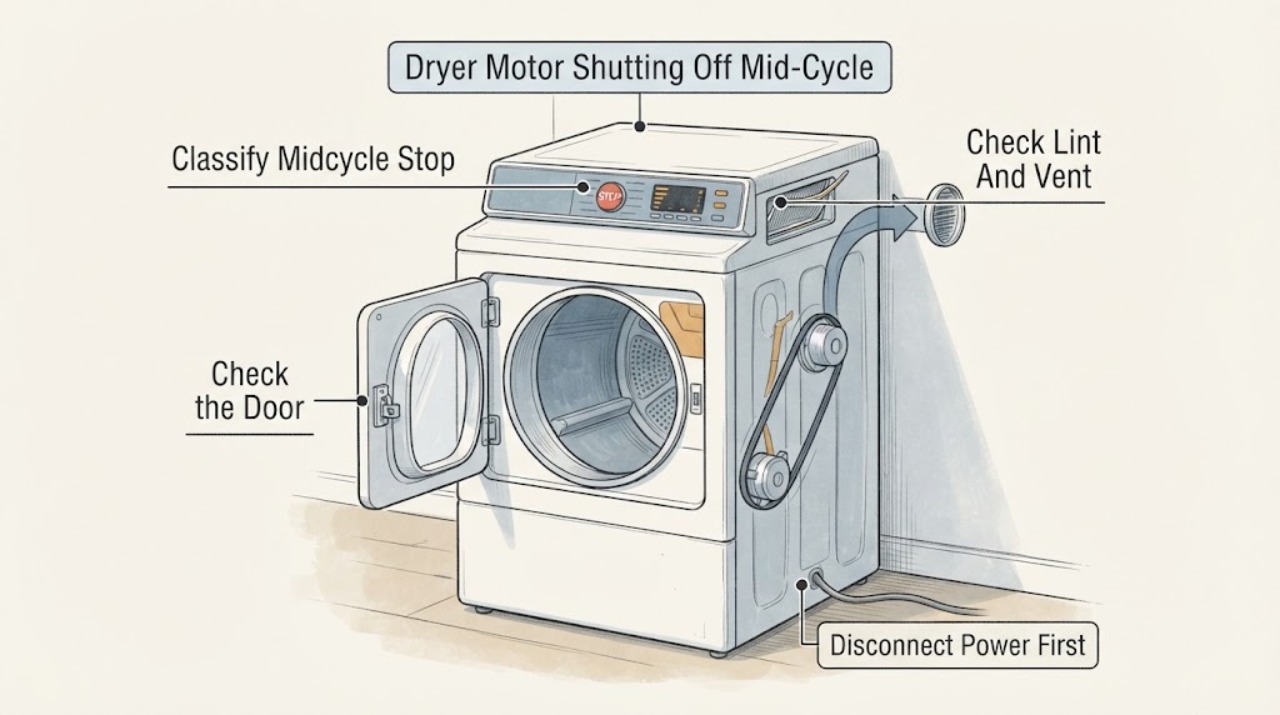
First determine whether the dryer reached its intended dryness or whether the drum stopped while clothes remained damp. Maytag automatic cycles sense load moisture and can turn off when the selected dryness is reached, while a door opening, wrong cycle, overloaded load, restricted airflow or power interruption can also end operation. Check the cycle and load, confirm the door is latched, clear the lint screen and inspect the vent path only with the dryer unplugged. For an electric model, a household supply issue can involve two breakers or fuses; do not repeatedly reset a breaker. If the drum stops with heat or burning odor, unusual noise, a damaged latch, an error code, a tripped breaker, or the same mid-cycle failure after safe checks, stop using the dryer and arrange service. Do not open the cabinet or diagnose the motor, belt, thermal fuse or control board from this symptom alone.
Before you begin
Safety first
- Limit owner checks to cycle selection, load and door observation, lint-screen cleaning, accessible vent inspection with the dryer unplugged, and normal household breaker observation. Do not open panels, test live circuits, bypass a door switch or thermal device, force the motor, inspect internal belts/fuses, or replace a part from the symptom alone.
Work through in order
Diagnostic checks
Use only checks that match the exact appliance or system and its official guide.
-
Check 1
Record the cycle, displayed time, load dryness, drum movement, control/display state and whether the stop occurs at the same point each time.
Expected result: The dryer finishes an automatic cycle with dry clothes, or it stops early with damp clothes and does not resume.
Next step: Use the cycle/load branch for a normal stop and the door, airflow, power and service branches for a damp or repeatable stop.
Why this matters
Why: Maytag says an automatic sensor stop can be normal at the selected dryness; a repeatable early stop with damp clothes is a fault symptom that needs further branching.
-
Check 2
Use the model-appropriate Automatic Dry or Timed Dry cycle, reduce an overloaded or mixed load, and confirm the door closes and latches without clothing caught at the opening.
Expected result: The dryer completes a correctly selected, freely tumbling load, or it still stops with a secure door and appropriate load.
Next step: If the condition persists, continue to the lint/airflow and power checks; do not bypass or hold the latch/switch.
Why this matters
Why: A cycle, load or latch condition can end a cycle early; persistence after these visible checks does not identify the motor or door switch.
-
Check 3
Clean the lint screen and, with the dryer unplugged, inspect the accessible hose and wall connection for crushing or lint; observe the outside hood for normal flap movement during a safe test.
Expected result: Airflow is weak or the vent path has visible restriction, or the path is clear and the stop persists.
Next step: Correct only accessible external restrictions and arrange professional vent cleaning or dryer service if the restriction is not safely reachable or the stop continues.
Why this matters
Why: Maytag identifies poor ventilation as a major drying-performance problem and warns that lint or crushed venting can restrict airflow; a clear vent does not prove a motor failure.
-
Check 4
If the controls are dead after the stop, inspect the accessible household breaker or fuse condition; for an electric dryer remember that Maytag says two circuits may be involved.
Expected result: A breaker/fuse is clearly tripped or blown, or power appears normal but the dryer still stops.
Next step: Reset or replace only the accessible household protection once if safe and permitted; call an electrician or qualified service if it trips again. Do not open the dryer terminal or cabinet.
Why this matters
Why: A supply interruption can stop the appliance, but a recurring trip signals an electrical problem and is not a reason to keep resetting the circuit.
-
Check 5
Note whether the stop follows heating, a door movement, an unusual noise, an error code, a burning odor, or a long-dry/weak-airflow condition.
Expected result: The same warning sign recurs, or the dryer simply stops without a visible external cause.
Next step: Stop using the dryer for warning signs and arrange service; do not declare the motor, belt, fuse or sensor failed from timing alone.
Why this matters
Why: Maytag's official mid-cycle guidance identifies belt, sensor, latch, door-switch and thermal-fuse possibilities, but these require model-specific diagnosis and may require disassembly.
-
Check 6
Give Maytag or a qualified servicer the model and serial numbers, gas/electric type, selected cycle, load description, stop timing, display/error state, door/latch result, vent observations and breaker history.
Expected result: The dryer repeatedly stops mid-cycle, cannot restart normally, or a safety/mechanical warning is present after external checks.
Next step: Keep the dryer unplugged for smoke, burning odor, repeated trips or visible damage and arrange qualified service. Do not open panels, bypass safety devices or substitute parts.
Why this matters
Why: The remaining diagnosis is inside the model-specific drive, thermal, control, door or power system; public Maytag guidance does not establish a universal motor repair.
Use your observations
Decision map
Find the observation that best matches what you see, then follow the next safe action.
-
PATH 01Next step
What you see
The dryer stops at the end of an automatic cycle and the clothes have reached the selected dryness with no warning sign.
Do this next
Use the cycle and dryness setting appropriate for the load; monitor only if it begins stopping early with damp clothes.
Why this path and its safety boundary
Why it matters: Maytag describes this as normal sensor-controlled shutoff rather than proof that the motor failed.
-
PATH 02Next step
What you see
The load is tightly packed, mixed with heavy items, or the door/latch is obstructed or not fully closed.
Do this next
Reduce or sort the load and close the door securely; do not bypass the latch or switch. Arrange service if the stop returns with a normal load and secure door.
Why this path and its safety boundary
Why it matters: Maytag identifies overloading, poor airflow through the load and a door/latch opening as causes of a cycle ending early.
-
PATH 03Next step
What you see
The lint screen or vent path is restricted, the load is warm but damp, or laundry-area heat/humidity is elevated.
Do this next
Clean the lint screen and accessible vent connections with power disconnected; use professional vent or dryer service if airflow remains weak.
Why this path and its safety boundary
Why it matters: Maytag identifies restricted ventilation as a performance problem that can prolong drying and warrants external inspection.
-
PATH 04Next step
What you see
The display is dead after the stop, a household breaker/fuse has tripped, or the same protection trips again.
Do this next
Stop resetting the circuit and call an electrician or qualified service. Do not access live terminals or the dryer cabinet.
Why this path and its safety boundary
Why it matters: Maytag says electric dryers may use two household circuits; recurring trips indicate an electrical issue rather than a motor diagnosis.
-
PATH 05Next step
What you see
The dryer stops with damp clothes after the external checks, emits burning odor/smoke, makes unusual noise, shows an error, or requires panel access to continue.
Do this next
Keep the dryer unplugged when a safety sign is present and arrange Maytag or qualified service. Do not bypass thermal or door protection or replace a motor from the symptom alone.
Why this path and its safety boundary
Why it matters: The symptom is beyond safe owner checks; Maytag lists internal drive, sensing, latch and thermal possibilities but does not establish which part failed.
Helpful context
Understand the symptom
Confirm whether it is a normal cycle finish
Record the selected cycle, the displayed time, whether the clothes are dry or damp, and whether the drum stopped while the controls stayed on. Maytag says automatic cycles sense humidity and turn off at the selected dryness; a normal sensor stop is different from a drum that stops with damp clothes and cannot resume.
Check the load, door and controls
Remove some items if the drum is tightly packed and keep similar fabrics together. Confirm clothing is not caught in the door and that the latch closes securely. Check the model manual for the correct Automatic Dry or Timed Dry selection and any Control Lock behavior. Do not hold or bypass the door switch to keep the dryer running.
Check lint and airflow with the dryer unplugged
Empty the lint screen. Unplug the dryer before looking behind it, then look for a crushed or kinked vent hose and lint at the hose or wall connection. From outside, observe whether the vent hood opens freely during normal operation and whether airflow is weak. Do not reach into the cabinet or disassemble internal venting to pursue a motor theory.
Check accessible power conditions
If the dryer stopped and the display or controls are also dead, check the accessible household breaker or fuse condition without opening the dryer. Maytag notes that electric dryers can use two breakers or fuses; a recurring trip or blown fuse needs an electrician or qualified service. Do not keep resetting a breaker or inspect live terminals.
Use the symptom timing to set the service handoff
Note whether the stop happens only on an automatic cycle, only with a heavy load, after the dryer becomes hot, when the door moves, or at a repeatable time. A belt, sensor, latch, door switch, thermal fuse, motor or control issue may require cabinet access, and Maytag's public guidance does not authorize an owner to identify or replace those parts from the symptom alone.
Stop for heat, electrical or mechanical warning signs
Stop using the dryer and arrange service for a burning smell, smoke, repeated breaker trips, an error code, a damaged or loose latch, unusual noise, visible belt or drum damage, no heat with damp clothes, or a repeatable mid-cycle stop after the external checks. Keep the dryer unplugged while waiting if a safety symptom is present; do not open the cabinet or bypass a safety device.
When checks do not resolve it
Need a professional?
Use Maytag support, an electrician or qualified dryer service for repeated breaker trips, persistent mid-cycle stops, internal drive/thermal/door symptoms, error codes, unusual noise, no heat, smoke, burning odor or any condition requiring cabinet access.
Safety scope: Limit owner checks to cycle selection, load and door observation, lint-screen cleaning, accessible vent inspection with the dryer unplugged, and normal household breaker observation. Do not open panels, test live circuits, bypass a door switch or thermal device, force the motor, inspect internal belts/fuses, or replace a part from the symptom alone.
Common questions
FAQ
Why does my Maytag dryer stop in the middle of a cycle?
It may have reached the selected dryness on an automatic cycle, or the load, door/latch, cycle setting, restricted airflow, power supply or an internal part may be involved. Record whether clothes are dry or damp before assuming the motor failed.
Can an overloaded Maytag dryer stop mid-cycle?
Yes. Maytag says a tightly packed or mixed load can restrict tumbling and airflow, and its official mid-cycle guide notes that overloading can let the door pop open and cut the cycle short. Reduce the load and keep similar fabrics together.
Can a blocked vent make a Maytag dryer stop?
Restricted venting is a significant performance and heat concern. Unplug the dryer before inspecting the accessible hose and wall connection; persistent weak airflow or long drying needs professional vent or dryer service rather than cabinet disassembly.
Why does my electric Maytag dryer stop and lose power?
Maytag says electric dryers may use two household breakers or fuses. A supply interruption can stop the dryer, but a recurring trip requires an electrician or qualified service; do not keep resetting the circuit or open the terminal area.
Should I replace the Maytag dryer motor when it shuts off mid-cycle?
No. Maytag lists several possible causes, including cycle/load, door/latch, airflow and internal parts. The symptom alone does not prove a motor failure, and motor, belt, fuse, sensor or control diagnosis may require model-specific service and cabinet access.
Read the exact guide
Official sources
- Why Does My Dryer Keep Stopping Mid-Cycle?Maytag · Official brand article listing load, belt, sensor, cycle, latch, switch and thermal possibilities; used for symptom classification and professional-repair boundary, not for asserting a failed part.
- Dryer Not Starting or No OperationMaytag Product Help · Official checks for start control, household fuse/breaker, door latch, cycle selection and control lock; used only for external checks.
- Checking if a Household Fuse or Circuit Breaker has TrippedMaytag Product Help · Official household-level breaker/fuse guidance; used only for accessible power observation and electrician escalation.
- Using Auto Dry, Timed Dry and EcoBoostMaytag Product Help · Official cycle and load behavior guidance, including automatic moisture sensing and large-load airflow limits.
- Dryer Stops Mid-CycleMaytag Product Help · Direct Maytag cycle-level guidance for an apparent mid-cycle stop, including automatic sensor shutoff, cycle selection and service escalation.
- Dryer is not Drying or Experiencing Long Dry TimesMaytag Product Help · Official external checks for power/gas, load, lint, vent airflow, cycle selection and service boundary.
Community feedback
Share a repair observation
Share a plain-text repair observation. Accepted observations are published automatically; this page may take a moment to update.