
On this page
Start here
Quick answer
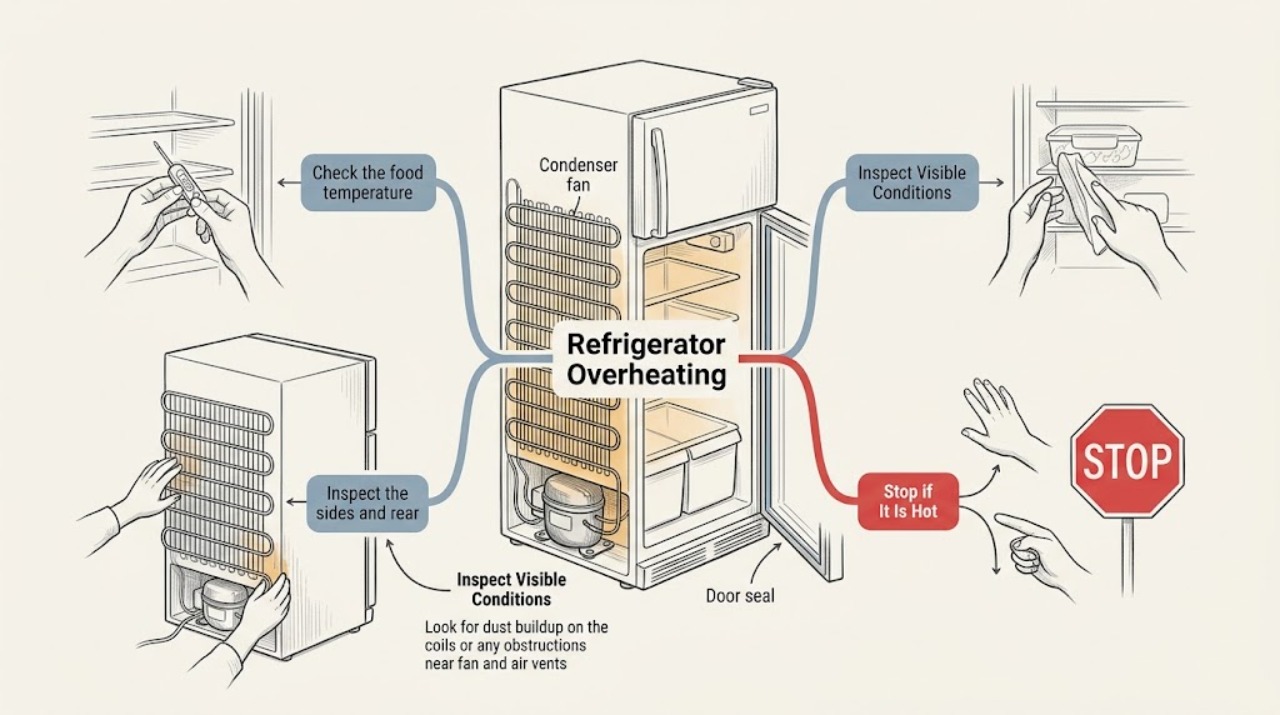
Warm sides or the area around the door seal can be normal because a refrigerator releases heat as it cools. Treat it as a problem when the exterior remains unusually hot, cooling is poor, the compressor runs continuously, or the condenser fan is abnormal. Check visible clearance, dust, vents, and door sealing; do not open the rear cover or touch hot or energized components.
Work through in order
Diagnostic checks
Use only checks that match the exact appliance or system and its official guide.
-
Check 1
Check the food temperature and whether the refrigerator is maintaining its set point while the cabinet feels warm; do not judge overheating by touch alone.
Expected result: The interior remains cold, or food is warming while the outside stays very hot and the compressor runs for long periods.
Next step: If cooling is poor, continue with airflow, clearance, gasket, and condenser checks and protect perishable food.
Why this matters
Why: Warm exterior with correct internal temperature can be normal heat release; warm food plus persistent exterior heat indicates inadequate cooling or heat rejection.
-
Check 2
Inspect the sides and rear clearance against the model's installation instructions and move nearby heat sources or stored items away from ventilation areas.
Expected result: The refrigerator is tightly enclosed or its condenser airflow path is obstructed.
Next step: Restore only the clearance specified for the model. Do not move a heavy refrigerator or disconnect lines without appropriate help.
Why this matters
Why: Restricted space can make it harder for the refrigerator to release heat and may extend compressor operation.
-
Check 3
From outside the appliance, look for visible dust, lint, or pet hair around the condenser area and clean only if the model's instructions permit it and power is safely disconnected.
Expected result: The condenser area is heavily dirty, or it appears clear but the fan is stopped, noisy, or repeatedly starting.
Next step: Follow the model manual or contact an authorized provider for cleaning. Arrange service for a fan, compressor, electrical, or sealed-system concern.
Why this matters
Why: Debris can reduce heat release; an abnormal condenser fan can prevent the condenser from staying cool and may contribute to compressor overheating.
-
Check 4
Check the door gasket and alignment from the outside and verify that interior vents are not blocked by containers or packages.
Expected result: The gasket leaks, the door does not align, or vents are covered; otherwise the seal and airflow look normal.
Next step: Clean the gasket and move items away from vents. Request service if the seal, alignment, frost, or temperature problem persists.
Why this matters
Why: Warm air entering through a poor seal or interrupted cold-air circulation increases cooling demand and can make the exterior feel hotter.
Use your observations
Decision map
Find the observation that best matches what you see, then follow the next safe action.
-
PATH 01Next step
What you see
The cabinet feels warm but temperatures are stable and no abnormal sound or breaker trip is present
Do this next
Keep the clearance and airflow areas clear and monitor the inside temperature.
-
PATH 02Next step
What you see
The cabinet is very hot, the refrigerator is warm inside, and airflow or condenser dirt is present
Do this next
Correct only safe, visible obstructions and use model-specific cleaning guidance; arrange service if cooling does not recover.
-
PATH 03Next step
What you see
The exterior remains hot despite clear airflow, or the condenser fan is abnormal or a breaker trips
Do this next
Stop repeated resets and arrange qualified appliance or electrical service. Do not open energized or sealed components.
Helpful context
Understand the symptom
Distinguish heat rejection from a cooling fault
The refrigerator's outside surface can feel warm while the inside remains at the correct temperature. The meaningful combination is exterior heat plus poor cooling, abnormal noise, repeated breaker trips, or a fan that is not operating normally.
When checks do not resolve it
Need a professional?
Arrange service when the refrigerator is hot outside and warm inside after safe clearance, airflow, gasket, and control checks; when the condenser fan is abnormal; or when a breaker trips. Do not attempt compressor, refrigerant, wiring, or sealed-system work.
Common questions
FAQ
Is it normal for the outside of a Maytag refrigerator to feel warm?
It can be normal for the cabinet or door-seal area to feel warm while the refrigerator maintains its internal temperature. Persistent heat together with poor cooling, abnormal fan behavior, or repeated breaker trips needs service.
Can dirty condenser coils make a refrigerator overheat?
Dust, lint, or pet hair can restrict heat release and make the cooling system work harder. Follow the model's permitted cleaning instructions; have a professional handle inaccessible fans, compressors, wiring, or sealed-system work.
Read the exact guide
Official sources
- 10 Reasons Your Refrigerator is Not CoolingMaytag · Maytag refrigerator cooling system
- Outside of Cabinet Feels Warm - RefrigeratorMaytag Product Help · Maytag full-size refrigerator cabinet temperature
- Tripping Breaker - RefrigeratorMaytag Product Help · Maytag refrigerator household electrical supply
Community feedback
Share a repair observation
Share a plain-text repair observation. Accepted observations are published automatically; this page may take a moment to update.